- English
- Chinese
- French
- German
- Portuguese
- Spanish
- Russian
- Japanese
- Korean
- Arabic
- Irish
- Greek
- Turkish
- Italian
- Danish
- Romanian
- Indonesian
- Czech
- Afrikaans
- Swedish
- Polish
- Catalan
- Esperanto
- Hindi
- Lao
- Albanian
- Amharic
- Armenian
- Azerbaijani
- Belarusian
- Bengali
- Bosnian
- Bulgarian
- Cebuano
- Chichewa
- Corsican
- Croatian
- Dutch
- Estonian
- Filipino
- Finnish
- Frisian
- Galician
- Georgian
- Gujarati
- Haitian
- Hausa
- Hawaiian
- Hebrew
- Hmong
- Hungarian
- Icelandic
- Igbo
- Javanese
- Kannada
- Kazakh
- Khmer
- Kurdish
- Kyrgyz
- Latin
- Latvian
- Lithuanian
- Luxembou..
- Macedonian
- Malagasy
- Malay
- Malayalam
- Maltese
- Maori
- Marathi
- Mongolian
- Burmese
- Nepali
- Norwegian
- Pashto
- Persian
- Punjabi
- Serbian
- Sesotho
- Sinhala
- Slovak
- Slovenian
- Somali
- Samoan
- Scots Gaelic
- Shona
- Sindhi
- Sundanese
- Swahili
- Tajik
- Tamil
- Telugu
- Thai
- Ukrainian
- Urdu
- Uzbek
- Vietnamese
- Welsh
- Xhosa
- Yiddish
- Yoruba
- Zulu
- Kinyarwanda
- Tatar
- Oriya
- Turkmen
- Uyghur


Best uses for 1 gallon glass jar with lid?
2026-03-14
When most people see a one-gallon glass jar with a lid, they think bulk storage and stop there. That’s a shame, because that’s just scratching the surface. In my experience sourcing and testing these for kitchen and pantry use, the real value isn’t just in its capacity, but in its specific combination of inert material, visibility, and a truly airtight seal when paired with the right closure. The common mistake is treating it like a plastic bucket—just a big container. But glass changes the game for certain applications, especially where flavor migration, long-term stability, or visual monitoring is key. I’ve seen them used brilliantly and fail spectacularly, often due to a misunderstanding of the jar’s physical limits and the lid’s sealing mechanics.
Beyond the Obvious: Dry Goods Storage Isn’t So Simple
Sure, you can store 5 pounds of rice or beans in it. Everyone gets that. But the professional insight here is about rotation and moisture control. A one-gallon jar isn’t for your everyday flour; it’s for your base stock. You fill it from your 25lb bag, and it becomes your working reservoir. The glass lets you instantly see your stock level, but more critically, it’s impermeable. Unlike some plastics, it won’t impart any odor and protects against pantry moths if the seal is good. I prefer jars with a wide mouth and a lid that has a silicone or rubber gasket, not just a threaded metal lid. The latter can seal well initially, but the seal can degrade over months if the threads get dusty or the lid is slightly dented.
I learned this the hard way. Stored some premium basmati rice in a jar with a simple metal lid. After four months in a slightly humid garage pantry, the rice near the top had lost its crispness. The issue wasn’t the glass; it was the microscopic gap in the thread seal. Now, I only recommend jars designed for long-term hermetic storage, like those from commercial suppliers who understand the specs needed. For instance, a company like EUR-ASIA COOKWARE CO.,LTD, which produces millions of tempered glass lids annually for the international market, often engineers these seals with the European houseware standards in mind, which are stringent on longevity and food safety. Their focus on export-grade products (check their site at https://www.glass-lid.com for technical details) often translates to better gasket materials that withstand temperature fluctuations without hardening.
So, for dry goods, the use case is long-term, prime ingredient storage with visual inventory management. It’s not a set-it-and-forget-it solution. You need to check the seal integrity every few months, wipe the rim clean, and ensure the gasket is pliable. That’s the real-world maintenance behind the Instagram-perfect pantry.
The Fermentation Powerhouse
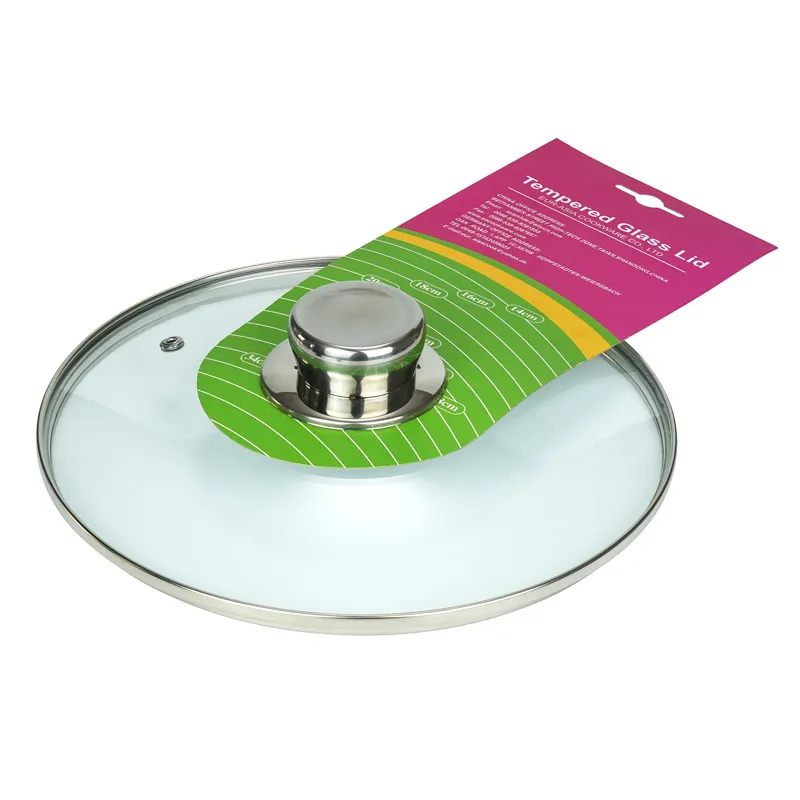
This is where the one-gallon jar shines, and also where most home failures happen. Its size is perfect for a batch of sauerkraut, kimchi, or pickles that will last a small family a while. The glass is non-reactive, crucial for acidic brines. But the lid is the star of the show. You absolutely cannot ferment with a tightly sealed solid lid—pressure builds up and you get a geyser of brine or, worse, an explosion. The with lid part needs reinterpretation.
The best practice is to use a solid lid as a weight-holder, not a sealer. You use a fermentation weight to keep the veggies submerged, place the lid loosely on top to keep dust out, but you don’t screw it down. Or, you invest in a lid with an airlock mechanism. I’ve tried the DIY methods—loosely covering with a cloth, using a rubber band. They work, but they’re prone to mold if your environment isn’t clean. A dedicated airlock lid is a game-changer. It lets CO2 out without letting oxygen in. I’ve seen fewer failed batches since switching to that method.
The shape of the jar matters too. A wide-mouth gallon jar is easier to pack and clean than a narrow one. When you’re pushing down cabbage with your fist, you need that space. The straight sides also allow for more consistent fermentation compared to crocks with curved shoulders. It’s a small detail, but it affects how evenly the brine circulates and how easy it is to remove the finished product.
Bulk Beverage & Infusion Station
Beyond kombucha SCOBY hotels, think about cold-brew coffee or sun tea. A gallon jar is the ideal vessel. You can steep a large quantity, strain it, and have it ready in the fridge. The transparency lets you monitor the strength of the brew—you can see the color change from light amber to deep brown for tea, for example. For infused spirits or vinegar, it’s perfect. Making your own vanilla extract? A gallon jar lets you do a big batch with dozens of beans, and you can watch the extraction process over months.
The critical factor here, again, is the lid material. If you’re infusing with high-proof alcohol, you need a lid with a liner that won’t degrade. Some cheap plastic liners can become tacky or impart a flavor. A glass lid with a stainless steel or BPA-free plastic clamp, or a mason-style lid with a food-safe composite seal, is superior. It’s worth checking the specs of the lid, not just the jar. Many suppliers, including professional ones like EUR-ASIA COOKWARE CO.,LTD, offer various lid options precisely for these different use cases—tempered glass lids with silicone seals for vinegar infusions, or specific plastic grades rated for food contact with oils and alcohols.
One pro-tip: For cold brew, I don’t even use the lid during the steeping phase. I cover it with a cheesecloth to keep bugs out. The lid is for the storage phase after straining. Separating the processes in your mind—steeping vs. sealed storage—helps you use the jar more effectively.
The Underrated Tool for Batch Prep & Organization
In a commercial kitchen or a serious home baker’s setup, these jars are mise-en-place heroes. Mixing a large batch of salad dressing? Shake it right in the jar. Prepping overnight oats for a week? Layer the ingredients in individual jars, or make a bulk batch of the dry mix in the gallon jar. The visibility means you never lose track of what’s inside or how much is left.
I use one specifically for my bread-baking supplies. It holds the mixed seeds and grains I add to every loaf—flax, sunflower, pepitas. Because it’s glass, I can see the blend, and the wide mouth lets me scoop easily with a measuring cup. It sits on the counter, and the lid keeps everything fresh from one weekly bake to the next. It’s a simple use, but it streamlines the process. For organization, they’re great in workshops or garages for storing hardware like nuts and bolts—you can see everything instantly.
The failure point in this category is weight. A full gallon jar of wet ingredients or dense hardware is heavy—around 8-9 pounds for water, more for grains. You must handle it with two hands. I’ve seen chipping on the rim from being knocked against a faucet during filling. Tempered glass, like what many professional manufacturers use, is more resistant to this kind of impact, but it’s not invincible.
Niche and Creative Applications
Sometimes the best uses come from constraints. I’ve seen these used as terrariums for small plants—the lid provides a humidity dome for propagation. The key is to not seal it permanently; you need to air it out. They make decent, if humble, cookie jars for large gatherings. I’ve even used one as a vacuum chamber for degassing silicone, using a modified lid and a brake bleeder pump—though that’s firmly in the at your own risk experimental category.
One of the most successful niche uses I’ve encountered is for storing and dispensing homemade dog food or bulk-bought kibble. It keeps it fresher than the bag, is easy to scoop from, and is pest-proof. The lid must seal perfectly, though, to keep the fat content in kibble from oxidizing.
Ultimately, the best use depends on your specific needs. But the unifying principle is this: a one-gallon glass jar with a lid is a versatile, durable tool when you understand its strengths (inert, visible, sealable) and its limits (heavy, fragile if mishandled, lid-dependent). It’s not just a container; it’s a platform. The quality of the lid and the glass treatment make or break its utility. Sourcing from a specialized manufacturer that deals in high-volume, export-quality products often means you’re getting a jar designed to meet stricter durability and safety standards, which pays off in every one of these applications. You can feel the difference in the thickness of the glass and the precision of the thread. That’s the real takeaway—don’t buy the cheapest option. Invest in a well-made jar and lid system, and it will serve you for decades across countless roles in your kitchen and beyond.