
- English
- Chinese
- French
- German
- Portuguese
- Spanish
- Russian
- Japanese
- Korean
- Arabic
- Irish
- Greek
- Turkish
- Italian
- Danish
- Romanian
- Indonesian
- Czech
- Afrikaans
- Swedish
- Polish
- Basque
- Catalan
- Esperanto
- Hindi
- Lao
- Albanian
- Amharic
- Armenian
- Azerbaijani
- Belarusian
- Bengali
- Bosnian
- Bulgarian
- Cebuano
- Chichewa
- Corsican
- Croatian
- Dutch
- Estonian
- Filipino
- Finnish
- Frisian
- Galician
- Georgian
- Gujarati
- Hausa
- Hawaiian
- Hebrew
- Hmong
- Hungarian
- Icelandic
- Igbo
- Javanese
- Kannada
- Kazakh
- Khmer
- Kurdish
- Kyrgyz
- Latin
- Latvian
- Lithuanian
- Luxembou..
- Macedonian
- Malagasy
- Malay
- Malayalam
- Maltese
- Maori
- Marathi
- Mongolian
- Burmese
- Nepali
- Norwegian
- Pashto
- Persian
- Punjabi
- Serbian
- Sesotho
- Sinhala
- Slovak
- Slovenian
- Somali
- Samoan
- Scots Gaelic
- Shona
- Sindhi
- Sundanese
- Swahili
- Tajik
- Tamil
- Telugu
- Thai
- Ukrainian
- Urdu
- Uzbek
- Vietnamese
- Welsh
- Xhosa
- Yiddish
- Yoruba
- Zulu
- Kinyarwanda
- Tatar
- Oriya
- Turkmen
- Uyghur


Glass Lid Price Guide: Key Factors for OEM and Bulk Orders
2026-10-16
Content
- Understanding the Core Components of Glass Lid Pricing
- Manufacturing Complexity and Mold Costs
- Compliance and Certification: The Hidden Cost Drivers
- OEM Customization and Branding Costs
- Bulk Order Dynamics: MOQ and Economies of Scale
- Common Pricing Mistakes to Avoid
- FAQ: Frequently Asked Questions About Glass Lid Pricing
- Strategic Sourcing Recommendations for 2026
- Conclusion
Determining the Glass Lid Price Guide: Key Factors for OEM and Bulk Orders requires a granular analysis of raw material costs, manufacturing complexity, and compliance standards. In 2026, bulk pricing for tempered glass lids is primarily driven by thickness specifications (3.8mm vs. 4mm+), edge polishing techniques, and logo printing methods. For B2B buyers, understanding the cost implications of high-curvature molds, LFGB/TUV certifications, and MOQ thresholds is essential for accurate budgeting. This guide breaks down the structural components of glass lid pricing to help procurement managers optimize supply chain efficiency without compromising quality.
Understanding the Core Components of Glass Lid Pricing
The final unit price of a glass lid is not a single variable but a composite of several manufacturing stages. Unlike standard stock items, OEM orders involve custom tooling and specific quality controls that directly impact the bottom line. To negotiate effectively, buyers must dissect the cost structure into its fundamental elements: raw glass processing, hardware assembly, and regulatory compliance.
At EUR-ASIA COOKWARE CO.,LTD., our production data indicates that raw material volatility accounts for approximately 40-50% of the base cost. However, the remaining percentage is heavily influenced by labor intensity and defect rates during tempering. Understanding these layers allows businesses to identify where cost-saving measures can be applied without sacrificing structural integrity or safety standards.
Raw Material Quality and Glass Thickness
The type of glass used is the primary determinant of durability and cost. Most household cookware lids utilize tempered soda-lime glass due to its thermal shock resistance. The standard thickness ranges from 3.8mm to 5.0mm. A shift from 3.8mm to 4.0mm may seem minor, but it significantly increases raw material consumption and requires longer tempering cycles, thereby raising energy costs.
- 3.8mm Glass: Cost-effective, suitable for lightweight pots and low-heat applications. Common in entry-level product lines.
- 4.0mm – 5.0mm Glass: Premium tier. Offers superior impact resistance and a heavier, high-quality feel. Required for high-end cookware brands targeting European and North American markets.
- Borosilicate Glass: Occasionally used for specialized laboratory or high-heat kitchenware. It commands a higher price due to expensive raw materials and complex processing requirements.
For bulk orders, specifying the exact thickness tolerance is crucial. Tighter tolerances reduce breakage rates during assembly but may increase the initial rejection rate at the factory, a cost often passed on to the buyer.
Edge Processing and Polishing Techniques
Edge treatment is a critical safety and aesthetic feature. Rough edges are a liability, leading to cuts and potential customer returns. The level of polish directly correlates with labor costs. There are three main tiers of edge processing:
- Seamed Edge: The most basic finish. The sharp edges are ground down slightly. This is the lowest-cost option but offers minimal premium appeal.
- Polished Edge: The edges are smoothed to a satin finish. This reduces the risk of injury and provides a cleaner look. It is the industry standard for mid-range cookware.
- Pencil Polished (High-Gloss): The edges are rounded and polished to a transparent, glossy finish. This requires multiple grinding and polishing steps, significantly increasing production time and cost. It is preferred for luxury brands where visual perfection is paramount.
When requesting quotes, specify the desired edge finish clearly. A switch from seamed to pencil polished can increase the unit price by 10-15%, depending on the diameter of the lid.
Manufacturing Complexity and Mold Costs
Not all glass lids are created equal. The geometry of the lid dictates the complexity of the molding process. Flat lids are straightforward to produce, while high-curvature or special-shaped lids require advanced engineering and higher capital investment in molds.
Impact of Curvature and Shape on Price
Standard flat or low-dome lids use generic molds that are widely available. However, modern cookware design often features deep domes or unique curves to accommodate larger food volumes or specific steam circulation patterns. Producing these shapes requires custom molds.
EUR-ASIA COOKWARE CO.,LTD. specializes in producing high-curvature, tall, and flat glass covers according to customer demand. The creation of a custom mold involves:
- Design Engineering: CAD modeling to ensure the glass flows correctly during pressing.
- Mold Fabrication: High-precision steel molds that can withstand extreme temperatures.
- Testing and Calibration: Ensuring the curvature matches the pot rim perfectly to prevent steam leakage.
For OEM orders, mold fees are typically a one-time upfront cost. However, this cost can often be amortized over large bulk orders. Buyers should negotiate mold fee refunds after reaching a certain order volume, a common practice in the industry.
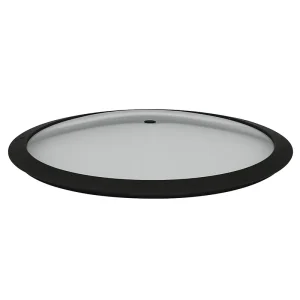
Hardware Integration: Knobs and Rims
The glass panel is only half of the lid. The hardware—specifically the knob and the metal rim (if applicable)—adds significant complexity. The attachment method determines both the cost and the durability.
| Component | Cost Implication | Quality Consideration |
|---|---|---|
| Stainless Steel Rim | Higher Cost | Provides structural reinforcement, prevents chipping, and offers a premium aesthetic. Requires precise welding or crimping. |
| Silicone Knob | Mid-Range Cost | Heat-resistant, ergonomic, and available in various colors. Requires high-temperature adhesive bonding. |
| Plastic/Bakelite Knob | Lower Cost | Cost-effective but limited in color and heat resistance. Must be rated for oven use if applicable. |
| Rimless Design | Variable Cost | Relies entirely on the strength of the glass edge. Requires high-quality pencil polishing to ensure safety. |
The assembly process must be automated or highly standardized to ensure consistency. Poorly attached knobs are a leading cause of product failure. At our Taian City production base, we utilize rigorous pull-test protocols to ensure knob adhesion meets international safety standards.
Compliance and Certification: The Hidden Cost Drivers
In 2026, regulatory compliance is not optional; it is a market entry requirement. Different regions have stringent standards for materials that come into contact with food. Failure to meet these standards results in rejected shipments, legal liabilities, and brand damage.
Key Certifications for Global Markets
Exporting glass lids to Europe, North America, and Asia requires specific certifications. These tests verify that the glass and hardware do not leach harmful substances like lead or cadmium into food.
- LFGB (Germany): One of the strictest food safety standards globally. Essential for selling in Germany and highly respected across the EU. It includes migration tests and sensory checks.
- TUV Certification: Indicates that the product has been tested by an independent third party for safety and quality. It enhances brand trustworthiness.
- ISO9001: While not a product certification, it certifies the manufacturing management system. It ensures consistent quality control processes are in place.
- FDA (USA): Required for the US market, focusing on material safety and labeling.
EUR-ASIA COOKWARE CO.,LTD. has passed ISO9001 certification, and our products have passed LFGB and TUV certification. This compliance infrastructure is built into our pricing model. While non-certified suppliers may offer lower initial quotes, the risk of non-compliance makes them a costly choice for serious B2B buyers. Our adherence to these standards ensures that over 90 percent of our products are successfully exported to Germany, Russia, Italy, France, Poland, Denmark, Spain, Switzerland, Brazil, Turkey, South Korea, and Japan.
OEM Customization and Branding Costs
For brands looking to differentiate themselves, customization is key. However, every custom element adds to the production timeline and cost. Understanding the pricing mechanics of branding helps in making strategic decisions.
Logo Printing Techniques
Printing logos on glass lids requires specialized inks that can withstand high temperatures and repeated washing. The two most common methods are screen printing and laser etching.
- Screen Printing: Cost-effective for large runs. Allows for colorful, detailed logos. However, it involves setup costs for each color and screen. Durability is good but can degrade over years of abrasive cleaning.
- Laser Etching: Permanent and premium. The logo is engraved into the glass surface. It has higher upfront machine costs but no consumable ink costs. Ideal for minimalist, high-end branding.
Our company can print logos on products according to customer requirements. When planning your budget, consider the number of colors in your logo. Single-color screen printing is significantly cheaper than multi-color designs. Additionally, the position of the logo affects the complexity of the jigging required during printing.
Packaging and Logistics
Glass is fragile. Packaging is not just about branding; it is about survival during transit. Standard export packaging involves individual white boxes, inner dividers, and master cartons with reinforced corners.
Custom packaging, such as full-color gift boxes or blister packs, increases the unit cost. Furthermore, the volume weight of the packaging affects shipping costs. Optimizing box dimensions to maximize container load efficiency can save substantial amounts in freight charges, especially for bulk orders destined for overseas markets.
Bulk Order Dynamics: MOQ and Economies of Scale
The relationship between order quantity and unit price is non-linear. Understanding economies of scale is vital for procurement planning. Small orders bear a disproportionate share of fixed costs, such as mold setup, machine calibration, and quality inspection initialization.
Price Breaks by Volume
Typically, manufacturers offer tiered pricing structures. As the order volume increases, the fixed costs are spread over more units, reducing the per-unit price. Additionally, larger runs allow for more efficient raw material purchasing and continuous production lines, minimizing downtime.
- Sample/Small Batch (Under 1,000 units): Highest unit cost. Includes setup fees and manual handling.
- Medium Batch (1,000 – 5,000 units): Moderate cost. Some efficiencies gained, but still involves frequent line changes.
- Large Bulk (10,000+ units): Lowest unit cost. Continuous production, optimized material usage, and automated packing.
With an annual output of more than 15 million pieces, EUR-ASIA COOKWARE CO.,LTD. leverages massive scale to keep costs competitive. Our facility in the Taian City Shandong Province China National High-tech Development Zone covers 20,000㎡, allowing for streamlined logistics and high-volume throughput. Buyers committing to annual contracts or larger quarterly orders can negotiate better rates and priority production scheduling.
Common Pricing Mistakes to Avoid
In the pursuit of the lowest price, many buyers make errors that ultimately increase total cost of ownership. Being aware of these pitfalls helps in structuring smarter RFQs (Requests for Quotation).
Ignoring Defect Rates
A lower quote may hide a higher defect rate. If 5% of lids arrive broken or with poor edge finishes, the cost of replacements, customer service, and brand reputation damage far outweighs the initial savings. Always ask for the manufacturer’s historical defect rate and their policy on replacing defective goods.
Underestimating Lead Times
Rush orders incur premium charges. Planning ahead allows for standard production scheduling, which is more cost-effective. Factor in time for mold creation, sample approval, and potential delays in raw material sourcing.
Over-Specifying Unnecessary Features
Not every market needs 5mm thick, pencil-polished, rimmed lids with laser-etched logos. Match the product specifications to the target market’s expectations. Over-engineering a product for a price-sensitive segment erodes margin without adding perceived value.
FAQ: Frequently Asked Questions About Glass Lid Pricing
What is the typical MOQ for custom glass lids?
Most manufacturers require a Minimum Order Quantity (MOQ) of 1,000 to 3,000 units per size for custom designs. This ensures that the setup costs for molds and printing are covered. For standard stock items, MOQs may be lower, but customization options will be limited.
How does glass thickness affect the price?
Thicker glass requires more raw material and longer tempering times. Moving from 3.8mm to 4.0mm or 5.0mm increases the cost due to material weight and energy consumption. However, thicker glass offers better durability and a premium feel, which can justify a higher retail price.
Are there hidden costs in glass lid manufacturing?
Yes. Potential hidden costs include mold fees, sample shipping costs, custom packaging design fees, and certification testing fees if not already held by the manufacturer. Always request a detailed breakdown of all costs in the quotation.
Why are LFGB and TUV certifications important for pricing?
Certifications like LFGB and TUV ensure that the product meets strict safety standards, particularly for the European market. Manufacturers who hold these certifications have invested in quality control and testing. While this may result in a slightly higher unit price, it eliminates the risk of costly recalls and legal issues, providing long-term value.
Can I get a discount for large annual orders?
Yes. Manufacturers often offer volume discounts for large annual commitments. By guaranteeing a certain volume over a year, you help the manufacturer plan production and raw material purchases more efficiently, allowing them to pass on some of these savings to you.
Strategic Sourcing Recommendations for 2026
To secure the best value for your glass lid orders, adopt a strategic sourcing approach. Start by defining your target market’s quality expectations. Do not over-specify for budget segments or under-specify for premium lines. Engage with manufacturers early in the design phase to optimize mold designs for cost-efficiency.
Partnering with an experienced manufacturer like EUR-ASIA COOKWARE CO.,LTD. provides access to extensive expertise in producing low, medium, and high-level household glass products. Our location in the China National High-tech Development Zone, combined with our 90+ employees and advanced production capabilities, ensures that we can meet diverse demands, from high-curvature special shapes to standard flat lids.
Verify that your supplier has the necessary certifications for your target markets. Request samples to evaluate edge polish quality, knob stability, and logo durability. Finally, consider the total landed cost, including freight and duties, rather than just the ex-factory price.
Conclusion
Navigating the Glass Lid Price Guide: Key Factors for OEM and Bulk Orders involves balancing material quality, manufacturing complexity, and compliance requirements. By understanding the impact of glass thickness, edge polishing, mold customization, and certifications, buyers can make informed decisions that align with their brand positioning and budget constraints.
For businesses seeking a reliable partner with proven expertise in global exports, EUR-ASIA COOKWARE CO.,LTD. offers a robust solution. With ISO9001, LFGB, and TUV certifications, and a track record of exporting to over ten major countries, we provide the quality and reliability needed for successful international trade. Whether you need standard lids or complex, custom-shaped designs, our team is ready to support your production goals.
Ready to optimize your supply chain? Contact us today to discuss your specific requirements, request samples, or obtain a detailed quotation for your next bulk order.
Explore our full range of glass lid solutions and technical specifications







