- English
- Chinese
- French
- German
- Portuguese
- Spanish
- Russian
- Japanese
- Korean
- Arabic
- Irish
- Greek
- Turkish
- Italian
- Danish
- Romanian
- Indonesian
- Czech
- Afrikaans
- Swedish
- Polish
- Basque
- Catalan
- Esperanto
- Hindi
- Lao
- Albanian
- Amharic
- Armenian
- Azerbaijani
- Belarusian
- Bengali
- Bosnian
- Bulgarian
- Cebuano
- Chichewa
- Corsican
- Croatian
- Dutch
- Estonian
- Filipino
- Finnish
- Frisian
- Galician
- Georgian
- Gujarati
- Hausa
- Hawaiian
- Hebrew
- Hmong
- Hungarian
- Icelandic
- Igbo
- Javanese
- Kannada
- Kazakh
- Khmer
- Kurdish
- Kyrgyz
- Latin
- Latvian
- Lithuanian
- Luxembou..
- Macedonian
- Malagasy
- Malay
- Malayalam
- Maltese
- Maori
- Marathi
- Mongolian
- Burmese
- Nepali
- Norwegian
- Pashto
- Persian
- Punjabi
- Serbian
- Sesotho
- Sinhala
- Slovak
- Slovenian
- Somali
- Samoan
- Scots Gaelic
- Shona
- Sindhi
- Sundanese
- Swahili
- Tajik
- Tamil
- Telugu
- Thai
- Ukrainian
- Urdu
- Uzbek
- Vietnamese
- Welsh
- Xhosa
- Yiddish
- Yoruba
- Zulu
- Kinyarwanda
- Tatar
- Oriya
- Turkmen
- Uyghur


Why Tempered Glass Lids Are Dominating Cookware Industry: Benefits, Manufacturing Insights, and Buying Guide
2026-05-01
- What Makes Tempered Glass Lids a Industry Standard?
- Key Benefits Driving Market Adoption
- Manufacturing Insights: How Quality Is Ensured
- Comparative Analysis: Tempered Glass vs. Traditional Materials
- Comprehensive Buying Guide: What to Look For
- Optimal Usage Scenarios and Applications
- Frequently Asked Questions (FAQ)
- Conclusion and Final Recommendations
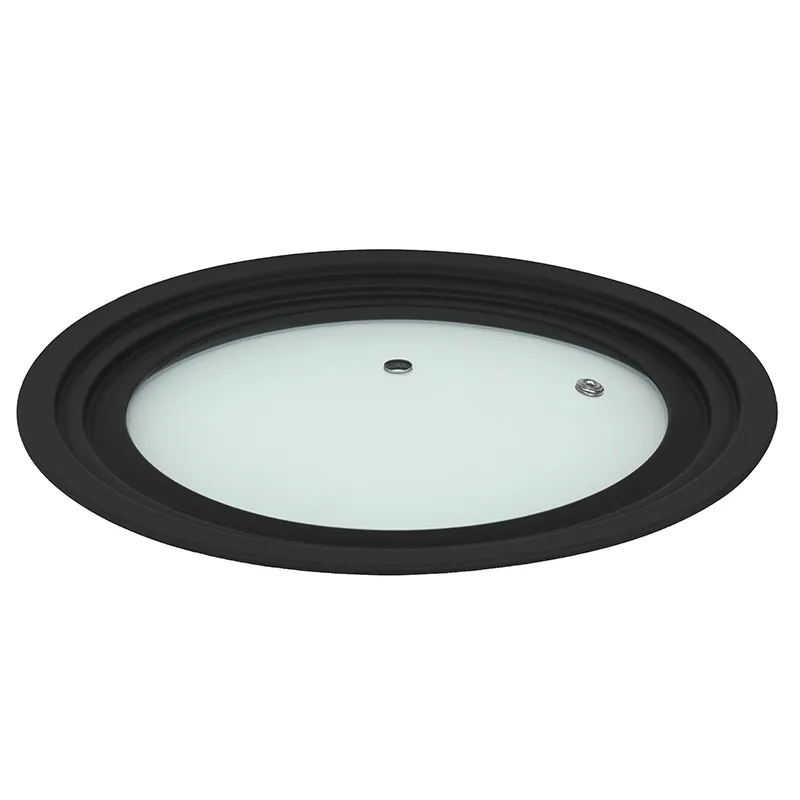
Tempered glass lids are dominating the cookware industry due to their unique blend of safety, durability, and visual convenience. Unlike traditional metal covers, these lids allow cooks to monitor food without releasing heat or steam, enhancing energy efficiency and cooking precision. Manufactured through a specialized thermal tempering process, they offer superior resistance to thermal shock and physical impact. This guide explores the benefits, manufacturing insights, and essential buying criteria for selecting high-quality tempered glass lids in today’s market.
What Makes Tempered Glass Lids a Industry Standard?
The shift toward tempered glass lids represents a significant evolution in culinary tool design. Historically, cookware lids were exclusively metal, often requiring the user to lift the cover to check progress. This action caused rapid heat loss and disrupted the cooking environment. The introduction of heat-resistant glass solved this inefficiency, providing a transparent barrier that maintains internal temperature while offering full visibility.
Industry experts recognize this transition as a response to modern cooking demands where precision and energy conservation are paramount. The material is not ordinary glass; it is engineered to withstand extreme temperature fluctuations common in stovetop cooking. From simmering sauces to boiling water, the structural integrity of these lids remains intact, making them a reliable choice for both professional chefs and home cooks.
Furthermore, the aesthetic appeal of glass complements contemporary kitchen designs. The sleek, transparent look adds a touch of elegance to any pot or pan, moving away from the purely utilitarian appearance of older metal lids. This combination of function and form has cemented its status as a dominant feature in current cookware collections.
The Science Behind Thermal Resistance
Understanding why these lids perform so well requires a look at the material science involved. Ordinary annealed glass breaks easily under thermal stress because of internal tensions created during cooling. In contrast, tempered glass undergoes a controlled thermal or chemical treatment to increase its strength compared to normal glass.
During the manufacturing process, the glass is heated to over 600 degrees Celsius and then rapidly cooled. This quenching process creates balanced internal stresses: the outer surfaces go into compression while the inner layers remain in tension. This state makes the material significantly harder to break. If it does fail, it crumbles into small, granular chunks rather than sharp, dangerous shards, enhancing user safety.
This scientific foundation ensures that the lid can handle the sudden temperature changes encountered when moving a pot from a hot burner to a cooler surface or adding cold ingredients to a hot pan. The reliability of this engineering is why manufacturers increasingly choose this material over alternatives.
Key Benefits Driving Market Adoption
The widespread adoption of tempered glass lids is driven by tangible advantages that improve the cooking experience. These benefits range from practical monitoring capabilities to long-term durability and health safety. Consumers and professionals alike prioritize these features when investing in new kitchen equipment.
- Visual Monitoring: The transparency allows users to check food doneness, liquid levels, and browning progress without lifting the lid. This prevents heat escape and maintains consistent cooking temperatures.
- Thermal Shock Resistance: Engineered to withstand rapid temperature changes, reducing the risk of cracking during high-heat searing or boiling.
- Safety Features: In the rare event of breakage, the glass shatters into dull, pebble-like pieces rather than jagged shards, minimizing injury risk.
- Chemical Inertness: High-quality glass does not react with acidic foods, ensuring no metallic tastes or harmful leaching occurs during cooking.
- Aesthetic Versatility: The clean look suits various kitchen styles and allows the vibrant colors of food to be visible, enhancing presentation.
These advantages address common pain points associated with traditional cookware. For instance, the inability to see inside a heavy cast iron pot often leads to overcooked or burnt food. With a glass lid, the cooking process becomes more intuitive and controllable. Additionally, the non-porous surface of the glass prevents odor absorption and staining, keeping the lid looking new even after years of use.
Energy Efficiency and Cooking Performance
Beyond convenience, there is a measurable impact on energy efficiency. Every time a metal lid is lifted to check food, a significant amount of trapped heat and steam escapes. This forces the heating element to work harder to restore the desired temperature, consuming more electricity or gas. By enabling visual checks, tempered glass lids help maintain a sealed environment.
This retention of heat and moisture is particularly beneficial for methods like braising, steaming, and simmering. The condensation that forms on the underside of the glass often drips back onto the food, keeping meats moist and preventing sauces from reducing too quickly. This self-basting effect enhances flavor development and texture, resulting in higher quality dishes with less effort.
Chefs note that this consistency leads to more predictable outcomes. When the internal environment of the pot remains stable, recipes execute more reliably. This performance boost is a key reason why educational cooking institutions and professional kitchens have integrated glass-lidded vessels into their standard inventory.
Manufacturing Insights: How Quality Is Ensured
The production of high-performance tempered glass lids involves rigorous processes to ensure safety and longevity. Understanding these steps helps consumers appreciate the value proposition of premium products versus lower-quality alternatives. The journey from raw silica sand to a finished cookware lid is complex and highly regulated.
First, raw materials including silica sand, soda ash, and limestone are melted in high-temperature furnaces to form molten glass. This mixture is carefully formulated to minimize impurities that could create weak points. Once formed into sheets, the glass undergoes precise cutting and edge grinding. Smooth edges are critical not only for aesthetics but also to prevent stress concentrations that could lead to spontaneous breakage.
The core of the process is the tempering stage. The cut glass pieces enter a tempering oven where they are heated uniformly. After reaching the target temperature, they are blasted with high-pressure air in a quenching station. This rapid cooling locks the internal stress structure in place. Quality control teams then subject random samples to impact tests and thermal shock cycles to verify compliance with international safety standards.
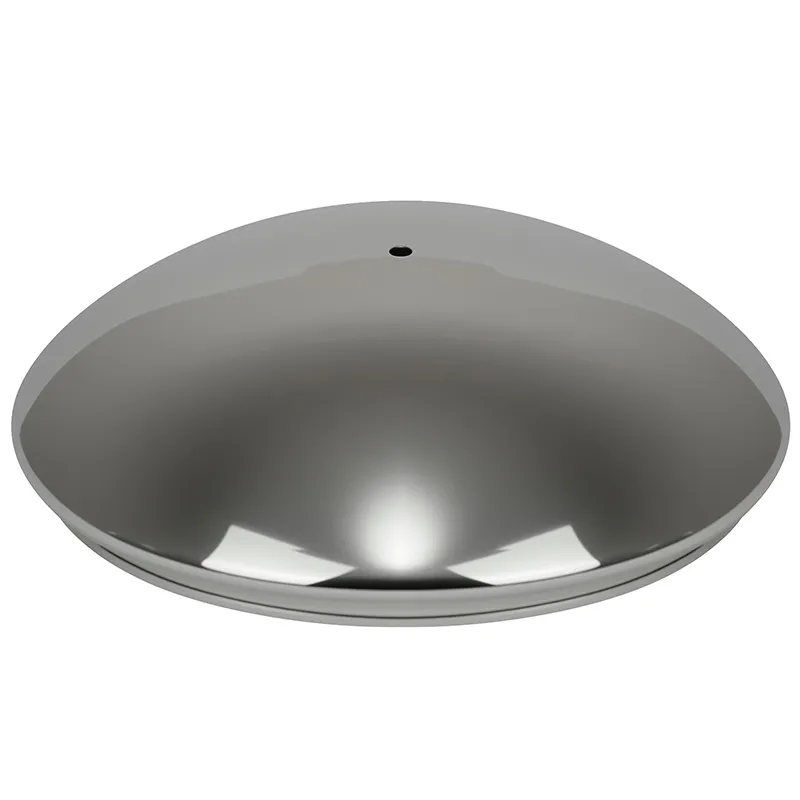
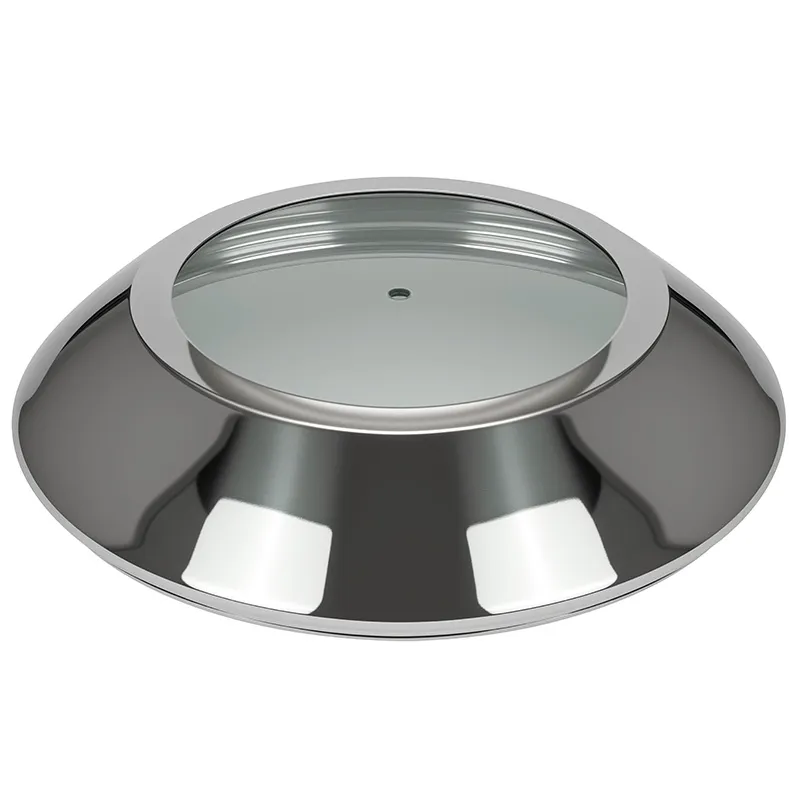
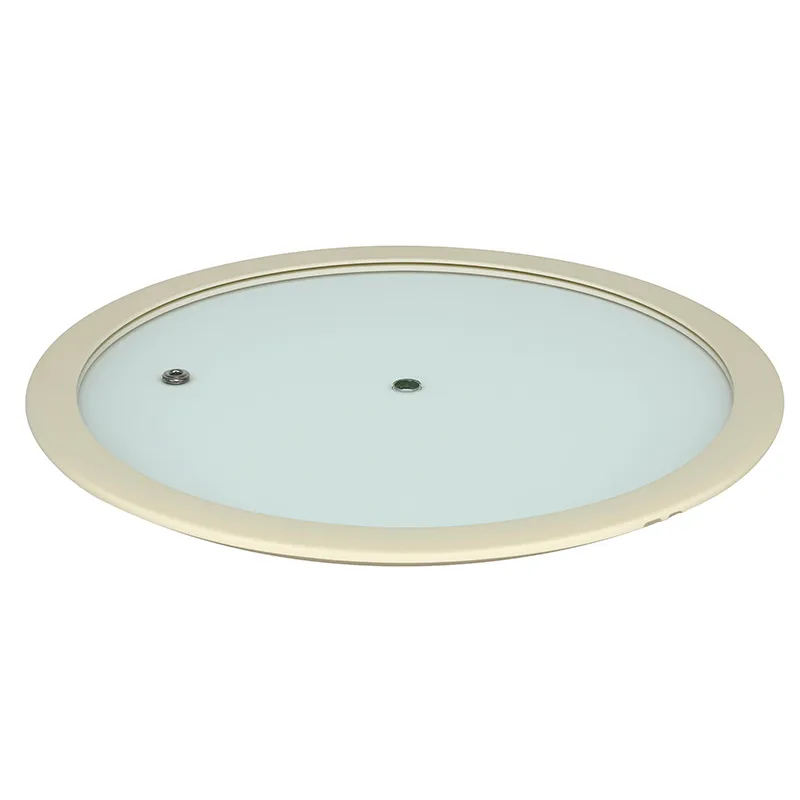
Leading this sector of advanced manufacturing is EUR-ASIA COOKWARE CO.,LTD., a specialist in producing household glass products ranging from low to high-end specifications. Located in the National High-tech Development Zone of Taian City, Shandong Province, their expansive 20,000㎡ production base houses a dedicated team of over 90 employees. With an annual output exceeding 15 million tempered glass lids and related accessories, the company exemplifies the scale and precision required in modern cookware production. Their facility is equipped to handle diverse customer demands, crafting high-curvature, tall, flat, and special-shaped glass covers, complete with custom logo printing options.
Commitment to quality is paramount in such large-scale operations. EUR-ASIA COOKWARE CO.,LTD. has secured ISO9001 certification for its management systems, while its products have passed stringent LFGB and TUV certifications, ensuring they meet the rigorous safety standards of global markets. Currently, over 90% of their production is exported to major culinary hubs including Germany, Russia, Italy, France, Poland, Denmark, Spain, Switzerland, Brazil, Turkey, South Korea, and Japan, demonstrating their capability to serve international clients with consistent excellence.
Integration with Handles and Rims
A critical aspect of manufacturing is the attachment of the handle and the fitting of the rim. The handle must be securely bonded to the glass to withstand frequent lifting and twisting. Manufacturers typically use high-strength, heat-resistant adhesives or mechanical locking systems reinforced with stainless steel components.
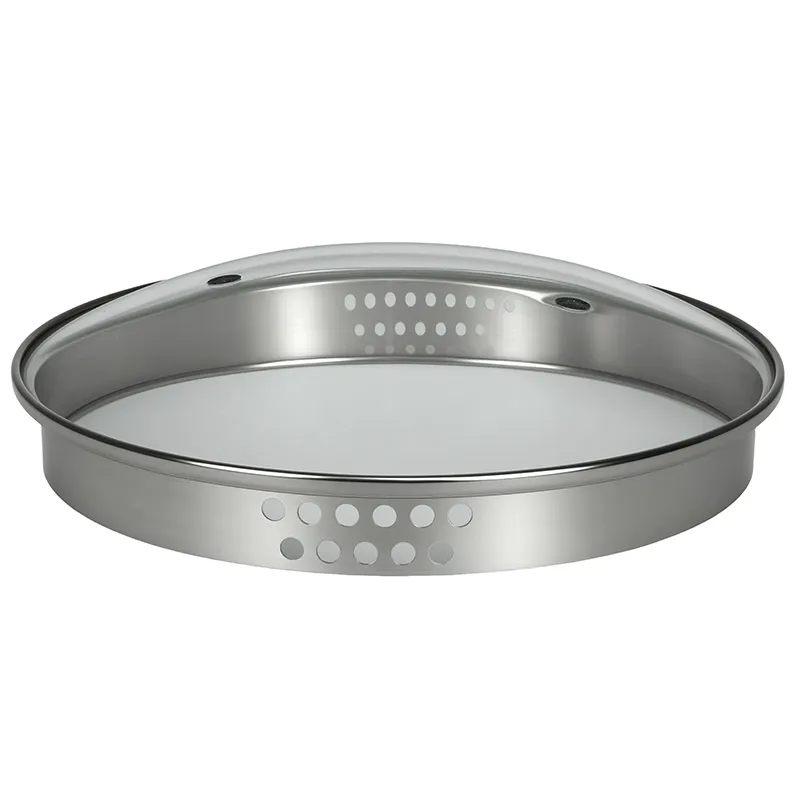
The rim, often made of stainless steel or silicone, serves two purposes: it protects the glass edge from chipping and creates a tight seal with the cookware body. Precision engineering ensures that the rim diameter matches standard pot sizes perfectly. A poor fit can lead to steam leakage, negating the benefits of the lid. Advanced manufacturing lines use laser measurement tools to guarantee these tolerances are met consistently.
Some premium models feature dual-material handles that combine a sturdy core with a soft-touch exterior for grip comfort. These assemblies are tested for thousands of cycles to simulate years of daily use. The integration process highlights the importance of holistic design, where the glass is just one component of a well-engineered system.
Comparative Analysis: Tempered Glass vs. Traditional Materials
To understand the dominance of tempered glass, it is helpful to compare it directly with traditional lid materials. While metal lids have their place, the specific advantages of glass make it the preferred choice for many cooking scenarios. The following table outlines the key differences in performance and usability.
| Feature | Tempered Glass Lids | Stainless Steel Lids | Aluminum Lids |
|---|---|---|---|
| Visibility | Full transparency for monitoring | Opaque; requires lifting | Opaque; requires lifting |
| Heat Retention | Excellent; minimizes opening frequency | Good, but often opened unnecessarily | Moderate; cools faster |
| Weight | Moderate; balanced feel | Heavy; can be cumbersome | Light; may feel flimsy |
| Reactivity | Non-reactive with all foods | Generally inert but can affect taste if low grade | Can react with acidic foods |
| Cleaning | Dishwasher safe; stain resistant | Easy to clean but shows water spots | Prone to oxidation and discoloration |
| Safety on Breakage | Crumbles into safe granules | Dents but does not shatter | Dents but does not shatter |
The data clearly indicates that while metal lids are durable against impact, they lack the functional utility of visibility. Aluminum lids, while lightweight, pose risks of reactivity with tomato-based sauces or citrus dishes. Tempered glass strikes an optimal balance, offering the durability needed for daily cooking with the added functionality of observation.
Moreover, the cleaning aspect is a major differentiator. Metal lids often accumulate grease rims that are difficult to scrub, whereas the smooth surface of tempered glass allows for easy wiping. Dishwasher safety is standard for high-quality glass lids, adding to the convenience factor for busy households. This ease of maintenance contributes significantly to user satisfaction and long-term adoption.
Comprehensive Buying Guide: What to Look For
Selecting the right tempered glass lid involves more than just matching the diameter of your pot. Several factors influence performance, safety, and compatibility. Buyers should evaluate specific attributes to ensure they are purchasing a product that meets high standards of quality and durability.
Thickness and Weight: High-quality lids typically have a thickness of at least 4mm to 5mm. Thinner glass may be more prone to warping or breaking under intense heat. The weight should feel substantial but not overly heavy, indicating proper density and tempering.
Rim Construction: Inspect the edge protection. A stainless steel rim is preferable for durability and heat distribution. Ensure the rim is smoothly finished without sharp burrs. Some designs include a silicone gasket within the rim to create a tighter seal, which is excellent for pressure-style cooking without a dedicated pressure cooker.
Handle Ergonomics: The handle is the primary point of contact. It should be made of a heat-resistant material like Bakelite or silicone-coated steel. Test the grip; it should be comfortable to hold even with wet hands. A vent hole in the handle or lid is a valuable feature for controlling steam release during boiling.
Compatibility and Sizing Standards
One of the most common mistakes buyers make is assuming all lids are universal. While many pots follow standard sizing, variations exist between brands and regions. Measure the inner diameter of your cookware precisely before purchasing. Most lids are designed to fit either the inner or outer rim, so knowing your pot’s configuration is crucial.
Universal adjustable lids are available, featuring expandable silicone skirts that fit a range of sizes. While convenient, fixed-size tempered glass lids generally provide a better seal and more stable fit. If you own a set of cookware from a specific manufacturer, checking for original replacement lids is often the safest bet for perfect compatibility.
Additionally, consider the type of stove you use. Induction cooktops require lids with magnetic properties if the lid itself sits on the heat source, though this is rare. However, the base of the pot must be flat for the lid to sit evenly. For gas stoves, ensure the handle does not extend too far over the flame path to avoid melting or overheating.
Optimal Usage Scenarios and Applications
Tempered glass lids excel in specific cooking methods where moisture retention and visual checks are critical. Recognizing these scenarios allows cooks to maximize the potential of their equipment. They are not just covers; they are active tools in the cooking process.
Simmering and Braising: Long-cooking dishes like stews and curries benefit immensely. The ability to see the reduction level of the sauce without lifting the lid ensures the dish does not dry out. The condensation cycle keeps ingredients tender.
Steaming Vegetables: When steaming, watching the color change of vegetables helps prevent overcooking. Bright green broccoli or crisp-tender asparagus can be achieved by timing the removal exactly when the visual cue appears.
Frying and Sautéing: While often left off during high-heat searing, placing a glass lid partially on the pan can contain oil splatter while still allowing some steam to escape. This technique is useful for cooking thicker cuts of meat that need to finish cooking through without burning the exterior.
Maintenance and Care Best Practices
To extend the lifespan of a tempered glass lid, proper care is essential. Although durable, it is not indestructible. Avoid subjecting the lid to extreme thermal shocks, such as taking it directly from a boiling pot and placing it on a cold granite countertop or running it under ice-cold water immediately.
Cleaning should be done with non-abrasive sponges to prevent scratching the surface. While dishwasher safe, hand washing is recommended to preserve the clarity and the integrity of the handle adhesive over time. Inspect the rim regularly for any signs of loosening or damage. If the handle feels loose, discontinue use immediately to prevent accidents.
Storage is another consideration. Stack lids carefully with a protective cloth or paper towel between them to prevent micro-scratches that could weaken the glass over time. Hanging storage solutions are ideal as they eliminate stacking pressure entirely and keep the lids easily accessible.
Frequently Asked Questions (FAQ)
Addressing common queries helps clarify misconceptions and provides additional value to readers considering this technology. These answers are based on general industry knowledge and material properties.
Can tempered glass lids go in the oven?
Most high-quality tempered glass lids are oven-safe up to specific temperatures, typically ranging from 180°C to 230°C (350°F – 450°F). However, the limiting factor is often the handle material. Plastic or silicone handles may have lower heat tolerance. Always check the manufacturer’s specifications before placing the lid in the oven.
Why did my glass lid shatter spontaneously?
Spontaneous breakage is rare but can occur due to nickel sulfide inclusions introduced during manufacturing or severe edge damage. Dropping the lid or hitting the edge against a hard surface can create micro-fractures that expand under heat. Using lids with protected rims significantly reduces this risk.
Is it safe to use a cracked tempered glass lid?
No. Even a small chip or crack compromises the structural integrity of tempered glass. The internal tension that gives the glass its strength is disrupted, making it highly susceptible to sudden shattering under heat. Replace any damaged lids immediately.
Do glass lids affect the taste of food?
No. Glass is chemically inert and non-porous. Unlike some metals that can impart a metallic flavor to acidic dishes, glass does not interact with food ingredients. This ensures the pure taste of the recipe is preserved every time.
How do I remove stubborn stains from a glass lid?
For baked-on residue, soak the lid in warm soapy water. A paste made of baking soda and water can be gently applied to lift stains without scratching. Avoid using steel wool or harsh chemical cleaners that could degrade the glass surface or the rim seal.
Conclusion and Final Recommendations
The dominance of tempered glass lids in the cookware industry is a testament to their superior functionality, safety, and alignment with modern cooking needs. By combining the durability of engineered glass with the practicality of visual monitoring, they offer a solution that traditional metal lids cannot match. The manufacturing advancements ensuring thermal resistance and impact safety have made them a trustworthy staple in kitchens worldwide.
For home cooks seeking efficiency and professionals demanding precision, upgrading to cookware equipped with high-quality tempered glass lids is a logical step. They are particularly suitable for those who frequently prepare soups, stews, and steamed dishes where moisture control is vital. The investment pays off through energy savings, improved food quality, and the convenience of easier maintenance.
When making your next purchase, prioritize lids with robust rim construction, ergonomic handles, and verified thermal ratings. Ensure compatibility with your existing cookware set to maximize utility. By choosing wisely, you equip your kitchen with a tool that enhances both the cooking process and the final dining experience, embodying the perfect fusion of science and culinary art. Whether sourcing from established global suppliers like EUR-ASIA COOKWARE CO.,LTD. or other certified manufacturers, verifying quality credentials remains the key to a safe and efficient kitchen.