
- Chinese
- French
- German
- Portuguese
- Spanish
- Russian
- Japanese
- Korean
- Arabic
- Irish
- Greek
- Turkish
- Italian
- Danish
- Romanian
- Indonesian
- Czech
- Afrikaans
- Swedish
- Polish
- Basque
- Catalan
- Esperanto
- Hindi
- Lao
- Albanian
- Amharic
- Armenian
- Azerbaijani
- Belarusian
- Bengali
- Bosnian
- Bulgarian
- Cebuano
- Chichewa
- Corsican
- Croatian
- Dutch
- Estonian
- Filipino
- Finnish
- Frisian
- Galician
- Georgian
- Gujarati
- Haitian
- Hausa
- Hawaiian
- Hebrew
- Hmong
- Hungarian
- Icelandic
- Igbo
- Javanese
- Kannada
- Kazakh
- Khmer
- Kurdish
- Kyrgyz
- Latin
- Latvian
- Lithuanian
- Luxembou..
- Macedonian
- Malagasy
- Malay
- Malayalam
- Maltese
- Maori
- Marathi
- Mongolian
- Burmese
- Nepali
- Norwegian
- Pashto
- Persian
- Punjabi
- Serbian
- Sesotho
- Sinhala
- Slovak
- Slovenian
- Somali
- Samoan
- Scots Gaelic
- Shona
- Sindhi
- Sundanese
- Swahili
- Tajik
- Tamil
- Telugu
- Thai
- Ukrainian
- Urdu
- Uzbek
- Vietnamese
- Welsh
- Xhosa
- Yiddish
- Yoruba
- Zulu
- Kinyarwanda
- Tatar
- Oriya
- Turkmen
- Uyghur


G Type Glass Lid Factory in China: Custom Sizes and OEM Options
2026-10-16
Content
- What Defines a High-Quality G Type Glass Lid?
- Why Choose a Specialized Manufacturer in China?
- Customization and OEM Capabilities
- Manufacturing Process: From Raw Material to Finished Product
- Comparing Glass Lid Types: G Type vs. Standard Flat Lids
- Global Export Experience and Market Reach
- How to Evaluate a Glass Lid Supplier: A Checklist
- Common Challenges in Sourcing Glass Lids and Solutions
- Frequently Asked Questions (FAQ)
- Conclusion: Partnering for Success in Cookware Manufacturing
Sourcing a reliable G Type Glass Lid Factory in China requires balancing manufacturing precision, material safety certifications, and flexible OEM capabilities. For B2B buyers, the ideal partner offers custom sizes, high-curvature tempering, and strict adherence to international standards like LFGB and TUV. EUR-ASIA COOKWARE CO.,LTD. specializes in these exact requirements, delivering over 15 million tempered glass lids annually from its Shandong production base. This guide details how to evaluate manufacturers, understand G-type specifications, and secure high-quality custom solutions for global markets.
What Defines a High-Quality G Type Glass Lid?
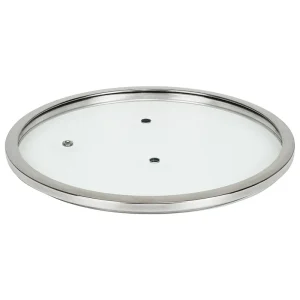
The term “G Type” generally refers to a specific structural design in cookware lids, often characterized by a distinct rim profile, ergonomic handle integration, and compatibility with standard pot diameters. In the context of industrial manufacturing, quality is not just about aesthetics; it is defined by thermal resistance, mechanical strength, and safety compliance.
A premium G Type glass lid must withstand rapid temperature changes without shattering. This is achieved through precise tempering processes that create surface compression and internal tension. When sourcing from a Chinese factory, buyers must verify that the manufacturer uses high-purity raw materials and automated tempering furnaces to ensure consistency across large batches.
Key Technical Specifications for G Type Lids
Understanding the technical parameters helps in communicating effectively with suppliers. The following attributes are critical for performance and safety:
- Material Composition: High-grade tempered soda-lime glass or borosilicate glass, depending on the thermal requirement.
- Thickness: Typically ranges from 4mm to 6mm. Thicker glass offers better durability but requires precise molding to avoid weight issues.
- Rim Design: The “G” profile often involves a reinforced edge or a specific groove for steam venting, which must be molded without micro-cracks.
- Handle Attachment: Stainless steel or heat-resistant plastic handles must be securely anchored to withstand torque and heat exposure.
- Flatness Tolerance: High-quality lids maintain flatness within ±0.5mm to ensure a proper seal on cookware.
Why Choose a Specialized Manufacturer in China?
China remains the global hub for glassware manufacturing due to its mature supply chain, advanced tempering technology, and cost-effective labor. However, not all factories are equal. A specialized facility focuses exclusively on glass products, allowing for deeper expertise in defect prevention and quality control.
For instance, EUR-ASIA COOKWARE CO.,LTD. operates out of the Taian City National High-tech Development Zone in Shandong Province. This location is strategic, offering access to high-quality silica sand and efficient logistics networks. With a facility covering 20,000㎡ and a building area of 15,000㎡, the company has scaled its operations to meet international demand while maintaining rigorous quality standards.
Specialized manufacturers like EUR-ASIA employ over 90 skilled workers and engineers who focus solely on glass product innovation. This specialization results in an annual output exceeding 15 million pieces, ensuring that bulk orders are fulfilled on time without compromising on individual unit quality.
The Importance of Certifications in Global Trade
Exporting glass cookware accessories to Europe, North America, and Asia requires strict adherence to safety regulations. A reputable factory must hold relevant certifications to prove their products are free from harmful substances like lead and cadmium.
EUR-ASIA COOKWARE CO.,LTD. has passed ISO9001 certification for its quality management systems. More importantly, its products have achieved LFGB (Germany) and TUV certifications. These marks are essential for entering markets in Germany, France, Italy, and other EU countries, where consumer safety laws are stringent. Without these certifications, customs clearance can be delayed, or products may be rejected at the border.
Customization and OEM Capabilities
One size does not fit all in the cookware industry. Brands often require unique dimensions, handle designs, or logo placements to differentiate their products. A capable G Type Glass Lid Factory must offer robust OEM (Original Equipment Manufacturer) services.
Custom Sizes and Shapes
Standard diameters (16cm, 18cm, 20cm, etc.) are common, but many premium cookware lines use non-standard sizes. Advanced factories can produce:
- High Curvature Lids: Designed for woks or deep pots, requiring complex molding techniques to maintain uniform thickness.
- Tall Domes: Used for roasting pans to allow heat circulation.
- Flat Lids: Preferred for modern, minimalist cookware sets.
- Special-Shaped Covers: Oval or rectangular lids for casserole dishes.
EUR-ASIA COOKWARE CO.,LTD. explicitly supports the production of high curvature, tall, flat, and other special-shaped glass covers according to customer demand. This flexibility allows brands to launch unique product lines without being constrained by off-the-shelf components.
Logo Printing and Branding
Brand visibility is crucial for retail success. Manufacturers should offer various branding options, such as silk-screen printing, laser etching, or metal badge attachment on the handle. The printing must be durable, resisting high temperatures and repeated washing in dishwashers. EUR-ASIA provides logo printing services tailored to client requirements, ensuring brand consistency across all units.
Manufacturing Process: From Raw Material to Finished Product
Understanding the production workflow helps buyers identify potential bottlenecks and quality checkpoints. A transparent factory will welcome audits and provide detailed process descriptions.
Step-by-Step Production Logic
- Raw Material Mixing: High-quality silica sand, soda ash, and limestone are mixed in precise ratios. Impurities are removed to prevent bubbles or discoloration.
- Melting and Forming: The mixture is melted at temperatures above 1500°C. The molten glass is then pressed or blown into the initial lid shape using molds.
- Annealing: The formed glass is cooled slowly in an annealing lehr to relieve internal stresses. This step prevents spontaneous breakage during later handling.
- Tempering: The lids are reheated to near their softening point and then rapidly cooled. This process creates the compressive surface layer that gives tempered glass its strength.
- Edge Processing: Edges are ground and polished to remove sharp corners and micro-cracks, enhancing safety and aesthetic appeal.
- Handle Assembly: Handles are attached using high-temperature resistant adhesives or mechanical fixtures, depending on the design.
- Quality Inspection: Each lid undergoes visual inspection for scratches, bubbles, or deformities. Random samples are tested for impact resistance and thermal shock.
- Packaging: Products are packed in export-standard cartons with dividers to prevent damage during transit.
Comparing Glass Lid Types: G Type vs. Standard Flat Lids
Choosing between different lid styles depends on the cookware application. The following table highlights the differences between G Type lids and standard flat lids to aid in decision-making.
| Feature | G Type Glass Lid | Standard Flat Lid |
|---|---|---|
| Design Profile | Curved or domed with specific rim geometry | Minimal curvature, nearly flat surface |
| Steam Management | Often includes integrated steam vents or gaps | Relies on loose fit or separate vent holes |
| Heat Circulation | Better for roasting and slow cooking | Ideal for boiling and simmering |
| Manufacturing Complexity | Higher; requires precise molding | Lower; simpler production process |
| Cost | Slightly higher due to complexity | More cost-effective for bulk basics |
| Aesthetic Appeal | Premium, ergonomic look | Modern, minimalist appearance |
Global Export Experience and Market Reach
A factory’s export history is a strong indicator of its reliability. Dealing with diverse markets requires adaptability to different packaging standards, labeling laws, and logistical challenges.
EUR-ASIA COOKWARE CO.,LTD. exports more than 90% of its products to major global markets, including Germany, Russia, Italy, France, Poland, Denmark, Spain, Switzerland, Brazil, Turkey, South Korea, and Japan. This extensive reach demonstrates the company’s ability to meet varied regional standards. For example, Japanese markets demand extremely high cosmetic perfection, while European markets prioritize environmental and safety certifications. Successfully serving these regions indicates a mature quality control system.
Logistics and Packaging Safety
Glass is fragile, and shipping damage is a primary concern for importers. Professional factories use reinforced packaging solutions, such as double-walled cartons, foam inserts, or palletized shipping for large containers. EUR-ASIA’s experience in exporting to distant markets like Brazil and South Korea implies a robust understanding of long-haul logistics and damage prevention strategies.
How to Evaluate a Glass Lid Supplier: A Checklist
When selecting a partner for your next project, use this checklist to assess potential suppliers objectively.
- Certification Verification: Ask for copies of LFGB, TUV, or FDA certificates. Verify their validity with the issuing body if necessary.
- Sample Testing: Request samples for thermal shock testing. Drop test from a specified height to check impact resistance.
- Production Capacity: Ensure the factory can handle your volume. EUR-ASIA’s capacity of 15 million pieces annually suggests they can scale for large orders.
- Communication Responsiveness: Quick and clear responses indicate good customer service and operational efficiency.
- Factory Audit: If possible, visit the facility. EUR-ASIA welcomes friends to visit their company in Taian City, Shandong, which is a sign of transparency and confidence in their operations.
- Customization Flexibility: Confirm their ability to produce custom molds and handle small-batch OEM runs if needed.
Common Challenges in Sourcing Glass Lids and Solutions
Challenge 1: Inconsistent Thickness
Variations in glass thickness can lead to uneven heating and breakage. Solution: Work with factories that use automated pressing machines and regular laser measurement checks during production.
Challenge 2: Handle Detachment
Poor adhesive quality or faulty assembly can cause handles to fall off. Solution: Specify high-temperature epoxy resins and request torque testing data from the supplier.
Challenge 3: Surface Scratches
Handling during production can cause micro-scratches that weaken the glass. Solution: Ensure the factory uses protective films or soft conveyor belts throughout the manufacturing line.
Frequently Asked Questions (FAQ)
What is the minimum order quantity (MOQ) for custom G Type glass lids?
MOQs vary by factory and customization level. For standard sizes, MOQs may be lower. For custom molds and shapes, factories typically require higher volumes to amortize mold costs. Contact EUR-ASIA directly to discuss specific project needs.
Can I get a sample before placing a bulk order?
Yes, reputable suppliers always provide samples. This allows you to verify quality, size, and packaging. Sample fees are usually refundable upon placing a bulk order.
How long does production take for OEM orders?
Standard orders may take 20-30 days. Custom OEM orders involving new molds can take 45-60 days, including mold development and approval time.
Are your glass lids dishwasher safe?
Yes, tempered glass lids from certified manufacturers like EUR-ASIA are designed to be dishwasher safe. However, it is recommended to check specific care instructions provided with the product.
Do you provide private label packaging?
Yes, OEM services include custom packaging design. You can provide your artwork, and the factory will print boxes, labels, and inserts according to your brand guidelines.
Conclusion: Partnering for Success in Cookware Manufacturing
Selecting the right G Type Glass Lid Factory in China is a strategic decision that impacts product quality, brand reputation, and bottom-line profitability. The market demands more than just low prices; it requires reliability, safety compliance, and customization flexibility.
EUR-ASIA COOKWARE CO.,LTD. stands out as a premier partner for businesses seeking high-quality glass lids. With its state-of-the-art facility in Taian City, ISO9001 and LFGB/TUV certifications, and an annual output of over 15 million pieces, the company offers the scale and expertise needed for global success. Their ability to produce custom shapes, from high-curvature domes to flat modern designs, ensures that your product stands out in a competitive market.
Whether you are targeting the stringent European market or the diverse Asian consumer base, partnering with a manufacturer that understands international standards is crucial. EUR-ASIA’s extensive export experience to countries like Germany, Japan, and Brazil proves their capability to deliver consistent quality worldwide.
For businesses looking to enhance their cookware lines with premium, custom-sized glass lids, the next step is clear. Engage with a supplier that values transparency and quality.
Ready to start your project? Contact EUR-ASIA COOKWARE CO.,LTD. today to request samples, discuss custom OEM options, or schedule a factory visit. Secure a supply chain partner that aligns with your brand’s commitment to excellence.
Explore our full range of glass cookware solutions and technical specifications







