
- Chinese
- French
- German
- Portuguese
- Spanish
- Russian
- Japanese
- Korean
- Arabic
- Irish
- Greek
- Turkish
- Italian
- Danish
- Romanian
- Indonesian
- Czech
- Afrikaans
- Swedish
- Polish
- Basque
- Catalan
- Esperanto
- Hindi
- Lao
- Albanian
- Amharic
- Armenian
- Azerbaijani
- Belarusian
- Bengali
- Bosnian
- Bulgarian
- Cebuano
- Chichewa
- Corsican
- Croatian
- Dutch
- Estonian
- Filipino
- Finnish
- Frisian
- Galician
- Georgian
- Gujarati
- Haitian
- Hausa
- Hawaiian
- Hebrew
- Hmong
- Hungarian
- Icelandic
- Igbo
- Javanese
- Kannada
- Kazakh
- Khmer
- Kurdish
- Kyrgyz
- Latin
- Latvian
- Lithuanian
- Luxembou..
- Macedonian
- Malagasy
- Malay
- Malayalam
- Maltese
- Maori
- Marathi
- Mongolian
- Burmese
- Nepali
- Norwegian
- Pashto
- Persian
- Punjabi
- Serbian
- Sesotho
- Sinhala
- Slovak
- Slovenian
- Somali
- Samoan
- Scots Gaelic
- Shona
- Sindhi
- Sundanese
- Swahili
- Tajik
- Tamil
- Telugu
- Thai
- Ukrainian
- Urdu
- Uzbek
- Vietnamese
- Welsh
- Xhosa
- Yiddish
- Yoruba
- Zulu
- Kinyarwanda
- Tatar
- Oriya
- Turkmen
- Uyghur


Silicone Glass Lid Factory in China: OEM Production and Wholesale Supply
2026-10-16
Content
- Why Choose a Specialized Silicone Glass Lid Manufacturer?
- Technical Specifications and Material Standards
- EUR-ASIA COOKWARE: Manufacturing Capability and Scale
- OEM Production Process: From Concept to Wholesale Supply
- Selection Guide: How to Choose the Right Supplier
- Frequently Asked Questions (FAQ)
- Industry Trends in Cookware Accessories
- Conclusion: Partnering for Long-Term Success
Sourcing a reliable silicone glass lid factory in China requires balancing manufacturing precision, material safety certifications, and scalable OEM capabilities. For B2B buyers, the ideal partner offers direct wholesale supply of tempered glass lids with integrated silicone rims, ensuring durability and leak resistance. EUR-ASIA COOKWARE CO.,LTD. specializes in this niche, delivering over 15 million units annually from its Shandong production base. With ISO9001, LFGB, and TUV certifications, the company provides customized OEM solutions for global markets, including Europe and North America, ensuring compliance with strict international safety standards.
Why Choose a Specialized Silicone Glass Lid Manufacturer?
The kitchenware industry has shifted towards hybrid designs that combine the aesthetic appeal of glass with the functional benefits of silicone. A standard glass lid often lacks a perfect seal, leading to heat loss and spillage during cooking. By integrating a food-grade silicone rim, manufacturers create a lid that fits snugly against various pot diameters, enhancing energy efficiency and cooking performance.
Partnering with a specialized factory rather than a general trader ensures direct control over quality assurance. In the context of a silicone glass lid factory in China, specialization means dedicated molding lines for silicone and precise tempering facilities for glass. This vertical integration reduces lead times and minimizes defects such as uneven silicone bonding or glass impurities.
For importers and brands, working directly with a manufacturer like EUR-ASIA COOKWARE CO.,LTD. allows for greater flexibility in product development. Whether you need high-curvature domes for deep stockpots or flat lids for frying pans, a specialized facility can adjust molds and production parameters to meet exact specifications without the markup associated with middlemen.
Key Advantages of OEM Production
- Custom Branding: Direct laser printing or screen printing of logos on both glass and silicone components.
- Material Customization: Selection of specific glass thicknesses (e.g., 4mm, 5mm) and silicone hardness levels (Shore A).
- Cost Efficiency: Wholesale pricing structures that scale with order volume, reducing unit costs significantly.
- Quality Control: In-house testing for thermal shock resistance and silicone durability.
Technical Specifications and Material Standards
Understanding the technical composition of silicone glass lids is crucial for B2B buyers. The product consists of two primary materials: tempered soda-lime glass and food-grade silicone. Each component must meet rigorous international standards to ensure consumer safety and product longevity.
Tempered Glass Core: The glass used in these lids is thermally tempered to withstand sudden temperature changes. This process increases the mechanical strength of the glass by up to five times compared to untreated glass. In the event of breakage, tempered glass shatters into small, granular chunks rather than sharp shards, reducing injury risk. High-quality factories monitor the tempering furnace temperature closely to ensure consistent stress distribution across the lid surface.
Silicone Rim Integration: The silicone ring serves as a gasket and handle grip. It must be made from 100% food-grade silicone, free from BPA, BPS, and other harmful plasticizers. The bond between the glass and silicone is critical; poor adhesion can lead to the ring detaching after repeated washing or heating. Advanced manufacturing techniques involve co-molding or high-temperature vulcanization to create a seamless, durable union.
| Component | Material Specification | Key Performance Metric | Certification Standard |
|---|---|---|---|
| Glass Body | Tempered Soda-Lime Glass | Thermal Shock Resistance: ≥120°C difference | ISO 9001, TUV |
| Silicone Rim | Food-Grade Silicone (LSR) | Heat Resistance: -40°C to 230°C | LFGB, FDA, BPA-Free |
| Steam Vent | Stainless Steel or Silicone | Corrosion Resistance, Easy Clean | Food Contact Safe |
| Handle/Knob | Bakelite or Silicone-Coated | Heat Insulation, Ergonomic Grip | Heat Resistant up to 220°C |
EUR-ASIA COOKWARE: Manufacturing Capability and Scale
Located in the Taian City National High-tech Development Zone in Shandong Province, EUR-ASIA COOKWARE CO.,LTD. represents a robust example of modern Chinese manufacturing infrastructure. The facility covers an area of 20,000 square meters, with 15,000 square meters dedicated to production and warehousing. This scale allows for significant output capacity, with an annual production volume exceeding 15 million pieces of tempered glass lids and related glass products.
The company employs more than 90 skilled workers and technicians, focusing on both low, medium, and high-level household glass products. This diverse production capability enables EUR-ASIA to cater to different market segments, from budget-friendly wholesale supplies to premium OEM orders for established cookware brands.
A key strength of EUR-ASIA is its export orientation. More than 90 percent of its products are exported to demanding markets such as Germany, Russia, Italy, France, Poland, Denmark, Spain, Switzerland, Brazil, Turkey, South Korea, and Japan. Success in these regions requires adherence to strict regulatory frameworks, particularly in Europe where LFGB (Germany) and general EU food contact regulations are stringent. The company’s possession of ISO9001, LFGB, and TUV certifications validates its commitment to quality and safety.
Customization and OEM Flexibility
Unlike standardized wholesale suppliers, EUR-ASIA offers extensive customization options tailored to client needs. The factory can produce various shapes, including:
- High Curvature Lids: Ideal for woks and deep stockpots, providing ample internal space for stirring.
- Tall Dome Lids: Designed for roasting pans and large casseroles.
- Flat Lids: Suitable for frying pans and sauté pans, allowing for stackable storage.
- Special-Shaped Covers: Custom molds for unique pot geometries or proprietary brand designs.
Logo placement is another critical aspect of OEM production. EUR-ASIA can print logos directly onto the glass surface or emboss them into the silicone rim, ensuring brand visibility. This level of customization supports brand identity without compromising the structural integrity of the lid.
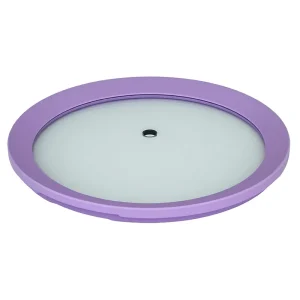
OEM Production Process: From Concept to Wholesale Supply
For businesses looking to launch a private label line of cookware, understanding the OEM workflow is essential. A professional silicone glass lid factory in China follows a structured process to ensure the final product matches the buyer’s expectations.
Step 1: Requirement Analysis and Design
The process begins with detailed specifications. Buyers provide dimensions, glass thickness preferences, silicone color codes (Pantone), and logo artwork. Engineers at EUR-ASIA review these requirements to assess manufacturability. If necessary, they suggest design modifications to improve durability or reduce production costs.
Step 2: Mold Development and Sampling
Once the design is finalized, custom molds are created for the silicone rings and any non-standard glass shapes. Prototypes are produced for buyer approval. This stage is critical for verifying the fit of the silicone rim on the glass edge and testing the steam vent functionality.
Step 3: Mass Production and Quality Control
Upon sample approval, mass production commences. The glass undergoes cutting, grinding, polishing, and tempering. Simultaneously, silicone rings are molded and bonded. Throughout this phase, random sampling is conducted to check for defects such as bubbles in the glass, incomplete silicone curing, or misaligned logos.
Step 4: Packaging and Logistics
Finished lids are packaged according to buyer instructions, often using eco-friendly materials to align with European market trends. EUR-ASIA coordinates logistics to ensure timely delivery to ports in destination countries, leveraging its experience in exporting to over 20 countries.
Selection Guide: How to Choose the Right Supplier
Selecting the right manufacturer involves evaluating several key factors beyond price. Here is a checklist for B2B buyers sourcing from China.
| Evaluation Criteria | What to Look For | Why It Matters |
|---|---|---|
| Certifications | LFGB, TUV, ISO9001, FDA | Ensures legal compliance in target markets and consumer safety. |
| Production Capacity | Annual output >10 million units | Indicates ability to handle large orders and meet tight deadlines. |
| Export Experience | Track record in EU/US markets | Proven understanding of international quality standards and packaging requirements. |
| R&D Capability | In-house mold making and design team | Allows for rapid prototyping and customization of unique designs. |
| Quality Assurance | In-house testing labs (thermal shock, drop test) | Reduces the risk of receiving defective goods and subsequent returns. |
Common Mistakes in Sourcing Glass Lids
Many buyers make the error of focusing solely on the lowest unit price. This often leads to compromised quality, such as thinner glass that breaks easily or silicone that degrades after a few months. Another common mistake is neglecting to verify the supplier’s export credentials. Working with a factory like EUR-ASIA, which has a established export history to countries like Germany and Japan, mitigates this risk.
Additionally, ignoring the importance of packaging can result in high breakage rates during transit. Professional manufacturers use reinforced cartons and dividers specifically designed for glass products. Always request details on packaging testing, such as drop tests, before finalizing the order.
Frequently Asked Questions (FAQ)
What is the minimum order quantity (MOQ) for OEM silicone glass lids?
MOQs vary depending on the level of customization. For standard sizes with custom logos, factories typically require an MOQ of 1,000 to 3,000 units per size. For completely custom shapes requiring new molds, the MOQ may be higher, often around 5,000 units, to amortize mold costs. EUR-ASIA offers flexible terms for wholesale buyers, so it is advisable to discuss specific needs directly.
Are silicone glass lids dishwasher safe?
Yes, high-quality tempered glass and food-grade silicone are both dishwasher safe. However, manufacturers recommend placing the lid on the top rack to avoid excessive vibration or impact from other heavy items. The silicone rim helps protect the glass edges from chipping during washing cycles.
Can I get samples before placing a bulk order?
Reputable factories always provide samples for quality verification. EUR-ASIA welcomes potential partners to request samples to evaluate the glass clarity, silicone texture, and overall finish. Sample costs are usually refundable upon placing a bulk order.
How long does production take for a wholesale order?
Standard production lead time is typically 20 to 30 days after deposit and sample confirmation. For peak seasons or highly customized orders, lead times may extend to 45 days. Efficient communication and timely approval of proofs can help expedite the process.
What certifications are required for exporting to Europe?
For the European market, LFGB (Germany) and DGCCRF (France) are highly regarded standards for food contact materials. Additionally, CE marking may be required depending on the specific product classification. EUR-ASIA’s products have passed LFGB and TUV certifications, making them suitable for export to Germany, Italy, France, and other EU nations.
Industry Trends in Cookware Accessories
The global cookware market is increasingly driven by health consciousness and aesthetic preferences. Consumers are moving away from plastic lids due to concerns about microplastics and chemical leaching. Silicone glass lids offer a safer, more durable alternative that aligns with these trends.
Sustainability is another major driver. Manufacturers are adopting eco-friendly packaging and optimizing production processes to reduce waste. EUR-ASIA’s location in a National High-tech Development Zone suggests access to advanced, cleaner production technologies. Furthermore, the durability of tempered glass means longer product lifecycles, reducing environmental impact compared to disposable or low-quality alternatives.
Design-wise, there is a growing demand for minimalist, sleek profiles. Flat and low-profile dome lids are gaining popularity for their modern look and ease of storage. Factories that can adapt quickly to these design trends, offering both functional and aesthetically pleasing products, hold a competitive advantage.
Conclusion: Partnering for Long-Term Success
Sourcing from a silicone glass lid factory in China offers significant advantages in terms of cost, customization, and scalability. However, the key to success lies in choosing a partner with proven expertise, robust certifications, and a track record of international exports. EUR-ASIA COOKWARE CO.,LTD. stands out as a reliable manufacturer, combining large-scale production capacity with the flexibility to meet diverse OEM requirements.
With annual outputs exceeding 15 million pieces and certifications including ISO9001, LFGB, and TUV, EUR-ASIA is well-equipped to serve brands targeting premium markets in Europe, Asia, and the Americas. Their ability to produce specialized shapes and apply custom branding makes them an ideal partner for businesses looking to differentiate their cookware lines.
For B2B buyers, the next step is to define your specific product requirements and reach out for a consultation. Whether you need standard wholesale supplies or bespoke OEM solutions, verifying the manufacturer’s capabilities through samples and audits is essential.
Ready to source high-quality silicone glass lids? Contact EUR-ASIA COOKWARE CO.,LTD. today to discuss your OEM needs, request samples, and secure a competitive wholesale supply chain. Visit our product catalog for more technical details and customization options.







