
- English
- Chinese
- French
- German
- Portuguese
- Spanish
- Russian
- Japanese
- Korean
- Arabic
- Irish
- Greek
- Turkish
- Italian
- Danish
- Romanian
- Indonesian
- Czech
- Afrikaans
- Swedish
- Polish
- Basque
- Catalan
- Esperanto
- Hindi
- Lao
- Albanian
- Amharic
- Armenian
- Azerbaijani
- Belarusian
- Bengali
- Bosnian
- Bulgarian
- Cebuano
- Chichewa
- Corsican
- Croatian
- Dutch
- Estonian
- Filipino
- Finnish
- Frisian
- Galician
- Georgian
- Gujarati
- Haitian
- Hausa
- Hawaiian
- Hebrew
- Hmong
- Hungarian
- Icelandic
- Igbo
- Javanese
- Kannada
- Kazakh
- Khmer
- Kurdish
- Kyrgyz
- Latin
- Latvian
- Lithuanian
- Luxembou..
- Macedonian
- Malagasy
- Malay
- Malayalam
- Maltese
- Maori
- Marathi
- Mongolian
- Burmese
- Nepali
- Norwegian
- Pashto
- Persian
- Punjabi
- Serbian
- Sesotho
- Sinhala
- Slovak
- Slovenian
- Somali
- Scots Gaelic
- Shona
- Sindhi
- Sundanese
- Swahili
- Tajik
- Tamil
- Telugu
- Thai
- Ukrainian
- Urdu
- Uzbek
- Vietnamese
- Welsh
- Xhosa
- Yiddish
- Yoruba
- Zulu
- Kinyarwanda
- Tatar
- Oriya
- Turkmen
- Uyghur


24cm G Type Glass Lid: OEM Manufacturer in China
2026-10-16
Choosing the right 24cm G type glass lid is important for cookware manufacturers, kitchenware brands, wholesalers, and distributors looking for reliable product compatibility and consistent quality. A well-designed glass lid allows users to monitor food during cooking while providing a practical covering solution for compatible pots and pans.
For businesses sourcing cookware components, working with an experienced OEM manufacturer in China can help simplify product customization, specification management, and bulk purchasing.
What Is a 24cm G Type Glass Lid?
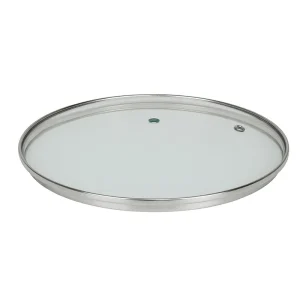
A 24cm G type glass lid is a cookware cover designed around a nominal 24 cm diameter and a specific G-type profile. Its dimensions and edge structure should match the corresponding cookware design to ensure proper fit and practical use.
When selecting this type of lid, buyers should consider more than diameter alone. Rim geometry, glass thickness, handle attachment, and compatibility with the intended cookware all need to be evaluated before mass production.
For OEM projects, confirming a technical drawing or physical sample is a useful step before approving a production specification.
Key Factors When Choosing a 24cm G Type Glass Lid
1. Glass Material and Thickness
Material selection affects the suitability of a glass lid for its intended application. Buyers should confirm the glass specification, thickness, and applicable quality requirements with the manufacturer before placing an order.
The selected material and product design should be appropriate for the intended cookware and its expected conditions of use.
2. G-Type Profile and Dimensional Accuracy
The G-type profile is an important specification when matching a lid to a particular cookware design. Even when two lids have the same nominal diameter, differences in rim shape or dimensions may affect compatibility.
Before ordering a 24cm G type glass lid, buyers should confirm the outer diameter, edge profile, tolerances, and any other dimensions required by their cookware drawings.
3. Handle and Rim Options
Handle design and rim configuration can influence product appearance, assembly requirements, and compatibility. Depending on the actual product range, OEM projects may involve different handle styles, rim finishes, or other customized details.
Buyers should confirm which options are available for the selected model rather than assuming that every configuration can be supplied.
Why Choose an OEM Manufacturer in China?
For cookware brands and distributors, an OEM manufacturer can provide a practical route to developing products around specific design and purchasing requirements.
When evaluating a potential supplier, consider the following factors:
- Specification confirmation: The supplier should be able to review dimensions, drawings, samples, and product requirements.
- Customization support: Confirm whether the manufacturer can accommodate the required profile, handle configuration, packaging, and other project details.
- Quality control: Ask about inspection procedures, dimensional checks, and product acceptance criteria.
- Bulk order planning: Discuss minimum order quantities, production lead times, packaging requirements, and delivery arrangements.
- Communication and documentation: Clear technical documentation helps reduce misunderstandings during sampling and production.
These factors can help buyers assess whether a supplier is suitable for long-term cookware sourcing.
How to Order a 24cm G Type Glass Lid for OEM Projects
A structured sourcing process can make product development more efficient.
Step 1: Define the product requirements. Specify the 24 cm nominal diameter, G-type profile, intended application, and required material characteristics.
Step 2: Confirm compatibility. Provide a technical drawing, reference sample, or other relevant dimensional information so the supplier can assess the required fit.
Step 3: Review customization options. Confirm available handle designs, rim treatments, packaging, and branding requirements where applicable.
Step 4: Approve the sample and specifications. Review the sample against the agreed requirements before authorizing mass production.
Step 5: Confirm the commercial terms. Discuss order quantity, unit pricing, lead time, inspection requirements, and shipping arrangements.
Following these steps helps establish clear expectations before a bulk order is placed.
Who Can Benefit from Custom Glass Lid Supply?
A 24cm G type glass lid may be relevant to several types of B2B buyers, depending on the product’s actual design and compatibility:
- Cookware manufacturers sourcing matching lid components.
- Kitchenware brands developing OEM product lines.
- Importers and wholesalers purchasing cookware accessories in bulk.
- Distributors seeking consistent specifications for their product portfolios.
The most suitable solution depends on the intended cookware, target market, technical requirements, and order volume.
Find the Right 24cm G Type Glass Lid Supplier
Selecting a suitable 24cm G type glass lid requires careful attention to dimensions, profile compatibility, material specifications, and quality requirements. For OEM buyers, confirming these details with a manufacturer before production can help reduce fit issues and improve purchasing efficiency.
If you are sourcing glass lids for a cookware project, prepare your required dimensions, drawings or samples, customization preferences, and estimated order quantity before contacting a supplier. These details will help establish whether the product can meet your requirements and support a more accurate quotation.
Contact our team to discuss your glass lid specifications, OEM requirements, and bulk supply needs.







