
- English
- Chinese
- French
- German
- Portuguese
- Spanish
- Russian
- Japanese
- Korean
- Arabic
- Irish
- Greek
- Turkish
- Italian
- Danish
- Romanian
- Indonesian
- Czech
- Afrikaans
- Swedish
- Polish
- Basque
- Catalan
- Esperanto
- Hindi
- Lao
- Albanian
- Amharic
- Armenian
- Azerbaijani
- Belarusian
- Bengali
- Bosnian
- Bulgarian
- Cebuano
- Chichewa
- Corsican
- Croatian
- Dutch
- Estonian
- Filipino
- Finnish
- Frisian
- Galician
- Georgian
- Gujarati
- Haitian
- Hausa
- Hawaiian
- Hebrew
- Hmong
- Hungarian
- Icelandic
- Igbo
- Javanese
- Kannada
- Kazakh
- Khmer
- Kurdish
- Kyrgyz
- Latin
- Latvian
- Lithuanian
- Luxembou..
- Macedonian
- Malagasy
- Malay
- Malayalam
- Maltese
- Maori
- Marathi
- Mongolian
- Burmese
- Nepali
- Norwegian
- Pashto
- Persian
- Punjabi
- Serbian
- Sesotho
- Sinhala
- Slovak
- Slovenian
- Somali
- Scots Gaelic
- Shona
- Sindhi
- Sundanese
- Swahili
- Tajik
- Tamil
- Telugu
- Thai
- Ukrainian
- Urdu
- Uzbek
- Vietnamese
- Welsh
- Xhosa
- Yiddish
- Yoruba
- Zulu
- Kinyarwanda
- Tatar
- Oriya
- Turkmen
- Uyghur


Buy Tempered Glass Lid Wholesale: Sizes, Specifications and OEM Options
2026-10-16
Content
- Why Choose Tempered Glass Lids for Cookware Lines?
- Key Specifications When Buying Tempered Glass Lids Wholesale
- OEM and ODM Capabilities: Customizing Your Brand
- Manufacturing Excellence: The EUR-ASIA Advantage
- Quality Control and Certification Standards
- Common Challenges in Sourcing Glass Lids
- FAQ: Frequently Asked Questions About Wholesale Tempered Glass Lids
- Strategic Sourcing Tips for 2026
- Conclusion: Securing Quality and Value in Glass Lid Procurement
When you buy tempered glass lid wholesale, securing the right balance of durability, thermal resistance, and aesthetic precision is critical for retail success. Sourcing directly from specialized manufacturers allows businesses to customize sizes, specifications, and OEM branding while ensuring compliance with international safety standards like LFGB and TUV. This guide details essential procurement strategies, technical specifications, and manufacturing capabilities to help importers and distributors make informed decisions in 2026.
Why Choose Tempered Glass Lids for Cookware Lines?
Tempered glass lids have become a staple in modern kitchenware due to their unique combination of functionality and visual appeal. Unlike standard soda-lime glass, tempered glass undergoes a rigorous thermal or chemical treatment process that increases its strength by four to five times. For wholesalers and private label brands, understanding the material advantages is the first step in building a competitive product line.
Thermal Shock Resistance and Safety
The primary advantage of tempered glass is its ability to withstand rapid temperature changes without shattering. In professional kitchen environments and home cooking scenarios, lids are frequently exposed to high heat from stovetops and sudden cooling when removed. High-quality tempered glass can typically endure temperature differentials of up to 200°C (392°F). This resilience reduces breakage rates during logistics and consumer use, directly impacting return rates and brand reputation.
Furthermore, if tempered glass does break, it crumbles into small, granular chunks rather than sharp, jagged shards. This safety feature is a significant selling point for families and aligns with strict consumer protection regulations in markets such as the European Union and North America.
Visual Monitoring and Cooking Efficiency
Transparency is not just an aesthetic choice; it is a functional requirement for modern cooking techniques. Chefs and home cooks prefer glass lids because they allow for visual monitoring of food without lifting the lid. This prevents heat and moisture loss, leading to more energy-efficient cooking and better flavor retention. For retailers, highlighting this energy-saving benefit can be a powerful marketing angle.
Key Specifications When Buying Tempered Glass Lids Wholesale
Procuring glass lids requires a detailed understanding of technical parameters. Vague specifications can lead to mismatched fittings, poor sealing, or safety hazards. Below are the critical dimensions and material properties that define quality in wholesale transactions.
Standard and Custom Sizes
Glass lids are categorized by diameter, which must correspond precisely to the cookware pot or pan. While standard sizes dominate the market, custom dimensions are increasingly requested for specialized cookware sets.
- Small Diameters (14cm – 18cm): Typically used for saucepans, milk pots, and small frying pans. These require precise curvature to fit narrow rims.
- Medium Diameters (20cm – 24cm): The most common range for family-sized stockpots and sauté pans. This segment represents the highest volume in wholesale orders.
- Large Diameters (26cm – 32cm+): Used for large roasting pans, woks, and industrial catering equipment. Structural integrity is crucial here to prevent warping under weight.
It is essential to verify whether the diameter measurement refers to the outer edge of the glass or the inner fitting ring. Miscommunication on this detail is a common source of manufacturing errors.
Thickness and Durability Standards
The thickness of the glass directly correlates with its durability and heat retention capabilities. Most high-quality wholesale lids range between 3mm and 5mm.
| Thickness | Application | Durability Profile |
|---|---|---|
| 3mm – 4mm | Lightweight cookware, budget lines | Good for standard home use; lighter weight reduces shipping costs. |
| 4mm – 5mm | Premium cookware, heavy-duty use | Superior thermal mass; feels more substantial and premium in hand. |
| >5mm | Specialized industrial or luxury segments | Maximum impact resistance; often used in high-curvature designs. |
Thicker glass offers better insulation but adds weight. Wholesalers must balance perceived quality with shipping logistics, as heavier items increase freight expenses.
Edge Polishing and Finish
The edge finish of a glass lid is a critical safety and quality indicator. Rough edges can cause cuts and indicate poor manufacturing standards. Premium lids feature finely polished or ground edges that are smooth to the touch. This not only enhances user safety but also improves the seal between the lid and the pot, preventing steam escape.
OEM and ODM Capabilities: Customizing Your Brand
In the competitive landscape of 2026, generic products rarely command high margins. Original Equipment Manufacturer (OEM) and Original Design Manufacturer (ODM) services allow brands to differentiate their offerings through customization. Working with a manufacturer that supports deep customization is vital for brand identity.
Logo Printing and Branding Techniques
Branding on glass lids can be achieved through several methods, each with distinct aesthetic and durability characteristics:
- Silk-Screen Printing: Ideal for simple, single-color logos. It is cost-effective for large volumes but may wear over time with aggressive scrubbing.
- Heat Transfer Printing: Allows for multi-colored, complex designs and gradients. This method bonds the ink to the glass surface, offering better durability than silk-screening.
- Laser Etching: Creates a permanent, frosted mark on the glass. While more expensive, it is indestructible and conveys a high-end, minimalist aesthetic.
When discussing OEM options, clarify the placement of the logo. Common positions include the center of the lid, the rim, or integrated into the handle design.
Handle Design and Material Integration
The handle is the primary interface between the user and the product. It must be ergonomic, heat-resistant, and securely attached. Manufacturers offer various handle materials:
- Stainless Steel: Durable, modern, and dishwasher safe. Often features a hollow design to reduce heat transfer.
- Bakelite/Phenolic Resin: Excellent heat resistance and available in various colors. Provides a secure grip even when wet.
- Silicone Coated: Offers superior grip and comfort, appealing to younger demographics and modern kitchen aesthetics.
Customizing the handle shape and material allows brands to target specific consumer segments, from professional chefs preferring steel to home cooks favoring ergonomic silicone.
Manufacturing Excellence: The EUR-ASIA Advantage
Selecting the right manufacturing partner is as important as the product specifications themselves. EUR-ASIA COOKWARE CO.,LTD exemplifies the level of expertise and capacity required for successful wholesale partnerships. Located in the Taian City Shandong Province China National High-tech Development Zone, the company operates a substantial production base covering 20,000㎡ with a building area of 15,000㎡.
With over 90 employees and an annual output exceeding 15 million pieces of tempered glass lids and related products, EUR-ASIA demonstrates the scalability needed to meet large international orders. This volume capacity ensures that lead times remain consistent, even during peak seasons.
Global Export Experience and Compliance
More than 90 percent of EUR-ASIA’s products are exported to demanding markets including Germany, Russia, Italy, France, Poland, Denmark, Spain, Switzerland, Brazil, Turkey, South Korea, and Japan. This extensive export history indicates a deep familiarity with diverse regulatory requirements and quality expectations.
Compliance is non-negotiable in the kitchenware industry. EUR-ASIA has passed ISO9001 certification, ensuring standardized quality management processes. Furthermore, their products have achieved LFGB and TUV certifications. LFGB compliance is particularly crucial for accessing the German and broader European markets, as it verifies that materials do not release harmful substances into food. TUV certification adds another layer of trust regarding product safety and manufacturing integrity.
Customization Flexibility
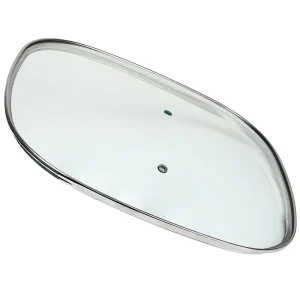
Unlike mass-production factories that rigidly adhere to standard molds, EUR-ASIA specializes in producing high-curvature, tall, flat, and other special-shaped glass covers according to customer demand. This flexibility is invaluable for brands launching unique cookware lines that deviate from traditional shapes. Whether requiring a specific curvature for a wok lid or a flat profile for a modern induction pot, the manufacturing capability exists to prototype and produce these custom forms efficiently.
Quality Control and Certification Standards
When you buy tempered glass lids wholesale, verifying the manufacturer’s quality control protocols is essential. Certifications are not just badges; they represent rigorous testing procedures.
Understanding LFGB and TUV Certifications
LFGB (Lebensmittel- und Futtermittelgesetzbuch): This German Food and Feed Code is one of the strictest standards globally for food contact materials. It tests for the migration of harmful substances from the glass and any associated components (like handles or seals) into food simulants. Passing LFGB ensures the product is safe for prolonged contact with acidic, fatty, and alcoholic foods.
TUV Certification: TUV Rheinland or TUV SUD marks indicate that the product has been tested by an independent third party for safety, quality, and environmental standards. For tempered glass, this often includes impact resistance tests and thermal shock testing.
ISO9001: Quality Management Systems
ISO9001 certification confirms that the manufacturer has a documented quality management system in place. This includes consistent raw material sourcing, standardized production processes, and systematic handling of customer feedback and defects. For wholesalers, this means reduced variability in product quality across different batches.
Common Challenges in Sourcing Glass Lids
Even experienced buyers encounter pitfalls when sourcing glass lids. Being aware of these common issues can help in negotiating better terms and ensuring product quality.
Breakage During Transit
Glass is fragile, and international shipping involves multiple handling points. Poor packaging is the leading cause of arrival breakage. Ensure your manufacturer uses reinforced carton boxes with adequate dividers and cushioning. Requesting a drop-test report or packaging samples before full production can mitigate this risk.
Inconsistent Fitment
A lid that fits perfectly on one pot may wobble on another due to minor variations in pot rim diameters. It is advisable to send physical samples of the cookware to the manufacturer for precise fitting tests. Relying solely on digital measurements can lead to discrepancies.
Surface Defects
Scratches, bubbles, or impurities in the glass can occur during the melting and forming process. Establish clear Acceptable Quality Limits (AQL) for visual defects in your contract. For premium lines, the tolerance for bubbles and scratches should be near zero.
FAQ: Frequently Asked Questions About Wholesale Tempered Glass Lids
What is the minimum order quantity (MOQ) for custom OEM glass lids?
MOQs vary by manufacturer and customization level. For standard sizes with custom logo printing, MOQs typically range from 1,000 to 3,000 pieces per size. For completely custom molds or shapes, the MOQ may be higher, often starting at 5,000 pieces, to amortize the mold creation costs.
Can tempered glass lids be used on induction cooktops?
The glass itself is compatible with all heat sources, including induction. However, the handle material and attachment method must be heat-resistant. Stainless steel handles can get hot on induction, so ergonomic designs often incorporate heat-insulating materials or hollow structures to dissipate heat.
How long does production take for a wholesale order?
Standard production lead times are typically 25 to 40 days after sample approval and deposit receipt. This includes raw material procurement, tempering, printing, and packaging. Custom mold development may add an additional 10 to 15 days to the timeline.
Are tempered glass lids dishwasher safe?
Yes, high-quality tempered glass lids are dishwasher safe. However, manufacturers recommend checking the handle material. Some plastic or wooden components may degrade in high-temperature dishwasher cycles. Stainless steel and high-grade Bakelite handles are generally dishwasher safe.
What is the difference between flat and high-curvature lids?
Flat lids are designed for standard pots and pans, providing a sleek, modern look and efficient stacking. High-curvature lids are used for woks, deep stockpots, or specialty cookware where extra vertical space is needed for steam circulation or ingredient volume. The curvature affects the tempering process, requiring specialized equipment to ensure uniform stress distribution.
Strategic Sourcing Tips for 2026
The global supply chain for kitchenware is evolving. Buyers are increasingly prioritizing sustainability, transparency, and agility. Here are strategic recommendations for sourcing tempered glass lids in the current market.
Prioritize Sustainable Packaging
Consumers are environmentally conscious. Request packaging solutions that minimize plastic use. Recyclable cardboard dividers and biodegradable protective films are becoming standard expectations in European and North American markets. Manufacturers like EUR-ASIA are adapting to these trends by offering eco-friendly packaging options.
Diversify Your Product Range
Don’t limit your inventory to standard round lids. Consider incorporating oval lids for roasting pans, square lids for casserole dishes, and specialized lids for pressure cookers. A diverse range allows you to capture niche market segments and increase average order value.
Build Long-Term Supplier Relationships
Transactional buying leads to inconsistent quality. Partnering with a manufacturer for the long term enables better communication, priority production scheduling, and collaborative product development. Visiting the factory, as invited by companies like EUR-ASIA, strengthens this relationship and provides firsthand verification of capabilities.
Conclusion: Securing Quality and Value in Glass Lid Procurement
Buying tempered glass lids wholesale is a strategic decision that impacts your brand’s reputation and profitability. By focusing on key specifications such as thickness, edge finish, and handle ergonomics, and leveraging OEM capabilities for branding, you can create a differentiated product line. Compliance with international standards like LFGB and TUV is not optional but a fundamental requirement for market access and consumer trust.
Partnering with an experienced manufacturer like EUR-ASIA COOKWARE CO.,LTD offers the scale, certification, and customization flexibility needed to succeed in the competitive 2026 marketplace. Their proven track record in exporting to major global markets and their ability to produce special-shaped glass covers ensure that your specific product requirements are met with precision and reliability.
Whether you are launching a new cookware brand or expanding an existing line, prioritizing quality, safety, and strategic partnership will drive long-term success. Evaluate your current supply chain, verify certifications, and consider the customization options available to elevate your product offering.
For detailed specifications, custom quote requests, or to schedule a factory visit, explore our related products and technical solutions to start your next successful procurement cycle.







