- English
- Chinese
- French
- German
- Portuguese
- Spanish
- Russian
- Japanese
- Korean
- Arabic
- Irish
- Greek
- Turkish
- Italian
- Danish
- Romanian
- Indonesian
- Czech
- Afrikaans
- Swedish
- Polish
- Basque
- Catalan
- Esperanto
- Hindi
- Lao
- Albanian
- Amharic
- Armenian
- Azerbaijani
- Belarusian
- Bengali
- Bosnian
- Bulgarian
- Cebuano
- Chichewa
- Corsican
- Croatian
- Dutch
- Estonian
- Filipino
- Finnish
- Frisian
- Galician
- Georgian
- Gujarati
- Haitian
- Hausa
- Hawaiian
- Hebrew
- Hmong
- Hungarian
- Icelandic
- Igbo
- Javanese
- Kannada
- Kazakh
- Khmer
- Kurdish
- Kyrgyz
- Latin
- Latvian
- Lithuanian
- Luxembou..
- Macedonian
- Malagasy
- Malay
- Malayalam
- Maltese
- Maori
- Marathi
- Mongolian
- Burmese
- Nepali
- Norwegian
- Pashto
- Persian
- Punjabi
- Serbian
- Sesotho
- Sinhala
- Slovak
- Slovenian
- Somali
- Scots Gaelic
- Shona
- Sindhi
- Sundanese
- Swahili
- Tajik
- Tamil
- Telugu
- Thai
- Ukrainian
- Urdu
- Uzbek
- Vietnamese
- Welsh
- Xhosa
- Yiddish
- Yoruba
- Zulu
- Kinyarwanda
- Tatar
- Oriya
- Turkmen
- Uyghur

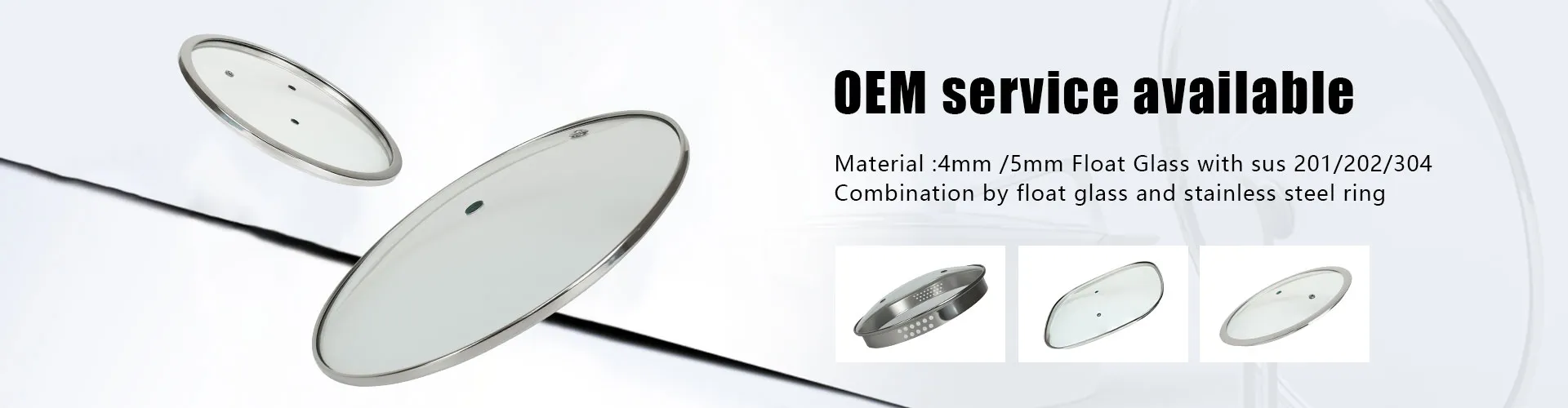
C Type Tempered Glass Lid Manufacturer for Global Cookware Buyers
2026-11-07
If you source cookware for brands, wholesale distribution or custom kitchen product lines, you know how hard it is to find a reliable C type glass lid manufacturer. Many glass lid suppliers only produce standard round lids. Rectangular cookware such as fish pans, griddles and rectangular pots requires specially shaped covers. This buying guide covers core design features, material options, customization scope, quality checks and supplier evaluation criteria for C type tempered glass lids. It helps you make confident OEM purchasing decisions and avoid common quality pitfalls.
What Is a C Type Tempered Glass Lid?
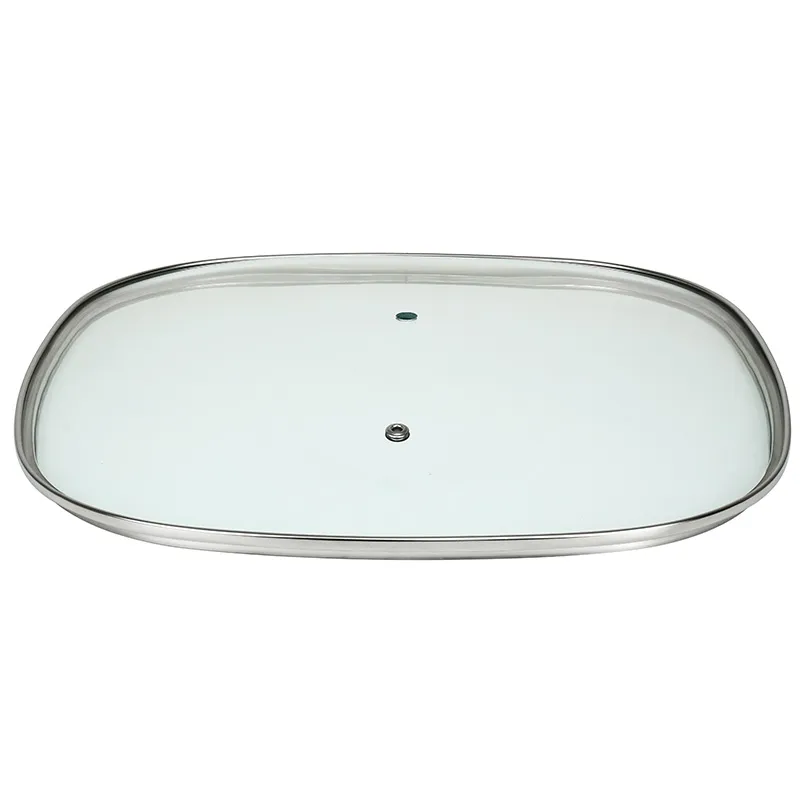
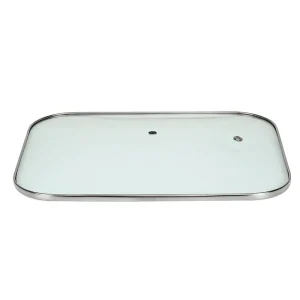
A C type tempered glass lid is a rectangular cookware lid with rounded corners, designed to fit non-round cookware. Unlike common circular glass lids, this rectangular C glass lid is built for fish pans, griddles and rectangular pots. It supports space-efficient stacking while letting users view food clearly during cooking.
Core Structural Features of Rectangular C Type Glass Lids
Every functional C type tempered glass lid comes with these standard components:
- Tempered float glass panel: transparent main body for monitoring cooking progress
- Polished stainless steel rim: wraps the glass edge to reduce chipping and cracking
- Pre-drilled central mounting hole: reserved for heat-resistant knobs (knobs sold separately)
- Small steam vent near the edge: releases internal pressure to prevent boil-over
Most standard models use either 4 mm or 5 mm float glass. The thicker 5 mm version delivers better durability for heavy-duty commercial cookware, while 4 mm keeps the lid lightweight for home kitchen applications.
Key Material & Rim Options from C Type Glass Lid Manufacturers
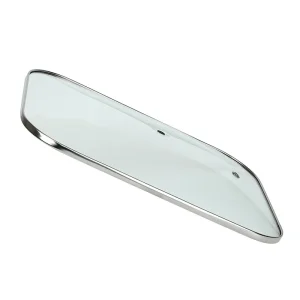
Material choices directly impact product safety, market compliance and service life, especially for stainless steel rim glass lid products exported to global markets.
The main panel is clear float glass processed into tempered glass to withstand thermal shock. The stainless steel rim is available in three widely used grades:
- SUS 201: Cost-effective choice for budget cookware lines
- SUS 202: Balanced performance for mid-range kitchenware
- Food-safe SUS 304: Recommended for premium brands and markets with strict food-contact regulations
PVD coating is an optional decorative finish for the metal rim, used for custom colour styling. Note: PVD performance data including heat resistance and salt spray resistance to be verified before formal specification lock.
Customization Capabilities You Should Expect from a C Type Glass Lid Supplier
Flexible custom glass lid for cookware solutions are the top priority for OEM buyers. A qualified C type glass lid manufacturer should support the following custom work:
- Size range: Standard sizes cover 16 cm to 30 cm; fully custom dimensions are available to match unique cookware molds
- Shape tuning: Adjust rounded corner radius, reposition the steam vent and modify hole spacing
- Surface finish: Polished stainless steel rim or optional PVD coloured rim
- Packaging: Custom carton packaging for retail or bulk sea shipment
The factory maintains a daily supply capacity of 20,000 pieces. Custom orders require mold confirmation for non-standard dimensions. Note: MOQ, mold cost and sample lead time for non-standard custom sizes to be verified.
Quality Control & Testing Standards for Export C Type Tempered Glass Lids
Poor tempering and loose rim sealing are the most frequent failures in glass lid sea shipments. Responsible manufacturers run multi-stage QC for export orders:
- Tempering integrity inspection: Prevent spontaneous glass breakage
- Thermal shock test: Validate the glass can survive rapid temperature changes during cooking
- Stainless steel rim fit check: Ensure the rim stays tightly bonded without peeling or gaps
- Food contact material compliance: Verify glass and stainless steel meet regional food safety rules
- Final visual inspection: Reject units with scratches, bubbles or misaligned holes
Common defects you should ask your supplier to screen out include rim detachment, glass surface scratches, improper steam vent placement and off-spec hole positions. Note: Exact FDA and LFGB testing requirements for glass-lid assemblies to be verified.

How to Evaluate a Reliable C Type Glass Lid Manufacturer
Use this checklist to screen glass lid OEM supplier candidates before bulk order placement:
- Production capacity: Confirm daily output and whether the factory operates in-house tempering and rim assembly
- Export experience: Check familiarity with ocean freight, commercial documentation and required certificates
- Sample policy: Clarify sampling rules before committing to bulk production
- Lead time: Standard lead time is 15–20 days after formal order confirmation
- Shipping & payment: Goods are loaded from Qingdao port; accepted payment terms include T/T and L/C
- Third-party inspection: Note: Support for third-party inspection to be verified.
Common FAQs for C Type Tempered Glass Lid OEM Purchasing
Can I get free samples before bulk order?
Sample availability and freight terms depend on order scale. Reach out to the supplier to confirm sample cost and delivery timeline for your target sizes.
What is the lead time for custom C type glass lid orders?
Orders using existing standard sizes take 15–20 days after confirmation. Custom mold orders require extra time for mold fabrication and trial sampling.
Is the stainless steel rim food-safe for EU & US markets?
SUS 304 grade rims are the food-safe option for strict North American and European markets. SUS 201 and 202 work well for markets with less stringent standards.
Can the steam vent position be adjusted?
Yes, the steam vent location can be customized according to your cookware design during mold development.
What is the packaging to avoid glass breakage during sea shipping?
All lids are securely packed in protective cartons to absorb vibration and impact for long ocean transit. Custom retail packaging can be arranged upon request.
Next Steps to Source Your C Type Glass Lid
Once you compare specifications and supplier qualifications, organize your technical requirements: target dimensions, glass thickness, stainless steel grade and order quantity. Send your request to the manufacturer to get drawings, quotations and sample arrangements. Whether you need standard rectangular C glass lids or bespoke fish pan glass cover for your cookware lineup, clear technical communication at the early stage reduces delays and quality risks.