- English
- Chinese
- French
- German
- Portuguese
- Spanish
- Russian
- Japanese
- Korean
- Arabic
- Irish
- Greek
- Turkish
- Italian
- Danish
- Romanian
- Indonesian
- Czech
- Afrikaans
- Swedish
- Polish
- Basque
- Catalan
- Esperanto
- Hindi
- Lao
- Albanian
- Amharic
- Armenian
- Azerbaijani
- Belarusian
- Bengali
- Bosnian
- Bulgarian
- Cebuano
- Chichewa
- Corsican
- Croatian
- Dutch
- Estonian
- Filipino
- Finnish
- Frisian
- Galician
- Georgian
- Gujarati
- Haitian
- Hausa
- Hawaiian
- Hebrew
- Hmong
- Hungarian
- Icelandic
- Igbo
- Javanese
- Kannada
- Kazakh
- Khmer
- Kurdish
- Kyrgyz
- Latin
- Latvian
- Lithuanian
- Luxembou..
- Macedonian
- Malagasy
- Malay
- Malayalam
- Maltese
- Maori
- Marathi
- Mongolian
- Burmese
- Nepali
- Norwegian
- Pashto
- Persian
- Punjabi
- Serbian
- Sesotho
- Sinhala
- Slovak
- Slovenian
- Somali
- Scots Gaelic
- Shona
- Sindhi
- Sundanese
- Swahili
- Tajik
- Tamil
- Telugu
- Thai
- Ukrainian
- Urdu
- Uzbek
- Vietnamese
- Welsh
- Xhosa
- Yiddish
- Yoruba
- Zulu
- Kinyarwanda
- Tatar
- Oriya
- Turkmen
- Uyghur


China Glass Lid Factory: High Quality OEM Glass Lids at Wholesale Prices
2026-10-16
For cookware brands, kitchenware wholesalers, importers, and distributors, finding the right glass lid factory is an important step toward building a competitive product range. A suitable manufacturing partner should understand product specifications, support consistent quality requirements, provide practical customization options, and offer pricing that matches the buyer’s order volume and business objectives.
High quality OEM glass lids can help businesses develop products that match their own cookware designs and brand positioning. However, product quality and manufacturing suitability should be evaluated through specifications, samples, production capabilities, and documented inspection requirements rather than marketing claims alone.
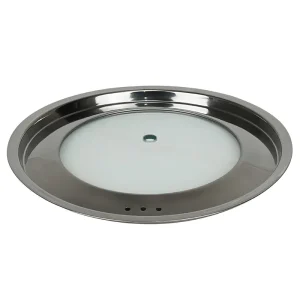
This article explores how to evaluate a glass lid manufacturer in China, what to consider when sourcing OEM glass lids, how wholesale prices are determined, and how to organize a purchasing process that supports consistent product quality and efficient inventory management.
Whether you are looking for a glass lid factory for a new cookware collection or a long-term wholesale glass lid supplier for an established distribution business, understanding these factors can help you make more informed purchasing decisions.
1. Why Work with a China Glass Lid Factory?
Working directly with a suitable glass lid factory can provide buyers with a clearer understanding of manufacturing arrangements, product specifications, and customization possibilities. The actual advantages depend on the supplier’s capabilities, production structure, and commercial terms.
1.1 Better Communication About Product Specifications
Glass lids may look similar at first glance, but differences in diameter, rim construction, handle design, and fitting dimensions can affect compatibility with cookware.
When buyers communicate directly with a manufacturer, they can discuss these requirements before confirming an order. Technical drawings, reference samples, and product specifications can help both parties establish a common understanding of the intended product.
For customized projects, clear communication is especially important because even small differences in dimensions or component arrangements can affect the final result.
1.2 Flexible Product Selection
A glass lid factory may offer standard models in several sizes or configurations. Depending on its manufacturing capabilities, it may also support customized dimensions, handles, accessories, or packaging.
Buyers should ask which models are already available and which require additional development. Existing models may simplify the purchasing process, while custom designs may be more appropriate when a product must match a particular cookware series.
The available range should always be verified through the manufacturer’s actual catalog and technical information.
1.3 Coordinated Wholesale Purchasing
Businesses purchasing multiple glass lid models may benefit from coordinating their requirements with one supplier, provided that the supplier can meet the necessary specifications.
For example, a distributor may need several diameters for different cookware categories. A cookware brand may require a consistent appearance across a collection of products.
Before placing a mixed-model order, buyers should confirm the minimum order quantity for each product, production scheduling, packaging arrangements, and the supplier’s ability to maintain separate model identification.
1.4 Planning for Long-Term Supply
A dependable manufacturing relationship should support repeat orders as well as the initial purchase.
Buyers can improve repeat-order consistency by maintaining approved product drawings, samples, inspection requirements, and packaging specifications. Any future changes should be documented and approved before they are introduced into production.
These practices help reduce uncertainty when a product moves from a trial order to regular wholesale purchasing.
2. High Quality Glass Lids: Key Product Considerations
The term high quality glass lid should be supported by clear product requirements. For commercial purchasing, quality is best evaluated through measurable characteristics, suitable materials, manufacturing controls, and appropriate inspection procedures.
2.1 Glass Material and Thickness
Material selection and glass thickness depend on the intended application and the product’s design.
Buyers should specify the required material characteristics and thickness rather than assuming that all glass lids share the same construction. If the product requires particular thermal performance or resistance to temperature changes, the applicable requirements should be identified and supported by suitable testing.
A glass lid manufacturer should clarify which specifications are available for the proposed model and whether additional testing or documentation can be provided.
2.2 Edge Processing and Rim Construction
The edge and rim are important areas to examine when evaluating a glass lid. Their design can affect fit, assembly, handling, and compatibility with the intended cookware.
Depending on the product, the construction may include a particular edge treatment or a separate rim component. Buyers should identify the required configuration through drawings, photographs, or a reference sample.
For wholesale orders, the approved specification should define the relevant dimensions and acceptable appearance conditions.
2.3 Handle Design and Assembly
The handle affects product usability, appearance, and assembly requirements. Different cookware brands may prefer different handle shapes, materials, and mounting arrangements.
When requesting a quotation, provide details about the desired handle configuration and any specific functional requirements. If the handle is customized, confirm whether the supplier needs a new component design or can use an existing option.
Assembly and functional checks should be defined according to the actual product design.
2.4 Appearance and Dimensional Consistency
For retailers and cookware brands, consistent product appearance can be important across different batches.
Inspection requirements may cover visible defects, dimensional accuracy, rim condition, handle alignment, and other characteristics relevant to the approved specification.
Before mass production, buyers should agree on the measurement methods, tolerances, and acceptance criteria that apply to the order. These details provide a more useful basis for quality evaluation than a general description such as premium or high quality.
3. OEM Glass Lids for Cookware Brands
OEM manufacturing is relevant to businesses that need glass lids produced according to their own product requirements. Depending on the factory’s capabilities, OEM services may involve existing product modifications, customized dimensions, handle configurations, branding, and packaging.
3.1 Developing Products Around Your Requirements
An OEM glass lid project typically begins with a product brief. The buyer explains the intended application, target dimensions, design preferences, required quantities, and any relevant performance or compliance requirements.
The manufacturer evaluates whether an existing model can meet those requirements or whether product development is necessary.
For an existing cookware design, a reference sample or technical drawing is often more useful than a product name alone. It allows the supplier to assess fitting dimensions and other important characteristics.
3.2 Custom Dimensions for Different Cookware Models
Cookware collections often include several sizes. A buyer may require lids with different nominal diameters while maintaining consistent design features across the range.
A China glass lid factory should clarify the available dimensions and explain how actual fitting measurements are determined. Nominal diameter alone may not be sufficient to establish compatibility.
If the project involves multiple sizes, request a specification sheet for each model and identify any shared components or design features.
3.3 Customized Rim and Handle Configurations
OEM requirements may include a specific rim profile, handle shape, mounting arrangement, or combination of components.
The buyer should provide clear reference information and confirm which features are essential. If a requested design requires additional tooling or new components, the manufacturer should explain the development requirements and associated costs.
Changes to the rim or handle should be reviewed as part of the complete product rather than evaluated independently from the lid’s fitting requirements.
3.4 Private-Label Packaging
Private-label projects may require customized packaging, product labels, logo artwork, or branded cartons.
Before production, buyers should confirm the artwork, printing method, packaging dimensions, labeling requirements, and minimum order quantities. The final packaging specification should also account for the protection required during storage and transportation.
A consistent packaging system can help distributors manage inventory and support retailers that need clearly identified products.
3.5 Sample Development and Approval
Sampling provides an opportunity to evaluate the proposed product before a larger investment is made.
A typical process includes:
- Submitting drawings, samples, or product references.
- Confirming technical requirements and production feasibility.
- Reviewing the quotation and any tooling or development costs.
- Evaluating the sample against the agreed specification.
- Recording the approved design before mass production.
The final sample or specification should be retained as a reference for subsequent production and quality inspection.
4. Wholesale Glass Lids: Building a Cost-Effective Product Range
Wholesale purchasing requires a balance between product quality, order quantity, unit cost, inventory needs, and delivery schedules. A low unit price is not necessarily the most economical option if the product does not meet the required specification or creates additional handling and replacement costs.
4.1 Choosing the Right Order Quantity
Order quantity influences purchasing costs and inventory planning. Larger orders may provide access to different pricing arrangements, but they also require more working capital and storage capacity.
Buyers should consider expected sales, replenishment frequency, product variety, and the manufacturer’s MOQ before determining the order size.
For a new product, a smaller trial order may help evaluate demand. Established distributors may prefer larger orders when sales patterns and product specifications are sufficiently stable.
4.2 Standard Models and Customized Models
Standard glass lids may be suitable when an existing product meets the required dimensions and configuration. They can reduce development requirements and simplify product selection.
Customized glass lids may be necessary when a brand needs a particular fitting dimension, handle design, rim structure, or presentation.
When comparing the two options, consider not only the unit price but also sample charges, tooling, minimum order quantity, lead time, and the costs associated with maintaining the product range.
4.3 Mixed-Size Purchasing
A wholesale buyer may need several sizes to serve different customer groups. Before placing a mixed-size order, confirm whether each size has a separate MOQ and whether the supplier can coordinate production across the selected models.
Each model should have a clear product code and specification. This helps prevent products with similar appearances from being confused during packing, shipping, or warehouse receiving.
4.4 Packaging and Storage Costs
Glass lids require packaging suitable for their dimensions, construction, and transportation conditions.
Buyers should discuss individual protection, separators, carton specifications, palletization, and labeling. The packaging method should protect the products while remaining practical for warehouse handling and distribution.
Storage requirements should also be considered when comparing wholesale quantities. Larger orders may reduce the unit price but increase the cost of holding inventory.
5. Glass Lid Price: Understanding Factory and Wholesale Quotations
Glass lid price depends on the product specification and the commercial conditions of the order. Buyers should request quotations that clearly identify the included product features and costs.
5.1 Factors That Influence Factory Prices
Several factors can affect the quoted price:
- Glass dimensions and material requirements
- Thickness and relevant processing requirements
- Rim construction and handle configuration
- Standard or customized product design
- Order quantity and production scheduling
- Packaging and labeling specifications
- Tooling, sampling, or development requirements
- Delivery terms and transportation arrangements
The relative importance of these factors varies by product. A supplier should explain which elements contribute to the quoted price for the selected model.
5.2 Comparing Wholesale Prices
When comparing glass lid wholesale prices, ensure that all suppliers are quoting equivalent products.
For example, two quotations may differ because one includes customized packaging or a different handle configuration. Another quotation may exclude tooling or other one-time charges.
A useful comparison should identify the product model, dimensions, material requirements, accessories, quantity, packaging, lead time, and trade terms.
5.3 Factory Price Versus Total Delivered Cost
The factory price does not necessarily represent the final cost of importing glass lids.
Depending on the agreement, buyers may also need to account for inland transportation, export handling, international freight, insurance, customs duties, taxes, and destination charges.
Ask the supplier to specify the delivery term and which costs are included. This makes it easier to estimate the total purchasing cost and compare different sourcing arrangements.
5.4 Requesting Volume-Based Quotations
If the buyer expects to increase order volume, it can be useful to request quotations for several realistic quantities.
The quotation should specify the quantity associated with each price and identify any conditions attached to the offer.
This approach can help businesses compare the economics of trial orders, regular replenishment, and larger purchasing commitments without assuming that a particular discount will automatically apply.
6. Choosing a China Glass Lid Supplier for Different Business Needs
Different businesses evaluate suppliers according to different priorities. A retailer, cookware brand, distributor, and industrial purchasing team may need different combinations of product flexibility, pricing, documentation, and delivery support.
6.1 For Cookware Brands
Cookware brands may prioritize design compatibility, private-label services, consistent product specifications, and the ability to maintain product appearance across a collection.
They should ask about OEM capabilities, sample approval, tooling requirements, artwork control, and repeat-order procedures.
A documented product specification can help ensure that the glass lid remains consistent with the brand’s cookware and packaging requirements.
6.2 For Importers and Distributors
Importers and distributors may focus on wholesale pricing, MOQ, production schedules, packaging, and shipping coordination.
When sourcing multiple glass lid models, they should also evaluate whether the supplier can maintain accurate product identification and provide the required shipment documentation.
A supplier’s ability to coordinate repeat orders may be particularly important for businesses with regular replenishment needs.
6.3 For Retailers and E-Commerce Businesses
Retailers may need packaging suitable for individual sales, clearly identified product dimensions, and information that helps consumers select compatible lids.
Before purchasing, confirm whether the product is intended for a specific cookware model or has a broader range of compatible applications.
Accurate product descriptions and fitting information can help reduce confusion and avoid unsupported compatibility claims.
6.4 For Replacement-Part Suppliers
Replacement-part businesses need to pay particular attention to dimensions and fitting requirements.
Two glass lids with the same nominal diameter may not fit the same cookware because their rim structures or seating dimensions differ.
Provide drawings, reference photographs, or samples when possible, and verify compatibility before committing to a large quantity.
7. Z Type Glass Lid and C Type Glass Lid: Confirming the Correct Design
Buyers may use terms such as Z type glass lid and C type glass lid to identify particular products. However, these labels do not necessarily describe standardized designs across all suppliers.
The correct purchasing process is to confirm the exact model and its technical characteristics.
7.1 Identifying a Z Type Glass Lid
If a buyer requests a Z type glass lid, ask which feature defines the Z type designation. The term may relate to a specific profile, component arrangement, or model classification used by the buyer or supplier.
A photograph may help with initial identification, but a drawing or physical sample is more reliable when critical dimensions must be matched.
The manufacturer should confirm the model number, fitting dimensions, and relevant construction details before providing a final quotation.
7.2 Identifying a C Type Glass Lid
For a C type glass lid, the buyer should similarly clarify the meaning of the designation.
If the term refers to a particular rim or edge profile, the relevant dimensions should be documented. If it refers to a complete product model, the supplier should identify the model and explain the differences from other available options.
This avoids misunderstandings when product names are translated across languages or used differently by separate manufacturers.
7.3 Comparing Different Configurations
When comparing Z type and C type designs, review:
- Overall diameter and fitting dimensions
- Rim profile and edge construction
- Glass thickness and material specifications
- Handle position and assembly requirements
- Compatibility with the intended cookware
- Available accessories and customization
- Packaging and model identification
These details are more useful for purchasing decisions than the model label alone.
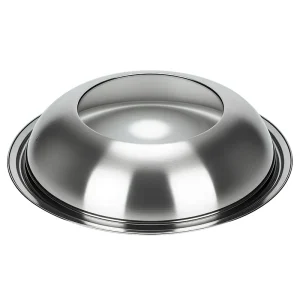
8. China 24 cm Glass Lid: A Practical Sourcing Checklist
A 24 cm glass lid may be part of a standard cookware range or a customized OEM collection. Buyers should verify the precise dimensions and product construction before ordering.
8.1 Confirming Fit and Dimensions
The nominal diameter is an initial identification point, not a complete compatibility specification.
Buyers should confirm the dimensions that determine how the lid sits on the intended cookware. These may include the outer diameter, inner fitting diameter, and other design-specific measurements.
A technical drawing or physical sample can help the supplier identify the correct product.
8.2 Confirming Product Features
Before requesting a quotation, define the required glass material, thickness, rim configuration, handle arrangement, and packaging.
If specific performance or compliance requirements apply, state them clearly and request appropriate documentation.
This makes it easier to compare products and avoid choosing a model based on appearance alone.
8.3 Purchasing Multiple Sizes
If the 24 cm glass lid is one part of a larger collection, ask whether the supplier can offer compatible products in other sizes.
Confirm whether each size has a separate MOQ and whether the same design language, accessories, and packaging system can be used across the collection.
Maintaining consistent model codes and specifications can simplify inventory management.
9. Working with a Glass Lid Exporter
For international buyers, export coordination is another important part of supplier evaluation. A glass lid exporter may be a manufacturer exporting its own products or a trading business coordinating production and shipment through manufacturing partners.
The business structure should be understood before an order is confirmed.
9.1 Confirming Export Responsibilities
Ask who is responsible for production coordination, quality inspection, packaging, export documentation, and communication if a problem occurs.
These responsibilities should be reflected in the quotation, purchase order, or applicable agreement.
Clear responsibility assignments are especially important when the buyer works with multiple product models or customized specifications.
9.2 Shipping and Documentation
Export shipments may require commercial invoices, packing lists, transport documents, and additional paperwork depending on the destination and transaction.
Buyers should confirm the documentation requirements with the supplier and their logistics or customs service provider.
Shipment quantities, packaging details, and product descriptions should be consistent across the relevant documents.
9.3 Planning Delivery Schedules
The overall delivery schedule may include sample development, sample approval, production, inspection, packing, and transportation.
Buyers should avoid treating production lead time as the entire order-to-delivery period.
For seasonal sales or product launches, establish a realistic schedule and clarify how changes to specifications or quantities could affect delivery.
10. Quality Control for OEM and Wholesale Glass Lids
A well-defined quality control process helps ensure that products meet the agreed specification. The specific checks should be appropriate for the design, intended use, and applicable requirements.
10.1 Incoming Material Checks
Depending on the manufacturing arrangement, material checks may be conducted before processing or assembly.
Buyers should ask which materials are controlled, how relevant specifications are verified, and whether supporting records can be provided when required.
Any material or performance claims should be supported by appropriate evidence.
10.2 In-Process Inspection
In-process inspection can help identify dimensional or assembly problems before the entire order is completed.
Relevant checks depend on the production process and may include dimensions, edge conditions, component positioning, and assembly characteristics.
The inspection plan should identify the applicable criteria and how nonconforming products are handled.
10.3 Final Product Inspection
Final inspection should confirm that the finished products match the approved specifications.
Depending on the product, this may include appearance, dimensions, handle assembly, product identification, packaging, and required documentation.
For customized orders, the final inspection should use the approved drawing or sample as a reference.
10.4 Packaging Verification
Packaging should be checked against the agreed order requirements.
Confirm that the product protection, separators, carton markings, quantities, and labeling meet the purchasing specification. For export orders, packaging should also be suitable for the expected transportation and handling conditions.
11. How to Request an OEM Glass Lid Quotation
A clear request for quotation helps a manufacturer understand the product requirement and prepare a relevant offer.
11.1 Information to Include
Buyers should provide as much of the following information as possible:
- Product name and intended application
- Nominal diameter and critical fitting dimensions
- Drawings, photographs, or reference samples
- Glass material and thickness requirements
- Rim and handle specifications
- Estimated quantity and order frequency
- OEM logo and packaging requirements
- Required inspections or documentation
- Destination country and preferred delivery terms
- Target delivery schedule
If some details are not yet available, identify them as items that need to be confirmed rather than allowing different suppliers to make inconsistent assumptions.
11.2 Questions to Ask the Factory
Before approving a supplier, consider asking:
- Which requested models are already available?
- What is the MOQ for each model?
- Are custom dimensions or handles available?
- Are sampling or tooling charges required?
- What quality checks can be performed?
- What packaging options are available?
- What is the estimated production lead time?
- Which export and shipping arrangements can be supported?
The answers can help determine whether the factory is suitable for the project.
11.3 Comparing Supplier Offers
Use a consistent comparison sheet to record product specifications, unit prices, MOQ, sample charges, tooling, packaging, lead time, inspection requirements, and delivery terms.
This approach helps buyers evaluate the complete offer rather than selecting a supplier based on one price figure.
12. Frequently Asked Questions About Glass Lid Factories and Wholesale Prices
Q1. How do I choose a China glass lid factory?
Evaluate the supplier’s product range, manufacturing or sourcing arrangements, technical knowledge, quality control, customization capabilities, MOQ, lead time, and commercial terms. Request relevant samples and documentation before confirming a large order.
Q2. Can a glass lid factory provide OEM products?
Some factories offer OEM services based on existing models or customized specifications. Available services may include dimensions, handles, branding, and packaging. Confirm the scope of customization and any additional development costs with the supplier.
Q3. What determines high quality glass lid pricing?
Price depends on material specifications, dimensions, rim and handle design, order quantity, customization, packaging, and delivery conditions. Quality requirements and testing can also influence the total cost.
Q4. Are wholesale glass lids cheaper than individual purchases?
Wholesale orders may qualify for different unit pricing because of order volume and production arrangements. The actual price depends on the model, quantity, packaging, and supplier terms. Buyers should compare quotations at realistic purchasing volumes.
Q5. Can I order a 24 cm glass lid from a China supplier?
Availability depends on the supplier’s product range. Confirm the nominal diameter, fitting dimensions, rim construction, and handle configuration to ensure that the selected product matches the intended cookware.
Q6. What should I check before buying Z type or C type glass lids?
Confirm the exact meaning of the model designation, then verify the drawing, dimensions, material, rim profile, and compatibility requirements. These labels may not have a universal meaning across manufacturers.
Q7. Does a factory price include shipping?
Not necessarily. The quotation should identify the applicable delivery term and specify which costs are included. Freight, insurance, customs duties, taxes, and destination charges may be handled separately depending on the agreement.
Q8. How can I reduce OEM development costs?
Start with a complete product brief, determine whether an existing model can meet the requirements, and confirm all dimensions and design features before sampling. Ask the supplier to separate one-time development costs from recurring production costs.
Q9. What packaging should I choose for glass lid wholesale orders?
Packaging should protect the glass and relevant components during handling and transportation. Discuss individual protection, separators, carton specifications, and palletization according to the product and shipping method.
Q10. Should I inspect samples before placing a bulk order?
Yes, samples are useful when dimensions, appearance, or compatibility are important. Establish clear acceptance criteria and retain the approved sample or specification as a reference for mass production.
Conclusion: Source High Quality OEM Glass Lids at Wholesale Prices
Choosing a suitable China glass lid factory involves more than comparing wholesale prices. Buyers should evaluate product specifications, OEM capabilities, quality control, production planning, packaging, and export arrangements to determine whether a supplier matches their business requirements.
For cookware brands, a well-managed OEM process can help align glass lid dimensions, components, and branding with an existing product range. For wholesalers and importers, clear specifications and comparable quotations can improve purchasing decisions and support more predictable inventory planning.
Whether you need standard glass lids, a 24 cm glass lid, customized Z type or C type designs, or a long-term wholesale supply arrangement, begin by defining your product requirements and confirming the supplier’s actual capabilities.
A detailed specification, approved sample, documented inspection plan, and clear delivery agreement provide a stronger foundation for repeat orders and long-term cooperation.
Planning your next glass lid order? Prepare your product dimensions, drawings or samples, required quantity, customization details, and destination information to request a quotation that reflects your actual purchasing needs.