- English
- Chinese
- French
- German
- Portuguese
- Spanish
- Russian
- Japanese
- Korean
- Arabic
- Irish
- Greek
- Turkish
- Italian
- Danish
- Romanian
- Indonesian
- Czech
- Afrikaans
- Swedish
- Polish
- Basque
- Catalan
- Esperanto
- Hindi
- Lao
- Albanian
- Amharic
- Armenian
- Azerbaijani
- Belarusian
- Bengali
- Bosnian
- Bulgarian
- Cebuano
- Chichewa
- Corsican
- Croatian
- Dutch
- Estonian
- Filipino
- Finnish
- Frisian
- Galician
- Georgian
- Gujarati
- Haitian
- Hausa
- Hawaiian
- Hebrew
- Hmong
- Hungarian
- Icelandic
- Igbo
- Javanese
- Kannada
- Kazakh
- Khmer
- Kurdish
- Kyrgyz
- Latin
- Latvian
- Lithuanian
- Luxembou..
- Macedonian
- Malagasy
- Malay
- Malayalam
- Maltese
- Maori
- Marathi
- Mongolian
- Burmese
- Nepali
- Norwegian
- Pashto
- Persian
- Punjabi
- Serbian
- Sesotho
- Sinhala
- Slovak
- Slovenian
- Somali
- Scots Gaelic
- Shona
- Sindhi
- Sundanese
- Swahili
- Tajik
- Tamil
- Telugu
- Thai
- Ukrainian
- Urdu
- Uzbek
- Vietnamese
- Welsh
- Xhosa
- Yiddish
- Yoruba
- Zulu
- Kinyarwanda
- Tatar
- Oriya
- Turkmen
- Uyghur


How to Evaluate a Glass Lid Manufacturer in China for OEM Cookware Projects
2026-10-27
Choosing a glass lid manufacturer in China involves more than comparing prices or browsing product catalogs. For cookware brands, importers, wholesalers, and OEM buyers, the right manufacturing partner needs to meet product specifications, support customization requirements, maintain consistent quality, and coordinate orders according to agreed terms.
A glass lid’s dimensions, shape, edge construction, handle assembly, and packaging can all affect the final product. A mismatch in any of these areas may lead to sample approval delays, assembly problems, or additional costs during bulk production.
This guide explains how to evaluate a glass lid manufacturer in China, from defining your product requirements and assessing customization compatibility to reviewing quality control, comparing quotations, and confirming key details before placing a bulk order.
1. Define Your Cookware Project Requirements
Before contacting manufacturers, prepare a clear description of your project. This helps potential suppliers understand your requirements and determine whether their proposed products and services are suitable.
Identify the Application and Product Type
Start by explaining how the glass lid will be used. For example, you may need lids for cooking pots, frying pans, woks, or a new cookware product line.
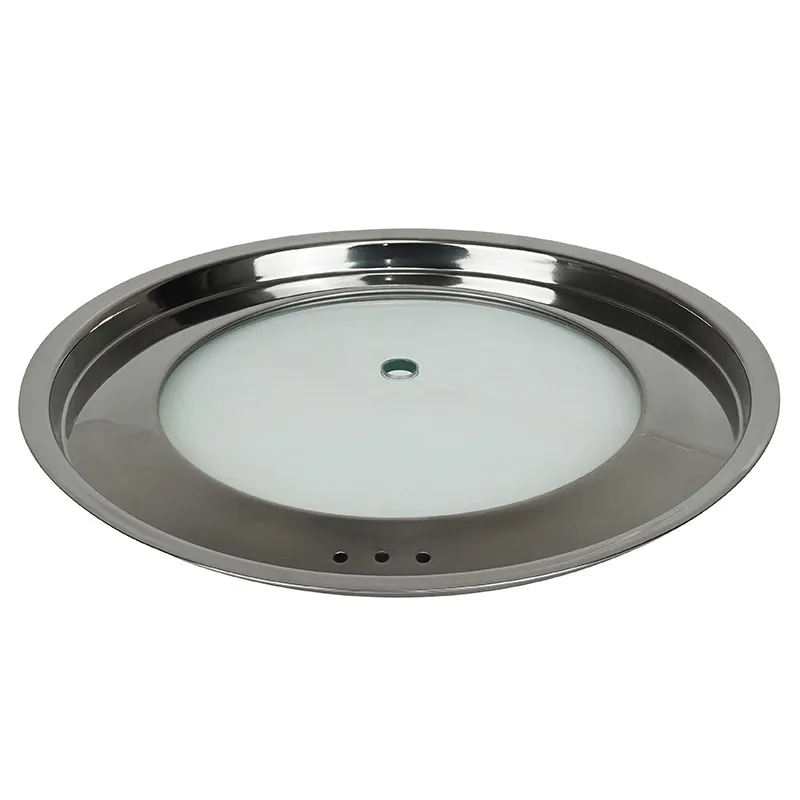
The application helps determine which product characteristics require attention, including the lid’s shape, dimensions, edge construction, handle design, and compatibility with the cookware.
Clarify whether your project involves:
- Sourcing an existing glass lid design.
- Matching a lid to existing cookware.
- Modifying an existing product.
- Developing a customized lid for a new cookware design.
- Purchasing multiple lid sizes or configurations.
These scenarios involve different levels of specification work. A buyer sourcing an existing product may mainly need to verify dimensions and available configurations, while a customized OEM project may require drawings, sample development, and more detailed technical discussions.
Prepare the Initial Specifications
Before requesting quotations, organize the information available for your project.
Useful materials may include:
- Product drawings or dimensional specifications.
- Photographs or physical samples of the existing cookware.
- Required lid diameter, shape, and rim design.
- Glass material and processing requirements.
- Knob, handle, or other accessory requirements.
- Packaging, labeling, and branding requirements.
- Estimated order quantities and product variants.
- Target markets and any known compliance requirements.
Not every detail needs to be finalized before the first discussion. However, distinguish confirmed requirements from items that still need technical evaluation.
For example, if you have an existing pan but have not confirmed the precise lid dimensions, identify the measurements that require verification rather than assuming that a visually similar lid will fit.
A clear project brief gives a glass lid supplier in China a better basis for assessing feasibility, identifying missing information, and preparing a quotation.
2. Evaluate Product Specifications and Customization Compatibility
A manufacturer may offer products that look similar to your target design without necessarily being able to meet every project requirement. Evaluate the specifications individually instead of relying only on product photographs or general descriptions.
Check Dimensions, Shape, and Rim Design
Start with the dimensions and physical structure of the lid.
Depending on your cookware design, relevant details may include:
- Lid diameter and overall dimensions.
- Shape and profile.
- Edge finishing and rim construction.
- The interface between the lid and the cookware.
- Clearance requirements for the handle or other components.
- Compatibility with the intended cookware design.
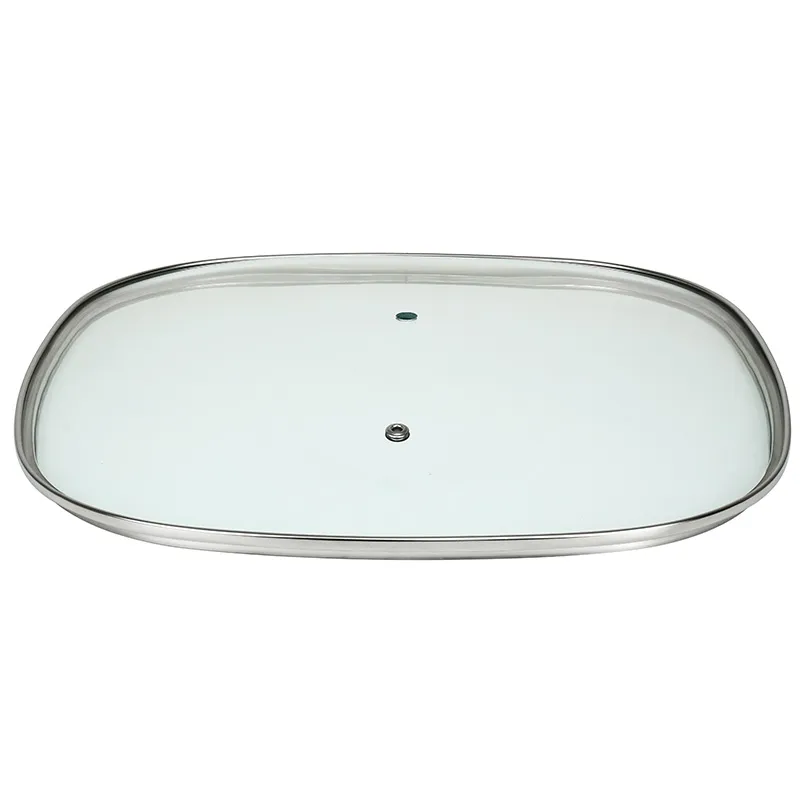
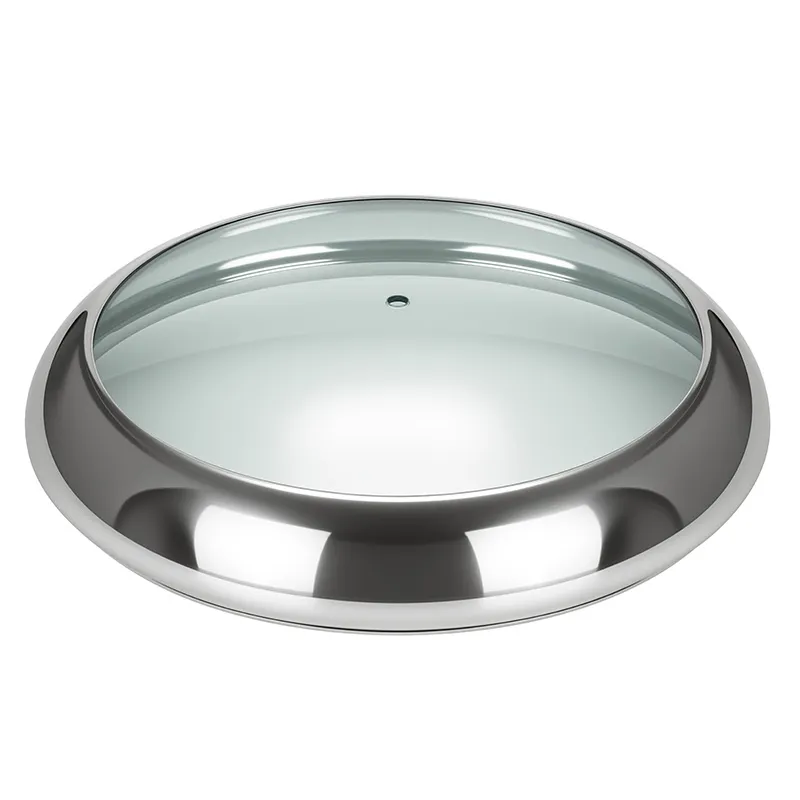
Different lid shapes may serve different product requirements. For example, flat and domed lids have different profiles and clearance characteristics. A square glass lid also presents different corner-design considerations from a conventional round lid.
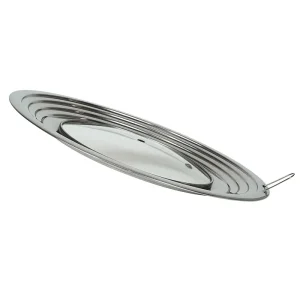
For replacement applications, do not rely on nominal diameter alone. The cookware’s rim geometry and the lid’s actual dimensions may affect compatibility. Drawings, measurements, or a physical reference sample can help the manufacturer assess the fit more accurately.
Ask the manufacturer to identify which dimensions are confirmed, which are preliminary, and which require further evaluation.
Important: Do not assume that one dimensional tolerance applies to every glass lid. Required tolerances should be established according to the product design, technical specifications, and agreed acceptance criteria.
Confirm Glass Material and Processing Requirements
Material selection and processing requirements should be established before finalizing the product specification.
If your project requires tempered glass, confirm that the proposed material and processing are appropriate for the intended application. Discuss the required glass type, thickness, processing requirements, and applicable quality or safety criteria.
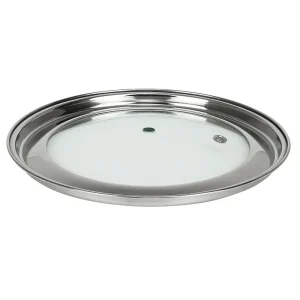
The buyer should clarify:
- Which glass material is required.
- Whether a specific thickness or dimensional specification applies.
- Which processing requirements must be met.
- What inspection or testing is necessary.
- Which technical documents or test records are required.
These details should be documented rather than left to interpretation during production.
A tempered glass lid manufacturer in China should be evaluated against the actual requirements of your project, not simply the general product category. Do not assume that all tempered glass lids have identical specifications or performance characteristics.
If your target market has specific safety or regulatory requirements, identify them early and confirm which party is responsible for determining and verifying compliance.
Assess Knob, Handle, and Rim Compatibility
A glass lid is often a complete assembly rather than a glass component alone. The knob or handle, rim, fastening components, and other accessories may affect the final product.
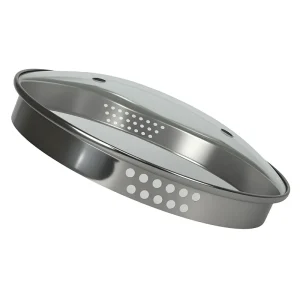
When evaluating a manufacturer, confirm whether the proposed components match your design and whether their specifications can be documented.
Questions worth asking include:
- What knob or handle options are available for the proposed design?
- What materials and finishes are specified for each component?
- How are the accessories attached to the glass lid?
- Which dimensional or assembly requirements need confirmation?
- Are there any limitations associated with the proposed combination of components?
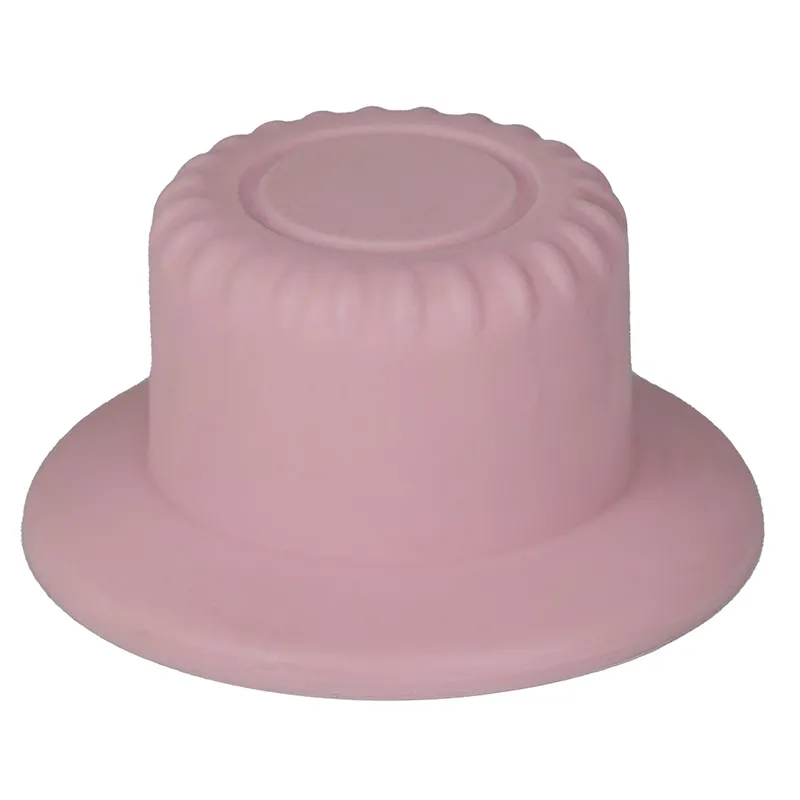
If the lid includes a metal rim or silicone component, confirm the required structure and fit rather than assuming that a standard accessory will suit every design.
For projects involving multiple components, maintain a specification sheet that identifies the requirements for each part. This helps prevent situations in which the glass itself is approved but an accessory or assembly detail remains unresolved.
Verify Customization and Product Development Capabilities
For OEM cookware projects, customization may involve changes to dimensions, shape, rim construction, handles, finishes, packaging, or branding.
Ask the manufacturer to evaluate your actual requirements and clarify what can be supplied, what needs modification, and what requires additional technical assessment.
Before proceeding, establish:
- Which requirements can be met using an existing design.
- Which changes require revised drawings or samples.
- Whether additional tooling or development work may be necessary.
- What information is needed to assess technical feasibility.
- Which requirements remain unconfirmed.
Do not assume that every requested design can be produced simply because a manufacturer offers OEM or ODM services. The feasibility of a specific project must be established through technical review and mutual confirmation.
The objective is to find a manufacturing partner that can assess your requirements clearly and communicate limitations before production begins.
3. Assess OEM/ODM Communication and Sample Approval
Product compatibility is only one part of supplier evaluation. For customized cookware projects, communication and sample approval help ensure that the buyer and manufacturer share the same understanding of the final product.
Clarify the OEM/ODM Project Scope
First, establish the scope of the cooperation.
An OEM project may involve manufacturing according to buyer-provided specifications. An ODM project may involve evaluating or adapting an existing design, depending on the agreed arrangement.
The exact division of responsibilities should be confirmed for each project.
Discuss who will be responsible for:
- Providing or developing product drawings.
- Confirming dimensions and materials.
- Evaluating customization requests.
- Selecting and confirming accessories.
- Reviewing packaging and branding requirements.
- Approving samples and final specifications.
- Managing changes during development.
Written confirmation is particularly important when a project involves several product variants or multiple parties.
If a requirement is still under discussion, record it as an open item rather than treating it as an approved specification.
Establish a Sample Approval Process
A sample can help the buyer evaluate whether the proposed product matches the agreed requirements before bulk production.
A practical process may include the following steps:
- Submit the initial project requirements and available technical documents.
- Review the proposed specifications with the manufacturer.
- Prepare a sample based on the agreed requirements.
- Inspect the sample against the relevant specifications.
- Record any differences or required changes.
- Request revisions if necessary.
- Approve the final sample and document the applicable specification version.
The actual process depends on the product and the agreement between the parties.
When reviewing a glass lid sample, consider dimensions, shape, edge construction, component assembly, and appearance. Additional checks may be necessary if the project has specific performance or compliance requirements.
Record the sample’s approval status and link it to the relevant drawings or specification documents. This gives both parties a clearer reference for subsequent production.
Sample approval should not be treated as proof that every future production batch will automatically meet the same requirements. The manufacturer should also explain how approved specifications are maintained during production and how product conformity is checked.
Sample fees, development lead times, revision arrangements, and approval procedures should be confirmed directly rather than assumed.
Document Specification Changes
Changes can occur during product development. A buyer may revise a dimension, select a different handle, adjust the rim design, or change the packaging requirements.
Without a clear change-control process, different parties may work from different versions of the same specification.
Record:
- The original requirement.
- The requested change and its reason.
- The date of the revision.
- The latest drawing or specification version.
- The approval status.
- Any impact on cost, production planning, or delivery.
Before bulk production begins, confirm that the manufacturer is working from the final approved requirements.
Any change that may affect product fit, materials, assembly, or packaging should be reviewed before acceptance.
4. Evaluate Quality Control and Production Management
A glass lid manufacturer should be evaluated not only on the products it offers but also on how it manages the requirements agreed with the buyer.
Rather than relying on general statements about quality, ask for specific explanations and supporting records where appropriate.
Ask About Quality Checks
Begin by understanding how the manufacturer checks materials, production processes, and finished products.
Depending on the product and manufacturing process, relevant checks may include:
- Incoming material inspection.
- Dimensional verification.
- Visual inspection.
- Edge and surface checks.
- Component assembly inspection.
- Finished-product inspection.
- Packaging checks before shipment.
Not every project requires the same inspection plan. The applicable checks should be determined by the product specification, intended use, relevant standards, and agreed quality requirements.
Ask the manufacturer which checks are performed, what acceptance criteria are used, and whether the results are documented.
If specific testing is necessary, confirm the applicable method and acceptance requirements before production. Do not assume that a general statement about quality inspection demonstrates compliance with a particular technical standard.
You may also need to establish whether independent testing or third-party inspection is appropriate for the project.
The objective is to understand how product requirements are translated into practical inspection activities and how deviations are identified.
Verify Production Consistency and Traceability
For bulk orders, approving one sample is not enough. Buyers should also understand how the manufacturer works to maintain consistency during production.
Useful questions include:
- How are approved product specifications communicated to production personnel?
- How are different models or sizes identified?
- Are relevant production and inspection records maintained?
- How are deviations from approved requirements handled?
- Can affected products or batches be identified if a quality issue occurs?
These questions are especially relevant when an order includes multiple sizes, rim designs, or accessory configurations.
For example, a purchase order containing several glass lid diameters should clearly distinguish the specifications and quantities for each model. The manufacturer and buyer should be able to identify which requirements apply to each product.
Where traceability is important, confirm what records are available and how they can be used to investigate a problem.
Do not assume that every manufacturer uses the same production management system or maintains the same types of records. Evaluate the actual arrangements relevant to your project.
Check How Quality Complaints Are Handled
Even when requirements are clearly defined, buyers should understand how problems will be managed if a product does not meet the agreed specifications.
Before placing a bulk order, discuss:
- How quality issues should be reported.
- What evidence should accompany a complaint.
- How affected products or batches will be identified.
- How the cause of a problem will be investigated.
- What corrective actions may be taken.
- How the parties will agree on a resolution.
The commercial agreement should define applicable responsibilities and remedies, including any relevant requirements for inspection, replacement, or other corrective action.
For international transactions, clarify the reporting process and responsibilities before shipment rather than negotiating every detail after a dispute arises.
A clear complaint-handling process does not guarantee that problems will never occur. It establishes how the parties will respond if they do.
5. Review Packaging, Order Management, and Export Coordination
A suitable manufacturing partner must also be able to coordinate the practical requirements associated with packaging, ordering, and international delivery.
These requirements should be discussed alongside product specifications rather than treated as minor details after the product has been approved.
Confirm Packaging Requirements
Packaging should be appropriate for the product’s structure, handling requirements, and intended shipping conditions.
Discuss the packaging configuration and confirm which requirements apply to your order.
These may include:
- Individual product protection.
- Separation between products or components.
- Inner and outer packaging specifications.
- Carton dimensions and packing quantities.
- Product labels, barcodes, or branding.
- Shipping marks and handling information.
- Any required packaging tests or validation.
A buyer requiring retail-ready packaging may have different needs from a wholesaler purchasing products in bulk packaging.
The packaging design should be reviewed against the product and shipping requirements. Do not assume that a packaging method suitable for one product configuration will automatically be appropriate for another.
Confirm the final packaging specification, the number of products per carton, and any associated costs before approving the order.
Evaluate Order Planning and Communication
Clear order management helps reduce misunderstandings between the buyer and manufacturer.
Before confirming an order, make sure the quotation, product specifications, purchase order, and order confirmation are consistent.
Check that the documents clearly identify:
- Product models and specification versions.
- Quantities for each model.
- Required accessories and packaging.
- Agreed prices and commercial terms.
- Production and delivery arrangements.
- Any outstanding technical or commercial issues.
For orders involving several product variants, the manufacturer should be able to distinguish each model and its corresponding requirements in the order documents.
You should also establish how progress updates will be provided and how changes or unexpected delays will be communicated.
Production schedules and delivery dates must be confirmed for the specific order. Do not rely on general statements about typical lead times when making purchasing commitments.
Confirm Export Documentation and Market Requirements
International buyers should determine which documents are required for the transaction and which party is responsible for preparing them.
Depending on the product, destination, and shipping arrangement, the documentation may include commercial and shipping records as well as product-related documents where applicable.
Before ordering, clarify:
- Which export and shipping documents the manufacturer can provide.
- Which documents the buyer or importer must arrange.
- Whether the destination market has specific product safety or compliance requirements.
- Whether testing, declarations, labeling, or other documentation is necessary.
- Who is responsible for verifying that the requirements have been met.
Requirements can vary by destination and product configuration. Do not assume that one certificate, test report, or document is suitable for every market.
If your cookware products are intended for North America, Europe, the Middle East, Southeast Asia, or multiple markets, identify the actual destination countries and confirm the applicable requirements for the specific product.
Where requirements are unclear, seek confirmation from the relevant regulatory authority, a qualified compliance professional, or another appropriate source before finalizing the order.
6. Compare Manufacturers Beyond Price
Price matters in bulk purchasing, but a quotation is only useful when its scope and assumptions are understood.
A lower price may reflect different specifications, accessories, packaging, order quantities, or delivery conditions. Compare the commercial terms and product requirements together before choosing a manufacturer.
Compare Quotation Scope and Assumptions
When comparing quotations from different manufacturers, check whether they cover the same product.
Confirm the following:
- Glass lid dimensions and design.
- Material and processing requirements.
- Rim, knob, handle, and other components.
- Customization or development work.
- Packaging configuration.
- Order quantities and model variations.
- Shipping or delivery arrangements.
- Payment terms and quotation validity.
- Additional or separately quoted costs.
If one quotation includes customized packaging and another does not, the two prices should not be treated as directly comparable.
The same applies when manufacturers propose different materials, components, or product specifications.
Ask each supplier to clarify exclusions and assumptions. A detailed quotation makes it easier to identify the actual differences between offers.
For glass lid wholesale orders, buyers should also confirm the quantities and specifications covered by the quotation rather than assuming that the same terms apply to every size or product configuration.
Assess Responsiveness and Project Execution
Communication quality can provide useful information about how a supplier approaches your project.
During the evaluation process, observe whether the manufacturer:
- Understands and accurately reflects the stated requirements.
- Identifies missing or conflicting specifications.
- Explains technical limitations clearly.
- Documents agreed changes.
- Provides requested supporting information.
- Clarifies unresolved questions before production commitments are made.
Responsiveness alone does not prove manufacturing capability. A prompt reply should not replace verification of technical specifications, quality records, samples, or commercial terms.
Likewise, a supplier that raises questions about unclear requirements may be helping prevent problems rather than unnecessarily complicating the project.
The objective is to assess whether communication supports accurate decisions and reliable coordination.
Use a Manufacturer Evaluation Checklist
A structured checklist can help procurement teams compare a glass lid manufacturer in China with other potential suppliers.
| Evaluation Area | Questions to Confirm | Evidence to Request |
|---|---|---|
| Product compatibility | Can the proposed product meet the required dimensions and design? | Drawings, specifications, or sample details |
| Material and processing | Are the material and processing requirements clearly defined? | Relevant technical documents |
| Customization | Can the requested design changes be evaluated? | Written feasibility assessment |
| Sample approval | Is there a clear process for reviewing and approving samples? | Sample records and approval documents, where applicable |
| Quality control | How are the agreed requirements checked? | Relevant inspection procedures or records |
| Production consistency | How are product models and batches identified? | Applicable production or traceability records |
| Packaging | Does the proposed packaging meet product and shipping requirements? | Packaging specifications or an approved sample |
| Order management | Are specifications, quantities, and delivery conditions confirmed? | Quotation, purchase order, and order confirmation |
| Export coordination | Are documentation responsibilities clear? | Applicable shipping and product documents |
| Commercial terms | Are costs and transaction conditions transparent? | Detailed quotation and agreed commercial terms |
Adapt the checklist to the actual project. Not every order requires every document listed, and the presence of a document alone does not establish that a manufacturer meets all your requirements.
Use the evidence to identify confirmed capabilities, outstanding questions, and risks that need to be addressed before committing to production.
7. Complete the Final Checks Before Placing a Bulk Order
Once a manufacturer has been evaluated and the proposed product appears suitable, complete a final review before placing the order.
Confirm the Final Product Specification
Make sure the final documentation identifies the exact product to be manufactured.
Confirm:
- Product model and dimensions.
- Glass material and processing requirements.
- Rim, knob, handle, and accessory specifications.
- Applicable inspection and acceptance criteria.
- Packaging requirements.
- The final drawing or specification version.
- Sample approval status, if sampling is part of the agreed process.
All outstanding technical questions should be resolved or explicitly documented before production begins.
Confirm Commercial and Delivery Terms
Review the quotation and order documents to ensure that all commercial conditions are clear.
These may include:
- Order quantities and prices.
- Payment terms.
- Production and delivery schedules.
- Shipping arrangements and agreed delivery terms.
- Responsibility for freight and other applicable costs.
- Procedures for handling order changes or unexpected delays.
Do not assume that a manufacturer’s usual conditions automatically apply to your transaction. Confirm the terms for the specific order and ensure that the relevant documents are consistent.
Document Quality and Packaging Requirements
Before releasing the order for production, make sure the parties agree on the requirements that will be used to evaluate the finished products.
Confirm the inspection criteria, required records, packaging specifications, and any destination-market documentation that applies.
It is also useful to establish how quality concerns will be reported and investigated, who will provide the relevant evidence, and how unresolved issues will be handled.
Bulk order pre-checklist:
- Final product specifications confirmed.
- Drawings and specification versions identified.
- Required samples reviewed and approved, where applicable.
- Quality requirements and acceptance criteria documented.
- Accessories and packaging requirements confirmed.
- Quotation and purchase order details checked.
- Production and delivery arrangements agreed.
- Applicable export and destination-market requirements reviewed.
- Responsibilities for documentation and quality issues clarified.
Completing these checks does not eliminate every purchasing risk, but it helps ensure that the buyer and manufacturer share a documented understanding of the order.
8. Frequently Asked Questions
What Information Should I Send to a Glass Lid Manufacturer for an OEM Project?
Start with the intended cookware application, product dimensions, drawings or reference samples, material requirements, rim design, accessory requirements, packaging needs, and estimated order quantities.
If some specifications are not finalized, identify them as pending. The manufacturer can then review the available information and explain what additional details are needed to assess feasibility.
The exact documents required will depend on the complexity of the product and the scope of the OEM project.
How Can I Verify Whether a Glass Lid Manufacturer Is a Suitable Production Partner?
Evaluate the manufacturer’s ability to meet your specifications, support the required customization, explain its quality control arrangements, and coordinate the sample and order confirmation process.
Where appropriate, request relevant technical documents, inspection records, sample details, and written confirmation of commercial terms.
Base your decision on evidence relevant to your project rather than relying exclusively on product images, general claims, or the quoted price.
Should I Approve a Sample Before Placing a Bulk Order?
For many customized projects, reviewing a sample is a practical way to check whether the proposed product matches the agreed dimensions, structure, appearance, and assembly requirements.
Whether a sample is necessary, which tests are required, and how approval is documented should be determined by the project and the agreement between the parties.
Remember that sample approval does not automatically establish that every production batch will meet the same requirements. Appropriate production inspection and quality controls remain important.
What Should I Compare When Evaluating Multiple Glass Lid Suppliers in China?
First, ensure that the quotations cover comparable products and commercial conditions. Compare dimensions, materials, components, customization, packaging, quality requirements, delivery arrangements, and any additional costs.
You should also evaluate how clearly each supplier handles technical questions and documents agreed requirements.
A meaningful comparison considers the overall suitability of each proposal rather than focusing only on unit price.
Conclusion: Choose a Manufacturer Based on Verified Project Requirements
Evaluating a glass lid manufacturer in China requires a structured approach. Start by defining your cookware project, then verify product specifications, customization compatibility, sample approval procedures, and quality control arrangements. Next, assess packaging, order management, export coordination, and the commercial terms of each proposal.
The most useful supplier evaluation is based on clear requirements and verifiable information. Product photographs, general capability statements, and quotations can help begin the process, but they should not replace specification checks, sample reviews where appropriate, and documented agreement on the final order.
Before requesting a quotation or placing a bulk order, organize your drawings, product requirements, packaging needs, and outstanding technical questions. This gives potential manufacturing partners a clearer basis for evaluating your project and helps you make a more informed purchasing decision.