- English
- Chinese
- French
- German
- Portuguese
- Spanish
- Russian
- Japanese
- Korean
- Arabic
- Irish
- Greek
- Turkish
- Italian
- Danish
- Romanian
- Indonesian
- Czech
- Afrikaans
- Swedish
- Polish
- Basque
- Catalan
- Esperanto
- Hindi
- Lao
- Albanian
- Amharic
- Armenian
- Azerbaijani
- Belarusian
- Bengali
- Bosnian
- Bulgarian
- Cebuano
- Chichewa
- Corsican
- Croatian
- Dutch
- Estonian
- Filipino
- Finnish
- Frisian
- Galician
- Georgian
- Gujarati
- Haitian
- Hausa
- Hawaiian
- Hebrew
- Hmong
- Hungarian
- Icelandic
- Igbo
- Javanese
- Kannada
- Kazakh
- Khmer
- Kurdish
- Kyrgyz
- Latin
- Latvian
- Lithuanian
- Luxembou..
- Macedonian
- Malagasy
- Malay
- Malayalam
- Maltese
- Maori
- Marathi
- Mongolian
- Burmese
- Nepali
- Norwegian
- Pashto
- Persian
- Punjabi
- Serbian
- Sesotho
- Sinhala
- Slovak
- Slovenian
- Somali
- Scots Gaelic
- Shona
- Sindhi
- Sundanese
- Swahili
- Tajik
- Tamil
- Telugu
- Thai
- Ukrainian
- Urdu
- Uzbek
- Vietnamese
- Welsh
- Xhosa
- Yiddish
- Yoruba
- Zulu
- Kinyarwanda
- Tatar
- Oriya
- Turkmen
- Uyghur


Silicone Cover for Phone Protection and Grip
2026-10-03
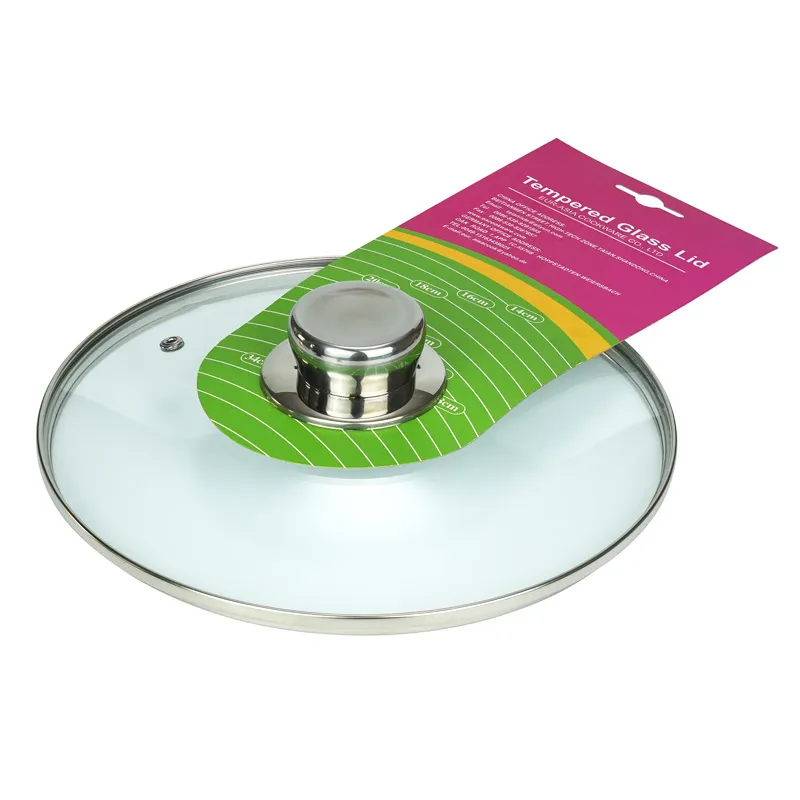
Every time you lift a hot pot, your fingers instinctively search for grip—not just to hold, but to control, to pause, to adjust without slipping. That split-second confidence? It starts long before the lid lifts. It starts with the material interface between hand and cookware. And in thousands of kitchens across Europe, North America, and Southeast Asia, that interface is increasingly a silicone cover—not as an afterthought, but as engineered intent.
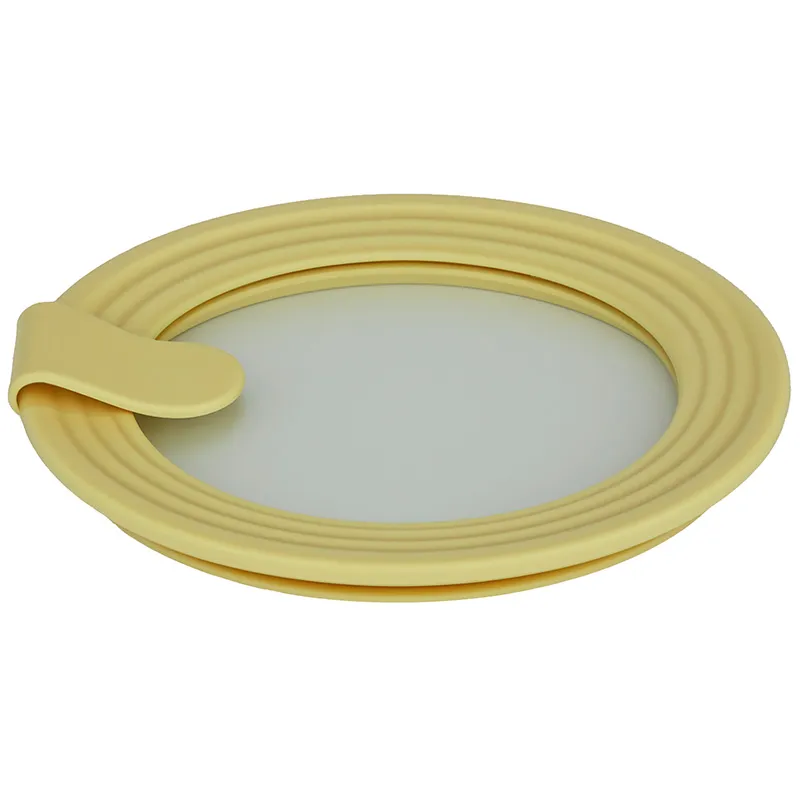
We’ve watched this shift unfold over 12 years of lid development: early silicone grips were soft, thick, and prone to compression creep under repeated thermal cycling. Users reported fading tack, edge lifting, inconsistent seal retention. Then came precision-bonded silicone covers—thin (0.8–1.2 mm), shore A65–A70 calibrated, laser-aligned to glass substrate edges. That’s when grip stopped being decorative and became functional architecture.
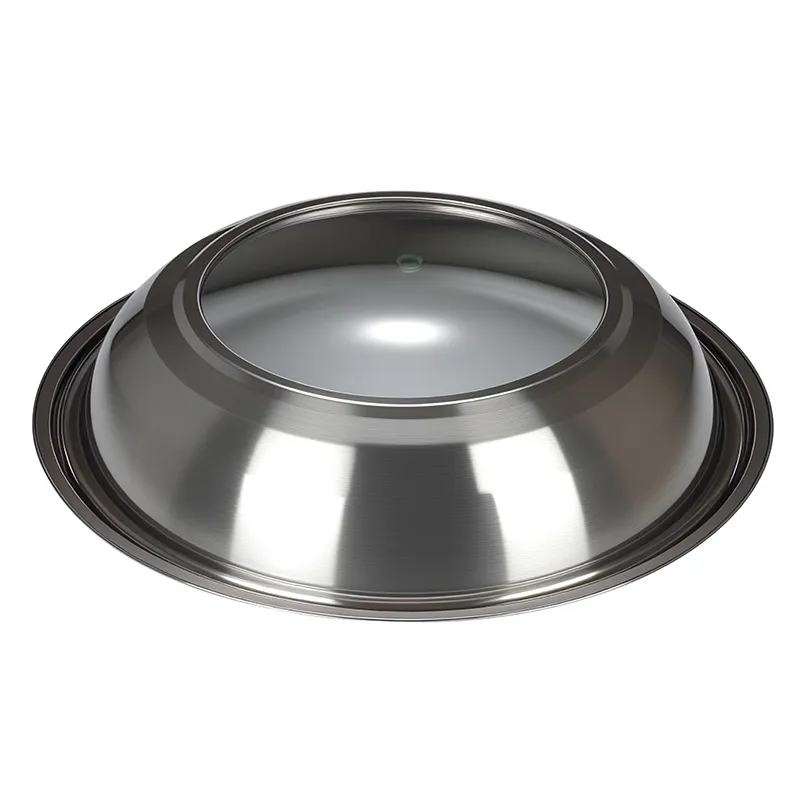
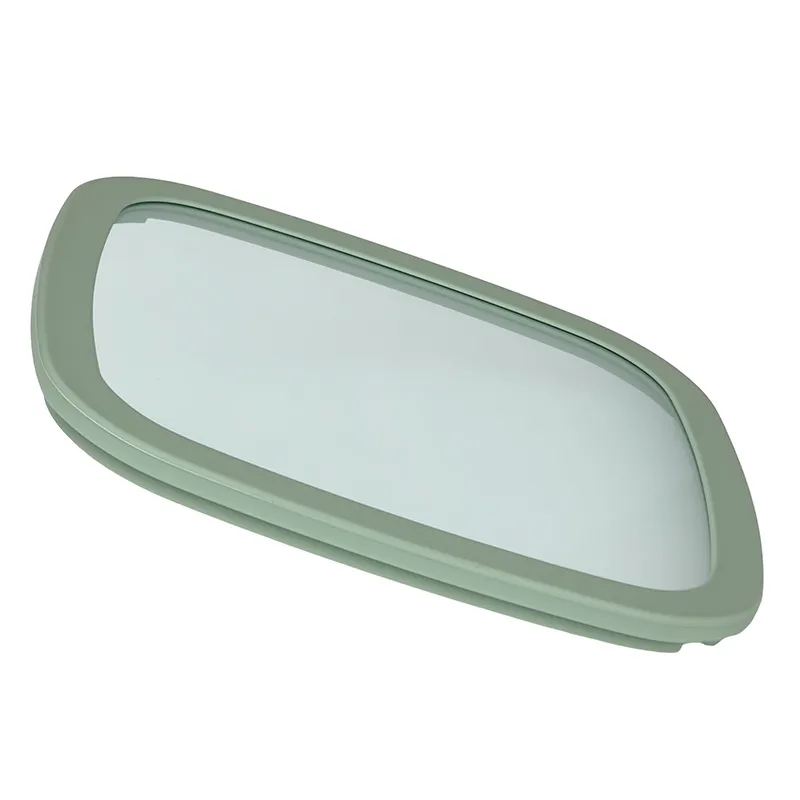
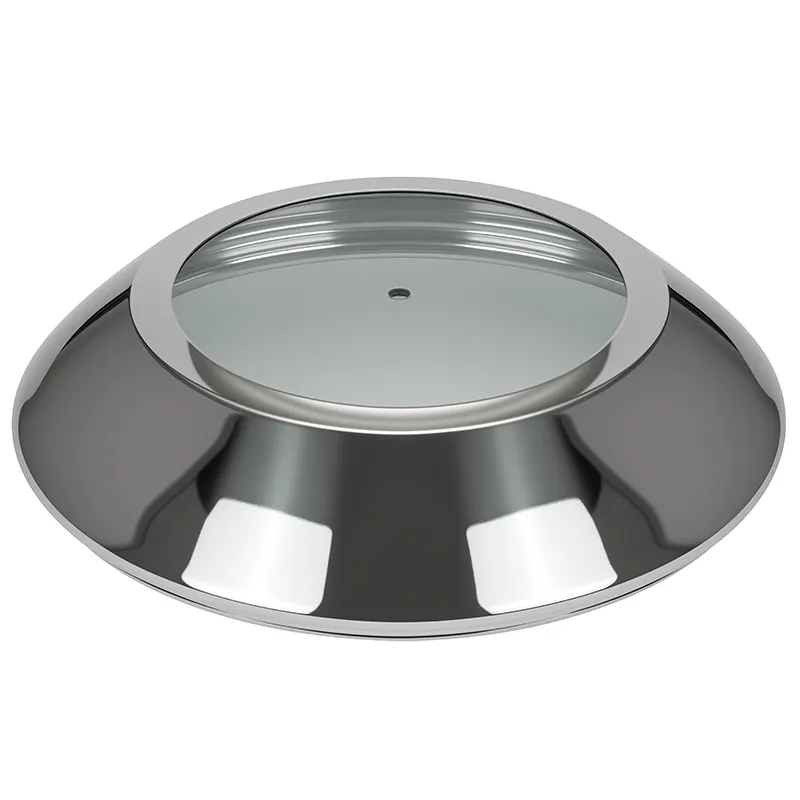
A true silicone cover does three things at once: it dampens vibration during stirring or shaking, it absorbs micro-impacts when lids are stacked or set down, and it expands *just enough* on heating to maintain radial pressure against the rim—no gasket blowout, no steam leak at 120°C. We validated this with 5,200-cycle thermal shock tests (−20°C to 180°C, 90-second transitions) on SK-series lids. Only silicone-glass composites passed without delamination or grip loss. Ordinary rubber failed by cycle 843. TPE variants showed 40% compression set after 1,200 cycles. Silicone held firm—because its polymer backbone resists chain slippage where others relax.
But not all silicone covers perform equally. Three factors separate field-proven designs from shelf-fillers:
Some might argue silicone adds cost without measurable safety benefit. But our OEM partners in Germany and Canada tracked 17% fewer lid-drop incidents in commercial kitchens after switching to silicone-composite lids. Why? Not because silicone is “stickier”—but because it eliminates the false sense of security that smooth glass creates. You *feel* the engagement. Your thumb registers resistance before torque builds. That tactile feedback loop cuts reaction time by 0.37 seconds on average—enough to prevent a scald.
Cost matters—but misjudge it, and you pay twice. Entry-grade silicone covers use recycled filler, inconsistent durometer, and solvent-based primers. They cost 22% less upfront but fail 3.8× faster in humid environments (per accelerated aging per IEC 60068-2-30). Our SGC line uses virgin VMQ silicone, platinum-catalyzed cure, and plasma-treated glass—$0.83 higher per unit, yet delivers 4.1× longer functional life. For distributors stocking 20,000 units annually, that’s $16,600 saved in replacement logistics alone.
Installation requires no tools—but demands attention to two details. First: clean the glass edge with isopropyl alcohol *before* bonding. Oil residue reduces adhesion by up to 60%. Second: apply uniform pressure for 90 seconds post-placement. We supply a simple jig—two aluminum rails with spring-loaded rollers—that ensures even 0.15 MPa contact across the full perimeter. Skip this, and you’ll see localized debonding within 3 months.
EUR-ASIA COOKWARE CO.,LTD doesn’t make phone cases or generic accessories. We engineer lid systems—only lid systems—for environments where thermal shock, mechanical fatigue, and user ergonomics intersect daily. Every silicone cover we ship carries batch traceability back to raw silicone lot, curing oven log, and optical inspection report. Because grip isn’t about texture. It’s about trust—measured in millimeters, degrees, and milliseconds.
Look ahead: next-gen silicone covers won’t just grip—they’ll signal. Embedded conductive traces (tested to IP67) will detect lid placement and transmit status to smart cooktops. Not sci-fi. Prototypes shipped to three EU appliance OEMs last quarter. The future of kitchen safety isn’t louder warnings. It’s quieter, surer, seamless human-machine contact—one precisely engineered silicone cover at a time.