
- English
- Chinese
- French
- German
- Portuguese
- Spanish
- Russian
- Japanese
- Korean
- Arabic
- Irish
- Greek
- Turkish
- Italian
- Danish
- Romanian
- Indonesian
- Czech
- Afrikaans
- Swedish
- Polish
- Basque
- Catalan
- Esperanto
- Hindi
- Lao
- Albanian
- Amharic
- Armenian
- Azerbaijani
- Belarusian
- Bengali
- Bosnian
- Bulgarian
- Cebuano
- Chichewa
- Corsican
- Croatian
- Dutch
- Estonian
- Filipino
- Finnish
- Frisian
- Galician
- Georgian
- Gujarati
- Haitian
- Hausa
- Hawaiian
- Hebrew
- Hmong
- Hungarian
- Icelandic
- Igbo
- Javanese
- Kannada
- Kazakh
- Khmer
- Kurdish
- Kyrgyz
- Latin
- Latvian
- Lithuanian
- Luxembou..
- Macedonian
- Malagasy
- Malay
- Malayalam
- Maltese
- Maori
- Marathi
- Mongolian
- Burmese
- Nepali
- Norwegian
- Pashto
- Persian
- Punjabi
- Serbian
- Sesotho
- Sinhala
- Slovak
- Slovenian
- Somali
- Scots Gaelic
- Shona
- Sindhi
- Sundanese
- Swahili
- Tajik
- Tamil
- Telugu
- Thai
- Ukrainian
- Urdu
- Uzbek
- Vietnamese
- Welsh
- Xhosa
- Yiddish
- Yoruba
- Zulu
- Kinyarwanda
- Tatar
- Oriya
- Turkmen
- Uyghur


Tempered Glass Lid Wholesale | Bulk Orders & Custom Specs
2026-10-16
Content
- Understanding Tempered Glass Lid Manufacturing Standards
- Key Specifications for Bulk Procurement
- Customization Options for Brand Differentiation
- Quality Certifications and Compliance Requirements
- Why Choose EUR-ASIA COOKWARE CO.,LTD. for Wholesale Orders
- Strategic Sourcing: How to Optimize Your Bulk Order
- Common Challenges in Glass Lid Procurement
- Frequently Asked Questions (FAQ)
- Conclusion: Securing Reliable Supply for Your Cookware Line
Sourcing tempered glass lids for bulk orders requires balancing safety certifications, manufacturing precision, and customization capabilities. For B2B buyers, the ideal partner offers LFGB and TUV compliance, high-curvature molding expertise, and scalable production volumes. EUR-ASIA COOKWARE CO.,LTD. delivers over 15 million units annually from its Shandong facility, specializing in custom-shaped lids for global markets including Germany, Japan, and Brazil. This guide details technical specifications, quality standards, and procurement strategies to secure reliable wholesale supply chains.
Understanding Tempered Glass Lid Manufacturing Standards
Tempered glass lids are critical components in modern cookware, serving both functional and aesthetic roles. Unlike standard annealed glass, tempered glass undergoes a rigorous thermal or chemical treatment process that increases its strength by four to five times. This enhancement is vital for kitchen environments where rapid temperature changes occur.
For wholesale buyers, understanding the manufacturing baseline is essential. The core value lies in the glass’s ability to withstand thermal shock without shattering into dangerous shards. Instead, if breakage occurs, tempered glass crumbles into small, granular chunks, significantly reducing injury risk. This safety feature is non-negotiable for retailers targeting consumer markets in Europe and North America.
The Science Behind Thermal Toughening
The tempering process involves heating flat glass sheets to approximately 620°C (1148°F) and then rapidly cooling them. This rapid cooling, known as quenching, creates compressive stress on the surface while maintaining tensile stress in the center. This stress distribution is what gives the lid its durability.
- Surface Compression: High compression levels prevent crack propagation.
- Thermal Shock Resistance: Capable of withstanding temperature differentials up to 200°C.
- Impact Strength: Resists accidental drops and impacts better than non-tempered alternatives.
In industrial production, consistency in this process is key. Variations in heating or cooling rates can lead to weak points, causing higher rejection rates during quality control. Established manufacturers utilize automated tempering furnaces to ensure uniform stress distribution across every unit produced.
Key Specifications for Bulk Procurement
When placing bulk orders for tempered glass lids, specifying exact parameters prevents costly mismatches between lids and cookware pots. Buyers must define dimensions, curvature, thickness, and edge finishing requirements clearly in their purchase orders.
Dimensional Accuracy and Tolerance
Precision is paramount. A deviation of even one millimeter can result in a lid that does not seal properly, leading to steam escape and poor cooking performance. High-quality manufacturers maintain tight tolerances, typically within ±0.5mm for diameter and height.
| Specification | Standard Range | Custom Capability |
|---|---|---|
| Diameter | 14cm – 32cm | Up to 40cm+ |
| Thickness | 3mm – 5mm | Specialized 6mm+ |
| Curvature Height | Standard Dome | High Curve / Flat |
| Edge Finish | Seamed / Polished | Ground / Safety Edge |
Handle Attachment and Material Compatibility
The handle is the primary interface for the user. It must be securely attached to withstand repeated lifting and washing. Common materials include stainless steel, Bakelite, and silicone-coated metals. The attachment method—whether mechanical riveting or adhesive bonding—must survive dishwasher cycles and high heat.
Stainless steel handles offer durability and a premium look but can become hot. Bakelite provides heat resistance and a comfortable grip. Manufacturers like EUR-ASIA COOKWARE CO.,LTD. often provide options for handle customization, allowing brands to match their specific cookware lines.
Customization Options for Brand Differentiation
In a competitive market, generic lids do not build brand loyalty. Customization allows retailers and cookware brands to create distinct product identities. This ranges from simple logo printing to complex structural modifications.
Logo Printing and Surface Decoration
Brand visibility on the lid itself is a powerful marketing tool. Screen printing and laser etching are the two primary methods for applying logos.
- Screen Printing: Ideal for colorful, complex designs. Uses high-temperature resistant inks that bond permanently to the glass surface.
- Laser Etching: Creates a frosted, permanent mark. Preferred for minimalist, premium branding as it does not add layers that could peel over time.
Customization extends beyond logos. Buyers can request specific color tints for the glass, such as bronze, grey, or clear, to match the aesthetic of their cookware sets. Vent hole placement and size can also be customized to control steam release, catering to specific cooking styles.
Special Shapes and High-Curvature Designs
Standard dome shapes are common, but unique culinary trends drive demand for specialized forms. High-curvature lids provide more internal volume for roasting large cuts of meat. Flat lids are preferred for stacking efficiency in retail packaging and storage.
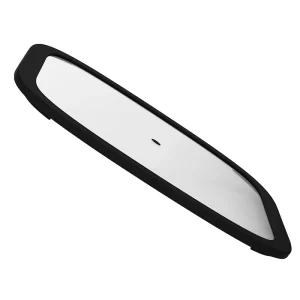
EUR-ASIA COOKWARE CO.,LTD. specializes in producing these special-shaped covers. Their production base in Taian City, Shandong Province, is equipped to handle high-curvature, tall, and flat designs according to customer demand. This flexibility is crucial for brands launching innovative cookware lines that deviate from traditional norms.
Quality Certifications and Compliance Requirements
International trade in kitchenware is heavily regulated. Importing tempered glass lids into markets like the European Union, United States, and Japan requires strict adherence to safety and material standards. Failure to comply can result in seized shipments, fines, and reputational damage.
Essential Certifications for Global Export
Buyers must verify that their supplier holds relevant certifications. These documents prove that the manufacturing process and final products meet international safety benchmarks.
- ISO9001: Certifies that the manufacturer has a robust Quality Management System in place. It ensures consistent production processes and continuous improvement.
- LFGB (Germany): The German Food and Feed Code is one of the strictest standards for food contact materials. It tests for heavy metal migration and overall safety.
- TUV Certification: A globally recognized mark of safety and quality, particularly respected in Europe. It validates that the product has undergone rigorous independent testing.
EUR-ASIA COOKWARE CO.,LTD. has passed ISO9001 certification, and its products have successfully met LFGB and TUV standards. This compliance enables them to export more than 90 percent of their products to demanding markets including Germany, France, Italy, and Japan. For buyers targeting these regions, partnering with a certified manufacturer reduces regulatory risk significantly.
Testing Protocols for Durability
Beyond paperwork, physical testing is crucial. Reputable factories conduct regular drop tests, thermal shock tests, and handle pull-tests. A standard thermal shock test might involve moving a heated lid directly into ice water to check for integrity. Buyers should request test reports or witness these tests during factory audits.
Why Choose EUR-ASIA COOKWARE CO.,LTD. for Wholesale Orders
Selecting the right manufacturing partner involves evaluating capacity, expertise, and reliability. EUR-ASIA COOKWARE CO.,LTD. stands out in the industry due to its scale, location, and specialized capabilities in household glass products.
Production Capacity and Infrastructure
Located in the China National High-tech Development Zone in Taian City, Shandong Province, the company operates a substantial production base. The facility covers an area of 20,000 square meters, with a building area of 15,000 square meters. This infrastructure supports a workforce of more than 90 employees dedicated to production and quality control.
The annual output exceeds 15 million pieces of tempered glass lids and other glass products. This high volume indicates a mature supply chain capable of handling large bulk orders without significant lead time delays. For retailers planning seasonal promotions or large-scale launches, this capacity ensures stock availability.
Global Export Experience
With over 90 percent of products exported, the company has extensive experience navigating international logistics and customs requirements. Their client base spans diverse markets:
- Europe: Germany, Russia, Italy, France, Poland, Denmark, Spain, Switzerland.
- Americas: Brazil.
- Asia: Turkey, South Korea, Japan.
This global footprint demonstrates adaptability to different regional preferences and standards. Whether it is the stringent quality demands of German buyers or the specific design aesthetics preferred in South Korea, the manufacturer has proven track records in these territories.
Strategic Sourcing: How to Optimize Your Bulk Order
Efficient procurement goes beyond price negotiation. It involves strategic planning to minimize costs and maximize product quality. Here is a step-by-step approach to sourcing tempered glass lids effectively.
Step 1: Define Technical Requirements Clearly
Before contacting suppliers, finalize your specifications. Create a detailed tech pack including drawings, dimensions, material grades, and packaging requirements. Ambiguity here leads to sampling errors and delays.
Step 2: Request Samples for Validation
Never place a bulk order without approving a pre-production sample. Check the fit on your actual cookware pots. Test the handle stability. Verify the clarity and finish of the glass. Ensure the logo printing aligns with your brand guidelines.
Step 3: Audit Quality Control Processes
Inquire about the supplier’s QC workflow. Do they inspect 100% of units or use statistical sampling? EUR-ASIA COOKWARE CO.,LTD. employs rigorous checks, leveraging their ISO9001 framework. Understanding their defect rate and rejection policy is vital for risk management.
Step 4: Negotiate Lead Times and Logistics
Clarify production timelines. Factor in raw material availability and shipping schedules. For ocean freight, book containers well in advance. Discuss Incoterms (e.g., FOB, CIF) to determine responsibility for shipping costs and insurance.
Common Challenges in Glass Lid Procurement
Even experienced buyers face challenges. Being aware of common pitfalls helps in mitigating risks.
Breakage During Transit
Glass is fragile. Poor packaging leads to high breakage rates. Ensure your supplier uses reinforced cartons, dividers, and adequate cushioning. Drop-test the packaged product before approving the packaging design.
Inconsistent Color Batches
If you order tinted glass, color consistency across batches can be an issue. Specify acceptable color tolerance levels in your contract. Request batch samples for large recurring orders to ensure visual uniformity on retail shelves.
Handle Loosening Over Time
Cheaper adhesives or poor riveting can cause handles to loosen. Prioritize suppliers who use high-temperature resistant adhesives or mechanical fixing methods. Conduct cycle testing to simulate long-term usage.
Frequently Asked Questions (FAQ)
What is the minimum order quantity (MOQ) for custom tempered glass lids?
MOQ varies by manufacturer and customization level. For standard sizes, MOQs may be lower. For custom shapes or printed logos, manufacturers typically require higher volumes to cover setup costs. Contacting suppliers like EUR-ASIA COOKWARE CO.,LTD. directly allows for negotiation based on specific project needs.
Can tempered glass lids go in the oven?
Yes, tempered glass lids are generally oven-safe up to certain temperatures, often around 200°C to 250°C. However, users should avoid sudden temperature changes, such as placing a hot lid on a cold wet surface, to prevent thermal shock breakage.
How do I verify the quality of tempered glass?
Look for certification marks like LFGB or TUV. Physically, tempered glass often has a slight distortion when viewed from an angle due to the tempering process. Additionally, certified suppliers provide test reports detailing impact and thermal resistance results.
Is it possible to print multi-color logos on glass lids?
Yes, screen printing allows for multi-color designs. However, each color requires a separate screen and firing process, which may increase cost and lead time. Laser etching is typically single-color (frosted) but offers a more durable finish.
What packaging is recommended for exporting glass lids?
Export-grade packaging should include individual wrapping (such as white boxes or bubble bags), sturdy inner dividers, and double-walled outer cartons. Palletizing with shrink wrap adds stability during container loading and unloading.
Conclusion: Securing Reliable Supply for Your Cookware Line
Sourcing tempered glass lids is a strategic decision that impacts product safety, brand reputation, and customer satisfaction. By prioritizing manufacturers with proven certifications like ISO9001, LFGB, and TUV, buyers mitigate regulatory risks. Customization capabilities, from high-curvature molds to precise logo printing, enable brands to differentiate their products in a crowded market.
EUR-ASIA COOKWARE CO.,LTD. offers a compelling solution for businesses seeking high-volume, high-quality production. With an annual output of over 15 million pieces and a strong export history to major global markets, they provide the reliability and expertise needed for successful partnerships. Their facility in Taian City combines scale with flexibility, accommodating both standard and special-shaped requirements.
For companies looking to enhance their cookware offerings with premium, compliant, and customizable glass lids, initiating a dialogue with an experienced manufacturer is the next logical step. Evaluate your specific design needs, request samples, and verify certifications to ensure a seamless supply chain.
Ready to discuss your bulk order requirements or custom specifications? Contact our team today to explore how our manufacturing capabilities can support your business growth.







