
- English
- Chinese
- French
- German
- Portuguese
- Spanish
- Russian
- Japanese
- Korean
- Arabic
- Irish
- Greek
- Turkish
- Italian
- Danish
- Romanian
- Indonesian
- Czech
- Afrikaans
- Swedish
- Polish
- Catalan
- Esperanto
- Hindi
- Lao
- Albanian
- Amharic
- Armenian
- Azerbaijani
- Belarusian
- Bengali
- Bosnian
- Bulgarian
- Cebuano
- Chichewa
- Corsican
- Croatian
- Dutch
- Estonian
- Filipino
- Finnish
- Frisian
- Galician
- Georgian
- Gujarati
- Haitian
- Hausa
- Hawaiian
- Hebrew
- Hmong
- Hungarian
- Icelandic
- Igbo
- Javanese
- Kannada
- Kazakh
- Khmer
- Kurdish
- Kyrgyz
- Latin
- Latvian
- Lithuanian
- Luxembou..
- Macedonian
- Malagasy
- Malay
- Malayalam
- Maltese
- Maori
- Marathi
- Mongolian
- Burmese
- Nepali
- Norwegian
- Pashto
- Persian
- Punjabi
- Serbian
- Sesotho
- Sinhala
- Slovak
- Slovenian
- Somali
- Samoan
- Scots Gaelic
- Shona
- Sindhi
- Sundanese
- Swahili
- Tajik
- Tamil
- Telugu
- Thai
- Ukrainian
- Urdu
- Uzbek
- Vietnamese
- Welsh
- Xhosa
- Yiddish
- Yoruba
- Zulu
- Kinyarwanda
- Tatar
- Oriya
- Turkmen
- Uyghur


China Glass Lid Manufacturer & Supplier: OEM, Wholesale Prices and Custom Solutions
2026-10-16
Choosing the right glass lid manufacturer is an important decision for cookware brands, kitchenware distributors, wholesalers, importers, and retailers. A suitable supplier should offer more than competitive pricing. Product consistency, material quality, dimensional accuracy, customization options, production capacity, and dependable communication are also essential factors when establishing a long-term supply relationship.
China is an important sourcing destination for a wide range of kitchenware products. Buyers searching for a China glass lid manufacturer often want to compare factory capabilities, evaluate OEM services, obtain wholesale quotations, and identify a supplier that can meet their specific product requirements. Whether the purchasing requirement involves standard glass lids, 24 cm glass lids, Z type glass lid designs, or customized glass lid covers, understanding the available options helps businesses make better sourcing decisions.
As a glass lid manufacturer and supplier, a company serving international buyers should be able to explain its product specifications, available configurations, quality inspection procedures, packaging options, and export arrangements. These details help buyers evaluate whether a particular glass lid factory is suitable for their target market and business model.
This guide explains how to select a glass lid supplier in China, what to consider when purchasing glass lids wholesale, how OEM glass lid manufacturing works, and which factors influence glass lid prices. It also discusses product dimensions, design variations, quality requirements, and international purchasing considerations.
Whether you are planning to buy glass lids for cookware production, wholesale distribution, private-label products, or replacement applications, the following information can help you prepare a clearer purchasing specification and communicate more effectively with potential suppliers.
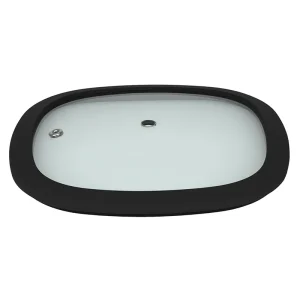
1. Understanding Glass Lids and Their Applications
Glass lids are commonly used in cookware and kitchenware because they allow users to observe food during cooking without removing the lid. Depending on the product design, a glass lid may be used with compatible pots, pans, saucepans, cooking vessels, or other kitchenware products.
For manufacturers, importers, and distributors, selecting the right glass lid requires consideration of more than its overall diameter. The shape of the rim, handle configuration, mounting method, thickness, material characteristics, and compatibility with the intended cookware all influence product suitability.
1.1 What Is a Glass Lid?
A glass lid is a cover manufactured primarily from glass and designed for a compatible container or cookware product. Many cookware lids incorporate a rim or edge component, a handle, or other accessories that help users lift and position the lid.
Different glass lid products may vary in shape, edge treatment, transparency, thickness, and accessory configuration. Some designs are developed for specific cookware models, while others are manufactured in standardized sizes for broader applications.
For a buyer looking for a China glass lid supplier, the first step is to determine the intended application. A lid designed for a particular frying pan may not fit a pot with the same nominal diameter if their rim structures differ. Buyers should therefore provide dimensional drawings, samples, or detailed product specifications whenever possible.
1.2 Common Applications of Glass Lid Products
Glass lids are used in several kitchenware categories, including:
- Frying pans and skillets
- Cooking pots and saucepans
- Selected casserole and cookware products
- Customized kitchenware collections
- Replacement lids for compatible cookware
- Private-label cookware ranges
The suitability of a glass lid depends on its actual design and technical specifications. Buyers should confirm whether the product is intended for a particular cookware series, general-purpose use, or a customized application.
A professional glass lid manufacturer should be able to review the buyer’s requirements and identify which specifications need to be confirmed before production.
1.3 Why Product Compatibility Matters
Compatibility is one of the most important factors in glass lid purchasing. Two lids with the same stated diameter may have different rim profiles, seating dimensions, or handle clearances.
Before placing a bulk order, buyers should confirm:
- Nominal diameter and actual fitting dimensions
- Rim or edge design
- Glass thickness and material specifications
- Handle shape and attachment method
- Compatibility with the intended cookware
- Packaging requirements for transportation and storage
These checks help reduce fitting problems, product returns, and unnecessary costs after delivery.
2. China Glass Lid Manufacturer: What Buyers Should Look For
When searching for a China glass lid manufacturer, international buyers should evaluate the supplier’s actual manufacturing capabilities rather than relying exclusively on marketing descriptions. A factory’s suitability depends on its equipment, product experience, quality management, customization capabilities, and ability to meet the buyer’s order requirements.
2.1 Manufacturing Experience and Product Knowledge
A manufacturer with relevant glass lid experience may be better prepared to discuss product dimensions, edge finishing, handle assembly, packaging, and quality inspection. Buyers should ask for product catalogs, technical drawings, samples, or production references that relate directly to their requirements.
Manufacturing experience is especially important for customized projects. A standard glass lid may require relatively straightforward specifications, while a customized design may involve additional tooling, dimensional verification, sample approval, and production testing.
When comparing suppliers, ask whether the proposed product is an existing model or a new design requiring development.
2.2 Production Capacity and Order Planning
Production capacity should match the buyer’s expected order volume and delivery schedule. A small distributor purchasing a limited quantity may have different requirements from a cookware brand ordering multiple sizes for a seasonal product launch.
A China glass lid factory should clarify its available production arrangements, minimum order quantity, sample lead time, estimated production schedule, and peak-season capacity.
Buyers should also confirm whether different sizes or configurations can be combined in one order. This can be particularly useful when launching a new product range or testing demand across several cookware models.
2.3 Quality Management and Inspection
Quality management should cover the relevant stages of production, from incoming materials and processing to final inspection and packaging.
Depending on the product and manufacturing process, inspection may include dimensional checks, visual examination, rim condition, handle attachment, appearance consistency, and packaging verification. Any testing requirements related to heat resistance, food-contact suitability, or applicable market regulations should be agreed upon and supported by appropriate documentation.
A reliable glass lid manufacturer should explain which inspections it performs and what records or reports can be provided to the buyer.
2.4 Communication and Technical Support
Clear communication helps prevent misunderstandings about specifications, tolerances, packaging, and delivery requirements.
Before confirming an order, buyers should establish a written specification covering the product model, dimensions, material requirements, accessories, logo or branding, packaging, and acceptance criteria. If a sample is approved, the production order should clearly identify the approved sample or specification revision.
For international purchasing, timely communication is especially important when adjustments are required during sampling or production.
3. OEM Glass Lid Manufacturer: Customized Products for Your Brand
OEM glass lid manufacturing allows cookware brands and kitchenware businesses to source products according to their own specifications. Depending on the factory’s capabilities, customization may involve dimensions, rim configurations, handles, branding, packaging, or other product features.
For businesses developing a private-label cookware range, working with an OEM glass lid manufacturer can help align the product with existing cookware designs and brand requirements.
3.1 What Is OEM Glass Lid Manufacturing?
OEM, or original equipment manufacturing, generally refers to producing goods according to a customer’s design, specifications, or agreed product requirements.
In a glass lid project, the buyer may provide an existing sample, a technical drawing, a dimensional specification, or a product concept. The manufacturer then evaluates the feasibility of producing the requested design.
The exact scope of OEM service varies by supplier. Some manufacturers may offer customization based on existing molds and standard components, while others may support more extensive product development. Buyers should confirm which services are available before assuming that every design can be produced.
3.2 Custom Sizes and Dimensions
Size customization can be important when a cookware brand needs lids for different pot and pan diameters. Common nominal sizes may include 20 cm, 24 cm, 26 cm, 28 cm, and other dimensions, depending on the supplier’s product range.
A China glass lid manufacturer should not be selected solely because it lists a particular nominal size. Buyers should also confirm the actual fitting dimensions and the tolerance requirements.
For example, a 24 cm glass lid may refer to a nominal product diameter, but the dimension used to determine compatibility could depend on the rim design and cookware structure.
Providing a technical drawing or physical sample is often the most effective way to confirm compatibility.
3.3 Custom Handles and Accessories
Handles influence usability, appearance, assembly requirements, and overall product positioning. Depending on the design, a glass lid may use a knob-style handle, a different handle profile, or a customized accessory.
When requesting an OEM quotation, buyers should specify the preferred handle material, shape, color, mounting method, and branding requirements.
If the handle includes metal components or other materials, the supplier should clarify the relevant material specifications and any applicable testing requirements.
3.4 Private Label and Logo Customization
Private-label projects may involve logo placement, branded packaging, product labels, or other presentation requirements.
Before approving a customized order, buyers should confirm the logo artwork, printing method, packaging design, minimum order quantity, and any additional setup costs. The supplier should also clarify how approved artwork and product specifications will be controlled during repeat orders.
For brands planning to expand their cookware collections, consistent branding across different glass lid sizes can improve product presentation and simplify catalog management.
3.5 OEM Sampling and Product Approval
Sampling is an important stage of customized manufacturing. It allows buyers to evaluate whether the proposed product matches the intended dimensions, appearance, handle configuration, and cookware compatibility.
A typical OEM process may include:
- Submitting the product drawing or reference sample.
- Confirming technical requirements and production feasibility.
- Reviewing the quotation, tooling requirements, and sample costs.
- Evaluating the sample and requesting necessary adjustments.
- Approving the final specifications before mass production.
The buyer and manufacturer should agree on the approval criteria in writing. This reduces the risk of disputes when the final production batch is delivered.
4. Wholesale Glass Lid Supplier: Purchasing in Bulk
A wholesale glass lid supplier serves businesses that need products in larger quantities for distribution, retail, manufacturing, or other commercial applications. Bulk purchasing may provide cost advantages, but the actual benefits depend on order volume, specifications, packaging, logistics, and the supplier’s pricing structure.
4.1 Benefits of Buying Glass Lids Wholesale
Purchasing glass lids wholesale can help importers and distributors establish a more consistent supply of products. It may also simplify purchasing administration when multiple sizes or product models can be sourced from one qualified supplier.
Potential advantages include:
- More predictable replenishment planning
- Opportunities to negotiate volume-based pricing
- Consistent product specifications across repeat orders
- More efficient coordination of packaging and shipment
- Potential customization for private-label products
These benefits are not automatic. Buyers should compare the total delivered cost and verify that the supplier can maintain the agreed product quality and delivery schedule.
4.2 Minimum Order Quantity
Minimum order quantity, often abbreviated as MOQ, is the smallest order a supplier is willing to accept under specified conditions.
MOQ may vary depending on the product model, glass dimensions, rim components, handle configuration, packaging, and customization requirements. Standard products may have different ordering conditions from newly developed OEM products.
When contacting a glass lid supplier, ask for the MOQ for each model and whether mixed sizes can be included in the same order.
For a new business, a trial order may be useful for evaluating demand and product quality. For established distributors, a larger order may improve purchasing efficiency, provided that inventory turnover and storage costs are considered.
4.3 Mixed-Size Wholesale Orders
A cookware distributor may need multiple glass lid sizes rather than a single model. A mixed-size order can help build a more complete product range and support customers with different cookware requirements.
Before placing such an order, confirm whether each size has a separate MOQ, whether the supplier can coordinate production across multiple models, and whether the products can be packed and labeled separately.
Accurate model identification is particularly important when several lids have similar appearances but different fitting dimensions.
4.4 Wholesale Packaging Requirements
Glass products require packaging that helps protect them during handling, storage, and transportation. Packaging requirements depend on product dimensions, weight, shipping conditions, and the buyer’s distribution model.
Buyers should discuss individual product protection, separators, carton strength, labeling, palletization, and any special handling instructions with the supplier.
For export orders, the packaging plan should be agreed upon before production. The buyer should also clarify whether the quoted price includes the specified packaging materials.
5. Glass Lid Price: What Determines the Cost?
Glass lid price is influenced by several variables, including product size, material specifications, edge processing, handle configuration, order quantity, packaging, customization, and shipping arrangements.
A useful quotation should clearly identify the product being priced and the conditions under which the price applies. Comparing two prices without comparing the specifications may lead to an inaccurate purchasing decision.
5.1 Product Size and Material Requirements
The size of a glass lid can affect material consumption, processing requirements, packaging dimensions, and transportation costs.
Material selection and required performance characteristics may also influence the manufacturing process. Buyers should specify the intended application and any relevant technical requirements instead of requesting a price based only on the general term “glass lid.”
If particular material standards or testing procedures are required, these should be stated in the request for quotation.
5.2 Handle and Rim Configuration
A glass lid with a standard configuration may have a different cost structure from one requiring customized handles, special rim components, or additional assembly operations.
When requesting prices for Z type glass lid or C type glass lid designs, buyers should provide reference images or drawings if the terms describe specific product geometries.
This helps the supplier determine whether the requested product corresponds to an existing model or requires additional development.
5.3 Order Quantity and Volume Pricing
Wholesale pricing often depends on the quantity ordered. Larger orders may distribute certain setup or packaging costs across more units, although the actual savings depend on the manufacturing process and supplier terms.
Buyers should request quotations at several realistic quantities if they expect to scale their purchases. For example, comparing a trial quantity with a planned repeat-order volume may help clarify how the supplier’s pricing structure changes.
Any quantity-based discount should be confirmed in the formal quotation rather than assumed.
5.4 Customization and Tooling Costs
OEM projects may involve sample charges, tooling, logo setup, customized components, or special packaging. These expenses may be quoted separately from the unit price.
Before approving a project, ask the supplier to distinguish between one-time development costs and recurring production costs. Also confirm whether tooling ownership, storage, maintenance, and future use are covered by the agreement.
This is particularly important when the buyer intends to order the same customized glass lid over an extended period.
5.5 Shipping, Packaging, and Import Costs
The factory price is only one component of the total purchasing cost. International buyers should also consider packaging, inland transportation, export handling, freight, insurance where applicable, customs duties, taxes, and destination charges.
The final cost depends on the shipping method, destination, order volume, agreed trade terms, and applicable import requirements.
To compare offers accurately, request quotations based on the same product specifications, quantity, packaging requirements, delivery destination, and trade terms.
5.6 How to Request an Accurate Glass Lid Quotation
A detailed inquiry helps a manufacturer provide a more relevant quotation.
Include the following information whenever possible:
- Product type and intended application
- Nominal diameter and required fitting dimensions
- Glass and rim specifications
- Handle design and material requirements
- Estimated order quantity
- OEM branding and packaging requirements
- Destination country and preferred shipping terms
- Required delivery schedule
- Testing or compliance documentation, if applicable
The more complete the specification, the easier it is to compare quotations from different glass lid manufacturers.
6. China Glass Lid Factory: Evaluating Production and Supply Capabilities
A China glass lid factory may offer standard products, customized manufacturing, or a combination of both. The appropriate supplier depends on the buyer’s technical requirements, order size, delivery expectations, and need for ongoing product development.
6.1 Standard Products Versus Customized Products
Standard glass lids may be suitable for buyers who need established dimensions and configurations. These products can reduce development requirements when an existing model matches the intended application.
Customized glass lids may be necessary when a cookware design requires a particular rim profile, handle arrangement, branding treatment, or dimensional specification.
When evaluating a factory, ask which requested models are already available and which would require sample development or tooling.
6.2 Equipment and Process Capability
The manufacturing process depends on the specific glass lid design and the supplier’s production arrangements. Buyers should ask the factory to explain which production and finishing operations are performed in-house and which, if any, are handled by external partners.
This distinction can help clarify production lead times, quality responsibilities, and coordination requirements.
If a project requires a specific process, material, or inspection method, the buyer should verify that the supplier can meet that requirement before placing an order.
6.3 Repeat-Order Consistency
Consistency across repeat orders is important for distributors and cookware brands. Differences in dimensions, accessories, appearance, or packaging can complicate inventory management and create customer complaints.
Buyers should establish a controlled product specification and retain an approved sample or reference drawing. Repeat orders should refer to the same approved requirements unless a change is formally agreed upon.
A documented process for handling product changes can help both parties maintain consistency as purchasing volumes increase.
6.4 Lead Time and Production Scheduling
Production lead time depends on product availability, order quantity, customization, material supply, packaging requirements, and the factory’s workload.
For standard products, the schedule may differ from that of a new OEM design. Buyers should ask for separate estimates for sample development, sample approval, mass production, and shipment preparation.
A realistic production schedule should include time for inspection and packaging rather than considering manufacturing time alone.
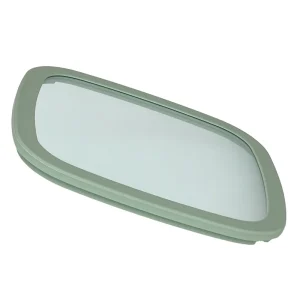
7. Z Type Glass Lid and C Type Glass Lid: Design Considerations
Some buyers use terms such as Z type glass lid and C type glass lid to identify particular product designs. However, these expressions may not have a universal technical meaning across manufacturers. Their exact interpretation should be confirmed using product drawings, reference photographs, samples, or supplier model numbers.
7.1 Understanding Z Type Glass Lid Requirements
When searching for a Z type glass lid, buyers should first determine which part of the product the letter “Z” describes. It may refer to a particular profile, component arrangement, or customer-specific designation, depending on the product catalog.
The purchasing specification should identify the relevant geometry and dimensions rather than relying on the model name alone.
If the product is intended for an existing cookware item, providing a sample or dimensional drawing can help the supplier confirm compatibility.
7.2 Understanding C Type Glass Lid Requirements
The same principle applies to C type glass lid products. Buyers should clarify whether “C type” refers to the rim, edge profile, handle arrangement, or another design characteristic.
The supplier should confirm the model designation and explain any relevant differences between the C type and other available configurations.
If both Z type and C type lids are required, request separate specifications and quotations for each model to avoid confusion during sampling and production.
7.3 Comparing Different Glass Lid Designs
When comparing two designs, evaluate the factors that affect actual use and manufacturing:
- Overall dimensions and fitting diameter
- Rim profile and contact area
- Glass thickness and edge treatment
- Handle position and clearance
- Compatibility with the intended cookware
- Available customization options
- Packaging and identification requirements
A clear comparison helps purchasing teams determine whether one design can replace another or whether each model must be maintained as a separate product.
7.4 Model Identification for Wholesale Orders
Product identification becomes increasingly important when a wholesale order includes several similar designs.
Each model should have a clear product code, specification sheet, and approved reference. If product labels or carton markings are required, the labeling system should match the buyer’s inventory and distribution process.
These measures can reduce the risk of mixing different glass lid models during production, shipping, warehousing, or resale.
8. China 24 cm Glass Lid: Size, Fit, and Purchasing Requirements
A China 24 cm glass lid may be relevant to buyers sourcing cookware lids for a specific pot or pan size. However, the stated diameter alone does not establish that a lid will fit every cookware product labeled 24 cm.
Before ordering, buyers should confirm how the nominal diameter is measured and identify the dimensions that determine the actual fit.
8.1 Confirming the Correct Diameter
A product’s nominal diameter may not be identical to every measurement used in its rim or fitting structure.
For example, the outer diameter, inner opening, and seating dimensions may differ. The correct measurement depends on the product’s design and the cookware it is intended to fit.
Buyers should provide the supplier with a drawing or sample whenever the fitting dimensions are critical.
8.2 Material and Construction Specifications
When purchasing 24 cm glass lids, buyers should specify the required material, thickness, rim construction, handle configuration, and other relevant features.
Any claims concerning thermal performance, resistance to temperature changes, or compatibility with particular cooking methods should be supported by appropriate product specifications and testing.
Do not assume that all glass lids have identical performance characteristics simply because they share the same nominal diameter.
8.3 Ordering 24 cm Glass Lids in Bulk
For wholesale purchases, buyers should confirm the available model, MOQ, production lead time, packaging arrangement, and quotation validity.
If the 24 cm glass lid will be sold as part of a larger cookware collection, check whether the supplier can provide compatible sizes with consistent appearance and specifications.
For private-label orders, the buyer should also confirm whether branding, packaging, or accessory customization is available for the selected model.
8.4 Sample Testing Before Mass Production
A sample can help verify the actual fit, appearance, handle position, and compatibility with the intended cookware.
Where required, additional checks may be needed to confirm dimensions, assembly, or relevant performance characteristics. The buyer and supplier should agree on the evaluation criteria before the sample is approved.
This process helps ensure that the production order is based on a confirmed product rather than a size description alone.
9. Glass Lid Exporter: Sourcing Products from China
Working with a glass lid exporter can help overseas buyers coordinate product quotations, export documentation, packaging, and shipment arrangements. However, buyers should distinguish between a manufacturer that exports directly, a trading company, and a supplier that uses external manufacturing partners.
Each business model may be suitable for different purchasing needs, provided that responsibilities are clearly defined.
9.1 Manufacturer or Trading Supplier?
A manufacturer may provide direct access to production information and technical discussions, depending on its business structure. A trading supplier may offer a broader product range or coordinate products from multiple factories.
Buyers should not assume that one model is always better. Instead, evaluate product knowledge, quality control, communication, pricing transparency, and the supplier’s ability to meet the specific order requirements.
Ask who is responsible for product inspection, specification approval, packaging, and handling any quality issues after delivery.
9.2 Export Documentation and Shipping Preparation
International shipments may require commercial invoices, packing lists, transport documents, and other paperwork depending on the destination, transaction structure, and applicable regulations.
Buyers should confirm the required documentation with the supplier and their freight forwarder or customs broker before shipment.
Product descriptions, quantities, packaging information, and other shipment details should be consistent across the relevant documents.
9.3 Packaging Glass Lids for International Transport
Because glass lids can be vulnerable to impact and edge damage, export packaging should be selected according to the product design and shipping conditions.
The packaging plan may include individual protection, separators, reinforced cartons, palletization, and clear handling instructions. The appropriate solution depends on the shipment size, transport method, and buyer’s receiving arrangements.
Where possible, buyers should review packaging specifications before mass production and discuss any special requirements for warehouse handling or retail presentation.
9.4 Delivery Terms and Responsibility
The buyer and supplier should agree on the delivery term, named destination, shipping responsibilities, and applicable costs.
Different trade terms allocate responsibilities differently. Therefore, a quotation should clearly state which costs and services are included rather than simply describing the offer as a factory price or delivered price.
For repeat orders, maintaining consistent delivery requirements can help purchasing teams compare costs and plan inventory more effectively.
10. High Quality Glass Lid Supplier: Quality Control and Product Reliability
A high quality glass lid supplier should be able to explain how product requirements are translated into inspection criteria. Quality should be evaluated through measurable specifications and relevant evidence rather than general descriptions alone.
The appropriate quality requirements depend on the intended cookware application and the product’s material and construction.
10.1 Visual Inspection
Visual inspection may identify scratches, chips, cracks, irregular edge conditions, appearance inconsistencies, or other defects relevant to the product specification.
The acceptance criteria should define which conditions are acceptable and which require rejection or corrective action. This is especially important when the glass lid will be sold under a retail brand.
Inspection methods and sampling frequency should be agreed upon according to the product’s risk level and order requirements.
10.2 Dimensional Inspection
Dimensional checks help verify that the product matches the approved drawing or specification.
Relevant measurements may include nominal diameter, fitting dimensions, rim geometry, thickness, and other design-specific characteristics.
For customized orders, the buyer should establish appropriate tolerances before production. A supplier cannot reliably assess dimensional conformity when the critical measurements and permitted variations have not been defined.
10.3 Handle and Assembly Checks
If a glass lid includes a handle or other assembled components, the relevant inspection requirements should be documented.
Depending on the design, checks may cover attachment, alignment, appearance, and the ability to meet specified functional requirements.
Any load, durability, or performance test should use an agreed method and acceptance criteria appropriate to the actual product.
10.4 Material and Performance Documentation
Some buyers may require documentation concerning material composition, food-contact suitability, thermal performance, or compliance with destination-market requirements.
The applicable requirements depend on the product design and intended market. Buyers should identify the specific regulations or standards relevant to their business and ask the supplier to provide suitable supporting documents.
General quality statements should not be treated as substitutes for product-specific test reports or compliance documentation.
10.5 Managing Defects and Corrective Actions
Before placing a significant order, buyers should clarify how nonconforming products will be documented and handled.
An agreed process may cover defect reporting, photographs, inspection records, investigation, corrective action, replacement arrangements, and responsibility for associated costs.
Clear procedures are useful for both parties because they reduce uncertainty when a quality issue occurs.
11. How to Buy Glass Lids from China: A Step-by-Step Guide
For importers and distributors, the process of buying glass lids from China begins with defining the product requirement and ends with verifying the delivered goods. A structured purchasing process can reduce misunderstandings and help buyers compare suppliers more accurately.
Step 1: Define Your Product Requirements
Start by identifying the intended cookware application, required diameter, rim configuration, handle design, material requirements, and target quantity.
If the product is based on an existing model, provide photographs, a sample, a drawing, or the original model number. This is particularly important for products described as Z type glass lid, C type glass lid, or other model-specific designs.
Step 2: Identify Suitable Manufacturers and Suppliers
Search for suppliers whose product range and capabilities match your requirements.
Review product catalogs, technical information, available customization options, and the supplier’s explanation of its manufacturing or sourcing arrangements.
Avoid relying exclusively on a website description. Request evidence relevant to the product and order you intend to purchase.
Step 3: Request Comparable Quotations
Send the same specification to each candidate supplier. Ask for unit prices at the relevant quantities, MOQ, sample charges, tooling costs if applicable, packaging details, production lead time, and shipping terms.
A standardized request makes it easier to compare offers without confusing differences in product scope or delivery conditions.
Step 4: Evaluate Samples
If the product is important to fit or appearance, request a sample before confirming mass production.
Check the sample against the agreed requirements, including dimensions, rim structure, handle arrangement, and compatibility with the cookware.
Record any approved adjustments in the final specification.
Step 5: Confirm the Order in Writing
The purchase order should identify the product model, specifications, quantity, price, packaging, delivery schedule, and applicable terms.
For OEM products, also confirm artwork approval, tooling arrangements, and the version of the approved drawing or sample.
Step 6: Arrange Inspection and Shipment
Before shipment, verify that the agreed inspection and packaging requirements have been completed. Confirm the shipping documents, carton information, and delivery arrangements.
For large or customized orders, consider whether an agreed pre-shipment inspection is appropriate.
Step 7: Review the Delivered Products
After receiving the shipment, inspect the goods according to the agreed acceptance criteria. Document any discrepancies and communicate them to the supplier promptly.
Maintaining inspection records can help improve subsequent orders and support a more consistent long-term purchasing relationship.
12. How to Choose the Right Glass Lid Manufacturer for Your Business
The best glass lid manufacturer is not necessarily the supplier offering the lowest quoted price. Buyers should evaluate the overall suitability of the product, the reliability of the supply arrangement, and the total cost of ownership.
12.1 Match the Supplier to Your Business Model
A retailer purchasing standard replacement lids may prioritize available sizes, order flexibility, and packaging. A cookware brand developing a private-label collection may prioritize OEM customization, design control, and repeat-order consistency.
An importer handling large wholesale volumes may place greater emphasis on production planning, shipment coordination, and quality documentation.
Defining your business priorities helps narrow the supplier selection process.
12.2 Compare Total Cost Instead of Unit Price Alone
A lower unit price may not represent better value if the product requires additional packaging, has a longer lead time, or does not meet the required specification.
Compare quotations using the same dimensions, material requirements, accessories, order quantity, inspection standards, and delivery terms.
Where relevant, include freight, import charges, inspection costs, and potential inventory expenses in the comparison.
12.3 Evaluate Long-Term Supply Stability
For repeat purchases, consider whether the supplier can maintain consistent specifications, provide clear communication, and manage future changes.
Discuss how product revisions will be documented, how approved samples will be retained, and how the supplier will communicate changes to materials or components.
A well-defined process can be more valuable over time than a small initial price difference.
12.4 Confirm Customization Limits
Not every supplier can accommodate every design. Before selecting an OEM glass lid manufacturer, confirm the actual customization options, tooling requirements, development schedule, and technical limitations.
A supplier that clearly explains what is feasible can help the buyer make better decisions and avoid unnecessary development costs.
13. Product Planning for Glass Lid Distributors and Retailers
Businesses building a glass lid product range should consider how individual models fit into their overall catalog. A structured product range can make purchasing, storage, sales, and replenishment more efficient.
13.1 Organizing Products by Size
A size-based catalog helps customers identify products that match their cookware. Each model should have clearly documented nominal dimensions and fitting specifications.
If the range includes a 24 cm glass lid and other sizes, use consistent product naming and measurement conventions across the catalog.
Avoid describing two models as interchangeable unless their compatibility has been verified.
13.2 Organizing Products by Design
If the product range includes Z type glass lid and C type glass lid models, document the difference between the designs using clear photographs and technical specifications.
Where the model names are customer-specific, explain the relevant geometry instead of assuming that every buyer understands the same terminology.
This is especially important for wholesale catalogs that serve customers in multiple countries.
13.3 Planning Inventory and Replenishment
Inventory planning should reflect demand, supplier lead times, minimum order quantities, and the number of product variations.
Ordering every available model in large quantities may increase storage costs and create slow-moving inventory. A phased purchasing strategy can help businesses evaluate demand before expanding the product range.
For repeat orders, maintaining accurate sales and stock records can improve forecasting and supplier coordination.
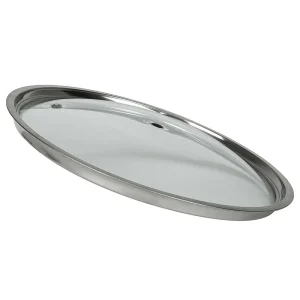
14. Why Clear Specifications Improve Glass Lid Purchasing
A detailed product specification is one of the most effective tools for improving communication between a buyer and a manufacturer. It provides a shared reference for quotations, sampling, production, inspection, and repeat orders.
14.1 Avoiding Ambiguous Product Names
Terms such as China glass lid cover, China glass cover lid, and glass lid product may describe similar product categories, but they do not always identify a precise model.
When contacting a supplier, use a model number or technical drawing whenever possible. Product names can support search and catalog organization, but they should not replace critical dimensions and design details.
14.2 Establishing Acceptance Criteria
The specification should identify the measurements and product characteristics that determine whether the goods are acceptable.
Depending on the design, this may include dimensions, permitted tolerances, appearance standards, handle assembly, packaging, and required documentation.
Clearly defined acceptance criteria help prevent disagreements after production.
14.3 Maintaining Specification Records
Keep the approved specification, sample reference, quotation, and purchase order together. If a product changes, record the revision and confirm the change with the relevant parties.
This is particularly useful for OEM products and recurring wholesale orders, where the same model may be purchased several times over an extended period.
15. Frequently Asked Questions About China Glass Lid Manufacturers and Suppliers
Q1. How do I find a reliable China glass lid manufacturer?
Start by identifying suppliers with relevant products and technical capabilities. Request product specifications, samples, quotations, and information about inspection procedures. Confirm the supplier’s manufacturing or sourcing arrangements and compare offers using the same product requirements.
Q2. Can I buy glass lids wholesale from China?
Wholesale purchasing may be available for standard and customized products, depending on the supplier. Buyers should confirm MOQ, quantity-based pricing, packaging requirements, lead time, and shipment terms before placing an order.
Q3. What factors affect glass lid price?
The main factors include product size, material requirements, rim design, handle configuration, order quantity, customization, packaging, and shipping arrangements. For an accurate quotation, provide a detailed specification and the expected purchasing quantity.
Q4. Does a glass lid manufacturer offer OEM services?
Some manufacturers offer OEM services such as customized dimensions, handle configurations, branding, or packaging. The available options vary by supplier. Confirm whether the required design is an existing model or needs new tooling and sample development.
Q5. How do I select a 24 cm glass lid?
Confirm the nominal diameter and the actual fitting dimensions required by the cookware. Check the rim profile, handle arrangement, and other relevant specifications. If compatibility is important, provide a sample or drawing and evaluate a production sample before placing a bulk order.
Q6. What is the difference between Z type glass lid and C type glass lid?
The meaning of these terms depends on the supplier’s product classification. Buyers should request drawings or photographs that identify the relevant design differences. Do not assume that the labels describe standardized geometries across all manufacturers.
Q7. How can I compare glass lid suppliers?
Compare product specifications, quality controls, customization capabilities, MOQ, unit pricing, lead time, packaging, communication, and delivery terms. A supplier comparison is meaningful only when the offers cover equivalent products and purchasing conditions.
Q8. Can I order glass lids with custom branding?
Some suppliers support private-label projects involving logos, labels, or customized packaging. Confirm the available methods, artwork requirements, minimum quantities, setup costs, and approval process before production.
Q9. What information should I provide when requesting a quotation?
Provide the product type, dimensions, drawing or reference sample, material requirements, handle specifications, order quantity, packaging preferences, destination country, delivery expectations, and any required compliance documentation.
Q10. How should glass lids be packaged for export?
Packaging should be appropriate for the product’s dimensions, edge structure, shipping conditions, and handling requirements. Discuss individual protection, separators, carton specifications, and palletization with the supplier before mass production.
Q11. Should I request samples before buying glass lids wholesale?
Samples are particularly useful when the lid must fit specific cookware or meet customized appearance and dimensional requirements. Agree on the evaluation criteria before approving the sample for mass production.
Q12. How can I reduce purchasing costs when sourcing glass lids from China?
Provide complete specifications, compare quotations at realistic order quantities, evaluate standard models before commissioning custom designs, and plan packaging and shipping early. Consider total delivered cost rather than unit price alone.
Conclusion: Choose the Right China Glass Lid Manufacturer and Supplier
Finding a suitable China glass lid manufacturer and supplier requires a balanced evaluation of product specifications, manufacturing or sourcing capabilities, customization options, quality management, wholesale pricing, and export arrangements.
For buyers seeking standard glass lids, the priority is to confirm dimensions, compatibility, availability, and order conditions. For OEM projects, a clear technical specification, approved sample, and documented production requirements are essential. For wholesale buyers and importers, MOQ, packaging, lead time, and total delivered cost should be considered alongside the quoted unit price.
Whether you are sourcing a 24 cm glass lid, comparing Z type and C type designs, developing a private-label cookware collection, or looking for a long-term glass lid exporter, a structured purchasing process can help reduce uncertainty and improve supplier coordination.
Before placing an order, prepare your product requirements, request comparable quotations, verify the relevant specifications, and agree on inspection and delivery conditions. These steps provide a stronger basis for selecting a supplier that matches your business needs and supports consistent purchasing over time.
Looking for a glass lid supplier for your next project? Prepare your product drawings or reference samples, required quantities, customization details, and destination information to request a quotation tailored to your purchasing requirements.







