- English
- Chinese
- French
- German
- Portuguese
- Spanish
- Russian
- Japanese
- Korean
- Arabic
- Irish
- Greek
- Turkish
- Italian
- Danish
- Romanian
- Indonesian
- Czech
- Afrikaans
- Swedish
- Polish
- Catalan
- Esperanto
- Hindi
- Lao
- Albanian
- Amharic
- Armenian
- Azerbaijani
- Belarusian
- Bengali
- Bosnian
- Bulgarian
- Cebuano
- Chichewa
- Corsican
- Croatian
- Dutch
- Estonian
- Filipino
- Finnish
- Frisian
- Galician
- Georgian
- Gujarati
- Haitian
- Hausa
- Hawaiian
- Hebrew
- Hmong
- Hungarian
- Icelandic
- Igbo
- Javanese
- Kannada
- Kazakh
- Khmer
- Kurdish
- Kyrgyz
- Latin
- Latvian
- Lithuanian
- Luxembou..
- Macedonian
- Malagasy
- Malay
- Malayalam
- Maltese
- Maori
- Marathi
- Mongolian
- Burmese
- Nepali
- Norwegian
- Pashto
- Persian
- Punjabi
- Serbian
- Sesotho
- Sinhala
- Slovak
- Slovenian
- Somali
- Samoan
- Scots Gaelic
- Shona
- Sindhi
- Sundanese
- Swahili
- Tajik
- Tamil
- Telugu
- Thai
- Ukrainian
- Urdu
- Uzbek
- Vietnamese
- Welsh
- Xhosa
- Yiddish
- Yoruba
- Zulu
- Kinyarwanda
- Tatar
- Oriya
- Turkmen
- Uyghur


Dome Glass Lids: Why Curved Design Is Popular for Cookware
2026-10-26
Summary: Learn about dome glass lids for cookware, their benefits, limitations, suitable pots, OEM sourcing considerations and tradeoffs compared with flat glass lids.
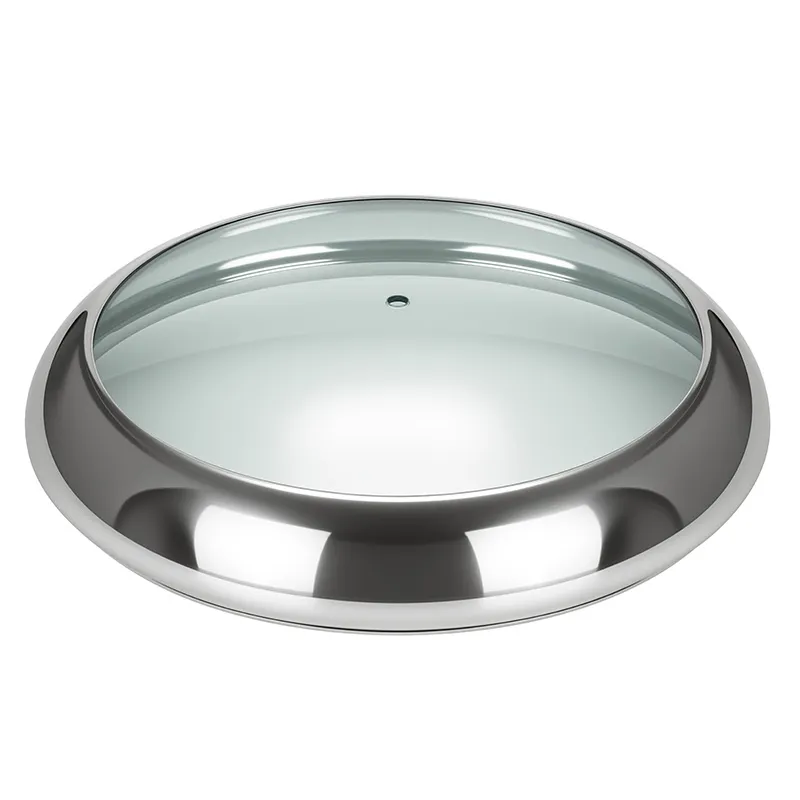
A dome glass lid is a curved, upward-arched tempered glass cover built for cookware.
Its rounded profile creates extra internal steam space, which is the primary reason many cookware brands select this style over flat alternatives.
This guide breaks down its functional benefits, suitable cookware types, practical limitations, production tradeoffs and cost considerations for OEM cookware development.
What Is a Dome Glass Lid?
A dome glass lid features an arched, raised glass surface instead of a level flat top.
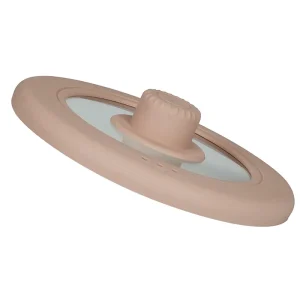
Most dome lids are made of safety tempered glass, commonly referred to as a dome tempered glass lid, while silicone-edged variants are known as dome silicone glass lids.
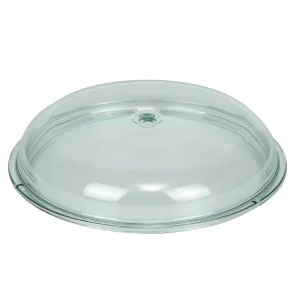
The core visual and functional difference lies in its upward curve.
Flat glass lids sit nearly flush with the pot rim, while dome lids extend upward to add vertical clearance inside the cookware.
This article focuses on the design logic of curved dome-style lids; flat glass lid designs are only mentioned briefly for quick context and will not be covered in depth here.
Core Benefits of Dome Glass Lids for Cookware
The curved dome shape delivers practical functional advantages for end users and cookware developers alike, supporting its consistent popularity for soup and stockpot product lines.
Extra Steam Space for Simmering & Boiling
The most valuable advantage of a dome glass lid is the added steam chamber above food.
When liquids boil or simmer, steam accumulates in this raised space instead of pressing directly against the food surface.
The extra room reduces boil-over risks during long cooking cycles such as broth simmering, bean cooking and slow stewing.
Larger steam volume also stabilizes cooking temperature.
Heat spreads more gently, preventing rapid liquid loss that often happens with tightly fitting flat lids on high heat.
Better Heat Circulation Inside the Pot
Heat and hot steam naturally rise, and the arched dome surface encourages steam to roll back down toward the food.
This circular convection pattern creates more even heating across ingredients.
For slow cooking applications where consistent temperature matters, this circulation effect is a major design plus.
Visual Appeal & Premium Cookware Aesthetics
Dome glass lids carry a premium visual impression compared to standard flat lids.
Cookware designers frequently use curved lids to upgrade the look of mid-to-high-end pot sets.
The rounded silhouette helps a product stand out on retail shelves and online product listings, making it a common choice for brands targeting premium home cooking segments.
Compatibility With Tall Ingredients
Large root vegetables, whole poultry cuts and stacked food items often sit close to a flat lid.
The dome’s upward arch provides clearance so bulky ingredients do not press against the glass surface while cooking.
This makes dome lids practical for recipes that require substantial vertical space inside the pot.
Which Cookware Works Best With a Dome Glass Lid?
Dome glass lids are not universally suitable for every cookware shape.
Their value shines most clearly on deep, tall vessels, while shallow cookware usually pairs better with flat lids.
Stockpots & Large Soup Pots
Stockpots are the most common match for a dome glass lid.
These pots are built for large-volume liquid cooking, and the dome’s extra steam space directly addresses boil-over and evaporation control for broths, stocks and soups.
Most standard OEM stockpot lines offer dome tempered glass lid options.
Deep Sauce Pots & Stew Pots
Deep sauce pots and stew pots designed for braising also benefit from the curved design.
Slow braising relies on stable, humid heat, and the dome profile retains moisture effectively for long cooking times.
Selected Wok Models
Only deep, high-sided woks work well with dome glass lids.
Shallow woks are intended for high-heat stir-frying with frequent lid removal, and the tall dome shape creates awkward proportions.
For covered steaming or braising inside deep woks, however, dome lids are a viable option.
Cases Where Dome Lids Are NOT Recommended
Avoid dome glass lids for low-profile frying pans, shallow skillets and compact mini sauce pans.
The tall curved silhouette looks mismatched on shallow cookware.
It also adds unnecessary height to finished product sets and hurts stacking efficiency during storage.
Key Limitations of Curved Dome Glass Lids
While dome lids bring clear cooking benefits, OEM buyers and product developers must weigh meaningful drawbacks before finalising a new cookware project.
These constraints affect packaging, logistics, quality control and overall project budget.
Poor Stacking Performance for Shipping & Storage
The outward curve is the biggest logistical downside.
Unlike flat glass lids that nest neatly together, dome lids cannot stack tightly.
Each arched lid occupies far more cubic space inside cartons and shipping containers.
Lower packing density increases per-unit ocean freight and warehousing costs.
Curved surfaces also have more exposed areas vulnerable to chipping during transit.
Higher Production Difficulty for Tempered Curved Glass
Manufacturing curved tempered glass requires an extra hot bending step beyond standard flat glass tempering.
During heat forming, glass must reach forming temperature and cool evenly across the curved surface.
For manufacturers without mature hot-bending process controls, consistent stress distribution across the arch is harder to maintain than for flat sheets.
Uneven cooling raises quality risks, including visual distortion and inconsistent temper stress.
Higher Tooling & Mould Cost for Custom Sizes
Every unique diameter and arch height requires a dedicated bending mould.
For custom OEM orders with small batch sizes, the one-time mould expense spreads across fewer finished units and significantly increases per-lid development cost.
Flat glass lids share simpler cutting fixtures across a wider range of sizes, reducing customisation overhead.
Cleaning Edge Concerns (Silicone Rim Variants)
For dome silicone glass lid styles with wrapped silicone rims, the seam between glass and silicone can trap food residue if not designed carefully.
Product developers should specify smooth, fully bonded rim construction to minimise gaps that are difficult for end users to clean.
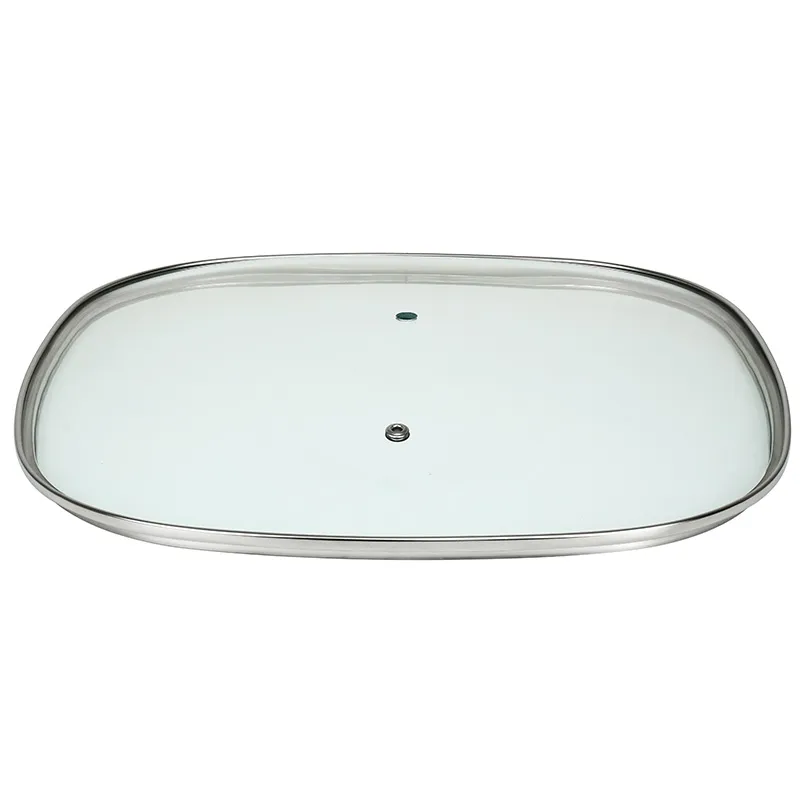
Dome vs Flat Glass Lids: Bending and Cost Differences (Brief Comparison)
| Feature | Dome Glass Lids | Flat Glass Lids |
|---|---|---|
| Bending process | Glass cutting + hot bending + tempering | Glass cutting + standard tempering |
| Tooling requirement | Custom mould per diameter/arc height | Simple cutting fixtures, reusable across multiple sizes |
| Stacking efficiency | Low; arched shape prevents tight nesting | High; easy stacking and packing |
| Unit production cost | Higher | Lower |
| Best fit | Deep stockpots, stew pots | Skillets, shallow pans |
This comparison stays limited to core manufacturing tradeoffs, as flat glass lid design will be covered in a separate dedicated resource.
Important Notes for OEM Custom Dome Glass Lid Orders
When sourcing custom dome lids for a cookware brand, three design decisions shape performance, quality and total landed cost.
Curvature Selection (Arc Height Design)
Arc height is the central design variable.
A taller arch maximises steam space and ingredient clearance but worsens stacking and pushes mould and freight costs upward.
A subtle, low dome curve balances benefits and logistics pain points.
Product teams should test multiple arc heights against their target pot size and intended cooking use case before locking in specifications.
As a general rule: only specify a taller arch when cooking performance is your top priority and higher logistics costs are acceptable.
Rim Options: Stainless Steel, PVD and Silicone for Dome Lids
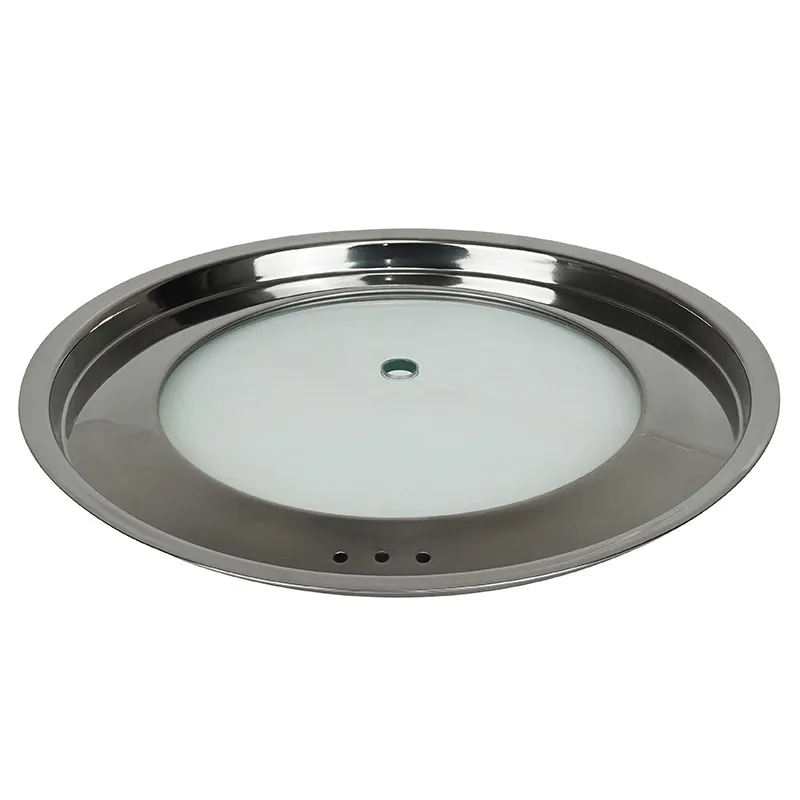
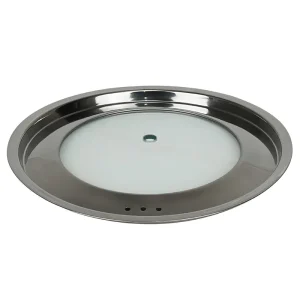
Dome tempered glass lids usually come with metal rims, including standard stainless steel and decorative PVD-coated rims for premium color finishes.
Dome silicone glass lids use flexible silicone wrapping for shatter protection and tight sealing.
Each rim style targets different price tiers and end-user priorities, from budget durability to premium visual finishes.
Quality Control for Curved Tempered Glass
QC checks for curved glass focus heavily on uniform temper stress, consistent arch shape, edge finishing and visual distortion.
Curved lids require extra inspection to catch uneven bending marks and stress inconsistencies that rarely appear on flat tempered glass.
Reliable suppliers will include stress testing as part of their standard quality workflow for dome lid batches.
FAQ
Is a dome glass lid stronger than a flat glass lid?
When properly tempered, both flat and dome tempered glass lids meet standard cookware safety requirements.
The curved shape does not automatically make the glass stronger; consistent tempering quality is the main factor for impact and thermal-shock resistance.
Poorly controlled hot bending can create uneven stress points that increase failure risk.
Can I get a custom dome tempered glass lid for my cookware brand?
Yes, custom dome tempered glass lid production is available for OEM cookware projects.
Customisation for the glass component includes diameter, arch height, rim material and rim color.
Handle design is often a separate accessory customisation with its own tooling requirements.
Remember that custom mould charges and minimum order quantities apply for new unique curves.
Are dome silicone glass lids dishwasher safe?
Most dome silicone glass lid models built for cookware are dishwasher safe, provided the silicone material is food-grade and heat-stabilised.
Even so, grease trapped in rim seams may occasionally require hand scrubbing, depending on the rim construction.
Does dome shape affect the glass lid’s heat resistance?
Heat resistance depends on the tempering quality and glass grade, not the curved dome geometry itself.
Properly manufactured tempered glass, flat or dome, handles normal stovetop heat exposure for covered cooking.