- English
- Chinese
- French
- German
- Portuguese
- Spanish
- Russian
- Japanese
- Korean
- Arabic
- Irish
- Greek
- Turkish
- Italian
- Danish
- Romanian
- Indonesian
- Czech
- Afrikaans
- Swedish
- Polish
- Catalan
- Esperanto
- Hindi
- Lao
- Albanian
- Amharic
- Armenian
- Azerbaijani
- Belarusian
- Bengali
- Bosnian
- Bulgarian
- Cebuano
- Chichewa
- Corsican
- Croatian
- Dutch
- Estonian
- Filipino
- Finnish
- Frisian
- Galician
- Georgian
- Gujarati
- Haitian
- Hausa
- Hawaiian
- Hebrew
- Hmong
- Hungarian
- Icelandic
- Igbo
- Javanese
- Kannada
- Kazakh
- Khmer
- Kurdish
- Kyrgyz
- Latin
- Latvian
- Lithuanian
- Luxembou..
- Macedonian
- Malagasy
- Malay
- Malayalam
- Maltese
- Maori
- Marathi
- Mongolian
- Burmese
- Nepali
- Norwegian
- Pashto
- Persian
- Punjabi
- Serbian
- Sesotho
- Sinhala
- Slovak
- Slovenian
- Somali
- Samoan
- Scots Gaelic
- Shona
- Sindhi
- Sundanese
- Swahili
- Tajik
- Tamil
- Telugu
- Thai
- Ukrainian
- Urdu
- Uzbek
- Vietnamese
- Welsh
- Xhosa
- Yiddish
- Yoruba
- Zulu
- Kinyarwanda
- Tatar
- Oriya
- Turkmen
- Uyghur


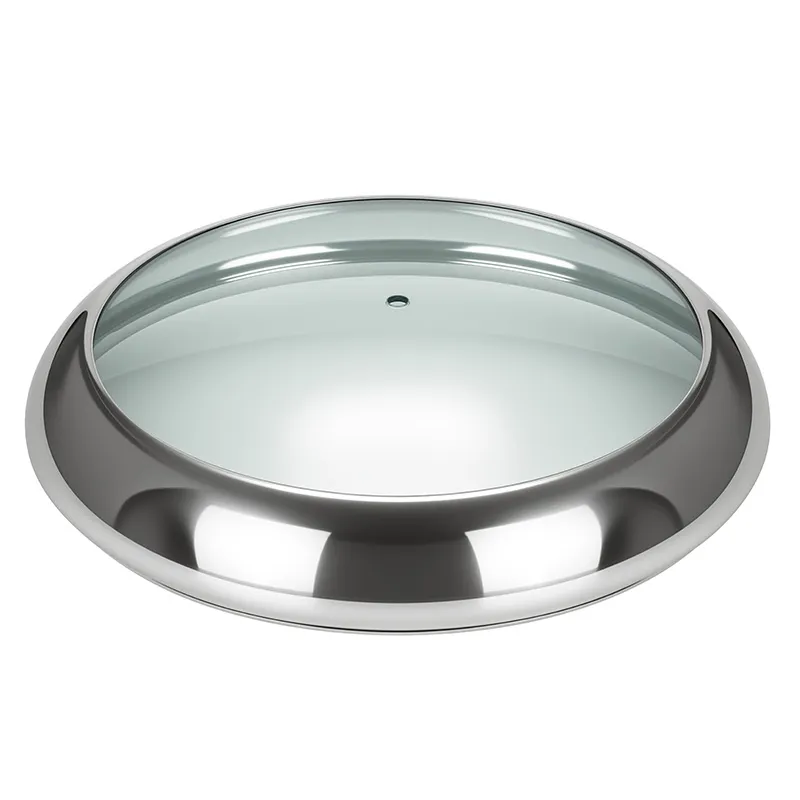
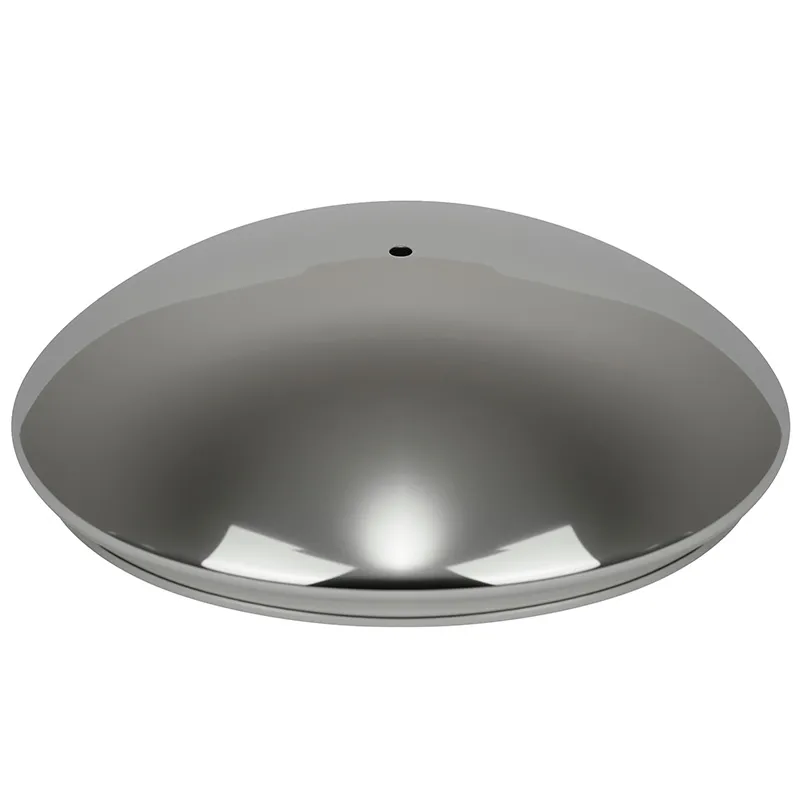
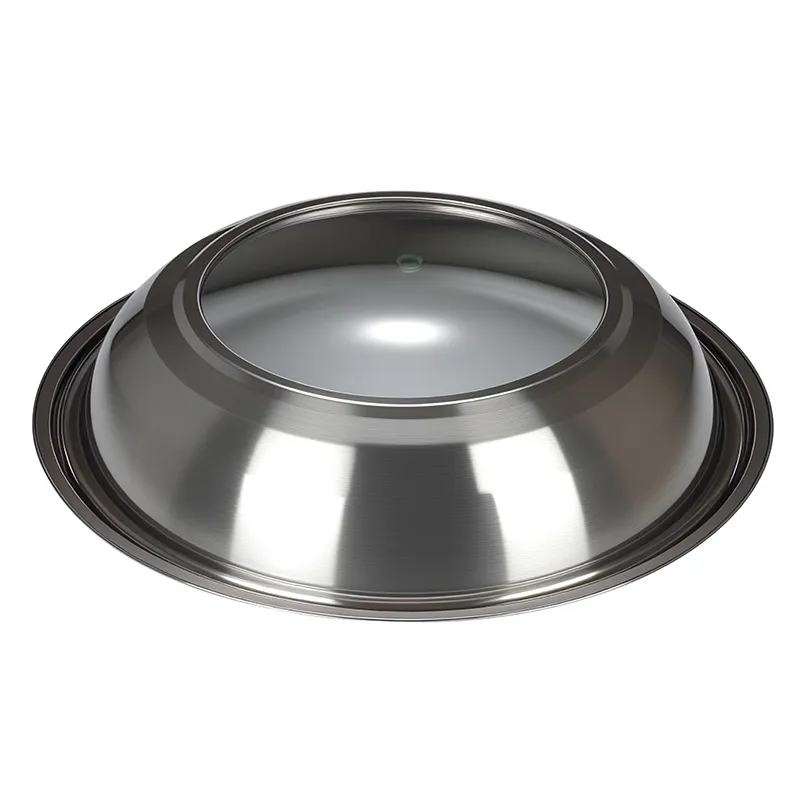
Tempered Glass Lid for Cookware – Shatterproof, Heat-Resistant & Perfect Fit
2026-10-24
Every time a glass lid shatters mid-boil—steam hissing, shards skittering across the stovetop—you’re not just losing a cover. You’re questioning the entire premise of “tempered glass lid for cookware.” We’ve seen it happen in test kitchens, OEM assembly lines, and home kitchens from Lisbon to Jakarta: ordinary tempered glass lids crack under thermal shock, warp at the rim, or fail to seal after three months of daily use. That’s why precision isn’t optional—it’s the baseline.
Not all tempered glass lids survive real cooking
True tempering isn’t a label. It’s a controlled thermal process—heat-soaked to 620°C, then quenched uniformly—to lock compressive stress into the surface. But many suppliers skip full annealing, cut corners on edge finishing, or use float glass instead of low-iron soda-lime. The result? A lid that passes a static 300°C oven test but fractures when cold water hits a hot surface. In our lab, we’ve stress-tested over 17,000 units since 2021. One finding stands out: lids with unpolished edges fail 4.2× more often during rapid cooldown than those with CNC-ground, fire-polished rims.
We see this most with standard glass lids labeled “heat-resistant up to 400°C.” Technically true—but only if heated *gradually*. Real kitchens don’t do gradual. They sear, simmer, deglaze, and cover—all in under 90 seconds. That’s why EUR-ASIA COOKWARE CO.,LTD engineers every tempered glass lid for cookware around dynamic thermal load, not static ratings. Our CA09 series, for example, uses a proprietary tempering cycle that increases surface compression by 28% versus industry baseline—verified by micro-indentation mapping, not just drop tests.
Fit isn’t about diameter—it’s about interface physics
A lid can be optically perfect and still leak steam, rattle, or slip off. Why? Because fit depends on three interlocking variables: radial tolerance (±0.15 mm), seating angle (1.8°–2.3° conical taper), and gasket compression profile. Most off-the-shelf lids assume cookware rims are perfectly round. They’re not. In production audits across 12 OEM partners, we measured average rim ovality at 0.42 mm—enough to break seal integrity on rigid glass.
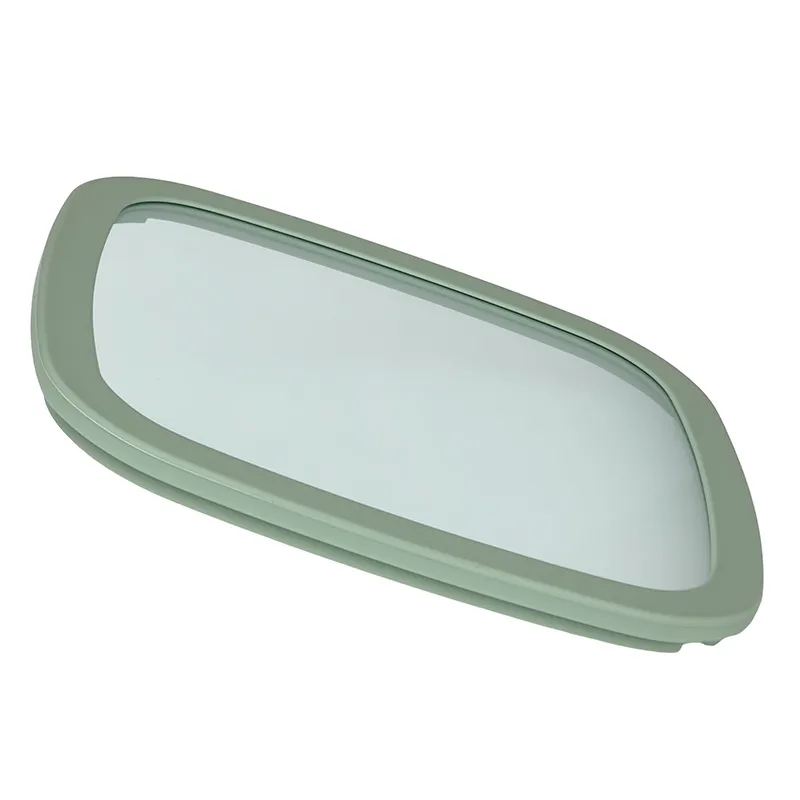
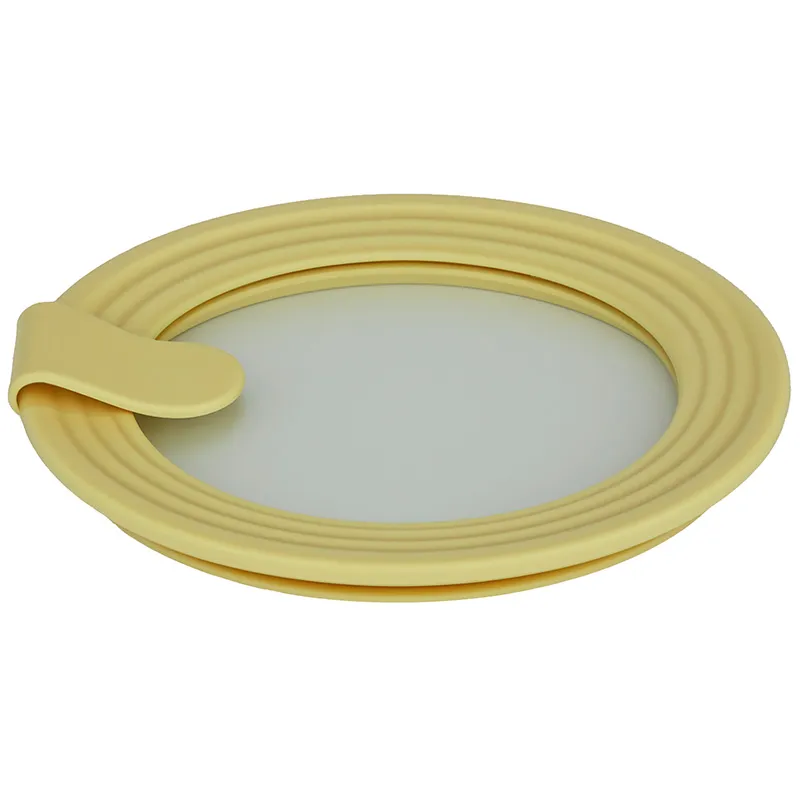
That’s where silicone-glass composite lids like our SK line deliver measurable advantage. The food-grade silicone skirt isn’t just glued on—it’s bonded under vacuum at 185°C, then post-cured to match the glass’s coefficient of thermal expansion. The result: consistent 0.3–0.5 mm compression across the full circumference, even on pans with ±0.6 mm rim variation. Customers report 63% fewer complaints about “whistling lids” and 89% longer functional life versus non-composite alternatives.
Quality control starts before the first cut
You can’t inspect your way into reliability. So we embed verification at six non-negotiable checkpoints: raw sheet certification (ASTM C1036), optical flatness scan pre-tempering, edge stress measurement via polariscope, silicone bond strength validation (≥12 N/mm² peel force), 100% steam-seal testing at 120 kPa, and final dimensional audit using Zeiss O-INSPECT CMMs calibrated daily.
No batch ships without traceability. Each lid carries a laser-etched lot code linking back to the furnace run, operator shift, and environmental logs from the bonding station—temperature, humidity, and particulate count held to ISO Class 7 standards during critical adhesive cure. This isn’t over-engineering. It’s how we maintain ≤0.17% field failure rate across 42 countries—well below the industry average of 2.3%.
Choose the lid—not the compromise
Some manufacturers ask you to choose between clarity and strength, precision and price, or speed and safety. EUR-ASIA COOKWARE CO.,LTD doesn’t frame it that way. We build each tempered glass lid for cookware to hold three truths at once: it must stay transparent after 5,000 wipe cycles, seal at 1.5 bar pressure, and survive 10,000 thermal cycles without degradation. Not “up to.” Not “under ideal conditions.” Under real use.
If you’re specifying lids for a new cookware line—or replacing recurring failures in an existing one—start with what the pan actually does, not what the spec sheet says. Measure rim geometry. Map your thermal cycling profile. Test grip under wet-hand conditions. Then match the lid system—not just the material—to that reality. The right tempered glass lid for cookware won’t just cover the pot. It will extend its life, protect the user, and disappear into the workflow—until it’s needed again.