- English
- Chinese
- French
- German
- Portuguese
- Spanish
- Russian
- Japanese
- Korean
- Arabic
- Irish
- Greek
- Turkish
- Italian
- Danish
- Romanian
- Indonesian
- Czech
- Afrikaans
- Swedish
- Polish
- Catalan
- Esperanto
- Hindi
- Lao
- Albanian
- Amharic
- Armenian
- Azerbaijani
- Belarusian
- Bengali
- Bosnian
- Bulgarian
- Cebuano
- Chichewa
- Corsican
- Croatian
- Dutch
- Estonian
- Filipino
- Finnish
- Frisian
- Galician
- Georgian
- Gujarati
- Haitian
- Hausa
- Hawaiian
- Hebrew
- Hmong
- Hungarian
- Icelandic
- Igbo
- Javanese
- Kannada
- Kazakh
- Khmer
- Kurdish
- Kyrgyz
- Latin
- Latvian
- Lithuanian
- Luxembou..
- Macedonian
- Malagasy
- Malay
- Malayalam
- Maltese
- Maori
- Marathi
- Mongolian
- Burmese
- Nepali
- Norwegian
- Pashto
- Persian
- Punjabi
- Serbian
- Sesotho
- Sinhala
- Slovak
- Slovenian
- Somali
- Samoan
- Scots Gaelic
- Shona
- Sindhi
- Sundanese
- Swahili
- Tajik
- Tamil
- Telugu
- Thai
- Ukrainian
- Urdu
- Uzbek
- Vietnamese
- Welsh
- Xhosa
- Yiddish
- Yoruba
- Zulu
- Kinyarwanda
- Tatar
- Oriya
- Turkmen
- Uyghur


Silicone Glass Lid Manufacturer Selection Guide for Cookware Brands
2026-11-04
If you are building a cookware product line, sourcing from a qualified silicone glass lid manufacturer directly impacts end-user satisfaction, compliance risk, and after-sales costs. Silicone-rimmed glass lids have grown in popularity for their quiet fit, reliable sealing, and chip-resistant edges, but not all suppliers deliver consistent quality. Many buyers focus only on unit price during initial screening, only to face mass production issues such as pungent silicone odors, loose rims that fall off after months of use, poor sealing that causes boil-overs, or non-compliant materials that trigger customs detentions. For cookware brands and OEM procurement teams working with Chinese supply chains, distinguishing a reliable silicone glass lid factory in China from low-cost vendors requires a structured evaluation framework. This guide breaks down the full selection criteria, custom development workflow, and incoming inspection standards to help you vet suppliers efficiently and reduce quality risks in mass production.
What Is a Silicone Glass Lid & How It Is Structured
A silicone glass lid combines a tempered glass panel with a food-grade silicone rim fitted along the outer edge. Unlike fully stainless steel or all-glass lids, this design leverages the transparency and heat resistance of tempered glass with the flexibility and cushioning properties of silicone.
The silicone rim serves four core functions:
- Sealing: It creates a uniform, soft seal against the cookware rim, locking in heat and moisture while reducing steam escape and boil-over risk.
- Impact protection: The flexible silicone absorbs edge impacts during handling, stacking, and shipping, drastically reducing glass chipping compared to bare glass edges.
- Noise reduction: The soft buffer eliminates the clanging sound of glass against metal cookware, making it ideal for home kitchens and quiet cooking environments.
- Anti-slip stability: The high-friction silicone surface keeps the lid securely positioned on the pot, even when tilted slightly, preventing accidental sliding.
Silicone glass lids are widely used for saucepans, stock pots, preservation pots, electric skillets, and small kitchen appliances. Note that this guide focuses on silicone rim and assembly-specific manufacturing criteria; the base tempered glass sheet production process is covered in our dedicated glass lid manufacturing guide and will not be repeated in detail here.
6 Key Dimensions to Evaluate a Silicone Glass Lid Manufacturer
As a core product line for many silicone lid manufacturers in China, silicone glass lids are produced across a wide range of quality tiers. A capable silicone glass lids maker does more than assemble parts — they control material sourcing, maintain tight tolerance standards, and validate long-term performance before shipment. Below are the six most critical dimensions to assess during supplier screening.
Food-Grade Silicone Material & Compliance Certifications
The silicone material is the most variable component and the biggest source of quality and compliance risk. Reputable silicone glass lid manufacturing operations use virgin food-grade silicone, while lower-cost suppliers may use recycled or filled silicone to cut costs.
Virgin food-grade silicone offers consistent elasticity, odorless performance, and stable chemical properties across temperature changes. Recycled or inferior silicone, by contrast, often releases a pungent plastic-like odor when heated, leaches unknown substances into food, and hardens or cracks after a short period of use, leading to premature seal failure.
For global distribution, verify that the material meets regional food contact safety standards. Key frameworks include:
- FDA (U.S. Food and Drug Administration) standards for food contact silicone
- LFGB (German Food and Feed Code) standards for the EU market
- Other regional requirements for target export markets
Non-compliant material can lead to customs detention, product recalls, and permanent brand damage, so never accept verbal claims alone. Always request formal certification documents and, for high-volume orders, consider third-party material testing.
Note: Factory-held food contact certifications (FDA / LFGB) and official silicone material grade specifications – TO BE VERIFIED
Color Matching & Aesthetic Customization Capability
For cookware brands, visual consistency across the product line is critical for brand identity. A capable silicone glass lid supplier based in China will offer reliable color matching capabilities to align the silicone rim with your cookware body, handle, or brand color system.
Standard product lines usually include several common stock colors, such as black, grey, or transparent silicone. For custom projects, look for suppliers that support Pantone color matching, with control over color consistency across production batches. In addition to color, consider other aesthetic options:
- Surface finish: matte, satin, or glossy silicone surfaces
- Logo application: pad printing, laser engraving, or debossed branding on the silicone rim
- Special effects: speckled, translucent, or two-tone silicone designs
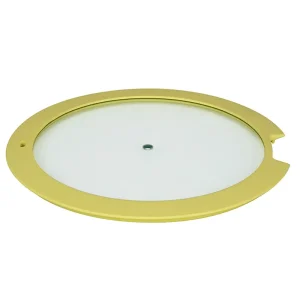
Poor color matching will result in noticeable shade differences between the lid and cookware set, harming perceived product quality. Always confirm physical color swatches under natural light before finalizing specifications, as digital renderings and screen displays often have color deviation.
Note: Available stock color range, Pantone matching accuracy, and custom color MOQ – TO BE VERIFIED
Size Range & Rim Tolerance Control
Silicone glass lids are produced for cookware diameters ranging from small saucepans to large stock pots. Beyond size range, the most critical quality metric is rim tolerance control.
Rim tolerance refers to the precision of both the glass edge dimensions and the silicone rim inner dimensions. If tolerances are too loose:
- An oversized silicone rim will fit loosely, slip out of position when heated, or even fall off during use.
- An undersized rim will be difficult to install, create excessive stress on the glass edge, or fail to seat properly on the cookware.
Consistent tolerance control requires precision glass cutting equipment and stable silicone molding processes. It directly determines fitting consistency across thousands of units in mass production, which in turn affects seal performance and defect rates. For brands with strict fitting requirements, ask suppliers for their internal tolerance standards and batch consistency data.
Note: Factory internal rim tolerance standards and glass-silicone fitting precision specifications – TO BE VERIFIED
Heat Resistance & Sealing Performance
Heat resistance and long-term sealing performance are the core functional metrics of a silicone glass lid. These properties are largely determined by silicone formulation and hardness.
Heat resistance defines the temperature range the silicone can safely withstand without deforming, hardening, or releasing harmful substances. Real-world use cases include exposure to stovetop radiant heat, dishwasher cycles, refrigerator storage, and occasional oven use. Inferior silicone may deform, become brittle, or emit odors at normal cooking temperatures.
Silicone hardness, measured on the Shore A scale, directly affects sealing behavior:
- Too soft: The rim compresses excessively, wears out quickly, and may deform permanently over time.
- Too hard: The rim does not conform well to minor imperfections on the cookware rim, resulting in uneven sealing and steam leakage.
A well-formulated silicone balances initial seal effectiveness with long-term compression set resistance — the ability to return to its original shape after being compressed for extended periods. Poor compression set leads to gradual seal failure as the silicone loses elasticity.
Note: Official silicone heat resistance range, Shore A hardness value, and compression set test results – TO BE VERIFIED
Assembly Process & Bonding Reliability
How the silicone rim is attached to the glass panel is a defining factor in long-term durability. Silicone glass lid manufacturing facilities typically use one of three assembly methods, each with different performance and cost profiles:
- Physical snap-fit: The silicone rim has a built-in groove that clips onto the glass edge mechanically, with no adhesive. This method is clean and adhesive-free, but fit precision is critical to prevent loosening over time.
- Adhesive bonding: Food-grade adhesive is used to secure the silicone rim to the glass. This creates a stronger bond but requires strict control over adhesive type and application to maintain food safety.
- Over-molding / co-curing: Liquid silicone is directly molded and cured onto the glass edge. This creates the strongest, most seamless bond but has higher tooling and production costs.
Regardless of the method, the key quality risk is rim detachment after repeated thermal cycling and washing. Reliable suppliers conduct accelerated aging tests — including repeated hot-cold cycles and dishwasher simulation — to verify bond durability before mass production.
Note: Factory primary assembly process type and internal bond durability testing standards – TO BE VERIFIED
Packaging, Lead Time & Bulk Supply Capacity
Even a well-made product can be damaged in transit if packaging is poorly designed, and unstable delivery timelines can disrupt your product launch schedule. Evaluate supply reliability across three areas:
- Packaging design: Glass is fragile and silicone can deform under sustained pressure. Export-grade packaging should include individual protective sleeves, dividers between units, and reinforced outer cartons to prevent edge chipping, glass breakage, and silicone compression deformation during ocean shipping.
- Production lead time: Standard lead times for stock items and custom orders should be clearly defined and consistently met. Look for suppliers with transparent scheduling and proactive communication if delays occur.
- Volume capacity: Verify daily production capacity for silicone glass lids, and confirm that the supplier can handle both initial orders and repeat reorders without excessive lead time increases. For growing brands, scalable capacity is critical to support sales growth.
Note: Silicone glass lid daily production capacity, standard sampling lead time, and mass production lead time – TO BE VERIFIED
Silicone Rim vs Stainless Steel Rim: Quick Comparison
Silicone-rimmed and stainless steel-rimmed glass lids are the two most common rim designs, each suited to different product positioning and use cases. This is a high-level comparison only; a full detailed breakdown of performance, cost, and application scenarios is available in our dedicated rim type comparison guide.
| Aspect | Silicone Rim Glass Lid | Stainless Steel Rim Glass Lid |
|---|---|---|
| Sealing performance | Better; soft silicone conforms to uneven rims | Moderate; rigid metal relies on precise machining |
| Edge impact protection | Excellent; flexible silicone absorbs impact | Moderate; metal dents and glass can still chip on hard impact |
| Cleaning ease | Moderate; groove areas can trap food residue | Excellent; smooth surface wipes clean easily |
| Relative cost | Mid-range | Mid to high-range |
| Ideal use case | Home cookware, preservation pots, quiet kitchens | Commercial cookware, high-heat applications, premium product lines |
For most residential cookware lines, silicone rims offer a strong balance of performance and cost. For heavy-duty commercial or high-temperature cookware, stainless steel rims are typically the more durable choice.
Custom Silicone Glass Lid Development & Sampling Process
Working with a silicone lid manufacturer in China on a custom lid follows a structured workflow. Understanding each step helps you set realistic timelines and catch issues early, before mass production.
- Requirement & Specification ConfirmationStart by sharing your core requirements: target diameter, glass thickness, silicone color reference, compliance standards, estimated order volume, and any special features (steam vents, knob mounting holes, special rim profiles). The supplier will review feasibility and provide initial specifications and pricing.
Key risk: Vague requirements lead to multiple sampling rounds and delayed timelines. Define dimensional and compliance criteria upfront.
- Design Finalization & Drawing ApprovalThe supplier will produce technical drawings with exact dimensions, silicone cross-section details, tolerance ranges, and color references. Review all parameters carefully, especially rim fit dimensions, as changes after tooling is completed will incur additional costs and delays.
Key risk: Overlooking tolerance markings on drawings leads to fit issues in mass production. Always confirm acceptable deviation ranges.
- Prototype SamplingOnce drawings are approved, the supplier will produce prototype samples. Sampling fees are standard for custom projects, and are often credited back against the first mass order. Before shipping, the supplier should conduct internal preliminary checks for dimensions, color, and basic fit.
Key risk: Rushing sample approval without real-cookware fit testing leads to mass production rework. Always test samples on your actual pot bodies.
- Sample Validation & ApprovalTest the received samples against your full requirements: check color match under natural light, verify fit on your actual cookware bodies, test seal performance with water, and conduct basic heat tests if needed. If revisions are required, request adjusted samples before proceeding. Always retain an approved signed sample as the mass production reference standard.
Key risk: Approving samples based only on photos creates color and texture deviation risks. Physical sample confirmation is mandatory.
- Mass Production SchedulingAfter sample approval, the order is scheduled for production. A reliable supplier will provide a confirmed delivery timeline and keep you updated on production progress.
Key risk: Unconfirmed raw material lead times cause delays. Confirm material stock status before locking in a delivery date.
- Pre-Shipment Inspection & DeliveryBefore shipment, conduct or arrange a third-party pre-shipment inspection against the approved sample and specification sheet. Once inspection passes, goods are packed and shipped per your logistics arrangements.
Key risk: Skipping pre-shipment inspection leads to batch defects being discovered at the destination warehouse.
Incoming Quality Inspection Checklist for Silicone Glass Lids
Consistent incoming quality control is essential to avoid receiving defective batches. Use the checklist below to standardize inspection for every silicone glass lid shipment.
Note: Quantitative pass/fail thresholds are for reference only; final official acceptance criteria – TO BE VERIFIED
| Inspection Item | Inspection Method | Acceptance Criterion | Common Defects |
|---|---|---|---|
| Silicone visual quality | Visual inspection under standard lighting | Smooth surface, no flash, no bubbles, no obvious color difference between units | Flash, bubbles, uneven color, scratches, foreign material in silicone |
| Glass visual quality | Visual inspection | No obvious scratches, chips, or impurities; no distortion | Scratches, edge chips, bubbles, optical distortion |
| Dimensional accuracy | Caliper / gauge measurement | Dimensions within specified tolerance range; silicone rim fits snugly without looseness | Over-tolerance dimensions, loose rim, tight rim that stresses glass |
| Odor test | Smell test at room temperature and after heating | No pungent or plastic-like odor | Strong chemical odor, burnt smell, persistent plastic scent |
| Rim bond / fit reliability | Manual pull test + thermal cycle simulation | Rim does not shift, detach, or crack after repeated pulling and temperature changes | Rim detachment, adhesive residue, cracking at silicone edge |
| Sealing performance | Water inversion test / negative pressure test | No water leakage; uniform contact around the full rim | Leakage, uneven seal gap, steam escape points |
| Compliance documentation | Certificate verification | Valid food contact and safety documentation on file | Missing certificates, expired certificates, material mismatch |
Frequently Asked Questions About Silicone Glass Lid Manufacturing
Can silicone glass lids be used in the oven?
Oven suitability depends on the silicone material’s heat resistance rating. Standard silicone glass lids are designed for stovetop use and may not be rated for full oven temperatures. High-temperature silicone formulations can support low to moderate oven use, but lids should never be exposed to direct open flame. Always confirm the temperature rating with your silicone glass lid manufacturer before specifying oven compatibility.
Note: Maximum recommended oven temperature rating – TO BE VERIFIED
How long does a silicone rim normally last with daily use and dishwashing?
With normal daily use and standard dishwasher cycles, a high-quality virgin food-grade silicone rim can maintain its elasticity and sealing performance for 1–2 years. Lower-quality or recycled silicone may harden, crack, or lose its seal within a few months, especially with frequent high-heat exposure. Actual service life also depends on cleaning detergent type, maximum use temperature, and handling frequency.
Is it possible to match my brand’s custom Pantone color for the silicone rim?
Yes, most professional silicone glass lids maker facilities offer custom Pantone color matching for the silicone rim. Color accuracy varies by supplier, and custom colors typically require a higher minimum order quantity than standard stock colors. Always request physical color chip samples for approval before mass production, as digital previews do not accurately reflect the final finish.
Note: Custom Pantone color MOQ and matching tolerance – TO BE VERIFIED
What is the typical minimum order quantity for custom silicone glass lids?
Minimum order quantities vary based on customization level. Standard off-the-shelf sizes and colors usually have low MOQs, suitable for small batch trials. Fully custom sizes, special silicone colors, or unique rim profiles require higher MOQs to cover tooling and setup costs. Exact MOQs depend on the supplier’s production scale and process type.
Note: Factory standard MOQ for standard and custom SKUs – TO BE VERIFIED
How can I verify that the silicone is truly food-grade?
First, request formal food contact safety certificates issued by accredited third-party laboratories, matched to your target market. For large orders, you can also send random samples to an independent lab for material testing. Avoid suppliers that only provide verbal assurances or refuse to share full certification documentation.
Work With a Reliable Silicone Glass Lid Supplier for Your Cookware Line
Selecting the right silicone glass lid manufacturer is about more than finding the lowest unit price. Material quality, tolerance control, assembly reliability, and compliance all contribute to real-world performance, brand reputation, and total cost of ownership. A good supplier acts as a technical partner, helping you optimize design for manufacturability, reduce defect rates, and meet regional market requirements.
As an experienced silicone glass lid factory of China, we support full custom silicone glass lid development for cookware brands, from initial specification review and prototyping to mass production and quality control. Our standard and custom lids are engineered for consistent sealing, long service life, and full food contact compliance. If you are developing a new cookware line or evaluating alternative silicone glass lid supplier of China options, you can share your project specifications to request samples and a detailed quotation.