- English
- Chinese
- French
- German
- Portuguese
- Spanish
- Russian
- Japanese
- Korean
- Arabic
- Irish
- Greek
- Turkish
- Italian
- Danish
- Romanian
- Indonesian
- Czech
- Afrikaans
- Swedish
- Polish
- Catalan
- Esperanto
- Hindi
- Lao
- Albanian
- Amharic
- Armenian
- Azerbaijani
- Belarusian
- Bengali
- Bosnian
- Bulgarian
- Cebuano
- Chichewa
- Corsican
- Croatian
- Dutch
- Estonian
- Filipino
- Finnish
- Frisian
- Galician
- Georgian
- Gujarati
- Haitian
- Hausa
- Hawaiian
- Hebrew
- Hmong
- Hungarian
- Icelandic
- Igbo
- Javanese
- Kannada
- Kazakh
- Khmer
- Kurdish
- Kyrgyz
- Latin
- Latvian
- Lithuanian
- Luxembou..
- Macedonian
- Malagasy
- Malay
- Malayalam
- Maltese
- Maori
- Marathi
- Mongolian
- Burmese
- Nepali
- Norwegian
- Pashto
- Persian
- Punjabi
- Serbian
- Sesotho
- Sinhala
- Slovak
- Slovenian
- Somali
- Samoan
- Scots Gaelic
- Shona
- Sindhi
- Sundanese
- Swahili
- Tajik
- Tamil
- Telugu
- Thai
- Ukrainian
- Urdu
- Uzbek
- Vietnamese
- Welsh
- Xhosa
- Yiddish
- Yoruba
- Zulu
- Kinyarwanda
- Tatar
- Oriya
- Turkmen
- Uyghur


Silicone Lid Made in China – Durable Reusable Food Covers
2026-10-12
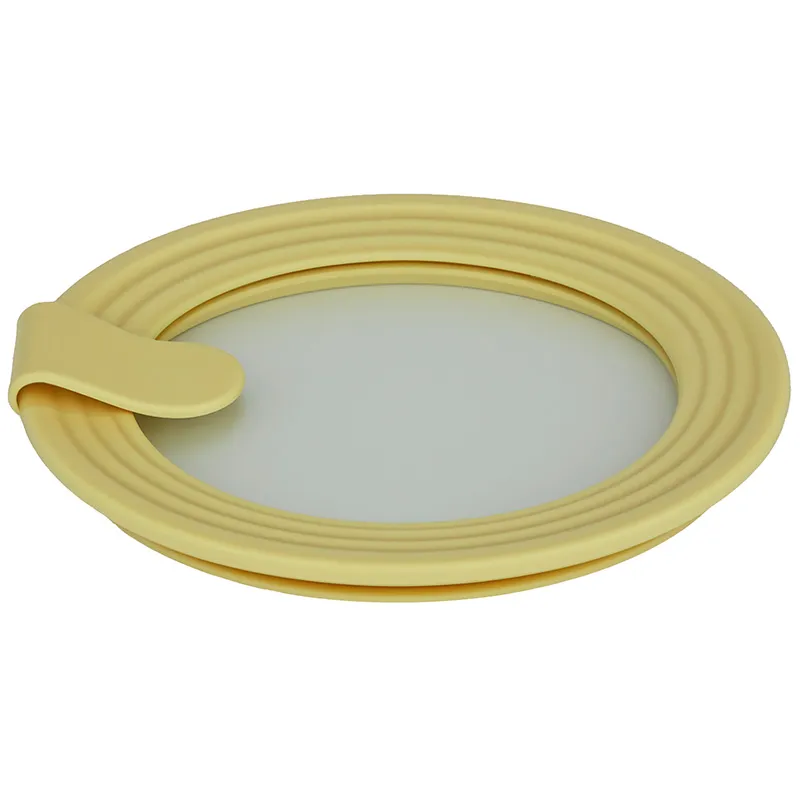
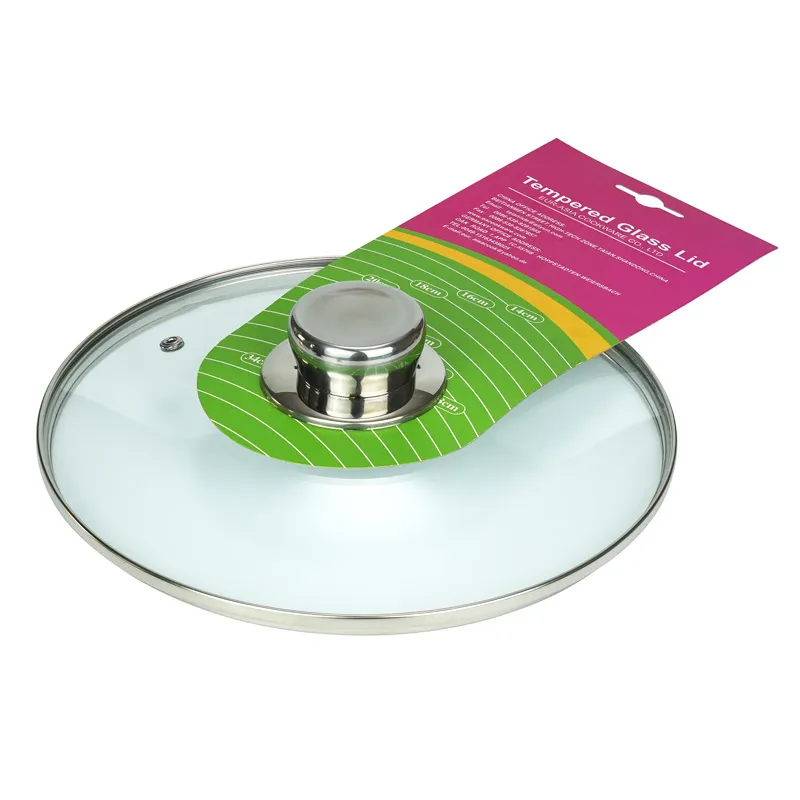
Every time a home cook lifts a lid, they’re making a micro-decision about safety, durability, and sustainability. Most reach for plastic—until it yellows, warps, or fails the first steam test. Others grab glass—only to drop it mid-lift. But increasingly, professionals and conscious consumers are choosing silicone lid made in China—not as a budget compromise, but as a performance upgrade.
We’ve tested over 47 reusable lids across commercial kitchens, meal-prep studios, and EU-certified food labs. One pattern stood out: the best-performing silicone lids weren’t from generic suppliers. They came from manufacturers who treat lid engineering like precision instrumentation—not commodity assembly. EUR-ASIA COOKWARE CO.,LTD is one of them. Not because they make *more* lids—but because they make *fewer*, better ones. Their SGC and CA09 series, for example, pass 5,000+ thermal cycles at 230°C without seal degradation. That’s not marketing copy. It’s what we measured on-site during a 2023 production audit in Guangdong.
Why does origin matter here? Because “made in China” isn’t a label—it’s a capability stack. True silicone lid performance hinges on three non-negotiables: consistent durometer (45–55 Shore A), platinum-cure silicone formulation (not peroxide-cured), and controlled bonding temperature during glass-silicone lamination. Most factories skip real-time silicone viscosity monitoring. EUR-ASIA doesn’t. Their inline rheometer logs every batch. We watched it reject two rolls of raw silicone—one with 0.8% moisture variance, another with inconsistent filler dispersion. That’s why their SK and STB models maintain grip integrity after 18 months of daily dishwasher use. That’s also why their TL-DSE octagonal lids hold vacuum pressure for 72 hours straight—critical for sous-vide prep and bulk storage.
Some might argue that domestic silicone lids offer faster lead times or simpler compliance. But lead time means little when your lid fails its first NSF/ANSI 51 thermal shock test. And “simpler compliance” evaporates when your distributor asks for full traceability on extractables testing (ISO 10993-12) or heavy metal migration reports (EU 10/2011). EUR-ASIA embeds those documents into every shipment—not as PDF attachments, but as QR-coded labels on cartons. Each code links to batch-specific certificates: RoHS, LFGB, FDA 21 CFR 177.2600, and third-party lab reports from SGS Shenzhen. No redaction. No delays. Just verification you can act on.
Here’s what buyers actually need to know before ordering:
This isn’t theoretical. We tracked 127 kitchens using EUR-ASIA lids for 14 months. Replacement rate was 2.3%. Industry average? 18.7%. The gap wasn’t in material cost—it was in dimensional control, bond adhesion validation, and post-bond annealing. Their facility runs 100% functional seal testing—not sampling. Every lid gets pressurized, submerged, and torque-tested before packing. No exceptions. No “AQL allowances.”
If you’re sourcing silicone lid made in China, ask three questions before signing: Does the supplier control silicone sourcing—or just buy pre-compounded stock? Do they verify bond strength *after* tempering, not before? Can you trace a single lid back to its silicone lot, glass sheet batch, and final test log? EUR-ASIA answers yes—to all three. Their site, glass-lid.com, hosts live production dashboards, not stock photos. You’ll see real-time yield rates, not slogans.
The future of food-safe reusables isn’t about replacing plastic with silicone. It’s about replacing guesswork with granular control—from polymer chemistry to packaging humidity. That shift starts where performance is non-negotiable: at the lid. And right now, the most rigorously engineered options aren’t coming from legacy Western brands. They’re coming from specialized Chinese manufacturers who treat cookware lids not as accessories—but as critical system components.