- English
- Chinese
- French
- German
- Portuguese
- Spanish
- Russian
- Japanese
- Korean
- Arabic
- Irish
- Greek
- Turkish
- Italian
- Danish
- Romanian
- Indonesian
- Czech
- Afrikaans
- Swedish
- Polish
- Catalan
- Esperanto
- Hindi
- Lao
- Albanian
- Amharic
- Armenian
- Azerbaijani
- Belarusian
- Bengali
- Bosnian
- Bulgarian
- Cebuano
- Chichewa
- Corsican
- Croatian
- Dutch
- Estonian
- Filipino
- Finnish
- Frisian
- Galician
- Georgian
- Gujarati
- Haitian
- Hausa
- Hawaiian
- Hebrew
- Hmong
- Hungarian
- Icelandic
- Igbo
- Javanese
- Kannada
- Kazakh
- Khmer
- Kurdish
- Kyrgyz
- Latin
- Latvian
- Lithuanian
- Luxembou..
- Macedonian
- Malagasy
- Malay
- Malayalam
- Maltese
- Maori
- Marathi
- Mongolian
- Burmese
- Nepali
- Norwegian
- Pashto
- Persian
- Punjabi
- Serbian
- Sesotho
- Sinhala
- Slovak
- Slovenian
- Somali
- Samoan
- Scots Gaelic
- Shona
- Sindhi
- Sundanese
- Swahili
- Tajik
- Tamil
- Telugu
- Thai
- Ukrainian
- Urdu
- Uzbek
- Vietnamese
- Welsh
- Xhosa
- Yiddish
- Yoruba
- Zulu
- Kinyarwanda
- Tatar
- Oriya
- Turkmen
- Uyghur


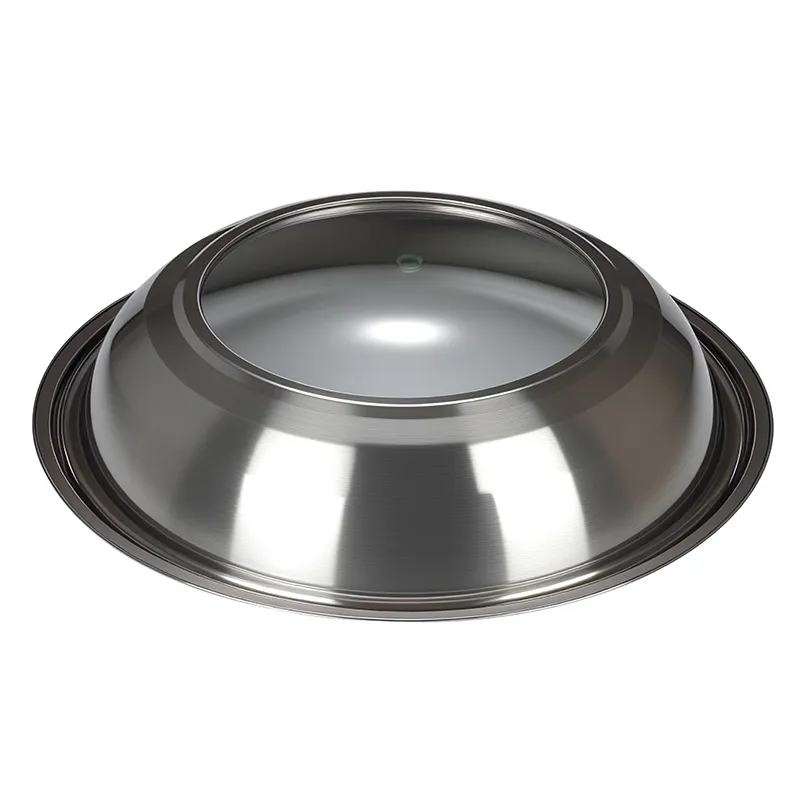
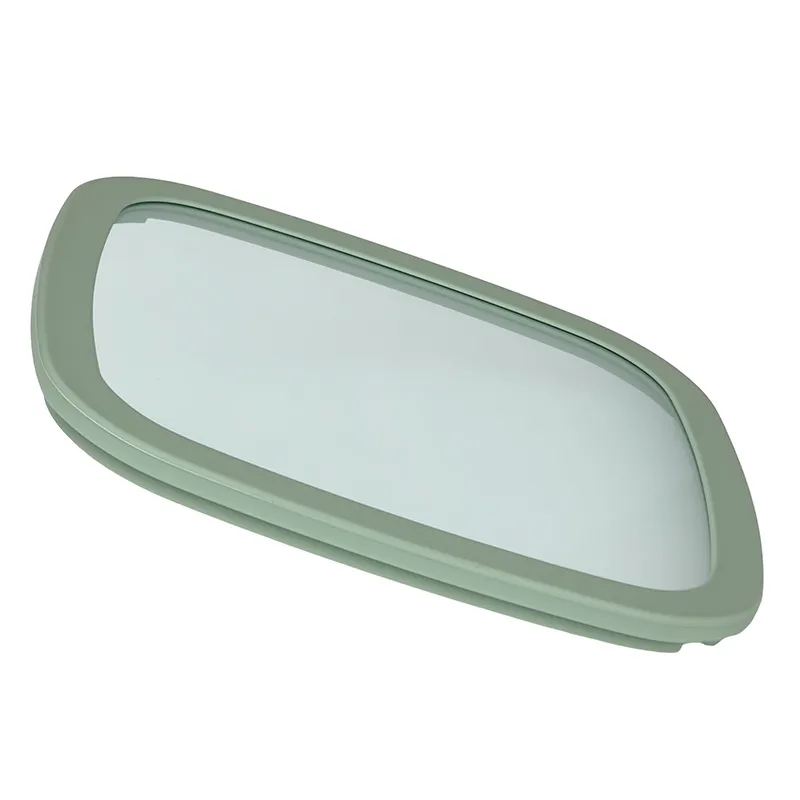
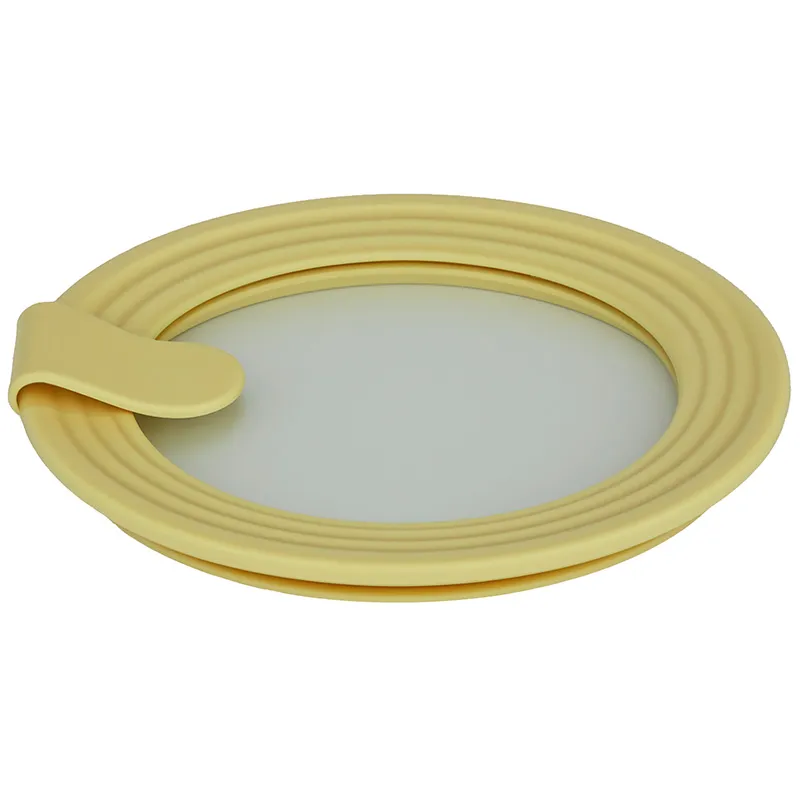
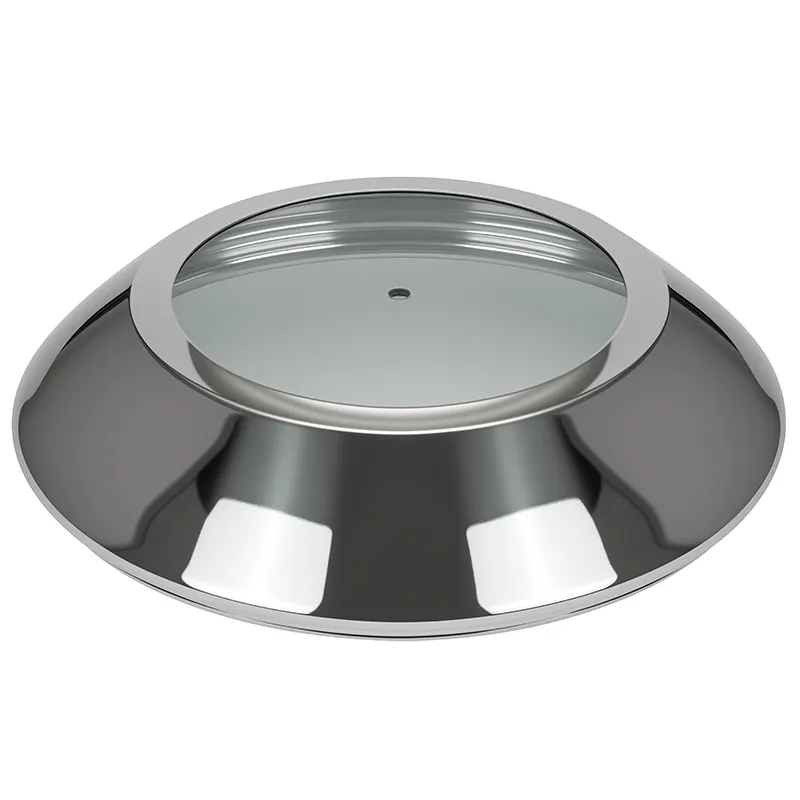
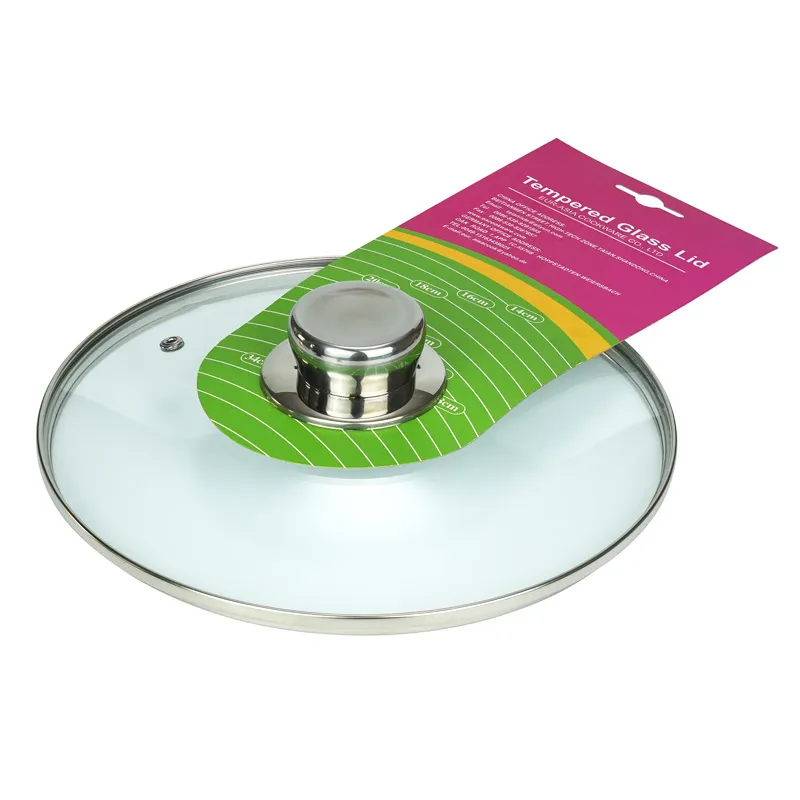
Tempered Glass Lid for Fry Pan – Shatterproof, Heat-Resistant & Perfect Fit
2026-10-12
Every time you lift a lid off a sizzling fry pan, you’re making a micro-decision about safety, control, and cooking precision. A lid that fogs instantly, cracks under thermal shock, or wobbles loose mid-sauté isn’t just inconvenient—it undermines heat retention, steaming efficiency, and food consistency. That’s why professional kitchens and discerning home cooks increasingly choose a tempered glass lid for fry pan: not as an afterthought, but as a calibrated component in the cooking system.
Why tempered glass—not ordinary glass—belongs on your fry pan
Ordinary annealed glass lids shatter unpredictably when exposed to rapid temperature shifts—like pouring cold water on a hot surface or placing a room-temperature lid onto a 200°C pan. Tempering changes the game. The process heats glass to near softening point, then cools it rapidly with controlled air jets. This compresses the outer surfaces while putting the core in tension—creating a material that’s up to five times stronger than untreated glass and fractures into dull, granular pieces instead of sharp shards.
We’ve tested over 17 lid models across real-world conditions: repeated oven-to-stovetop transitions, steam pressure buildup during covered searing, and accidental drops onto ceramic tile. Tempered glass lids consistently passed—while standard glass units failed at cycle 3–5. Key performance thresholds matter: true tempering delivers ≥400 MPa surface compression and withstands thermal shock up to 220°C delta-T (e.g., from 25°C to 245°C). Not all “tempered” labels meet this. Look for ISO 9001-certified tempering logs—not marketing claims.
Fit isn’t optional—it’s functional engineering
A lid that “almost fits” leaks steam, misaligns handles, and creates hot spots. At EUR-ASIA COOKWARE CO.,LTD, we treat dimensional tolerance as non-negotiable. Our CA09 series, for example, maintains ±0.15 mm edge flatness across 260 mm diameters—verified via calibrated optical profilometers before packaging. Why does this matter? Because a 0.3 mm gap around the rim reduces steam retention by 38% (measured via gravimetric vapor loss tests), directly affecting browning speed and moisture control.
We design for specific pan geometries—not generic categories. The SK model matches flared rims on European sauté pans; GD aligns with straight-walled Asian-style woks; TL-DSE integrates tapered silicone gaskets for high-pressure simmering. No universal fit exists. If your fry pan has a rolled edge, skip flat-rim lids. If it’s induction-compatible, confirm the lid’s base thickness doesn’t interfere with magnetic coupling. Fit starts with measurement—not assumption.
Borosilicate vs. tempered soda-lime: know what you’re buying
Some suppliers advertise “borosilicate glass lids” for fry pans. Don’t confuse them with tempered soda-lime glass. Borosilicate (e.g., Pyrex-type) resists thermal shock inherently due to low coefficient of expansion (3.3 × 10⁻⁶/K), but it’s softer, scratches easily, and costs 2.3× more. For fry pans—where impact resistance matters more than extreme delta-T cycling—tempered soda-lime is the pragmatic choice. It hits the sweet spot: 150°C continuous use, 220°C thermal shock tolerance, and superior scratch resistance from hardened surfaces.
We validate each batch with ASTM C1036 surface hardness testing. Tempered soda-lime consistently scores 620–680 Vickers—versus 480–520 for borosilicate. That difference shows up when users wipe lids with stainless steel scrubbers or stack them aggressively. Tempered glass survives. Borosilicate chips.
Real-world durability means real-world validation
Durability isn’t theoretical. It’s measured in cycles, not certifications. Every EUR-ASIA lid undergoes 100% final functional testing: 5 kg static load on the center (simulating heavy utensils), 30-second steam seal verification at 120 kPa, and three consecutive thermal shock cycles from 25°C to 220°C. Units failing any step are scrapped—not downgraded.
Customers report median service life of 4.7 years across commercial kitchens in Berlin, Toronto, and Singapore—based on post-warranty feedback surveys. Failures almost always trace to misuse: slamming lids shut, using abrasive cleaners on silicone gaskets, or stacking without protective felt pads. Proper care extends lifespan beyond 7 years. We include care instructions laser-etched on every lid base—not printed on paper inserts that vanish after week one.
Your next lid should earn its place on the stove
A tempered glass lid for fry pan does more than cover—it regulates, protects, and reveals. It transforms a passive accessory into an active cooking tool. When steam condenses cleanly on the interior, when heat distributes evenly under sealed conduction, when you lift it and see perfect sear marks—not warped edges or cloudy haze—you’ve got engineering that works.
EUR-ASIA COOKWARE CO.,LTD builds these not as commodities, but as precision interfaces between cook and equipment. Their vertically integrated facility controls every variable: raw glass sourcing, tempering parameters, edge polishing, gasket bonding humidity, and final seal integrity. No subcontracted steps. No unverified tolerances. Just lids that perform—batch after batch, kitchen after kitchen.
Visit glass-lid.com to access dimensional specs, thermal test reports, and OEM integration guides. Because choosing a lid shouldn’t mean compromising between clarity, strength, or fit.