- English
- Chinese
- French
- German
- Portuguese
- Spanish
- Russian
- Japanese
- Korean
- Arabic
- Irish
- Greek
- Turkish
- Italian
- Danish
- Romanian
- Indonesian
- Czech
- Afrikaans
- Swedish
- Polish
- Catalan
- Esperanto
- Hindi
- Lao
- Albanian
- Amharic
- Armenian
- Azerbaijani
- Belarusian
- Bengali
- Bosnian
- Bulgarian
- Cebuano
- Chichewa
- Corsican
- Croatian
- Dutch
- Estonian
- Filipino
- Finnish
- Frisian
- Galician
- Georgian
- Gujarati
- Haitian
- Hausa
- Hawaiian
- Hebrew
- Hmong
- Hungarian
- Icelandic
- Igbo
- Javanese
- Kannada
- Kazakh
- Khmer
- Kurdish
- Kyrgyz
- Latin
- Latvian
- Lithuanian
- Luxembou..
- Macedonian
- Malagasy
- Malay
- Malayalam
- Maltese
- Maori
- Marathi
- Mongolian
- Burmese
- Nepali
- Norwegian
- Pashto
- Persian
- Punjabi
- Serbian
- Sesotho
- Sinhala
- Slovak
- Slovenian
- Somali
- Samoan
- Scots Gaelic
- Shona
- Sindhi
- Sundanese
- Swahili
- Tajik
- Tamil
- Telugu
- Thai
- Ukrainian
- Urdu
- Uzbek
- Vietnamese
- Welsh
- Xhosa
- Yiddish
- Yoruba
- Zulu
- Kinyarwanda
- Tatar
- Oriya
- Turkmen
- Uyghur

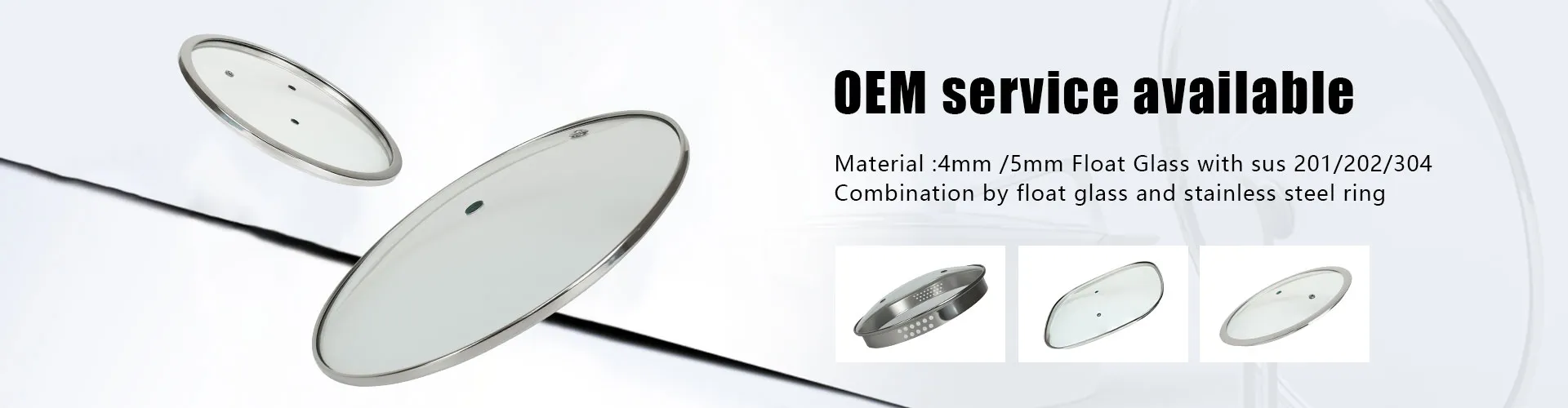
Tempered Glass Lid Exporter from China | Wholesale & OEM Cookware Glass Lids
2026-11-10
If you are an overseas importer, cookware brand owner or trading company sourcing tempered glass lids, partnering with a reliable tempered glass lid exporter from China helps you secure stable supply, flexible OEM support and manageable lead times. Many global buyers choose Chinese cookware glass lid manufacturers for well-developed production lines, broad compatibility with stockpots, frying pans and casseroles, and mature export logistics. This practical guide walks you through global compliance rules, wholesale options, OEM workflows, pre-shipment inspection, breakage control packaging, sea freight arrangements and export documents to avoid common sourcing pitfalls.
Why Source Tempered Glass Lids from Chinese Exporters
Working with a factory-based tempered glass lid exporter creates clear advantages for B2B buyers. Most facilities support bulk wholesale orders and custom OEM/ODM projects, with tooling capacity for standard round lids and non-standard shapes.
It is helpful to separate factory exporters from general trading intermediaries. Direct factory suppliers normally offer more flexible MOQ negotiation for repeat orders, clearer access to quality control records and direct support for small design adjustments. Production capacity varies by factory, yet experienced suppliers can often arrange mixed container loads with matching cookware components if required.
Compliance Standards for Export Tempered Glass Lids
Food contact safety and thermal shock resistance are the two core compliance requirements for cookware glass lids sold internationally. Different markets enforce separate testing and documentation rules. Confirm requirements for your destination country before mass production to prevent customs delays.
EN 12983 Standard for Cookware Glass Lids
EN 12983 is the primary European standard for cookware. EN 12983‑1 covers general cookware, which applies to tempered glass lids, while EN 12983‑2 targets enamel cookware. This standard assesses thermal shock resistance, mechanical stability and food contact material safety.
Products sold in the EU need to satisfy relevant performance clauses. Accredited lab test reports are available per model or batch upon buyer request. Key assessment areas include resistance to rapid temperature change, structural safety under regular use and limits on harmful substance migration.
Other Common Market Certifications & Requirements
For the US market, most importers require food contact compliance statements referencing FDA regulations. Shipments bound for Germany typically need LFGB testing, while California Proposition 65 documentation may be necessary for goods entering California.
Australia and Oceania follow their own food contact material guidelines. These certifications are not always held in stock; most can be arranged on a project basis. Discuss certification scope with your tempered glass lid exporter during sampling.
Available Options: Wholesale & OEM / ODM Tempered Glass Lids
Buyers can select ready-made wholesale tempered glass lids or custom OEM and ODM solutions based on branding strategy, order volume and packaging needs.
Standard Wholesale Tempered Glass Lids
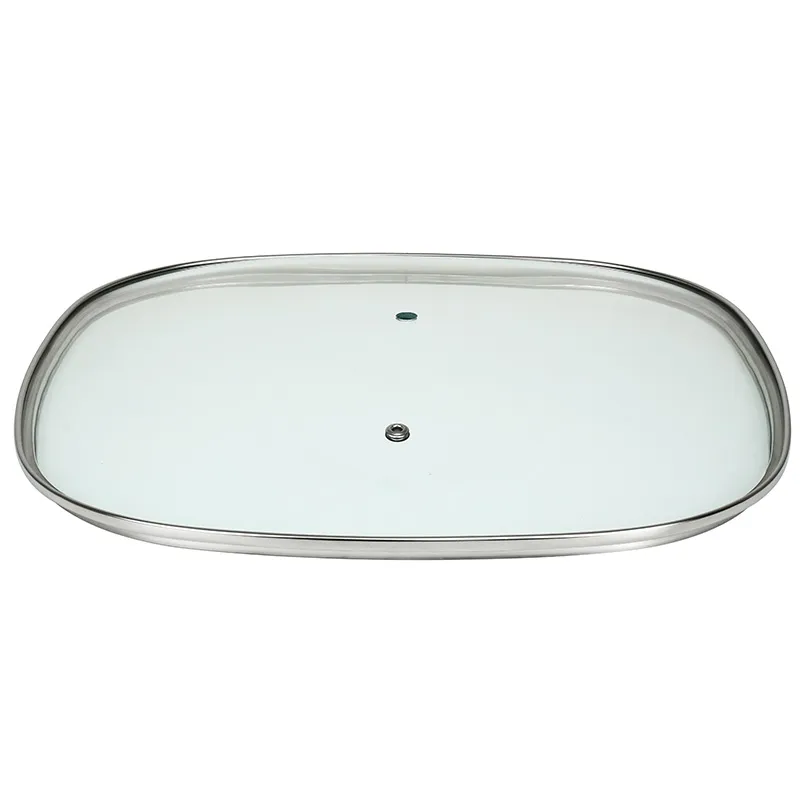
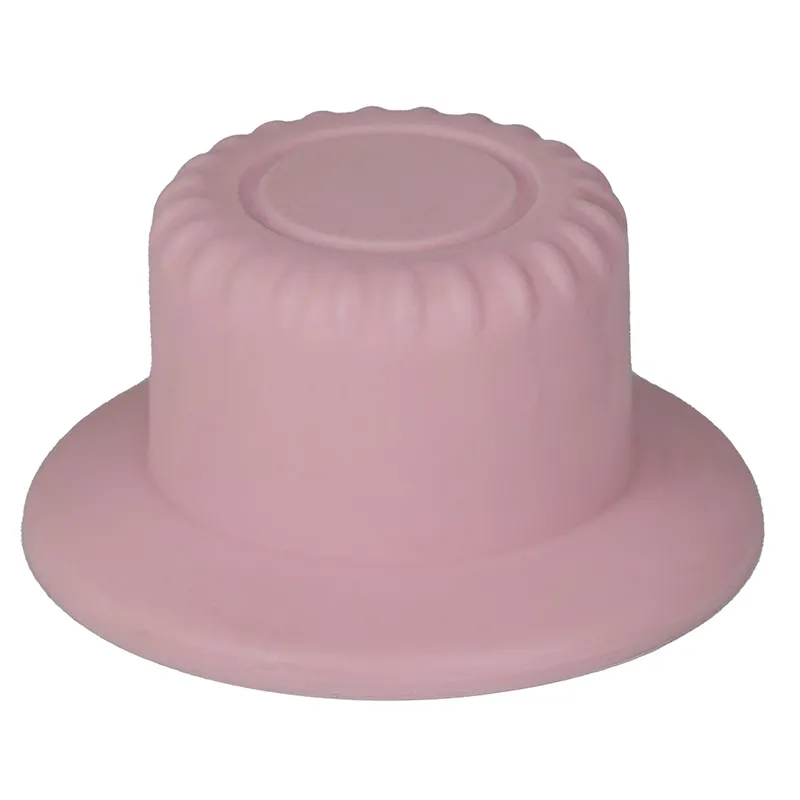
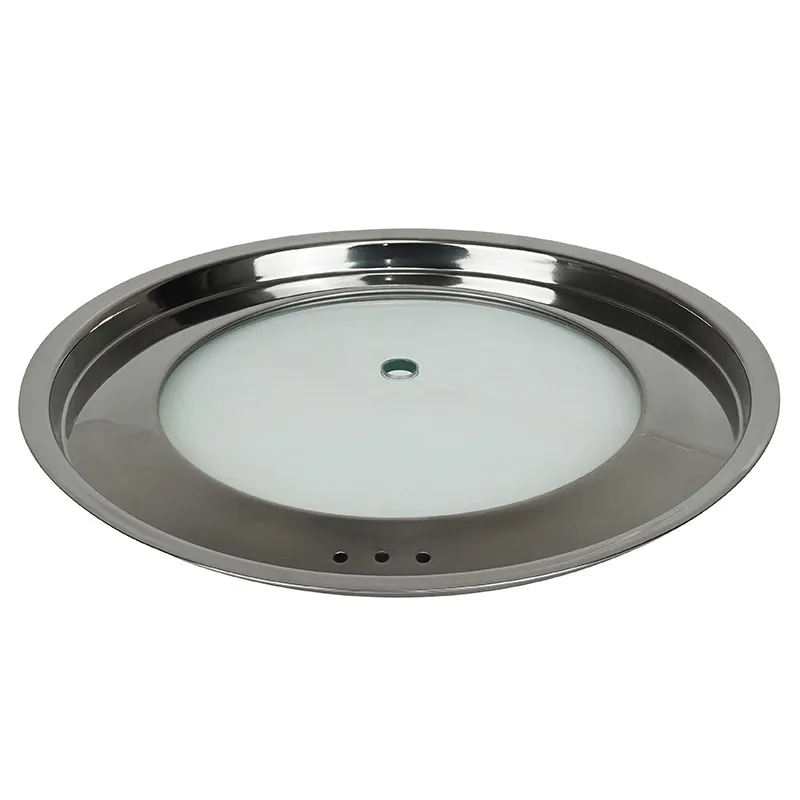
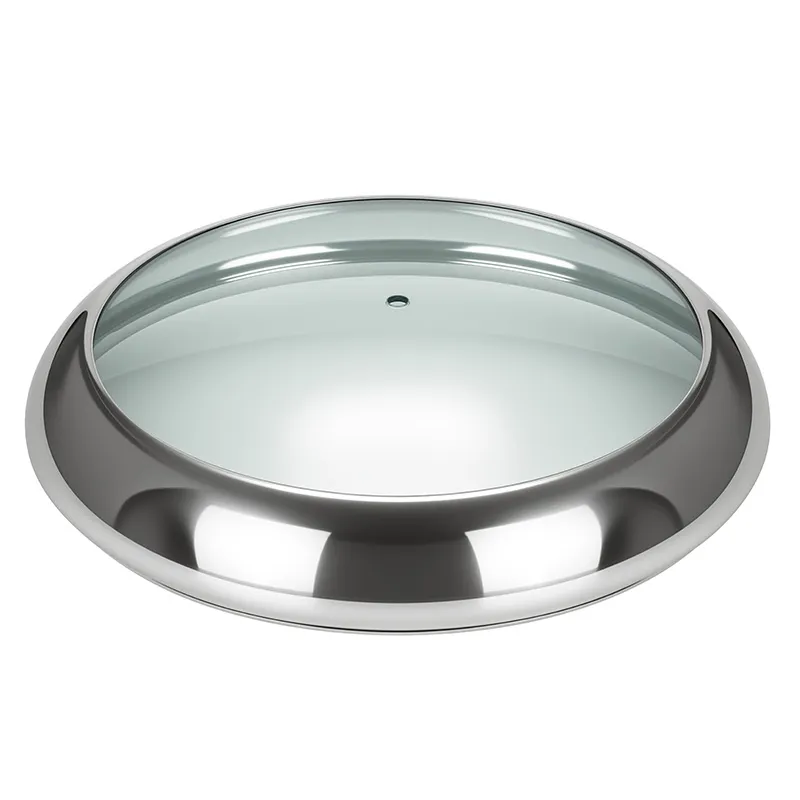
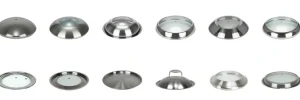
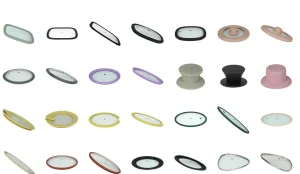
Stock cookware glass lids cover the most popular diameter sizes for mainstream cookware. Standard selections include different glass thicknesses, vent holes and handle options: stainless steel, phenolic and silicone handles. You may also choose plain polished glass edges or protective metal rim wrapping.
Standard lids fit distributors, retailers and resellers without custom branding needs. Lead times for wholesale stock orders are generally shorter than custom mould projects.
Custom OEM & ODM Service for Cookware Glass Lids
OEM tempered glass lid services support custom branding and structural modifications. Popular custom work includes laser engraving, silk-screen logos, special handle profiles, non-circular lid shapes and custom retail packaging.
The standard OEM workflow follows this sequence: inquiry → specification confirmation → sample production → sample approval → mass production. Sampling and tooling fees depend on design complexity. New mould development requires separate quotation and lead time confirmation.
Quality Inspection Before Shipment
Formal pre-shipment inspection reduces breakage and functional defects for glass goods. Inspectors check visual quality, dimensional tolerance, handle assembly and overall tempered glass integrity.
- Surface inspection for scratches, air bubbles, chips and edge damage
- Dimension check against approved samples or technical drawings
- Handle pull test to verify stable assembly
- Vent hole alignment and functionality
- Random sampling for thermal stability performance
- Verification of markings and labels
Third-party inspection via recognized testing firms can be arranged on your request. Bulk shipments follow standard AQL sampling practices for cookware products. No supplier can guarantee zero defects, yet structured inspection lowers the risk of large non-conforming batches.
Export Packaging & Sea Freight Solution for Glass Lids
Tempered glass lids are fragile, so protective packaging design directly controls breakage rates during ocean transit and container handling.
Protective Packaging Designs to Reduce Breakage
Two widely adopted export packaging types:
- Bulk export packing: individually wrapped with foam, grouped into inner cartons and packed into heavy-duty 5-ply outer cartons, then stacked on export pallets. This cost-efficient option suits buyers who will repack locally.
- Retail-ready colour box packing: printed custom boxes for direct shelf sale after arrival.
Moisture-proof materials are added for long sea voyages. Straps and corner protectors are standard for full-container loads.
Shipment, Lead Time & Shipping Terms
Lead times split into sample lead time and mass production lead time. Both are affected by order volume, mould schedule and raw material supply. Common Incoterms include EXW, FOB and CIF. FOB remains the most popular choice for B2B importers buying from major Chinese coastal ports.
Both FCL and LCL shipments are supported. LCL cargo faces higher risk of rough handling, so extra packaging reinforcement is recommended for consolidated shipments.
Export Documents You Will Receive
Your tempered glass lid exporter prepares standard shipping documents for customs clearance. The base set includes commercial invoice, packing list and bill of lading.
Additional documents available upon request:
- Certificate of Origin (CO)
- Preferential origin certificates such as FORM A and FORM E (subject to eligibility and advance application)
- Product test reports and food contact declarations
Preferential origin certificates need several working days to process and cannot be issued instantly alongside shipment.
Frequently Asked Questions about Tempered Glass Lid Exports
Q: What is the normal MOQ for tempered glass lids?
A: MOQ differs between stock wholesale and custom OEM orders. Standard sizes usually carry lower minimum quantities, while new mould projects require higher MOQ.
Q: Can tempered glass lids break suddenly?
A: Tempered glass has an inherent low spontaneous breakage rate, a known characteristic across the glass industry. Manufacturers follow standard tempering procedures to keep this rate within accepted industry ranges.
Q: What temperature range can tempered glass cookware lids withstand?
A: Properly produced tempered glass lids are engineered for normal stovetop cooking. Sudden extreme thermal shock remains a hazard and should be avoided by end users.
Q: Can I mix different lid sizes in one container?
A: Mixed-size loading is available for most wholesale orders, subject to carton layout and pallet stability.
Q: Who takes responsibility for broken goods upon arrival?
A: Damage liability depends on agreed Incoterms, packaging standard and cargo insurance coverage. Clarify breakage handling rules and insurance before order confirmation.
Q: What are the common rim styles for tempered glass lids?
A: Two mainstream rim types are plain polished glass edge and stainless steel wrapped rim. Stainless steel rims offer extra edge protection, while polished glass edges provide a cleaner minimalist look.
Get Your Wholesale & OEM Quote for Tempered Glass Lids
If you plan to source wholesale cookware glass lids or develop custom OEM tempered glass lids, prepare these details to receive an accurate quotation: lid diameter and thickness, handle type, vent requirement, branding specifications, order quantity, target sales market, packaging requirements and preferred Incoterm.
Share your specification sheet to request samples, confirm compliance documentation, lock in production timelines and finalize shipping arrangements with our tempered glass lid exporter team.