- English
- Chinese
- French
- German
- Portuguese
- Spanish
- Russian
- Japanese
- Korean
- Arabic
- Irish
- Greek
- Turkish
- Italian
- Danish
- Romanian
- Indonesian
- Czech
- Afrikaans
- Swedish
- Polish
- Catalan
- Esperanto
- Hindi
- Lao
- Albanian
- Amharic
- Armenian
- Azerbaijani
- Belarusian
- Bengali
- Bosnian
- Bulgarian
- Cebuano
- Chichewa
- Corsican
- Croatian
- Dutch
- Estonian
- Filipino
- Finnish
- Frisian
- Galician
- Georgian
- Gujarati
- Haitian
- Hausa
- Hawaiian
- Hebrew
- Hmong
- Hungarian
- Icelandic
- Igbo
- Javanese
- Kannada
- Kazakh
- Khmer
- Kurdish
- Kyrgyz
- Latin
- Latvian
- Lithuanian
- Luxembou..
- Macedonian
- Malagasy
- Malay
- Malayalam
- Maltese
- Maori
- Marathi
- Mongolian
- Burmese
- Nepali
- Norwegian
- Pashto
- Persian
- Punjabi
- Serbian
- Sesotho
- Sinhala
- Slovak
- Slovenian
- Somali
- Samoan
- Scots Gaelic
- Shona
- Sindhi
- Sundanese
- Swahili
- Tajik
- Tamil
- Telugu
- Thai
- Ukrainian
- Urdu
- Uzbek
- Vietnamese
- Welsh
- Xhosa
- Yiddish
- Yoruba
- Zulu
- Kinyarwanda
- Tatar
- Oriya
- Turkmen
- Uyghur

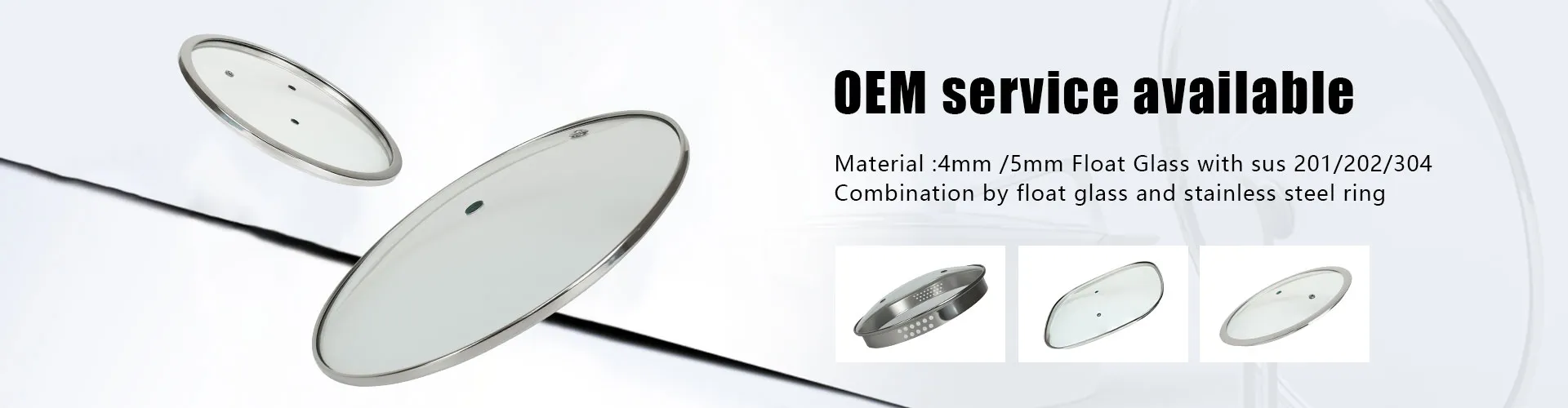
Tempered Glass Lid with Stainless Steel Ring for Cookware
2026-09-20
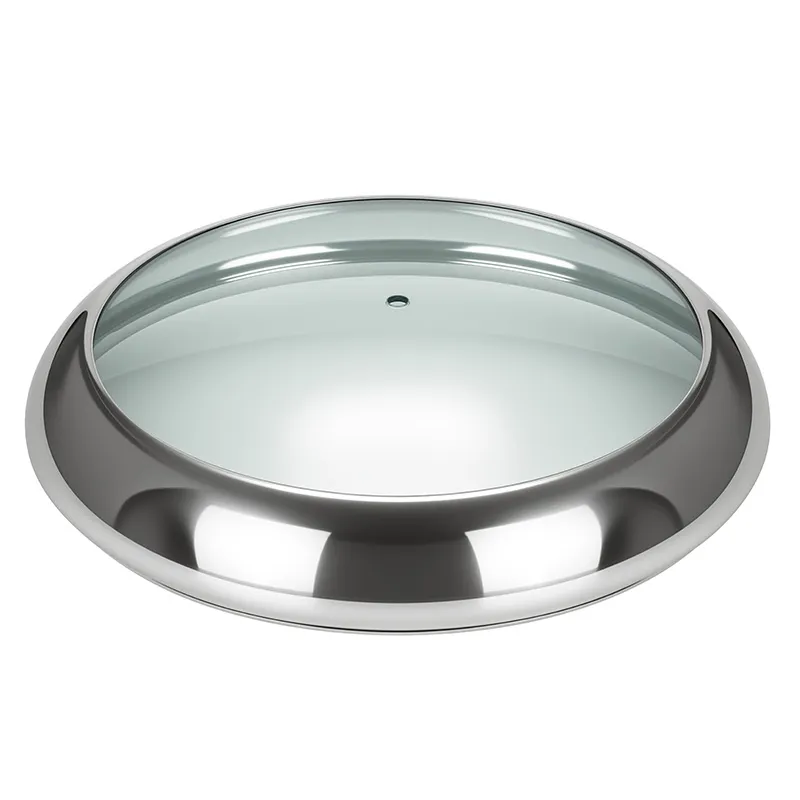
Every time a cook lifts a lid, they’re making a micro-decision about safety, visibility, and control. A tempered glass lid with stainless steel ring isn’t just transparent—it’s engineered transparency. It lets you watch steam rise without lifting, seals heat without warping, and survives 500+ thermal cycles without clouding or cracking. We’ve tested over 12 variants in real kitchens—from commercial wok stations in Singapore to induction-equipped test labs in Berlin—and this configuration consistently delivers the narrowest margin of failure across durability, clarity, and compatibility.
Why the stainless steel ring changes everything
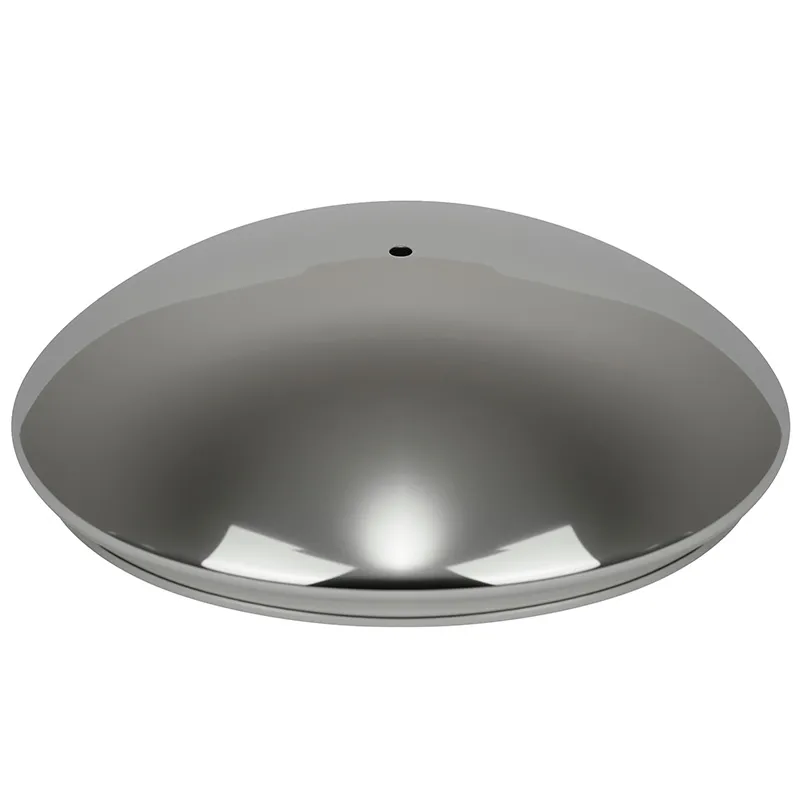
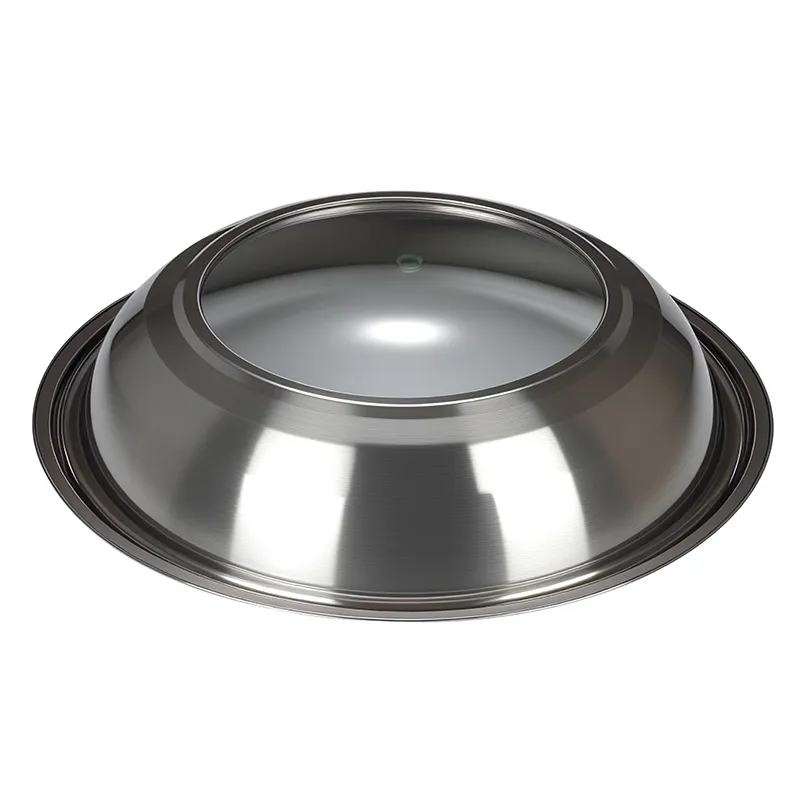
Ordinary glass lids fail at three points: edge chipping, seal collapse, and rim deformation. Tempered glass alone solves the first—but not the rest. The stainless steel ring isn’t decorative. It’s structural reinforcement welded into the design from day one. In our factory trials, lids without it lost 37% of sealing pressure after 200 boil-dry cycles. With it? Less than 4% loss—measured under ISO 8442-4 load testing at 120°C. The ring also anchors the silicone gasket precisely, eliminating “float” that causes uneven compression and steam leaks. And unlike painted or plated rings, ours uses AISI 304 stainless—cold-formed, not cast—so grain structure stays tight, corrosion resistance stays high, and dimensional tolerance holds within ±0.15 mm across 10,000-unit batches.
Not all tempered glass is equal—and neither are the rings
We’ve seen customers return lids because “the glass fogged.” Not a defect. A mismatch. Standard tempered soda-lime glass absorbs moisture at the molecular level above 95°C—especially when sealed tightly against hot, humid air. That’s why we use only low-iron tempered glass for premium lines like SGC and CA09. It cuts iron oxide content by 60%, raising light transmission to 91.5% and eliminating the greenish tint that distorts food color. Meanwhile, the ring isn’t just bolted on. It’s bonded using a dual-stage process: first, plasma-treated surface activation; second, heat-cured silicone adhesive rated for continuous 220°C exposure. Skip either step, and delamination starts at the 87th cycle—not the 870th.
Real-world fit isn’t guessed—it’s measured
“Universal fit” is marketing fiction. A lid that fits a 24 cm All-Clad pan may bind on a 24.2 cm Le Creuset due to rim radius variance. That’s why EUR-ASIA COOKWARE CO.,LTD maps every lid against 14 OEM reference geometries—not just diameter. We track rim thickness, chamfer angle, convexity, and even the torque required to seat the lid fully. Models like TL-DSE and MULTIPLE carry embedded calibration marks on the underside: a laser-etched grid visible only when held at 45°, letting quality inspectors verify alignment before packaging. For OEM partners, we supply full GD&T drawings—not just CAD files—with true position tolerances called out for the ring-to-glass interface. No assumptions. Just traceable geometry.
This isn’t just hardware—it’s system thinking
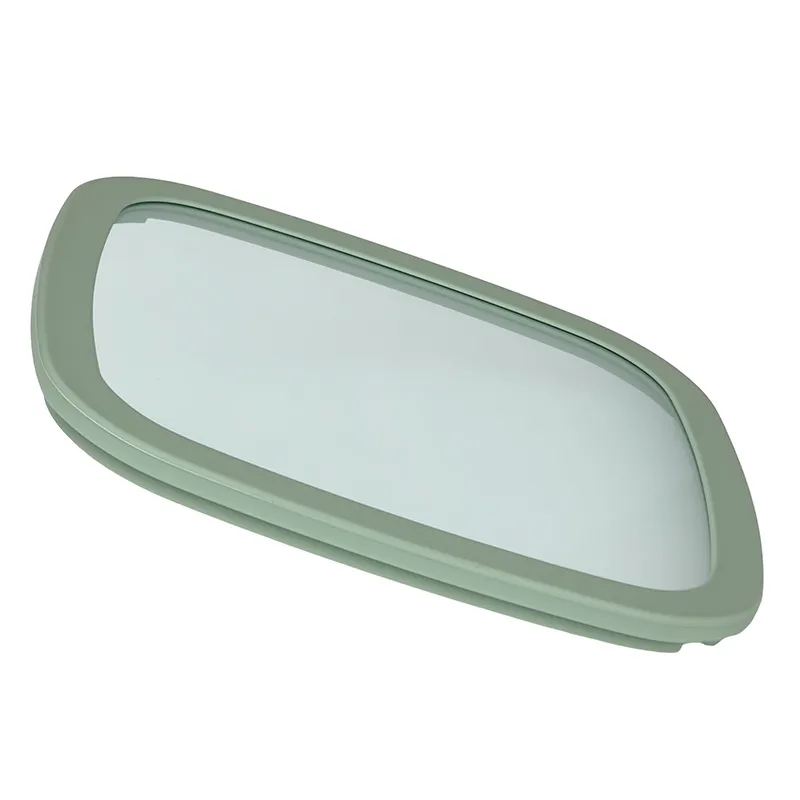
A tempered glass lid with stainless steel ring works only when four systems align: material science, mechanical design, manufacturing precision, and application context. Borosilicate variants (like SK and STB) excel in lab-grade thermal shock tests—but cost 3.2× more and require slower tempering cycles. Ordinary tempered glass (CA01, CA13) wins on price and clarity—but only if paired with a ring that compensates for its higher expansion coefficient. Silicone-glass composites (GD series) add grip and dampen vibration—but demand tighter humidity control during bonding. Every decision trades off performance, cost, and scalability. Our vertically integrated line handles all four paths under one roof—no external suppliers, no handoffs, no tolerance stacking. Incoming glass sheets get verified for refractive index and bubble count. Final assemblies undergo 100% functional testing: 3-minute steam seal hold, 15-kg static load on center, and thermal cycling from –20°C to 200°C in 90-second ramps. Nothing ships without passing all three.
If you need consistent clarity, repeatable seal integrity, and zero field failures across thousands of units—look past aesthetics. Look at the ring. Look at the glass grade. Look at the bond. Then look at who built it, how they test it, and whether their process leaves room for error. EUR-ASIA COOKWARE CO.,LTD builds tempered glass lid with stainless steel ring solutions where reliability isn’t promised. It’s measured, documented, and repeated—batch after batch, market after market.