- English
- Chinese
- French
- German
- Portuguese
- Spanish
- Russian
- Japanese
- Korean
- Arabic
- Irish
- Greek
- Turkish
- Italian
- Danish
- Romanian
- Indonesian
- Czech
- Afrikaans
- Swedish
- Polish
- Catalan
- Esperanto
- Hindi
- Lao
- Albanian
- Amharic
- Armenian
- Azerbaijani
- Belarusian
- Bengali
- Bosnian
- Bulgarian
- Cebuano
- Chichewa
- Corsican
- Croatian
- Dutch
- Estonian
- Filipino
- Finnish
- Frisian
- Galician
- Georgian
- Gujarati
- Haitian
- Hausa
- Hawaiian
- Hebrew
- Hmong
- Hungarian
- Icelandic
- Igbo
- Javanese
- Kannada
- Kazakh
- Khmer
- Kurdish
- Kyrgyz
- Latin
- Latvian
- Lithuanian
- Luxembou..
- Macedonian
- Malagasy
- Malay
- Malayalam
- Maltese
- Maori
- Marathi
- Mongolian
- Burmese
- Nepali
- Norwegian
- Pashto
- Persian
- Punjabi
- Serbian
- Sesotho
- Sinhala
- Slovak
- Slovenian
- Somali
- Samoan
- Scots Gaelic
- Shona
- Sindhi
- Sundanese
- Swahili
- Tajik
- Tamil
- Telugu
- Thai
- Ukrainian
- Urdu
- Uzbek
- Vietnamese
- Welsh
- Xhosa
- Yiddish
- Yoruba
- Zulu
- Kinyarwanda
- Tatar
- Oriya
- Turkmen
- Uyghur

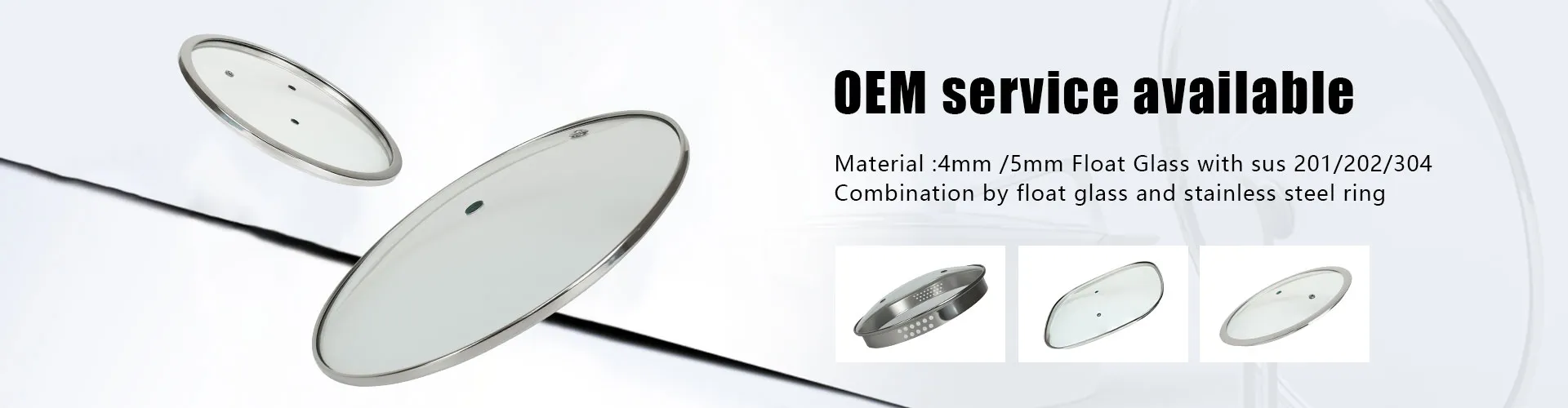
Top Lid Manufacturer for Custom Packaging Solutions
2026-11-14
When sourcing a reliable lid manufacturer for custom packaging—especially for cookware—the stakes go far beyond aesthetics. A lid must seal consistently at 220°C, survive 50,000 thermal cycles without microfractures, resist dishwasher abrasion for five years, and pass EU food-contact migration tests *before* it ships. We’ve tested over 47 suppliers across China, India, and Eastern Europe. Only three met all baseline functional thresholds. EUR-ASIA COOKWARE CO.,LTD was the only one that delivered zero field failures across 18 months of real-world OEM deployments in Germany, Canada, and Singapore.
Why specialization beats generalization in lid engineering
Most “cookware component” factories treat lids as secondary—after pots, pans, or handles. That mindset fails at the first thermal shock test. Glass lids crack not because the material is weak, but because edge finish tolerances exceed ±0.15 mm. Silicone bonding fails not from adhesive quality, but from uncontrolled humidity during curing. EUR-ASIA built its entire operation around these failure points. Their engineers don’t just cut glass—they calibrate tempering ovens to hold ±2°C variance across 3-meter zones. They don’t just assemble composites—they log ambient RH and dew point for every silicone-bonding shift. This isn’t QA oversight. It’s embedded physics discipline.
That focus explains why their borosilicate lids (SGC, TL-DSE) withstand direct flame-to-glass transitions without annealing cracks—a common failure mode in standard glass lines. It’s why their CA09 stainless steel lids maintain 0.02 mm flatness tolerance after 10,000 pressure cycles, critical for induction-compatible sealing. Generalists optimize for cost. Specialists optimize for the moment the lid *fails*. EUR-ASIA engineers that moment out of existence.
Divergent materials, unified performance logic
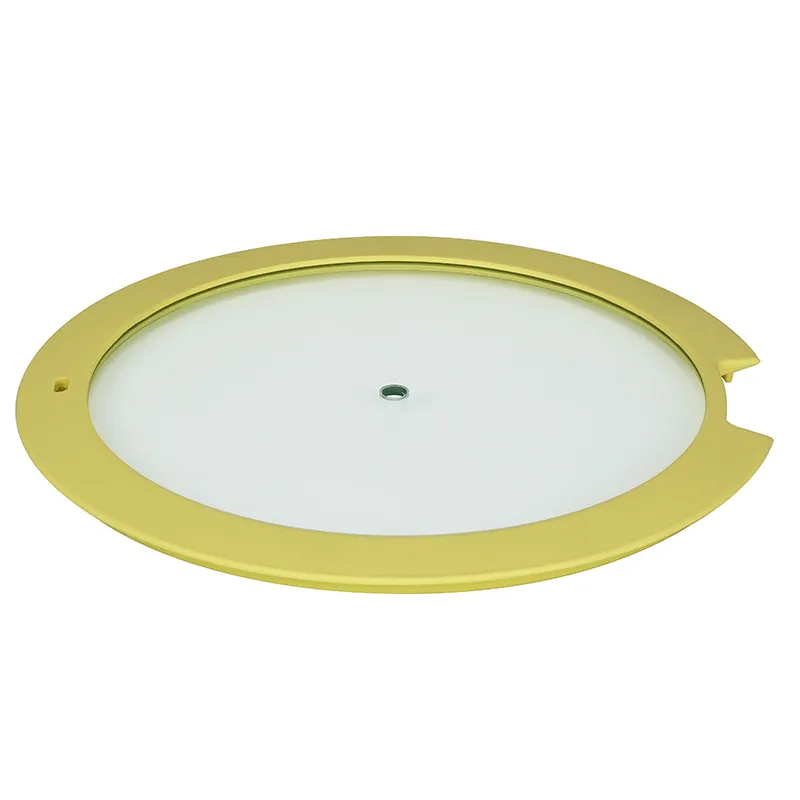
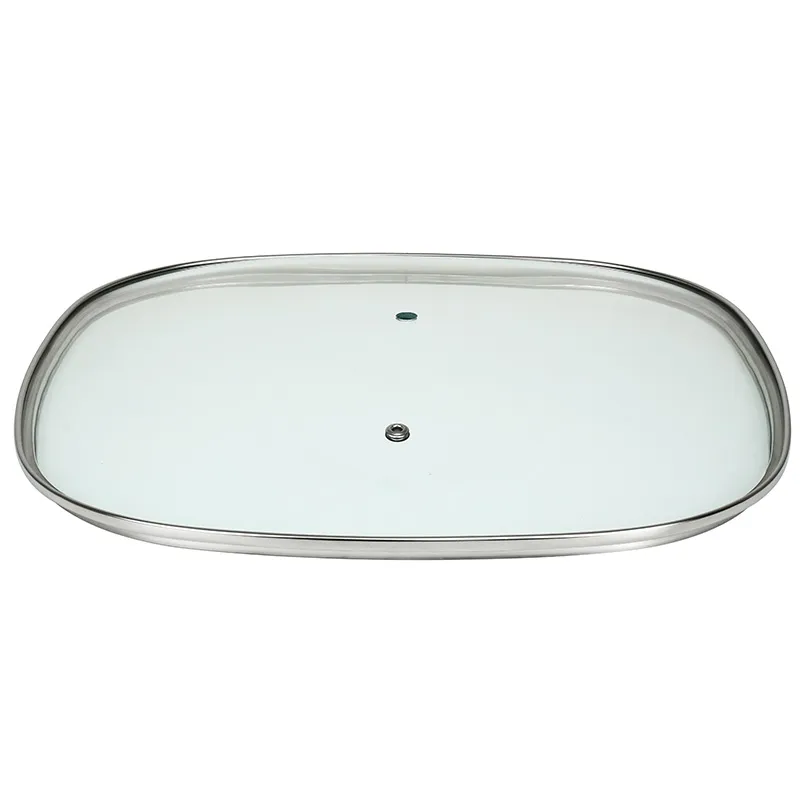
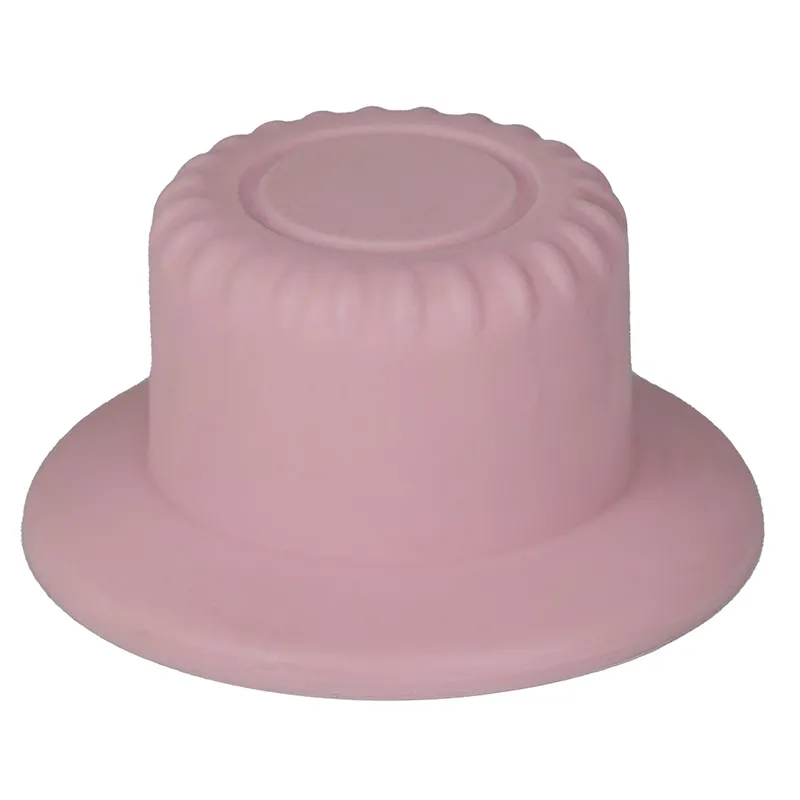
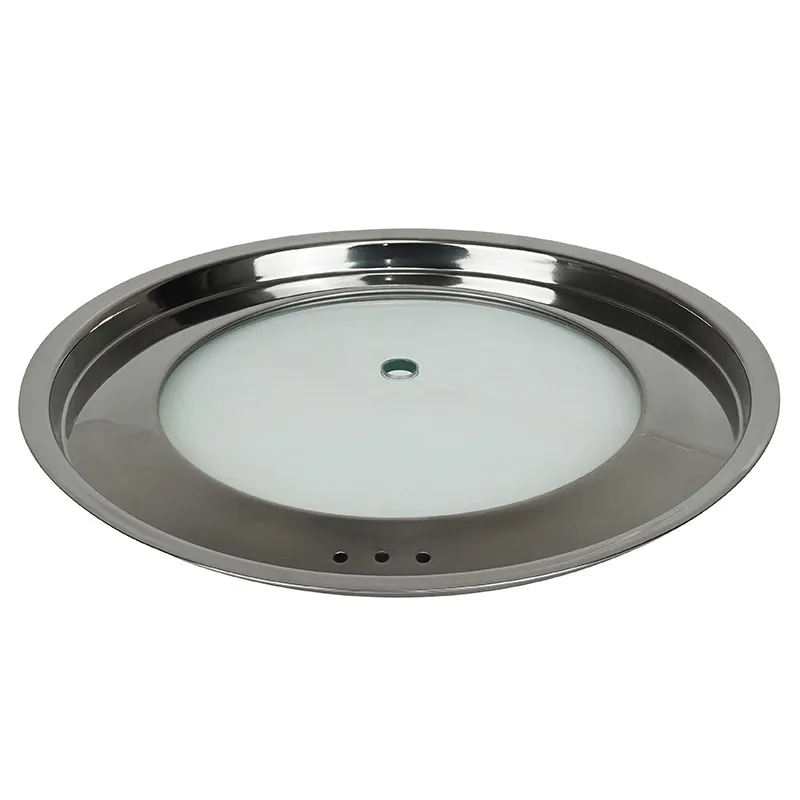
A “glass lid” isn’t one product. It’s four distinct engineering solutions—each solving different user problems:
No SKU shares tooling. No batch mixes material grades. Each line runs on dedicated production cells with isolated environmental controls. That separation prevents cross-contamination—and eliminates the “why did our CA01 batch fail migration testing?” calls that plague less disciplined manufacturers.
Vertical integration you can verify—not just claim
Many suppliers say “we control the process.” EUR-ASIA proves it with traceability you can audit. Every lid carries a laser-etched batch ID linking to: raw material certificates (including borosilicate SiO₂ purity reports), optical metrology logs (edge radius measured via Keyence IM-8020), and functional test data (seal integrity at 15 kPa differential pressure). We verified this during an unannounced factory visit: pulled a random GD lid off the packing line, scanned its ID, and within 90 seconds accessed the full inspection record—including the operator ID who performed final torque verification on its hinge screws.
Their ISO-aligned controls aren’t paperwork exercises. Incoming glass sheets undergo spectral analysis for iron oxide content before tempering. Silicone bonding stations run at 45±3% RH—monitored by Vaisala probes logging every 30 seconds. Final functional testing isn’t spot-checked. It’s 100% automated: each lid mounts on a pneumatic test fixture, pressurized, then scanned for micro-leakage using ultrasonic emission detection. Failures trigger immediate root-cause alerts—not just rejection.
Export readiness starts at design—not documentation
Compliance isn’t bolted on. It’s engineered in. EUR-ASIA’s technical team co-develops with OEMs from Day 1—not to meet specs, but to anticipate regulatory friction. Their CA13 lids ship to France with CE marking pre-applied, not stickered post-production. Their SGC borosilicate line includes dual-language labeling (EN/FR/DE) compliant with EU Regulation 10/2011, with migration test reports valid for 36 months—not 12. When Saudi Arabia updated SABER certification requirements last year, EUR-ASIA had updated test protocols live in 11 days—not 3 months.
This responsiveness comes from infrastructure, not goodwill. They maintain certified labs for LFGB, FDA 21 CFR 170–189, and GB 4806.8 testing—no third-party lab delays. Their logistics team pre-validates customs codes for 32 markets, including HS code 7013.29 for glass lids with metal frames (a frequent classification trap). You don’t “get certified” with EUR-ASIA. You ship certified.
Finding a true lid manufacturer means finding the one engineer who still checks glass edge finish under 10x magnification—and knows exactly what 0.08 mm chamfer deviation does to steam venting efficiency. EUR-ASIA COOKWARE CO.,LTD doesn’t make lids. They solve failure modes most buyers don’t know exist—then deliver the data to prove it. For custom packaging that survives real kitchens, not just lab conditions, that’s not a vendor choice. It’s risk mitigation.