- English
- Chinese
- French
- German
- Portuguese
- Spanish
- Russian
- Japanese
- Korean
- Arabic
- Irish
- Greek
- Turkish
- Italian
- Danish
- Romanian
- Indonesian
- Czech
- Afrikaans
- Swedish
- Polish
- Catalan
- Esperanto
- Hindi
- Lao
- Albanian
- Amharic
- Armenian
- Azerbaijani
- Belarusian
- Bengali
- Bosnian
- Bulgarian
- Cebuano
- Chichewa
- Corsican
- Croatian
- Dutch
- Estonian
- Filipino
- Finnish
- Frisian
- Galician
- Georgian
- Gujarati
- Haitian
- Hausa
- Hawaiian
- Hebrew
- Hmong
- Hungarian
- Icelandic
- Igbo
- Javanese
- Kannada
- Kazakh
- Khmer
- Kurdish
- Kyrgyz
- Latin
- Latvian
- Lithuanian
- Luxembou..
- Macedonian
- Malagasy
- Malay
- Malayalam
- Maltese
- Maori
- Marathi
- Mongolian
- Burmese
- Nepali
- Norwegian
- Pashto
- Persian
- Punjabi
- Serbian
- Sesotho
- Sinhala
- Slovak
- Slovenian
- Somali
- Samoan
- Scots Gaelic
- Shona
- Sindhi
- Sundanese
- Swahili
- Tajik
- Tamil
- Telugu
- Thai
- Ukrainian
- Urdu
- Uzbek
- Vietnamese
- Welsh
- Xhosa
- Yiddish
- Yoruba
- Zulu
- Kinyarwanda
- Tatar
- Oriya
- Turkmen
- Uyghur

Wholesale Stainless Steel Pan with Glass Lid | Factory Price
2026-10-29
- Why Choose Stainless Steel Pans with Glass Lids?
- Technical Specifications: What Defines Quality?
- Manufacturing Excellence at EUR-ASIA COOKWARE CO.,LTD.
- Comparison: Standard vs. Premium Stainless Steel Pans
- How to Select the Right Stainless Steel Pan for Your Market
- Common Issues and Maintenance Guidelines
- Applications Across Different Cooking Styles
- FAQ: Frequently Asked Questions About Stainless Steel Cookware
- Strategic Sourcing for Wholesale Buyers
- Conclusion: Elevate Your Product Line with Premium Cookware
A stainless steel pan with glass lid is a versatile cookware essential that combines the durability of high-grade metal with the visibility of tempered glass. For B2B buyers, wholesalers, and private label brands, sourcing these pans requires balancing material quality, thermal performance, and manufacturing precision. This guide details the technical specifications, production standards, and procurement strategies for premium stainless steel cookware, ensuring you secure factory-direct pricing without compromising on EEAT-compliant quality benchmarks.
Why Choose Stainless Steel Pans with Glass Lids?
The global demand for stainless steel cookware continues to rise due to its longevity, hygiene, and aesthetic appeal. Unlike non-stick coatings that degrade over time, stainless steel offers a permanent cooking surface. When paired with a high-quality glass lid, the functionality expands significantly.
Key Advantages for End Users
- Visibility: Tempered glass lids allow users to monitor cooking progress without lifting the lid, retaining heat and moisture.
- Durability: High-grade stainless steel (such as 304 or 316) resists corrosion, rust, and acidic foods.
- Versatility: Suitable for gas, electric, induction, and oven use (depending on handle materials).
- Hygiene: Non-porous surfaces prevent bacterial growth and are dishwasher safe.
For retailers and distributors, these features translate into lower return rates and higher customer satisfaction. The combination of robust metal construction and precision-engineered glass creates a product that meets modern kitchen demands.
Technical Specifications: What Defines Quality?
When evaluating a stainless steel pan with glass lid for wholesale purchase, understanding the technical composition is critical. Not all stainless steel is created equal, and the quality of the glass lid directly impacts safety and usability.
1. Stainless Steel Grades
The core material determines the pan’s performance. Industry standards typically distinguish between two primary grades:
- 304 Stainless Steel (18/8 or 18/10): Contains 18% chromium and 8-10% nickel. This is the industry standard for high-quality cookware, offering excellent corrosion resistance and a bright, polished finish.
- 201 Stainless Steel: A lower-cost alternative with less nickel. While functional, it is more prone to rust over time and is generally used for budget-tier products.
Premium manufacturers often utilize a multi-ply construction. A common configuration is “3-ply,” featuring an aluminum or copper core sandwiched between two layers of stainless steel. This ensures even heat distribution, eliminating hot spots that can burn food.
2. Tempered Glass Lid Standards
The lid is not merely an accessory; it is a critical safety component. High-quality lids are made from tempered glass, which undergoes thermal treatment to increase strength. Key specifications include:
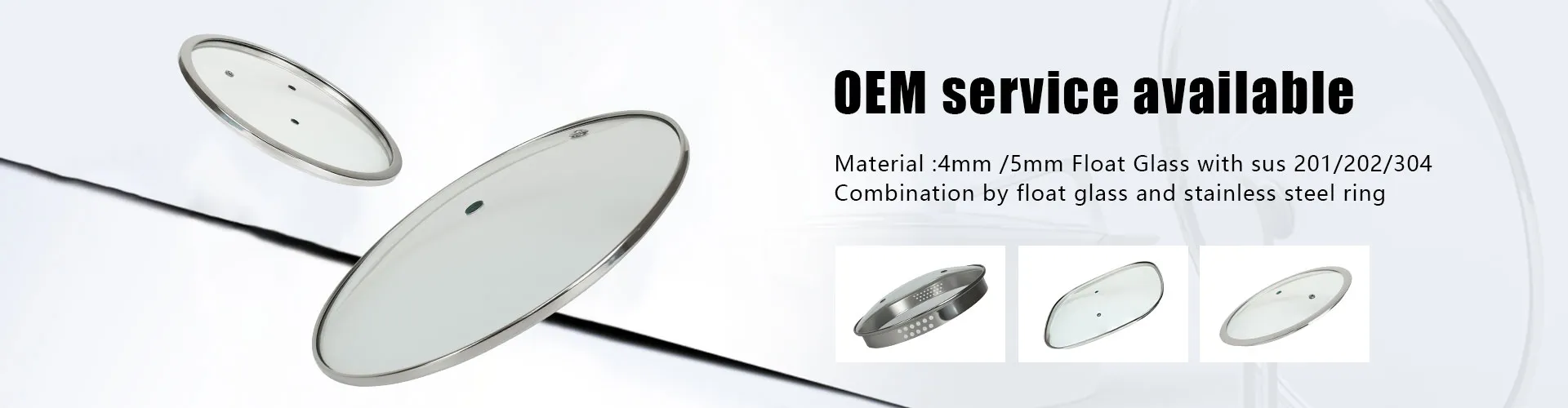
- Thickness: Standard high-quality lids range from 4mm to 6mm in thickness.
- Heat Resistance: Must withstand temperature shocks up to 200°C–300°C without shattering.
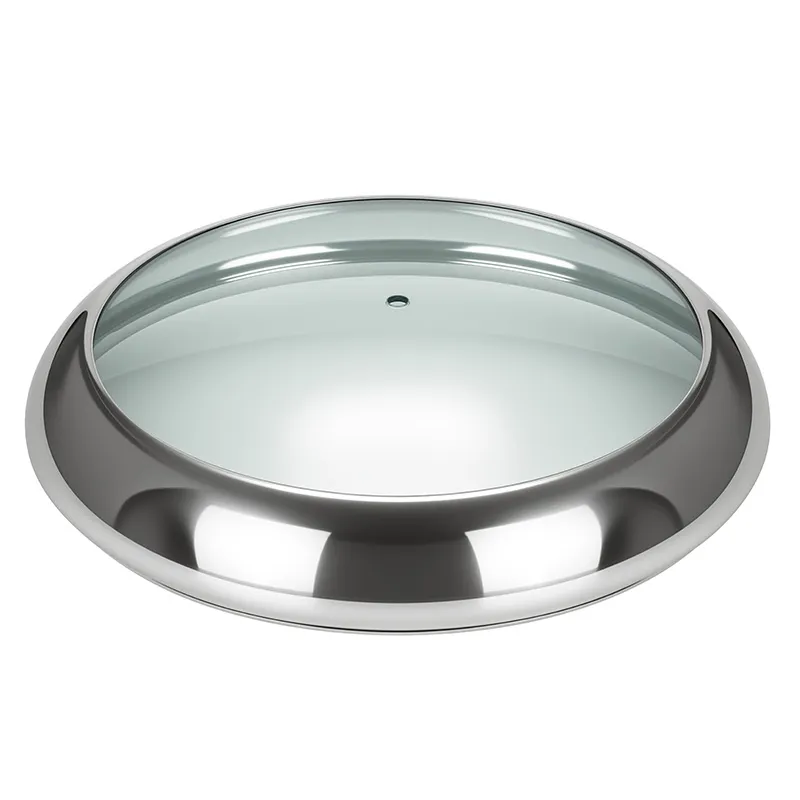
- Rim Design: Stainless steel rims protect the glass edge from chipping and provide a secure seal.
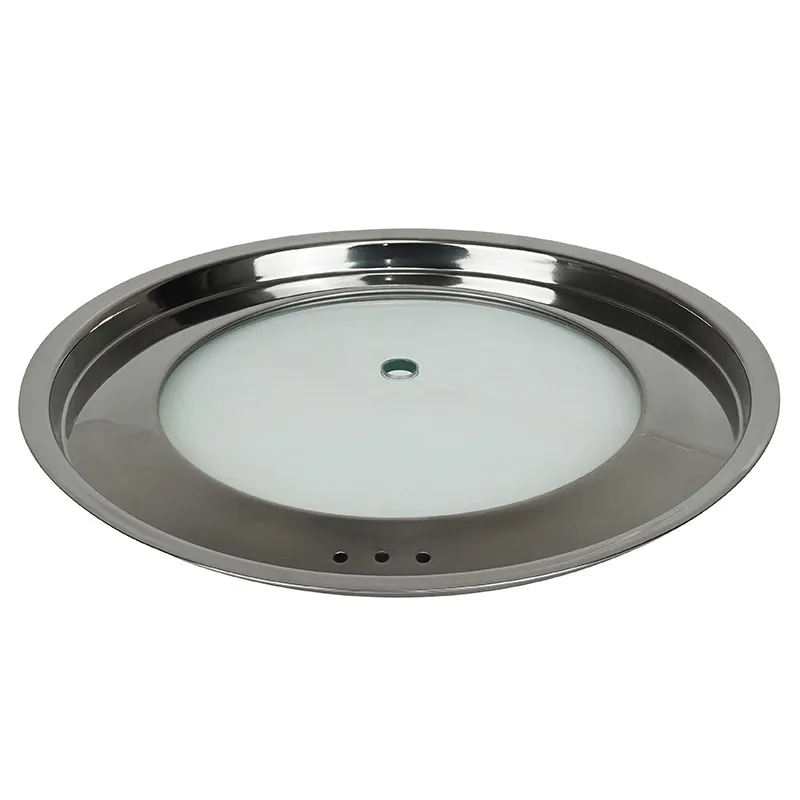
- Steam Vents: Properly sized vents prevent pressure buildup while maintaining internal humidity.
Manufacturing Excellence at EUR-ASIA COOKWARE CO.,LTD.
Sourcing from a manufacturer with established infrastructure and certifications is vital for consistent quality. EUR-ASIA COOKWARE CO.,LTD. represents a benchmark in the industry, specializing in the production of household glass products and kitchen accessories. Located in the Taian City, Shandong Province China National High-tech Development Zone, the company operates a substantial production base covering 20,000㎡ with a building area of 15,000㎡.
With over 90 employees and an annual output exceeding 15 million pieces of tempered glass lids and related products, EUR-ASIA demonstrates significant scale and capacity. This volume allows for efficient cost management, translating to competitive factory prices for wholesale partners. More than 90% of their products are exported to demanding markets including Germany, Russia, Italy, France, Poland, Denmark, Spain, Switzerland, Brazil, Turkey, South Korea, and Japan. This extensive export history confirms their ability to meet diverse international standards.
Customization and OEM Capabilities
Modern retail requires differentiation. EUR-ASIA supports extensive customization options:
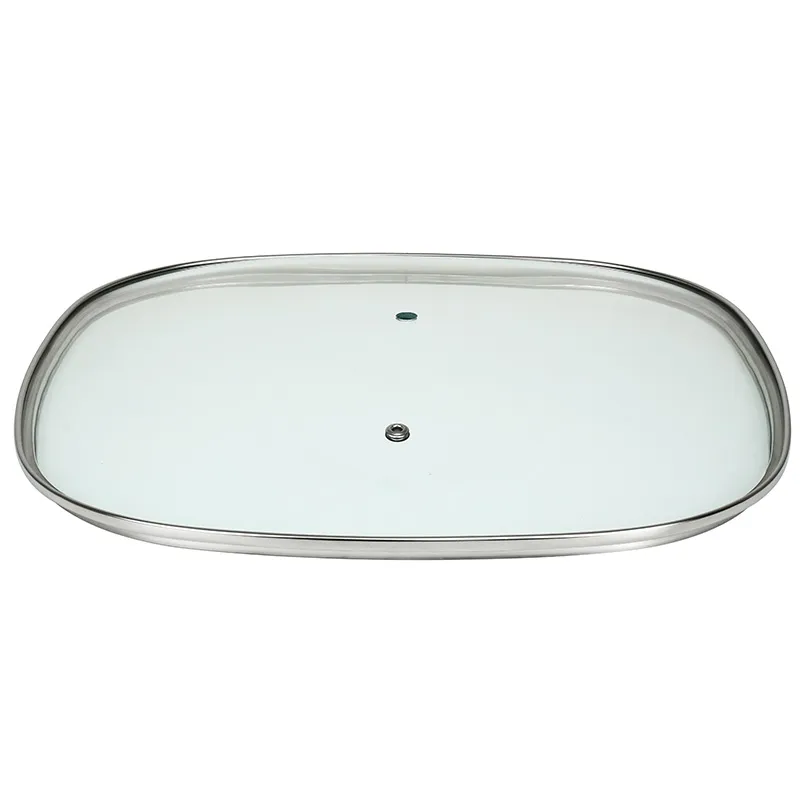
- Special Shapes: Capability to produce high curvature, tall, flat, and other special-shaped glass covers based on specific design requirements.
- Logo Printing: Direct printing of brand logos on glass lids or steel handles for private labeling.
- Material Flexibility: Options for various stainless steel grades and glass thicknesses to match target market price points.
Certifications and Compliance
Trustworthiness in B2B transactions is built on verified compliance. EUR-ASIA COOKWARE CO.,LTD. has passed ISO9001 certification, ensuring standardized quality management processes. Furthermore, their products have achieved LFGB and TUV certifications. LFGB compliance is particularly crucial for exporting to Europe, as it certifies that materials do not transfer harmful substances to food. TUV certification adds an additional layer of trust regarding product safety and durability.
Comparison: Standard vs. Premium Stainless Steel Pans
Understanding the difference between entry-level and premium products helps buyers align inventory with their target audience. The following table outlines key differences in construction and performance.
| Feature | Standard Grade | Premium Grade |
|---|---|---|
| Steel Type | 201 Stainless Steel | 304 (18/8) or 316 Stainless Steel |
| Construction | Single Layer | 3-Ply or 5-Ply (Encapsulated Base) |
| Heat Distribution | Uneven, prone to hot spots | Uniform, rapid heating |
| Glass Lid Thickness | 3mm – 4mm | 5mm – 6mm Tempered Glass |
| Rim Material | Plastic or Thin Metal | Reinforced Stainless Steel |
| Induction Ready | Often No | Yes (Magnetic Base) |
| Target Market | Budget Retailers | Specialty Stores, High-End Brands |
How to Select the Right Stainless Steel Pan for Your Market
Choosing the right product mix involves analyzing local consumer preferences and regulatory requirements. Here is a step-by-step approach to selecting the optimal stainless steel pan with glass lid for your business.
Step 1: Define Your Target Audience
Are you targeting budget-conscious students, family-oriented households, or professional chefs? Budget markets may accept 201 steel with simpler lids, while premium markets demand 304 steel, encapsulated bases, and heavy-duty glass lids with silicone gaskets.
Step 2: Verify Compatibility
Ensure the pans are compatible with induction cooktops if selling in regions like Europe or Japan where induction usage is high. This requires a magnetic bottom layer. Request test reports or samples to verify magnetic permeability.
Step 3: Assess Lid Fit and Finish
A poor-fitting lid leads to heat loss and customer complaints. Check the precision of the glass-to-metal fit. The lid should sit snugly without wobbling. Inspect the steam vent design; it should be integrated smoothly to prevent water accumulation around the knob.
Step 4: Review Certification Documentation
Before placing bulk orders, request copies of LFGB, FDA, or TUV certificates. For European markets, LFGB is non-negotiable. Ensure the manufacturer, such as EUR-ASIA COOKWARE CO.,LTD., provides batch-specific testing data if required.
Common Issues and Maintenance Guidelines
Educating end-users on proper care reduces returns and enhances brand reputation. Including care instructions with your product packaging is a best practice.
Preventing Discoloration
Stainless steel can develop rainbow-like discoloration due to mineral deposits from hard water or overheating. This is not damage but a surface reaction. Users can remove this with a mixture of vinegar and water or specialized stainless steel cleaners.
Avoiding Thermal Shock
While tempered glass is durable, sudden extreme temperature changes can cause breakage. Advise users not to place a hot glass lid on a cold, wet surface or under cold running water immediately after cooking. Let it cool naturally.
Cleaning Best Practices
- Abrasives: Avoid steel wool or harsh abrasive pads that can scratch the polished surface. Use soft sponges or non-scratch scrubbers.
- Dishwashers: While most stainless steel pans are dishwasher safe, hand washing is recommended to preserve the shine and extend the life of the glass lid’s seal.
- Food Residue: Soak pans with stuck-on food in warm soapy water before scrubbing. For stubborn residues, boiling water in the pan can help loosen particles.
Applications Across Different Cooking Styles
The versatility of a stainless steel pan with glass lid makes it suitable for various culinary techniques. Highlighting these applications in marketing materials can boost sales.
Sautéing and Frying
The wide surface area and even heat distribution make these pans ideal for sautéing vegetables or searing meats. The glass lid allows users to monitor browning without interrupting the cooking process.
Simmering and Braising
For slow-cooked dishes, the tight seal of the glass lid traps moisture and flavor. The transparency allows chefs to check liquid levels and tenderness without lifting the lid, maintaining a consistent internal temperature.
Steaming
With the addition of a steamer insert, these pans function effectively as steamers. The glass lid enables users to watch the steaming process, ensuring vegetables retain their color and nutrients.
FAQ: Frequently Asked Questions About Stainless Steel Cookware
Addressing common queries helps capture long-tail search traffic and assists buyers in making informed decisions.
Is stainless steel better than non-stick?
Stainless steel is more durable and does not chip or peel like non-stick coatings. It is better for high-heat searing and browning. Non-stick is easier for delicate foods like eggs but has a shorter lifespan. Many consumers prefer stainless steel for its longevity and health safety.
Can the glass lid go in the oven?
Most tempered glass lids are oven-safe up to certain temperatures (typically 150°C–200°C), but the handle material limits this. If the handle is plastic or bakelite, the lid may not be oven-safe. Always check the specific product specifications provided by the manufacturer.
Why does food stick to stainless steel?
Food sticks if the pan is not properly preheated or if insufficient fat is used. The “water drop test” is a common method: if water beads up and dances on the surface, the pan is ready. Proper technique eliminates sticking issues.
What is the benefit of a glass lid over a metal lid?
The primary benefit is visibility. Users can monitor cooking progress without releasing heat and steam. Metal lids trap heat slightly better but require lifting to check food, which disrupts the cooking environment.
Does EUR-ASIA offer sample orders?
Most reputable manufacturers, including EUR-ASIA COOKWARE CO.,LTD., typically accommodate sample requests for quality verification before bulk orders. Contacting their sales team directly is the best way to arrange this.
Strategic Sourcing for Wholesale Buyers
Securing a reliable supply chain is as important as the product itself. When partnering with a manufacturer like EUR-ASIA COOKWARE CO.,LTD., consider the following logistical factors.
Packaging and Shipping
Glass lids are fragile. Ensure the supplier uses robust packaging, such as individual color boxes with foam inserts or master cartons with dividers. EUR-ASIA’s experience in exporting to over 20 countries suggests they have optimized packaging solutions to minimize breakage during transit.
Lead Times and MOQ
Discuss Minimum Order Quantities (MOQ) and production lead times early. Custom logo printing or special shapes may require longer lead times due to mold creation and setup. Planning ahead ensures inventory availability during peak seasons.
Quality Control Protocols
Inquire about the factory’s QC process. Do they perform 100% inspection or random sampling? ISO9001 certification implies a structured quality management system, but requesting a detailed QC checklist can provide additional assurance.
Conclusion: Elevate Your Product Line with Premium Cookware
A stainless steel pan with glass lid is more than a kitchen tool; it is a long-term investment for consumers and a reliable revenue stream for retailers. By focusing on material integrity, certified manufacturing, and user-centric design, businesses can differentiate themselves in a competitive market.
Partnering with an experienced manufacturer like EUR-ASIA COOKWARE CO.,LTD. offers distinct advantages. Their ISO9001, LFGB, and TUV certifications, combined with a massive annual output and extensive export experience to markets like Germany, Japan, and the USA, ensure that you receive products that meet global standards. Their ability to customize shapes, thicknesses, and branding allows you to create a unique product identity.
Whether you are launching a new private label or replenishing stock for existing lines, prioritizing quality and compliance will drive customer loyalty and reduce operational risks. Evaluate your specific market needs, request samples to verify quality, and establish a partnership with a manufacturer that values precision and transparency.
Ready to source high-quality stainless steel cookware? Contact our team today to discuss customization options, request a quote, or schedule a factory visit. Explore our full range of kitchenware solutions to find the perfect match for your business needs.