
- English
- Chinese
- French
- German
- Portuguese
- Spanish
- Russian
- Japanese
- Korean
- Arabic
- Irish
- Greek
- Turkish
- Italian
- Danish
- Romanian
- Indonesian
- Czech
- Afrikaans
- Swedish
- Polish
- Basque
- Catalan
- Esperanto
- Hindi
- Lao
- Albanian
- Amharic
- Armenian
- Azerbaijani
- Belarusian
- Bengali
- Bosnian
- Bulgarian
- Cebuano
- Chichewa
- Corsican
- Croatian
- Dutch
- Estonian
- Filipino
- Finnish
- Frisian
- Galician
- Georgian
- Gujarati
- Hausa
- Hawaiian
- Hebrew
- Hmong
- Hungarian
- Icelandic
- Igbo
- Javanese
- Kannada
- Kazakh
- Khmer
- Kurdish
- Kyrgyz
- Latin
- Latvian
- Lithuanian
- Luxembou..
- Macedonian
- Malagasy
- Malay
- Malayalam
- Maltese
- Maori
- Marathi
- Mongolian
- Burmese
- Nepali
- Norwegian
- Pashto
- Persian
- Punjabi
- Serbian
- Sesotho
- Sinhala
- Slovak
- Slovenian
- Somali
- Samoan
- Scots Gaelic
- Shona
- Sindhi
- Sundanese
- Swahili
- Tajik
- Tamil
- Telugu
- Thai
- Ukrainian
- Urdu
- Uzbek
- Vietnamese
- Welsh
- Xhosa
- Yiddish
- Yoruba
- Zulu
- Kinyarwanda
- Tatar
- Oriya
- Turkmen
- Uyghur


4mm Tempered Glass Lid: Factory Direct OEM Supply from China
2026-10-16
Content
- Why Choose 4mm Tempered Glass for Cookware Lids?
- Technical Specifications of 4mm Tempered Glass Lids
- OEM and Customization Capabilities in China
- EUR-ASIA COOKWARE: A Trusted Manufacturing Partner
- Comparative Analysis: 3mm vs. 4mm vs. 5mm Glass Lids
- Procurement Guide: How to Source from China
- Common Challenges and Solutions in Glass Lid Sourcing
- Frequently Asked Questions (FAQ)
- Conclusion: Securing Quality and Value in Glass Lid Supply
A 4mm tempered glass lid is a high-durability kitchen component engineered for thermal resistance and mechanical strength. Sourced directly from specialized manufacturers, these lids offer OEM customization for global cookware brands. By eliminating intermediaries, buyers secure factory-direct pricing while ensuring compliance with international safety standards such as LFGB and TUV. This guide details the technical specifications, manufacturing advantages, and procurement strategies for sourcing premium 4mm tempered glass lids from certified Chinese suppliers.
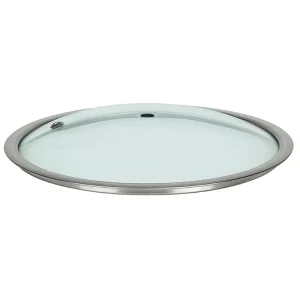
Why Choose 4mm Tempered Glass for Cookware Lids?
In the competitive landscape of kitchenware manufacturing, material selection dictates product longevity and consumer satisfaction. The 4mm thickness represents an optimal balance between structural integrity and weight efficiency. Unlike standard 3mm variants, 4mm tempered glass provides superior resistance to thermal shock and physical impact.
Tempering is a thermal treatment process that induces compressive stresses on the surface of the glass. This process increases the bending strength of the material by four to five times compared to annealed glass. For cookware applications, this means the lid can withstand rapid temperature changes without shattering, a critical safety feature for modern kitchens.
Thermal Shock Resistance and Safety Standards
One of the primary concerns for end-users is safety during high-heat cooking. High-quality 4mm tempered glass lids are designed to withstand temperature differentials exceeding 200°C. This capability ensures that moving a lid from a hot pot to a cool surface, or vice versa, does not result in catastrophic failure.
- Enhanced Durability: The increased thickness reduces the likelihood of breakage during daily handling and cleaning.
- Safe Breakage Pattern: If breakage occurs, tempered glass crumbles into small, granular chunks rather than sharp shards, minimizing injury risk.
- Chemical Stability: Premium glass formulations resist corrosion from acidic foods and detergents, maintaining clarity over time.
Visual Appeal and Cooking Monitoring
Beyond safety, transparency is a key functional benefit. Chefs and home cooks rely on visual monitoring to adjust heat levels and check food progress without lifting the lid. This retains heat and moisture, improving energy efficiency and cooking results. The 4mm profile offers a premium, substantial feel that consumers associate with high-end cookware sets.
Technical Specifications of 4mm Tempered Glass Lids
Understanding the technical parameters is essential for B2B buyers and product designers. These specifications determine compatibility with various pot bodies and adherence to international regulatory requirements.
| Parameter | Specification | Industry Benefit |
|---|---|---|
| Thickness | 4.0 mm ± 0.2 mm | Optimal balance of strength and weight; reduces shipping costs compared to thicker variants. |
| Material | Soda-lime silicate glass | Standard industry material known for clarity and cost-effectiveness when properly tempered. |
| Thermal Resistance | Up to 250°C (continuous) | Suitable for most stovetop cooking methods, including induction and gas. |
| Edge Processing | Seamed, Polished, or Ground | Polished edges provide a premium aesthetic and reduce chipping risks during assembly. |
| Certifications | LFGB, TUV, ISO9001 | Ensures compliance with European and global food safety and quality management standards. |
Edge Work and Aesthetic Finishes
The edge treatment of a glass lid significantly impacts its perceived quality and durability. Common finishes include seamed edges for cost-effective solutions and fully polished edges for premium product lines. Polishing removes micro-cracks from the cutting process, enhancing the overall strength of the lid and providing a smooth, comfortable grip for the user.
Furthermore, the curvature of the glass can be customized. Manufacturers can produce high-curvature domes, flat profiles, or tall shapes to match specific pot designs. This flexibility allows brands to create distinctive product lines that stand out in retail environments.
OEM and Customization Capabilities in China
Sourcing from China offers unparalleled flexibility in Original Equipment Manufacturing (OEM). Leading factories do not merely supply standard components; they act as engineering partners capable of translating design concepts into mass-produced realities. This section explores how customization drives brand differentiation.
Logo Printing and Branding Techniques
Brand visibility is crucial in the cookware market. Advanced printing technologies allow for durable, high-resolution logo application directly onto the glass surface. Common techniques include screen printing and ceramic decal firing.
- Screen Printing: Ideal for simple, bold logos. It offers good durability and cost-efficiency for large runs.
- Ceramic Decals: Allows for complex, multi-colored designs and gradients. The ink is fused into the glass during tempering, ensuring it never fades or peels off.
Customization extends beyond logos. Buyers can specify the color of the silicone gaskets, the finish of the stainless steel rims, and the design of the knob handles. This holistic approach ensures that the lid integrates seamlessly with the rest of the cookware set.
Mold Development for Unique Shapes
For brands seeking unique market positioning, custom mold development is available. Whether requiring a specific radius for a sleek modern look or a specialized shape for niche cooking applications, manufacturers can create bespoke molds. This capability is supported by advanced CNC machining and precision molding technologies, ensuring consistent quality across millions of units.
EUR-ASIA COOKWARE: A Trusted Manufacturing Partner
When evaluating potential suppliers, operational scale, certification, and export experience are critical indicators of reliability. EUR-ASIA COOKWARE CO.,LTD. exemplifies the capabilities required for high-volume, high-quality international supply chains.
Located in the Taian City National High-tech Development Zone in Shandong Province, EUR-ASIA operates a substantial production base covering 20,000 square meters, with a building area of 15,000 square meters. This infrastructure supports an annual output of over 15 million pieces of tempered glass lids and related kitchen accessories. Such volume capacity ensures that large orders can be fulfilled efficiently, meeting tight delivery schedules without compromising quality.
Quality Assurance and International Certifications
Trustworthiness in B2B transactions is built on verified compliance. EUR-ASIA has passed ISO9001 certification, demonstrating a robust quality management system. More importantly for international exporters, their products meet stringent safety standards, including LFGB (Germany) and TUV certifications. These certifications are mandatory for accessing key markets in Europe and other regulated regions.
The company employs more than 90 skilled workers, combining manual craftsmanship with automated production lines. This hybrid approach allows for rigorous quality control at every stage, from raw material inspection to final packaging. Over 90% of their production is exported to demanding markets such as Germany, Russia, Italy, France, Poland, Denmark, Spain, Switzerland, Brazil, Turkey, South Korea, and Japan. This extensive export history proves their ability to meet diverse regional standards and consumer preferences.
Flexible Production for Diverse Market Needs
EUR-ASIA specializes in producing low, medium, and high-level household glass products. Their versatility allows them to cater to both budget-conscious retailers and premium luxury brands. They can manufacture high-curvature, tall, flat, and other special-shaped glass covers according to specific customer demands. This adaptability makes them an ideal partner for brands looking to expand their product lines with customized solutions.
Comparative Analysis: 3mm vs. 4mm vs. 5mm Glass Lids
Selecting the correct thickness is a strategic decision affecting cost, performance, and perceived value. The following comparison helps buyers make informed decisions based on their target market segment.
| Feature | 3mm Tempered Glass | 4mm Tempered Glass | 5mm+ Tempered Glass |
|---|---|---|---|
| Weight | Lightweight | Moderate | Heavy |
| Durability | Standard | High | Very High |
| Cost | Lowest | Competitive | Premium |
| Target Market | Entry-level, Promotional | Mid-to-High End, Standard Retail | Luxury, Professional Grade |
| Thermal Mass | Low | Balanced | High (Retains heat longer) |
The 4mm option emerges as the “sweet spot” for most mainstream cookware brands. It offers a significant upgrade in durability and feel over 3mm glass without the substantial weight and cost penalties associated with 5mm or thicker variants. This balance contributes to higher customer satisfaction and reduced return rates due to breakage.
Procurement Guide: How to Source from China
Sourcing industrial components internationally requires careful planning. To ensure a smooth transaction and high-quality product delivery, buyers should follow a structured procurement process.
Step 1: Define Technical Requirements
Before contacting suppliers, prepare a detailed technical sheet. Specify dimensions, curvature radius, edge finish, hole size for steam vents, and any branding requirements. Clear specifications minimize communication errors and ensure accurate quoting.
Step 2: Verify Supplier Credentials
Request proof of certifications such as ISO9001, LFGB, and TUV. Ask for recent audit reports if available. A reputable supplier like EUR-ASIA will readily provide these documents. Verify their export experience to your specific region to ensure they understand local packaging and labeling regulations.
Step 3: Request Samples
Never place a bulk order without evaluating physical samples. Check the clarity of the glass, the smoothness of the edges, and the durability of the printed logo. Test the fit with your existing pot bodies. Sample evaluation is the most effective way to assess manufacturing quality.
Step 4: Negotiate Terms and Lead Times
Discuss Minimum Order Quantities (MOQs), payment terms, and production lead times. Consider seasonal factors, as production capacity may be tighter during peak seasons. Establish clear agreements on defect rates and replacement policies to protect your interests.
Common Challenges and Solutions in Glass Lid Sourcing
Even with experienced partners, challenges can arise. Being aware of common issues allows for proactive management.
- Breakage During Transit: Glass is fragile. Ensure the supplier uses reinforced packaging, such as double-walled cartons and individual dividers. Drop tests should be conducted during the sampling phase.
- Color Consistency: For printed logos, color matching can be tricky. Provide Pantone codes and approve physical proofs before mass production begins.
- Dimensional Tolerances: Small variations in glass bending can affect fit. Specify acceptable tolerance ranges (e.g., ±1mm) in your contract to avoid assembly issues.
Frequently Asked Questions (FAQ)
Is 4mm tempered glass safe for dishwasher use?
Yes, high-quality 4mm tempered glass lids are generally dishwasher safe. However, to prolong the life of printed logos and silicone seals, hand washing is often recommended by manufacturers. The glass itself will not degrade in dishwasher conditions.
Can I customize the shape of the glass lid?
Absolutely. Manufacturers like EUR-ASIA specialize in custom molds. You can request high curvature, flat, tall, or other special shapes to match your unique cookware design. Custom mold fees may apply depending on the complexity.
What certifications are needed to sell glass lids in Europe?
To sell in Europe, particularly in Germany and France, LFGB certification is crucial for food contact materials. TUV certification also adds significant credibility. Ensure your supplier provides valid test reports from accredited laboratories.
How long does it take to produce a custom order?
Lead times vary based on order volume and customization level. Standard orders may take 20-30 days, while new mold development can add 10-15 days. It is best to discuss specific timelines with your supplier during the quotation phase.
What is the minimum order quantity (MOQ) for OEM services?
MOQs depend on the level of customization. For standard items with simple logo printing, MOQs might be lower. For custom shapes requiring new molds, higher volumes are typically required to amortize mold costs. Contact the manufacturer directly for precise figures based on your needs.
Conclusion: Securing Quality and Value in Glass Lid Supply
Sourcing 4mm tempered glass lids directly from a certified Chinese manufacturer offers a strategic advantage for cookware brands. It combines cost efficiency with high-quality engineering, ensuring products meet global safety standards. The 4mm thickness provides the ideal balance of durability and aesthetics, catering to the expectations of modern consumers.
Partnering with an experienced supplier like EUR-ASIA COOKWARE CO.,LTD. ensures reliability. With their ISO9001, LFGB, and TUV certifications, extensive export experience, and flexible OEM capabilities, they are well-equipped to support your brand’s growth. Their ability to produce specialized shapes and apply durable branding makes them a versatile partner for both established and emerging cookware lines.
For businesses looking to enhance their product offerings with reliable, high-performance glass components, direct engagement with a proven manufacturer is the next logical step. Evaluate your specific design requirements, request samples, and establish a supply chain that prioritizes quality and consistency.
Ready to optimize your cookware line with premium glass solutions? Contact our team today to discuss your OEM requirements, request samples, and receive a customized quotation tailored to your project needs.







