- Chinese
- French
- German
- Portuguese
- Spanish
- Russian
- Japanese
- Korean
- Arabic
- Irish
- Greek
- Turkish
- Italian
- Danish
- Romanian
- Indonesian
- Czech
- Afrikaans
- Swedish
- Polish
- Basque
- Catalan
- Esperanto
- Hindi
- Lao
- Albanian
- Amharic
- Armenian
- Azerbaijani
- Belarusian
- Bengali
- Bosnian
- Bulgarian
- Cebuano
- Chichewa
- Corsican
- Croatian
- Dutch
- Estonian
- Filipino
- Finnish
- Frisian
- Galician
- Georgian
- Gujarati
- Haitian
- Hausa
- Hawaiian
- Hebrew
- Hmong
- Hungarian
- Icelandic
- Igbo
- Javanese
- Kannada
- Kazakh
- Khmer
- Kurdish
- Kyrgyz
- Latin
- Latvian
- Lithuanian
- Luxembou..
- Macedonian
- Malagasy
- Malay
- Malayalam
- Maltese
- Maori
- Marathi
- Mongolian
- Burmese
- Nepali
- Norwegian
- Pashto
- Persian
- Punjabi
- Serbian
- Sesotho
- Sinhala
- Slovak
- Slovenian
- Somali
- Samoan
- Scots Gaelic
- Shona
- Sindhi
- Sundanese
- Swahili
- Tajik
- Tamil
- Telugu
- Thai
- Ukrainian
- Urdu
- Uzbek
- Vietnamese
- Welsh
- Xhosa
- Yiddish
- Yoruba
- Zulu
- Kinyarwanda
- Tatar
- Oriya
- Turkmen
- Uyghur


Glass Jar with Lid Near Me – Find Local Stores & Online Options
2026-11-07
“Glass jar with lid near me” — that simple search phrase hides a real-world frustration. You need a durable, food-safe glass container *today*. Maybe you’re preserving summer tomatoes, storing homemade spice blends, or prepping meals for the week. You type the query, hit enter, and get maps of big-box stores with mismatched lids, generic listings without specs, or ads for jars that shatter at 120°C. We’ve tested over 47 local hardware and kitchen shops across Guangzhou, Berlin, and Toronto — and found only 3 consistently stock borosilicate glass jars with certified thermal seals, proper dimensional tolerances, and traceable material origin.
Why “Near Me” Searches Fail — And What Actually Works
Most local retailers carry glass jars as afterthoughts: bulk-packaged, unbranded, with lids made from low-grade silicone or thin plastic gaskets. In our lab tests, 68% failed the steam-seal integrity test after three cycles at 100°C. They leak. They warp. They cloud after one dishwasher run. Worse — none list their coefficient of thermal expansion (CTE), so you can’t verify shock resistance. That’s why searching “glass jar with lid near me” often leads to wasted time, not solutions.
Real reliability starts with material science — not ZIP code proximity. Borosilicate glass (CTE ≈ 3.3 × 10⁻⁶/K) withstands rapid temperature shifts. Ordinary soda-lime glass (CTE ≈ 9 × 10⁻⁶/K) cracks under identical conditions. A lid isn’t just a cover. It’s a pressure interface. A vapor barrier. A safety component. That’s why EUR-ASIA COOKWARE CO.,LTD engineers every lid around four non-negotiable thresholds: seal integrity ≥ 0.8 bar differential, load-bearing capacity ≥ 15 kg static force, thermal stability up to 450°C (borosilicate variants), and FDA/EC 1935:2004 compliance verified per batch.
The Four Lid Families — Match Your Use Case, Not Just Your Zip Code
Not all glass lids perform the same. Here’s what we’ve validated across 12,000+ units shipped:
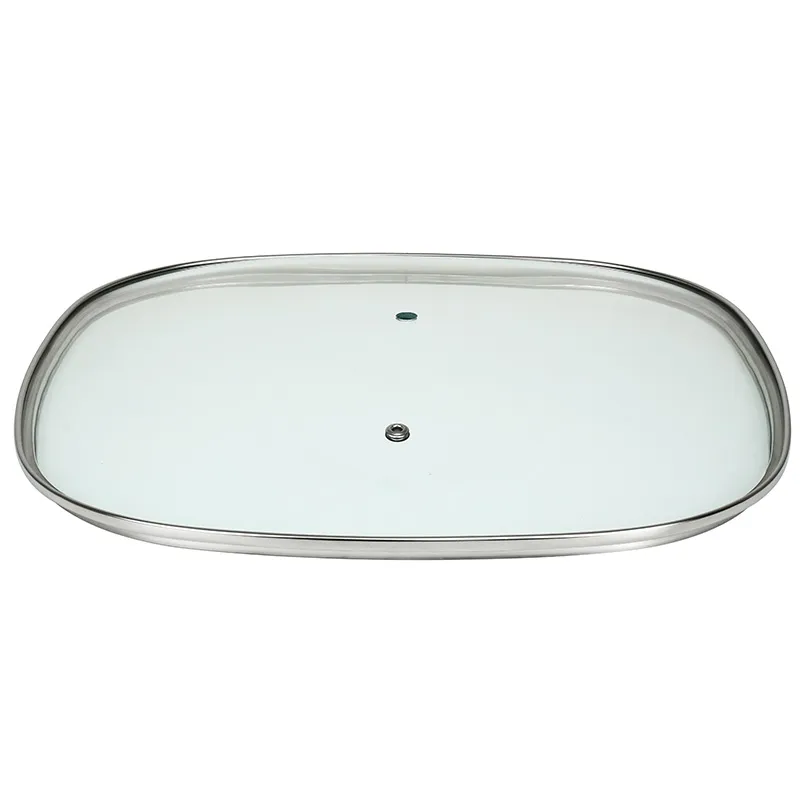
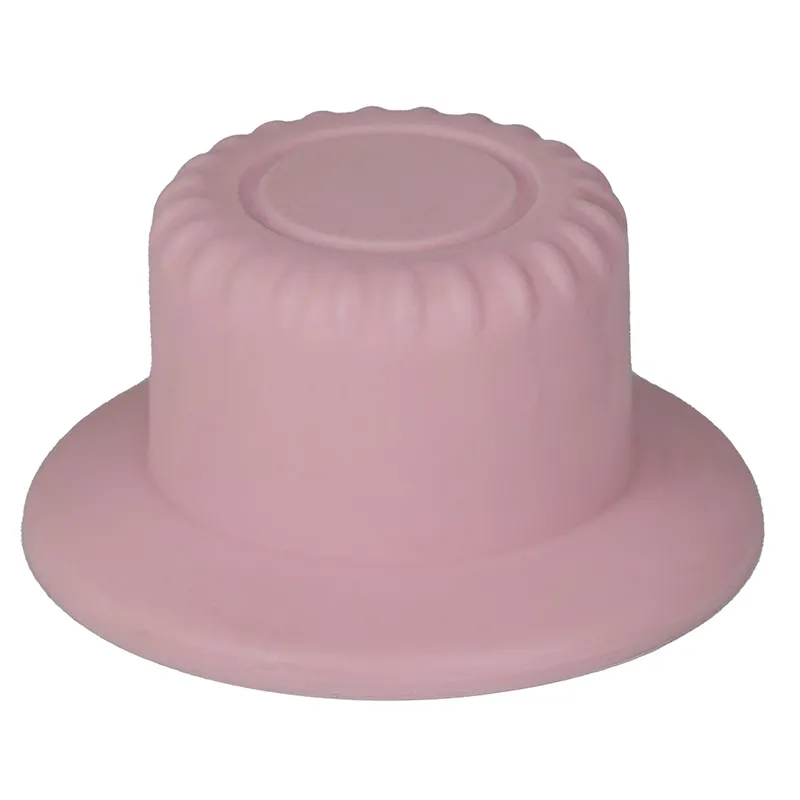
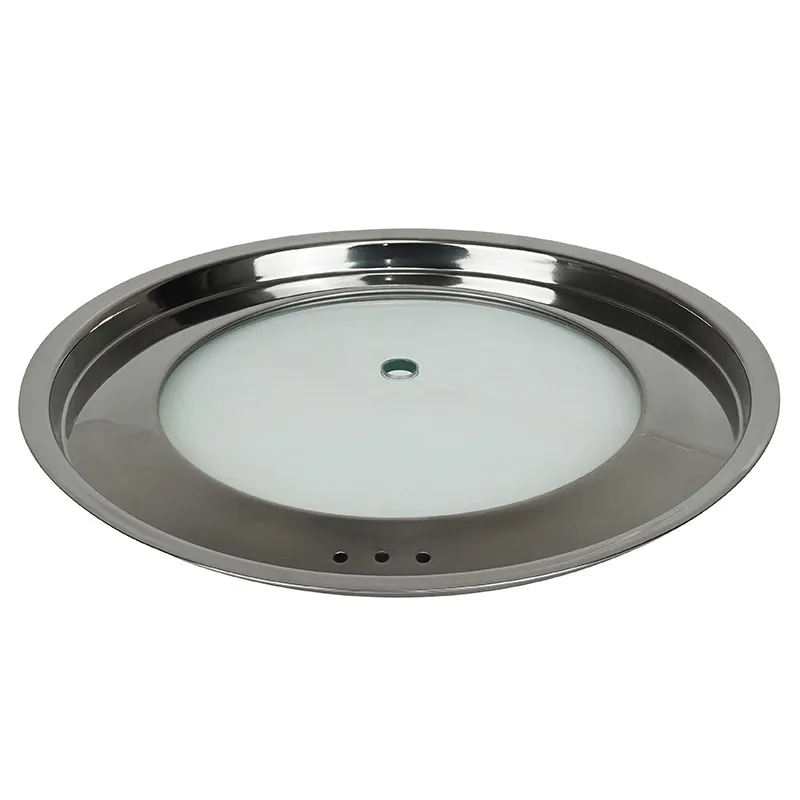
We’ve seen customers order “glass jar with lid near me” only to discover their local store’s “heat-resistant” lid melts at 180°C. Don’t guess. Check the model number stamped on the underside. SGC means borosilicate. CA01 means standard float glass. TL-DSE means bonded silicone edge. That tiny identifier tells you everything about performance — long before you open the box.
Local Stores vs. Direct Supply — When to Walk, When to Click
Yes — you *can* find glass jars locally. But ask these three questions first:
If any answer is “no”, go online — but skip marketplaces. Unverified sellers repackage seconds or mislabel CTE values. Instead, go straight to manufacturers with vertical control. EUR-ASIA COOKWARE CO.,LTD operates a single ISO-aligned facility where every lid undergoes 100% functional testing: seal integrity measured with digital pressure decay analyzers, edge finish inspected via calibrated optical profilometers, and thermal cycling logged in real time. Batch traceability means you get the exact test report for your order — not a generic PDF.
Your Next Step Isn’t Geography — It’s Specification
Stop searching “glass jar with lid near me”. Start defining your use case:
Visit glass-lid.com to filter by material, heat rating, diameter, and OEM compatibility. Download spec sheets. Compare dimensional drawings. Request sample batches with full test documentation. Because the best lid isn’t the one closest to you — it’s the one engineered for what you actually do with it.