- Chinese
- French
- German
- Portuguese
- Spanish
- Russian
- Japanese
- Korean
- Arabic
- Irish
- Greek
- Turkish
- Italian
- Danish
- Romanian
- Indonesian
- Czech
- Afrikaans
- Swedish
- Polish
- Basque
- Catalan
- Esperanto
- Hindi
- Lao
- Albanian
- Amharic
- Armenian
- Azerbaijani
- Belarusian
- Bengali
- Bosnian
- Bulgarian
- Cebuano
- Chichewa
- Corsican
- Croatian
- Dutch
- Estonian
- Filipino
- Finnish
- Frisian
- Galician
- Georgian
- Gujarati
- Haitian
- Hausa
- Hawaiian
- Hebrew
- Hmong
- Hungarian
- Icelandic
- Igbo
- Javanese
- Kannada
- Kazakh
- Khmer
- Kurdish
- Kyrgyz
- Latin
- Latvian
- Lithuanian
- Luxembou..
- Macedonian
- Malagasy
- Malay
- Malayalam
- Maltese
- Maori
- Marathi
- Mongolian
- Burmese
- Nepali
- Norwegian
- Pashto
- Persian
- Punjabi
- Serbian
- Sesotho
- Sinhala
- Slovak
- Slovenian
- Somali
- Samoan
- Scots Gaelic
- Shona
- Sindhi
- Sundanese
- Swahili
- Tajik
- Tamil
- Telugu
- Thai
- Ukrainian
- Urdu
- Uzbek
- Vietnamese
- Welsh
- Xhosa
- Yiddish
- Yoruba
- Zulu
- Kinyarwanda
- Tatar
- Oriya
- Turkmen
- Uyghur

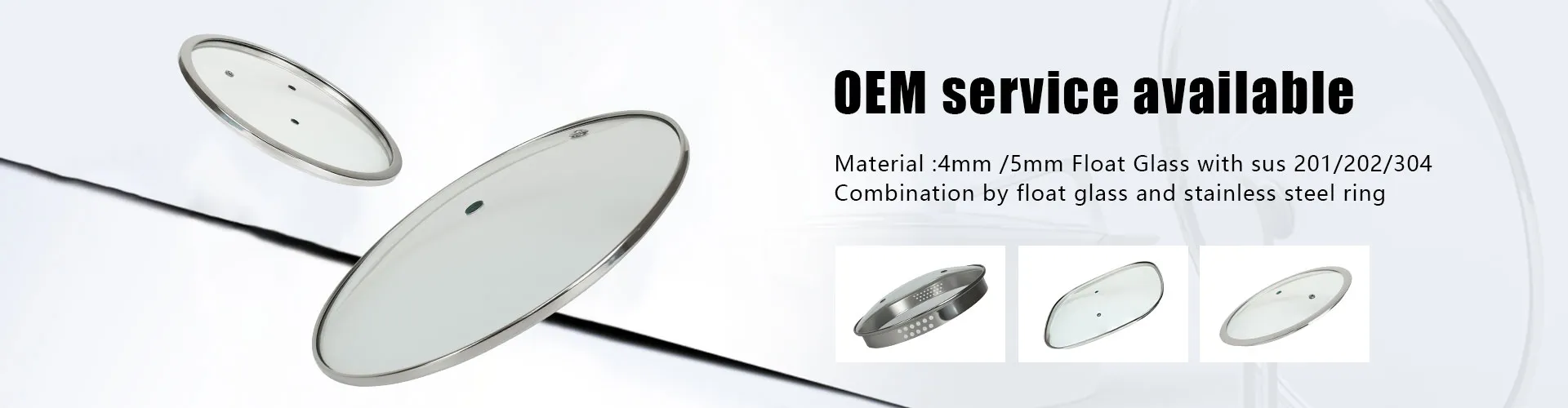
Tempered Glass Sheet for Cookware Lids: Material Selection Guide
2026-10-27
Summary: Learn how to select glass sheet for cookware lid production by evaluating material type, thickness, dimensions, processing requirements, tempering quality, and applicable safety standards.
Selecting the right glass sheet is an important step in manufacturing reliable cookware lids. The material must suit the product design, withstand the intended processing conditions, and meet the applicable safety and performance requirements.
For cookware manufacturers and glass processors, material selection involves more than choosing a thickness or checking visual clarity. Buyers also need to consider dimensional tolerances, edge quality, tempering capability, inspection requirements, and the responsibilities associated with each stage of production.
This guide explains how to evaluate glass sheet for cookware lid manufacturing, from material specifications and cutting requirements to breakage prevention and supplier assessment. It also outlines the information buyers should confirm before approving samples or placing bulk orders.
1. What Is Tempered Glass Sheet for Cookware Lids?
Tempered glass sheet is glass that has undergone controlled heat treatment to improve its mechanical strength and change its fracture behavior. In cookware manufacturing, glass serves as the transparent component of a lid and must be processed to meet the requirements of the finished product.
The appropriate material depends on the lid’s dimensions, geometry, intended use, manufacturing process, and applicable safety requirements. A specification suitable for one lid design should not automatically be applied to every other design.
1.1 The Role of Glass Sheet in Cookware Lid Manufacturing
Glass provides the main transparent surface of a cookware lid. Its quality affects appearance, dimensional consistency, manufacturing yield, and the ability to produce a finished component that meets the required performance criteria.
Depending on the supplier’s production process, buyers may purchase glass at different stages:
- Untempered glass sheet: Material supplied before final cutting, edge processing, and tempering.
- Cut glass blanks: Glass cut to the required dimensions and potentially edge-finished before tempering.
- Tempered glass components: Glass parts that have completed heat treatment and the specified quality checks.
These supply stages are not interchangeable. Buyers purchasing untempered sheet must account for the additional processing required to produce a finished component. Buyers purchasing tempered components should instead define the finished dimensions, acceptance criteria, and required test documentation.
The supply stage also determines how quality responsibilities are allocated between the material supplier, glass processor, and finished-product manufacturer.
Before requesting quotations, buyers should clarify whether they need raw material, processed glass blanks, or finished tempered glass components. This distinction helps suppliers quote the correct product and reduces misunderstandings about processing requirements and inspection responsibilities.
1.2 Tempered Glass vs. Ordinary Annealed Glass
Annealed glass and tempered glass differ in their manufacturing processes and resulting mechanical behavior.
Annealed glass is cooled in a controlled manner after forming. Fully tempered glass undergoes controlled heating followed by rapid cooling, creating surface compression balanced by internal tension.
This stress distribution generally improves the glass’s resistance to mechanical loading compared with comparable annealed glass and produces a different fracture pattern when breakage occurs.
However, tempering does not make glass unbreakable. Impact, edge damage, manufacturing defects, and unsuitable thermal conditions can still cause failure.
For cookware lid applications, buyers should evaluate:
- Whether the glass is suitable for the intended thermal conditions.
- Whether the finished component meets applicable impact and thermal shock requirements.
- Whether the tempering process is appropriate for the material thickness and geometry.
- Whether the finished glass meets the required fragmentation and quality criteria.
These factors help establish whether a glass specification is suitable for the intended application.
1.3 Which Glass Materials Are Suitable for Cookware Lids?
Soda-lime glass and borosilicate glass are two material families that may be considered for glass lid applications. They differ in composition and thermal properties, so their suitability must be evaluated against the actual product requirements.
For example, a lid intended for repeated heating and cooling may require a different material assessment from a component used under less demanding thermal conditions.
Buyers should not assume that all cookware lids require the same glass composition or that different glass types can be processed using identical tempering conditions.
The first step is to define the finished product’s operating conditions and performance requirements. Material selection and manufacturing specifications can then be developed around those requirements.
2. How to Select the Right Glass Material for Cookware Lids
Selecting glass sheet for cookware lids requires a balance between material properties, manufacturing capability, appearance, and end-use performance.
A material should not be approved solely because it looks clear or is available in the required thickness. It must also be compatible with the intended processing route and meet the relevant product specifications.
2.1 Glass Composition and Material Grade
Glass composition influences thermal behavior, mechanical properties, and suitability for different manufacturing processes.
Soda-lime glass is widely used in glass products, including applications involving heat treatment. Borosilicate glass has different thermal properties and may be suitable for applications with specific thermal requirements.
Neither material should be selected by name alone. The actual composition, product design, processing conditions, and applicable testing requirements all matter.
Before approving a material, buyers should confirm:
- The glass type and supplier’s material specification.
- The intended application and operating conditions.
- Compatibility with the planned cutting and edge-processing methods.
- Suitability for the required heat-treatment process.
- Relevant technical documentation and test reports.
- Whether the selected material can meet the finished product’s safety requirements.
Material specifications should be documented rather than communicated only through general descriptions such as “heat-resistant glass.”
For OEM projects, documentation is particularly important when the same product design will be manufactured across multiple batches or supplied to different markets.
2.2 Optical Clarity and Surface Quality
Optical quality affects the appearance and usability of a transparent cookware lid. Buyers should establish acceptable limits for visible defects before production begins.
Potential defects include:
- Scratches and surface marks.
- Bubbles or inclusions.
- Visible contamination.
- Surface irregularities.
- Optical distortion exceeding the agreed acceptance criteria.
Not every visible imperfection has the same significance. Some defects may be cosmetic, while others may indicate a more serious material or processing problem.
A practical inspection specification should define the inspection conditions, defect categories, and acceptance criteria. The inspection method should be appropriate for the product’s intended use and quality requirements.
Surface quality should also be assessed at the appropriate manufacturing stage. A defect observed after tempering may have originated in the original material, during cutting, or during subsequent handling. Identifying its source helps prevent recurring problems.
2.3 Choosing Glass for Different Lid Designs
Cookware lid designs vary in diameter, curvature, profile, and other geometric features. These differences can affect cutting, edge finishing, handling, and tempering.
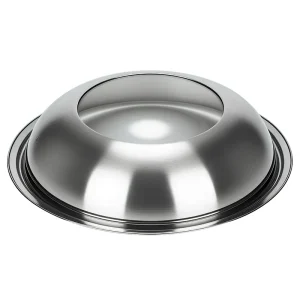
For example, flat and curved components may require different manufacturing arrangements. A design with a complex outline may also require more precise control of cutting and edge processing.
When selecting glass sheet, buyers should consider:
- The intended shape and dimensions.
- The required thickness and dimensional tolerances.
- Whether the geometry can be processed consistently.
- Whether the glass can be tempered using a validated process.
- Whether the finished component meets the required performance tests.
The most suitable material is not necessarily the one with the lowest initial purchase price. Material suitability, processing yield, quality consistency, and the cost of rejected components should also be considered.
3. How to Choose the Right Glass Thickness and Dimensions
Thickness and dimensions are fundamental parts of a glass sheet specification. They affect manufacturing feasibility, product geometry, and the performance of the finished lid.
The correct values should be established from the approved product design and validated manufacturing requirements rather than selected from a generic thickness chart.
3.1 Common Glass Thickness Options for Cookware Lids
Cookware lids are manufactured in different thicknesses according to their design and performance requirements.
For example, 4 mm and 5 mm glass specifications are used in some cookware lid product offerings. These are examples of possible specifications, not universal requirements or proof that either thickness is suitable for every lid.
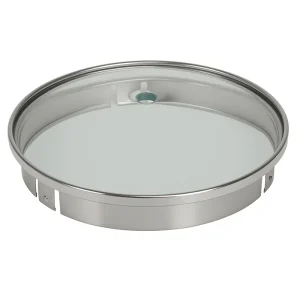
When comparing thickness options, buyers should evaluate:
- Lid diameter and geometry.
- Glass composition.
- Intended thermal conditions.
- Required impact and thermal shock performance.
- Tempering equipment and process capability.
- Finished-product design and applicable testing requirements.
Thickness should be selected as part of the complete engineering specification. Increasing thickness does not automatically guarantee better performance in every situation, and a thicker component may require different processing conditions.
The selected thickness must be compatible with both the product design and the manufacturing process.
3.2 Glass Diameter, Shape, and Dimensional Tolerances
A glass sheet specification should distinguish nominal dimensions from allowable manufacturing variation.
For a round cookware lid, diameter is a key dimension. Other designs may require additional measurements to define the complete profile.
The specification should clarify whether dimensions refer to the unprocessed glass blank or the finished glass component. It should also identify the measurement method and permitted tolerance for each critical dimension.
Dimensional variation can affect downstream processing, product fit, assembly operations, and consistency between production batches.
A complete dimensional specification may include:
- Nominal thickness and permitted thickness variation.
- Finished diameter or other critical dimensions.
- Profile and shape requirements.
- Edge-processing requirements.
- Locations and dimensions of holes or special features.
- Inspection methods and acceptance criteria.
These requirements should be documented in an approved drawing or technical specification.
3.3 How to Define Thickness and Cutting Tolerances in a Purchase Order
A purchase order should translate the product design into measurable acceptance criteria.
Rather than relying on a general statement such as “high-precision glass,” buyers should define the specific dimensions and tolerances required for the project.
A useful purchase specification should identify:
- Material: Required glass type and material specification.
- Thickness: Nominal thickness and permitted deviation.
- Dimensions: Required diameter, width, length, or profile.
- Edge condition: Required edge finish and acceptable defect limits.
- Special features: Holes and other features that must be processed before tempering.
- Inspection method: Measurement procedures, sampling approach, and acceptance criteria.
- Documentation: Records required for material identification and quality verification.
Tolerance values should be based on the approved drawing, applicable requirements, and the supplier’s demonstrated manufacturing capability.
An unnecessarily tight tolerance may increase manufacturing cost or reduce production yield without improving finished-product performance. Conversely, a tolerance that is too broad may create downstream processing or fit problems.
The objective is to establish tolerances that are technically justified and consistently achievable.
| Specification | What Buyers Should Define | Why It Matters |
|---|---|---|
| Glass type | Material type and grade | Establishes material suitability |
| Thickness | Nominal thickness and tolerance | Supports process control and product consistency |
| Diameter or profile | Finished dimensions and permitted variation | Reduces dimensional mismatch |
| Edge condition | Edge finish and acceptable defects | Helps control damage-related risks |
| Processing features | Hole positions and other geometry | Supports accurate manufacturing |
| Inspection method | Measurement procedures and acceptance criteria | Improves consistency between batches |
4. Cutting, Drilling, and Edge Processing Before Tempering
Cutting and edge processing are important stages in the manufacture of tempered glass components. Defects introduced during these operations can affect subsequent heat treatment and the reliability of the finished glass.
For fully tempered components, the final dimensions and required holes should generally be established before tempering.
4.1 Glass Cutting and Shape Processing
Glass cutting creates the required blank from the supplied material. The cutting method must be appropriate for the glass type, thickness, geometry, and required dimensional accuracy.
Poor cutting quality can produce edge chips, cracks, or other defects that become potential failure origins.
Manufacturers should control the cutting process to reduce damage and maintain dimensional consistency. This includes selecting suitable equipment, maintaining process settings, and inspecting the resulting blanks.
Before production, buyers should confirm that the supplier can consistently manufacture the required shape and dimensions.
For complex geometries, a sample run can help verify that the proposed process achieves the required tolerances without unacceptable damage.
4.2 Edge Grinding, Polishing, and Defect Inspection
Edge processing removes or reduces cutting-related irregularities and creates the specified edge finish.
The required finish depends on the product design and applicable manufacturing requirements. Buyers should not assume that every component requires the same degree of polishing or edge profile.
Inspection should look for:
- Chips and visible cracks.
- Irregular edge profiles.
- Damage introduced during grinding.
- Surface marks near the edge.
- Deviations from the approved drawing.
Edge damage deserves particular attention because cracks and sharp defects can concentrate stress and contribute to glass failure.
The inspection criteria should define acceptable edge conditions before mass production begins. Where requirements are demanding, the manufacturer should establish suitable in-process checks.
4.3 Hole Drilling and Other Special Features
Some glass components require holes or other special features. These should be incorporated into the manufacturing plan before tempering.
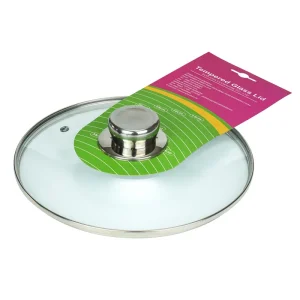
The dimensions and locations of holes should be defined in the engineering drawing. Their feasibility depends on glass thickness, overall geometry, required tolerances, and manufacturing capability.
Drilling can introduce local damage if it is not performed and controlled correctly. Hole quality and the surrounding glass should therefore be inspected before the component proceeds to heat treatment.
Buyers should confirm:
- Hole diameter and position.
- Required dimensional tolerance.
- Applicable edge-quality requirements.
- Whether the proposed process is suitable for the glass specification.
- The inspection method for confirming the finished feature.
Specific minimum distances between holes and edges should not be assumed without reference to the design, applicable requirements, and validated process capability.
4.4 Why Glass Should Not Be Cut After Tempering
Fully tempered glass contains a carefully established internal stress distribution. Conventional cutting, drilling, or substantial edge modification after tempering can disrupt that stress balance and cause the component to break.
For this reason, final dimensions, holes, and other required features should normally be completed before tempering.
If the product design changes after tempering, the manufacturer should evaluate the revised geometry and determine whether a new glass blank or a different manufacturing process is required.
Drawing approval is therefore important before production. Confirming dimensions and processing features in advance helps avoid unnecessary scrap and reduces the risk of damage during manufacturing.
5. The Tempering Process and Its Quality Requirements
Tempering is a critical manufacturing stage because it changes the mechanical behavior and fracture characteristics of glass.
A successful process must suit the material, thickness, and geometry while consistently meeting the required product specifications.
5.1 Heating and Rapid Cooling
Thermal tempering generally involves heating the glass under controlled conditions and then rapidly cooling it.
The heating and cooling conditions must be appropriate for the glass composition, thickness, shape, and production equipment.
If the process is unsuitable or inconsistent, the glass may not achieve the intended performance. Differences in glass temperature, cooling conditions, or component geometry can affect the final stress distribution.
Manufacturers should establish and validate process parameters for the specific product rather than relying on a single generic temperature or cooling time.
Buyers evaluating a supplier should ask whether the process has been validated for the required glass specification and whether relevant process records are maintained.
5.2 Surface Compression and Internal Stress
The tempering process creates surface compression and balancing internal tension.
This stress distribution contributes to the characteristic mechanical behavior of fully tempered glass. It also affects how the glass responds when damaged.
However, glass strength cannot be assessed from a single stress value alone. Material quality, edge condition, geometry, process consistency, and the nature of the applied load all influence performance.
For cookware lid applications, the important question is whether the finished component meets the applicable product requirements and performs consistently under its intended conditions.
Buyers should define the required verification methods and acceptance criteria rather than assuming that any glass described as tempered will automatically meet their product requirements.
5.3 Fragmentation Testing and Tempering Verification
Fragmentation testing evaluates the breakage pattern of tempered glass under specified test conditions.
For cookware glass lids, EN 12983-2:2023+A1:2025 is one relevant European standard to review when the product falls within its scope. It addresses safety and performance requirements for specified domestic cookware and glass lids, including requirements relating to thermally toughened glass lids and fragmentation testing.
The exact test procedure and acceptance criteria should be checked against the applicable standard and edition before they are included in a product specification.
Fragmentation testing is only one part of quality verification. It does not prove that every component in a production batch is free from defects or that the finished lid meets every applicable performance requirement.
Depending on the product, a quality-control plan may combine:
- Visual inspection.
- Dimensional verification.
- Review of manufacturing records.
- Applicable fragmentation testing.
- Additional impact or thermal shock testing where required.
- Batch identification and traceability.
The appropriate combination depends on the product, customer requirements, and applicable standard.
6. How to Control Glass Stress and Reduce Breakage Risks
Glass breakage can have multiple causes. Effective prevention requires attention to material quality, processing stages, handling practices, and finished-product requirements.
It is important to distinguish manufacturing defects from damage occurring during transport, assembly, or use.
6.1 Common Causes of Glass Breakage
Potential contributors to glass breakage include:
- Edge damage: Chips or cracks may create locations where stress becomes concentrated.
- Processing defects: Damage introduced during cutting, grinding, drilling, or handling may remain in the finished component.
- Unsuitable tempering conditions: Inappropriate heating or cooling conditions may affect the glass’s final properties.
- Thermal loading: Temperature differences and thermal gradients may contribute to stress, depending on the material and conditions.
- Impact: Localized impacts may damage the glass, particularly near vulnerable edges.
- Material inclusions: Certain inclusions, including nickel sulfide in susceptible tempered glass, can contribute to delayed breakage under particular conditions.
These factors do not explain every failure. The actual cause should be assessed using available evidence, including the fracture pattern, production records, inspection results, and operating conditions.
Avoid assigning a failure to tempering quality alone without an appropriate investigation.
6.2 The Role of Process Consistency
A consistent manufacturing process should control cutting, grinding, cleaning, handling, and inspection as connected stages.
Practical measures include:
- Defining edge-quality requirements before production.
- Inspecting glass blanks after cutting and edge processing.
- Preventing unnecessary contact or impact during handling.
- Using suitable storage and transport arrangements.
- Recording defects and investigating repeated failures.
- Reviewing the process whenever recurring damage is identified.
Process consistency also matters when the same product is manufactured across multiple batches. Changes in equipment, process settings, material sources, or handling methods should be evaluated when they may affect product quality.
6.3 Heat Soak Testing and Its Limitations
Heat Soak Testing (HST) is a controlled process used in certain applications to promote the early failure of susceptible tempered glass containing nickel sulfide inclusions.
The method is associated particularly with architectural tempered glass and should not automatically be treated as a mandatory requirement for all cookware glass lids.
Heat soak testing also has limitations. It does not eliminate every possible inclusion, remove all manufacturing defects, or guarantee that glass will never break after testing.
Before specifying HST for a cookware project, buyers should determine:
- Whether the applicable product standard or customer specification requires it.
- Whether the test method is appropriate for the glass and application.
- Which risks the test is intended to address.
- Whether the process has been validated for the intended component.
- What additional inspection or testing is necessary.
Standards developed for architectural glass, including the EN 14179 series, should not be represented as universally applicable cookware requirements.
The correct approach is to select testing according to the product’s intended use, applicable standards, and documented risk assessment.
6.4 Quality Controls That Help Reduce Breakage Risks
A practical quality-control system should address multiple manufacturing stages rather than relying on a single final inspection.
| Manufacturing Stage | Recommended Control | Purpose |
|---|---|---|
| Incoming material | Verify material identity and inspect for visible defects | Reduce the risk of unsuitable material entering production |
| Cutting | Check blank dimensions and visible damage | Detect cutting-related defects |
| Edge processing | Inspect edge finish and potential cracks or chips | Reduce edge-related risks |
| Pre-tempering | Verify dimensions and special features | Prevent unsuitable blanks from proceeding |
| Tempering | Maintain validated process conditions and records | Support consistent processing |
| Post-tempering | Conduct required visual and performance checks | Verify product conformity |
| Final review | Maintain batch records and investigate failures | Support traceability and corrective action |
These controls should be adapted to the manufacturing process and finished-product requirements.
A reliable system also includes procedures for handling nonconforming components and investigating recurring defects.
7. Safety Standards and Food Contact Compliance for Cookware Glass
Material specifications and finished-product requirements serve different purposes.
A glass sheet may meet its material specification without automatically demonstrating that the finished cookware lid meets all applicable safety and performance requirements.
Buyers should evaluate both the glass material and the complete product according to its intended use and target market.
7.1 Cookware Glass Lid Safety and Performance Standards
For domestic cookware intended for use on a cooking range or hob, EN 12983-1:2023 and EN 12983-2:2023+A1:2025 are relevant European standards to review, subject to their respective scopes and applicable editions.
Part 1 addresses general requirements for domestic cookware. Part 2 specifies additional requirements for certain ceramic cookware and glass lids.
The relevant requirements for a finished glass lid may include impact resistance, thermal shock endurance, and fragmentation, depending on the applicable provisions and product.
These standards concern the finished product and its intended application. They should not be interpreted as universal specifications for every raw glass sheet.
Before including a standard in a purchase contract, buyers should confirm:
- The product falls within its scope.
- The correct edition and amendments are being used.
- The required tests apply to the intended product.
- The testing laboratory or supplier can provide appropriate documentation.
- Any additional customer or market-specific requirements are addressed.
A material certificate alone may not establish compliance of the finished lid. Where applicable, verification should cover the completed product and its intended use.
7.2 Food Contact Safety and Compliance Documentation
Food contact compliance concerns whether materials and articles are suitable for their intended contact with food.
In the European Union, Regulation (EC) No 1935/2004 establishes a general framework for food contact materials. In broad terms, materials must not transfer constituents to food at levels that could endanger human health or cause unacceptable changes to food composition, taste, or odor.
Good Manufacturing Practice requirements under Regulation (EC) No 2023/2006 are also relevant to food contact materials within their scope.
For cookware glass lids, buyers should assess the glass and any other components that may contact food under the product’s intended conditions of use.
The assessment should consider:
- Material composition and supplier documentation.
- Intended food contact conditions.
- Applicable market-specific legal requirements.
- Relevant test reports or supporting compliance documents.
- Any coatings, treatments, or other materials that may affect compliance.
Food contact compliance and mechanical safety are different questions. A material’s suitability for food contact does not by itself demonstrate that the finished glass lid has passed the required impact, thermal shock, or fragmentation tests.
7.3 FDA, LFGB, and Other Market-Specific Requirements
Requirements differ between markets, and buyers should identify the rules applicable to the finished product before placing an order.
For products intended for the United States, applicable FDA food contact requirements should be assessed according to the substances, materials, intended uses, and relevant regulatory provisions.
For European markets, the applicable EU framework and any relevant national requirements should be considered.
Buyers may also encounter documentation described as FDA compliant, LFGB tested, or food contact tested. These expressions do not all represent the same type of legal approval or certification.
A supplier’s compliance statement should be supported by documentation appropriate to the specific material and intended use.
Before approving a supplier, confirm:
- Which market the product is intended for.
- Which legal and technical requirements apply.
- Whether the supplied documents cover the actual material and product.
- Whether the test conditions match the intended use.
- Whether additional finished-product testing is required.
Avoid assuming that every cookware glass lid must obtain the same certificate or that a single test report automatically establishes compliance in every country.
7.4 What Documents Should Buyers Request?
The documents required depend on the product, the market, and the agreed quality specification.
A useful procurement checklist may include:
- Material specification sheet.
- Supplier declaration or other applicable compliance documentation.
- Relevant material or product test reports.
- Incoming material inspection records.
- Tempering and quality inspection records, where applicable.
- Batch identification and traceability information.
- Finished-product test reports when required.
The purpose is to establish that the material and manufacturing process meet the agreed requirements and that the relevant evidence can be traced to the supplied product.
Buyers should verify document scope and validity instead of relying solely on a certificate title or a general supplier statement.
8. How to Inspect Tempered Glass Sheet Before Bulk Production
A clear inspection plan helps buyers verify that supplied glass matches the approved specification.
The plan should distinguish incoming material checks, pre-tempering checks, and post-tempering verification because different defects can arise at different manufacturing stages.
8.1 Incoming Material Inspection
Incoming inspection should confirm that the material supplied matches the purchase specification.
Depending on the project, checks may include:
- Material type and supplier identification.
- Nominal thickness and permitted variation.
- Sheet dimensions and visible surface condition.
- Available material documentation.
- Batch identification and traceability.
Inspection methods should be appropriate for the required accuracy. If a critical characteristic cannot be verified through visual inspection alone, the buyer should define a suitable measurement or testing method.
Material acceptance criteria should be agreed before production rather than established only after a problem occurs.
8.2 Pre-Tempering Inspection
Before tempering, glass blanks should be checked against the approved drawing and processing requirements.
Relevant checks include:
- Diameter, profile, or other critical dimensions.
- Thickness where required.
- Edge finish and visible damage.
- Hole locations and other special features.
- Cleanliness and condition before heat treatment.
Defects detected at this stage can often be addressed before additional processing adds cost.
The inspection process should also provide a way to identify and separate nonconforming blanks.
8.3 Post-Tempering Inspection
After tempering, inspection should verify that the finished glass meets the agreed quality requirements.
Depending on the product specification, this may include:
- Visual inspection for defects.
- Verification of finished dimensions.
- Assessment of shape or distortion where relevant.
- Required fragmentation testing.
- Applicable impact or thermal shock testing.
- Review of process and inspection records.
Not every component necessarily requires every test. The inspection plan should be based on the applicable product standard, customer requirements, and validated quality-control process.
Visual inspection alone cannot establish that every performance requirement has been met.
8.4 Sample Approval Before Mass Production
Sample approval allows buyers and manufacturers to confirm the specification before committing to a larger order.
A useful approval process should cover the actual requirements that will govern production, including dimensions, material, edge condition, appearance, and applicable performance tests.
Before approving samples, buyers should:
- Review the technical drawing and specification.
- Confirm that the sample represents the proposed manufacturing process.
- Check critical dimensions and visible quality.
- Review required test results and documentation.
- Record deviations and agree on corrective actions.
- Confirm the final acceptance criteria for mass production.
Changes to material, geometry, equipment, or processing conditions should be assessed when they may affect product conformity.
Sample approval is most useful when it establishes a clear reference for subsequent production rather than serving only as a visual confirmation.
Glass Sheet Inspection Checklist
| Inspection Item | What to Check | Acceptance Basis |
|---|---|---|
| Material identity | Glass type and material specification | Approved material requirements |
| Thickness | Actual thickness | Agreed tolerance |
| Dimensions | Diameter, profile, and other critical dimensions | Approved drawing |
| Surface quality | Scratches, bubbles, inclusions, and visible defects | Agreed appearance criteria |
| Edge quality | Chips, cracks, and edge finish | Approved workmanship requirements |
| Special features | Hole positions and other processed details | Engineering drawing |
| Tempering quality | Required process verification and performance tests | Applicable product requirements |
| Traceability | Batch and inspection records | Agreed documentation requirements |
This checklist can be adapted to the particular glass lid design and supplier arrangement. It should not be treated as a substitute for the applicable product standard.
9. How to Choose a Reliable Tempered Glass Sheet Supplier
A suitable supplier should be able to meet the required specification consistently and provide evidence that the material and manufacturing process are appropriate for the intended application.
Price is an important procurement factor, but it should be evaluated alongside processing capability, quality control, traceability, and the cost of potential nonconformities.
9.1 Manufacturing Capabilities and Processing Equipment
Buyers should assess whether a supplier can manufacture the required glass specification using an appropriate process.
Relevant considerations include:
- Ability to process the required thickness and geometry.
- Cutting and edge-processing capability.
- Suitable tempering equipment and process controls.
- Ability to maintain required dimensional tolerances.
- Inspection facilities appropriate to the product requirements.
The presence of equipment alone does not prove that a supplier can consistently meet the specification. Buyers should look for evidence of process capability, sample quality, and relevant inspection results.
Where the product has complex geometry or demanding tolerances, a sample production run may help establish whether the proposed manufacturing route is suitable.
9.2 Quality Control and Traceability
A supplier’s quality-control system should address the stages where defects may occur and provide a way to investigate problems.
Buyers should ask how the supplier manages:
- Incoming material verification.
- Cutting and edge-processing inspection.
- Tempering process control.
- Finished-product inspection.
- Nonconforming products.
- Corrective actions and recurring defects.
- Batch records and traceability.
The supplier should be able to explain how the agreed acceptance criteria are applied and what evidence is available to support conformity.
For repeat orders, traceability is particularly important because it helps identify whether a quality issue is associated with a specific batch, material source, or manufacturing condition.
9.3 Sample Testing and Production Consistency
A sample that meets the specification provides a useful starting point, but it does not automatically establish consistent mass-production quality.
Buyers should confirm that the material and process used for the sample are representative of the proposed production arrangement.
They should also define how changes will be handled if the supplier changes the material source, equipment, process settings, or other factors that may affect the finished glass.
A practical approval process includes:
- An approved drawing and material specification.
- Defined inspection and test requirements.
- Recorded sample approval.
- Agreed acceptance criteria for production batches.
- A process for reviewing significant changes.
- A documented method for addressing nonconforming products.
These measures reduce ambiguity between buyer and supplier and provide a clearer basis for quality evaluation.
9.4 Questions to Ask Before Placing a Bulk Order
Before placing an order, buyers should obtain clear answers to the questions most relevant to the project.
- What glass types and thickness options can you supply for this application?
- What dimensional tolerances can you consistently achieve?
- Which cutting and edge-processing methods are used?
- How is the tempering process controlled and verified?
- Which inspection records and test reports can you provide?
- Can production batches be traced to their material and inspection records?
- Which product safety and food contact requirements can you support?
- Can you manufacture samples according to the approved drawings and specifications?
- How are material or process changes communicated and approved?
- What acceptance criteria will be used for mass production?
Assess the answers against the actual project requirements rather than relying on a generic supplier checklist.
A reliable purchasing decision depends on the supplier’s ability to demonstrate that the required specification can be manufactured, inspected, and maintained consistently.
10. Conclusion: Selecting Glass Sheet for Reliable Cookware Lid Production
Selecting tempered glass sheet for cookware lids requires a coordinated approach to material choice, dimensional design, processing, tempering, and quality verification.
Buyers should begin by defining the glass type, thickness, dimensions, edge requirements, and intended operating conditions. Cutting and edge processing must produce blanks suitable for the validated tempering process, while inspection and testing should confirm that the finished components meet the agreed requirements.
Safety standards and food contact regulations must also be assessed according to the intended product and target market. No single material certificate or inspection result should be treated as proof that every aspect of the finished lid is compliant.
Before mass production, buyers should approve samples, document acceptance criteria, and confirm that the supplier can maintain consistent quality across production batches.
If you are evaluating materials for a cookware project, start with the approved product drawing and performance requirements. From there, confirm the glass specification, processing route, testing requirements, and supplier documentation before committing to bulk production.
For buyers evaluating complete cookware components, explore our tempered glass lid product range to review finished glass lid options for cookware applications.