- Chinese
- French
- German
- Portuguese
- Spanish
- Russian
- Japanese
- Korean
- Arabic
- Irish
- Greek
- Turkish
- Italian
- Danish
- Romanian
- Indonesian
- Czech
- Afrikaans
- Swedish
- Polish
- Basque
- Catalan
- Esperanto
- Hindi
- Lao
- Albanian
- Amharic
- Armenian
- Azerbaijani
- Belarusian
- Bengali
- Bosnian
- Bulgarian
- Cebuano
- Chichewa
- Corsican
- Croatian
- Dutch
- Estonian
- Filipino
- Finnish
- Frisian
- Galician
- Georgian
- Gujarati
- Haitian
- Hausa
- Hawaiian
- Hebrew
- Hmong
- Hungarian
- Icelandic
- Igbo
- Javanese
- Kannada
- Kazakh
- Khmer
- Kurdish
- Kyrgyz
- Latin
- Latvian
- Lithuanian
- Luxembou..
- Macedonian
- Malagasy
- Malay
- Malayalam
- Maltese
- Maori
- Marathi
- Mongolian
- Burmese
- Nepali
- Norwegian
- Pashto
- Persian
- Punjabi
- Serbian
- Sesotho
- Sinhala
- Slovak
- Slovenian
- Somali
- Samoan
- Scots Gaelic
- Shona
- Sindhi
- Sundanese
- Swahili
- Tajik
- Tamil
- Telugu
- Thai
- Ukrainian
- Urdu
- Uzbek
- Vietnamese
- Welsh
- Xhosa
- Yiddish
- Yoruba
- Zulu
- Kinyarwanda
- Tatar
- Oriya
- Turkmen
- Uyghur

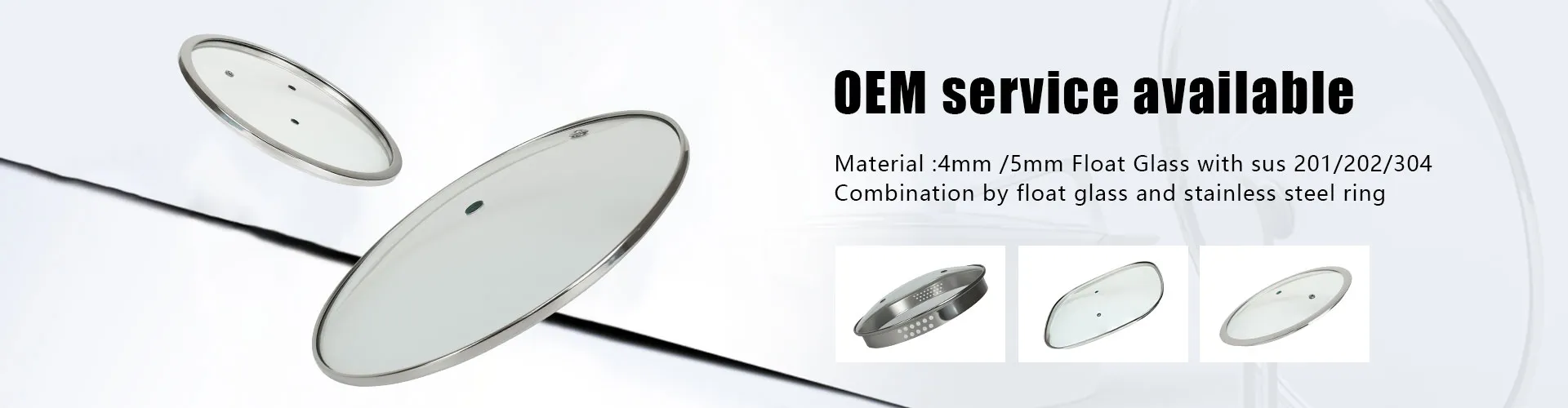
Replacement Glass Lids for Cookware: How to Choose the Right Fit
2026-10-21
Summary: Learn how to measure replacement glass lids for cookware, check compatibility, compare designs, and prepare for bulk orders.
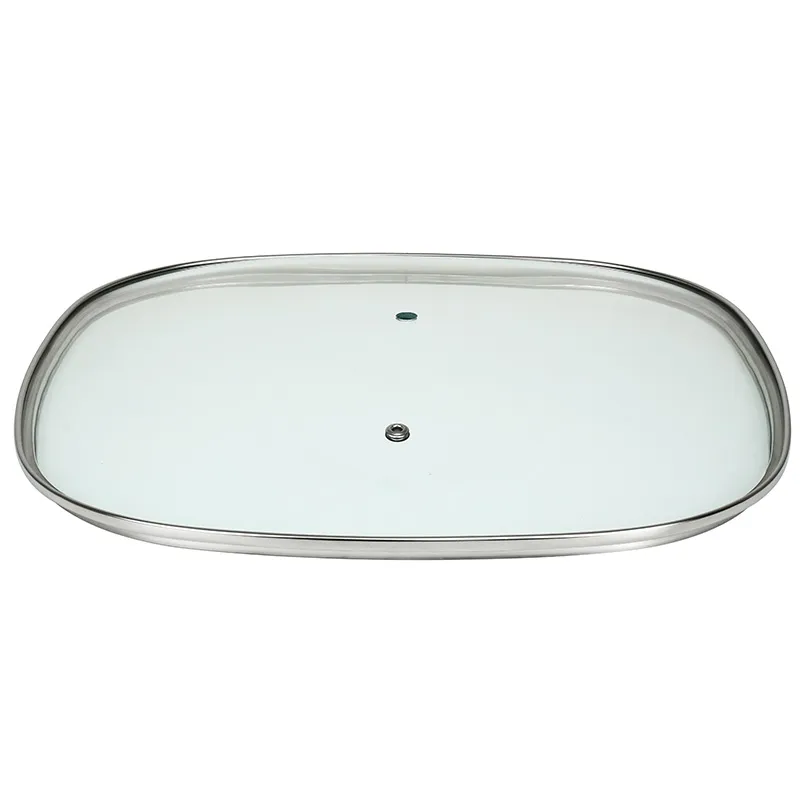
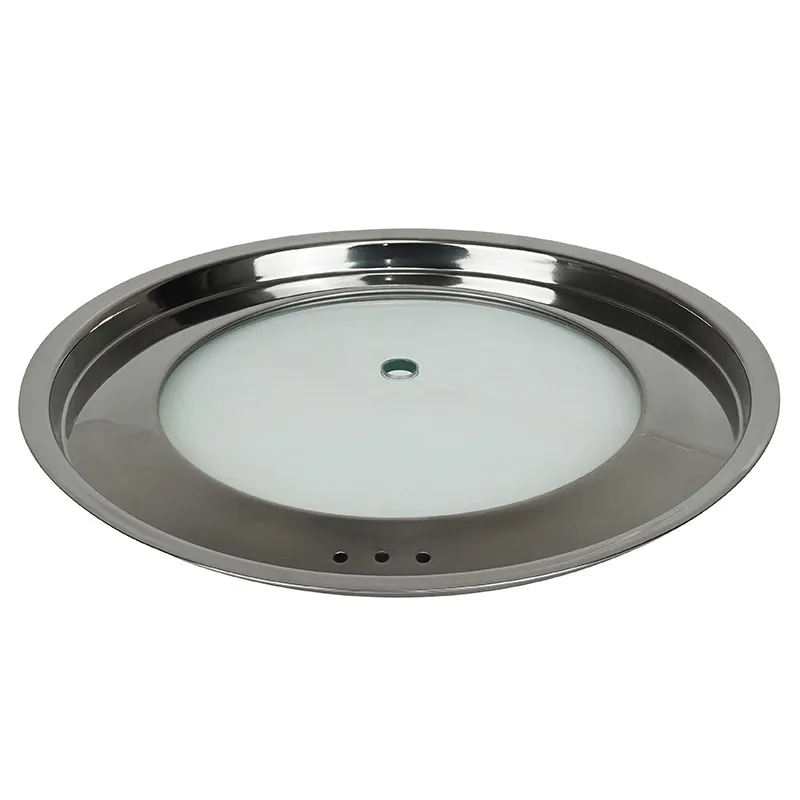
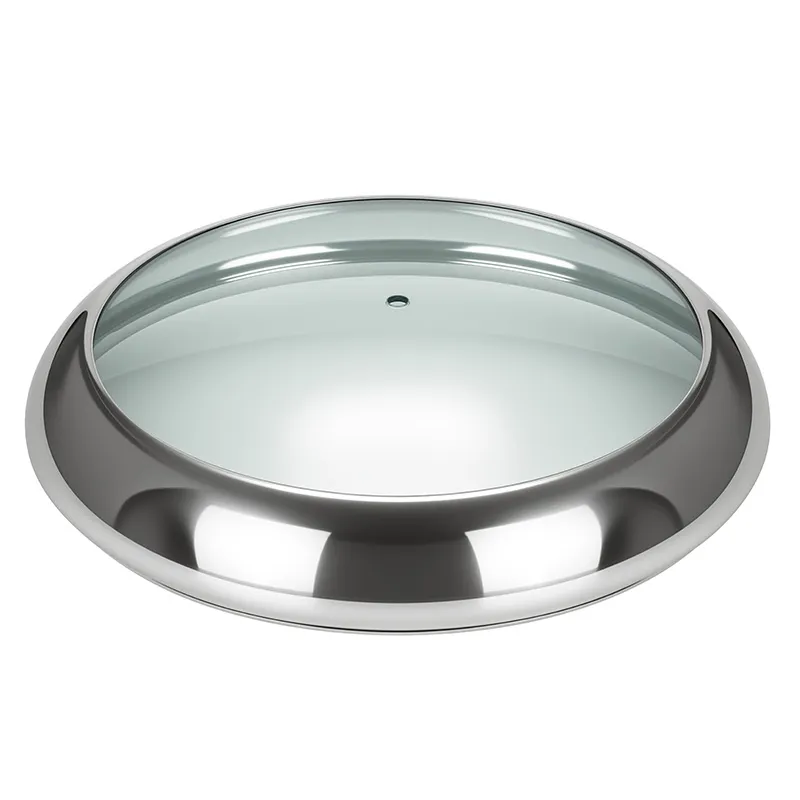
Replacement glass lids for cookware need to match more than the diameter of a pot or pan. The rim profile, contact area, overall dimensions, handle design, and steam vent configuration can all affect compatibility.
A lid with the wrong dimensions or edge design may not sit securely on the cookware.
For individual buyers, the priority is finding a replacement that fits existing cookware. For cookware brands, importers, distributors, and wholesale buyers, the process also involves confirming specifications, evaluating samples, and maintaining consistency across bulk orders.
This guide explains how to measure a cookware lid, assess compatibility, compare standard and custom options, and prepare the information needed to source replacement glass lids.
1. What Are Replacement Glass Lids for Cookware?
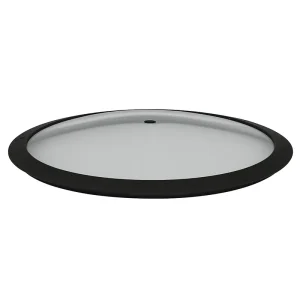
Replacement glass lids are intended to replace missing, damaged, or unsuitable lids on existing cookware. Depending on the design, they may be used with frying pans, saucepans, pots, and other compatible cookware.
Individual consumers may need a replacement because the original lid is lost, the glass is damaged, or a handle or attachment requires replacement. Retailers and distributors may need multiple sizes for different cookware models, while manufacturers and private-label brands may require consistent specifications for ongoing product lines.
Before selecting a replacement, determine whether you need a single compatible lid, a standard-size product, or a customized component for a commercial order.
When Should a Cookware Glass Lid Be Replaced?
A glass lid should not continue to be used if the glass is cracked, chipped, or otherwise damaged in a way that could compromise safe use. A damaged rim, loose handle, or defective attachment also requires attention.
Whether a handle or another component can be replaced separately depends on the product’s construction and the availability of suitable parts. If the glass itself is damaged, replacing the complete lid is generally more appropriate than attempting to repair the glass.
Always follow the cookware manufacturer’s inspection, use, and replacement instructions.
Original Manufacturer Lids vs. Third-Party Replacements
An original manufacturer’s replacement may be easier to identify when the cookware model and part number are available. However, original parts may not be available for older or discontinued cookware.
A third-party replacement may be an alternative if its dimensions and design are suitable for the intended cookware. A matching diameter alone does not establish compatibility. The rim profile, contact area, seating position, and other relevant features must also be checked.
Do not assume that a lid described as universal will fit every pot or pan.
2. How to Measure a Cookware Lid for Replacement
Accurate measurements help narrow down suitable replacement options and reduce uncertainty before ordering. The first step is to establish which dimensions are required and where each measurement should be taken.
Measure the Diameter Using Clear Reference Points
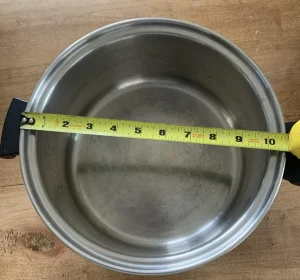
Start by identifying the cookware opening and the area where the lid contacts the cookware. These measurements are related, but they may differ from the lid’s overall outside diameter.
For a round lid:
- Measure across the relevant reference points using a suitable measuring tool.
- Record exactly where the measurement begins and ends.
- If the lid has a metal rim, record the overall assembly dimensions and the glass dimensions separately when required.
- Compare the measurements with the original product specifications, if available.
Do not automatically treat the nominal cookware size as the required lid diameter. The size shown on product packaging may follow a different measurement convention.
Check the Rim Profile and Overall Height
The rim profile affects how the lid sits on the cookware. Different designs may have different edge shapes, metal bands, contact areas, or seating depths, even when their nominal diameters are similar.
Record the lid’s overall height, including raised features that may affect clearance or storage. For a custom design, a technical drawing or cross-sectional profile can provide more useful information than a single diameter measurement.
Photographs taken from above and from the side can help clarify the geometry when drawings are unavailable.
Record the Other Key Dimensions
| Measurement or feature | Information to record | Why it matters |
|---|---|---|
| Diameter | Actual measurement and reference points | Establishes the initial size requirement |
| Rim profile | Edge shape, contact area, and construction | Helps assess seating and compatibility |
| Overall height | Height of the complete lid assembly | Helps check clearance and storage |
| Handle | Height, position, and attachment arrangement | Helps match the required configuration |
| Steam vent | Presence, position, and design | Helps reproduce the intended configuration |
| Cookware identification | Brand, model, or part number, if available | Helps identify the intended application |
The required information depends on the product. A standard replacement may need fewer details than a customized lid with a specific rim and handle arrangement.
Common Measurement Mistakes
Three mistakes are particularly worth avoiding:
- Measuring only the glass: The metal rim or contact area may determine how the lid fits.
- Confusing nominal size with actual dimensions: Confirm the measurement convention before comparing products.
- Ignoring secondary features: Handle height, rim geometry, and steam vent placement may affect whether a replacement is suitable.
3. How to Check Whether a Replacement Glass Lid Will Fit
After recording the dimensions, evaluate the complete design rather than relying on diameter alone.
Match the Diameter and Rim Design
Compare the measured dimensions with the cookware opening and any available original specifications. The lid should sit in its intended position without an obvious mismatch between the rim and the cookware.
A lid that is too small may not seat securely. A lid that is too large may fail to seat correctly or interfere with the cookware’s surrounding structure.
Two lids with similar diameters should not automatically be treated as interchangeable if their rim profiles or contact areas differ.
For custom or bulk orders, agree on the measurement references and acceptable dimensional tolerances with the supplier before production.
Check the Handle and Steam Vent
Confirm the handle’s position, shape, mounting arrangement, and whether it is supplied as part of the complete lid or separately.
If the original lid has a steam vent, document its location and configuration. Provide photographs or drawings when the replacement must reproduce the original design.
For commercial orders, record these requirements in the approved product specification instead of relying solely on verbal descriptions.
Verify the Intended Cookware Application
If the cookware brand, model, or original part number is available, share it with the supplier. This information may help identify a suitable product or clarify which measurements are still needed.
If model information is unavailable, provide:
- Measurements of the cookware opening and original lid, if available.
- Clear photographs from the top and side.
- Close-up photographs of the rim and contact area.
- Images of the handle and steam vent.
- A technical drawing or reference sample, when necessary.
The supplier can use these materials to assess whether an existing product may be suitable or whether further measurements and sample testing are needed.
Will a Universal Glass Lid Fit Different Cookware Brands?
Possibly, but compatibility depends on the product’s specified size range and design. A universal lid may accommodate a defined range of cookware dimensions or rim configurations; it should not be assumed to fit every brand or pan shape.
Check the manufacturer’s stated compatibility range and verify the fit on the intended cookware where necessary. For commercial applications, use the actual cookware model or an approved reference sample rather than relying on a general product description.
4. Materials and Design Options for Replacement Glass Lids
The appropriate material and design depend on the cookware application, the original product specification, and the buyer’s requirements.
Tempered Glass and Glass Specifications
Tempered glass is used in many cookware lid designs, but the term alone does not establish every performance characteristic of a specific product.
Buyers should confirm the glass type, thickness, applicable manufacturing requirements, and relevant test documentation with the supplier. Claims about operating temperatures, thermal performance, or safety-related properties should be supported by applicable product documentation.
The glass should also be evaluated as part of the complete lid assembly. The rim, handle attachment, and other components may influence the requirements for the finished product.
Rim Materials and Edge Designs
Some glass lids use a metal rim, while other designs use different edge configurations. The appropriate option depends on the cookware interface and the required design.
When comparing options, review the rim dimensions, profile, material specification, and contact area. For custom products, request drawings or samples when a visual comparison alone cannot establish compatibility.
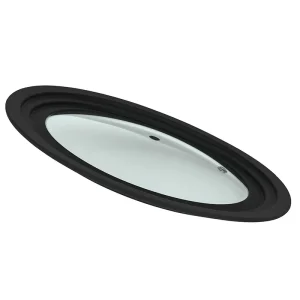
Handle Design and Mounting
Handle requirements may include material, shape, height, position, and attachment method. Confirm whether the handle is included in the complete lid assembly or must be sourced separately.
For customized products, a drawing or reference sample can help clarify the required configuration. Any claims about heat resistance, durability, or suitability for a particular cooking application should be checked against the relevant product specifications and testing.
Steam Vents and Other Functional Features
The presence, position, and design of a steam vent may be part of the original cookware specification. Other requirements may include the lid’s overall profile, handle clearance, rim construction, and appearance.
Separate essential requirements from optional preferences. A clear specification helps the supplier evaluate the design and identify unresolved questions before sample approval.
5. Standard Sizes vs. Custom Replacement Glass Lids
The choice between a standard product and a custom design depends on how closely the available specifications match the intended cookware.
When Is a Standard-Size Lid Suitable?
Before ordering, confirm the actual dimensions and product configuration. Two lids described as the same nominal size may not have identical specifications.
For distributors and wholesalers, consistency across repeat orders is also important. Confirm how the product specification will be documented and maintained.
When Should You Consider a Custom Lid?
A custom glass lid may be worth evaluating when existing products do not meet requirements for diameter, rim profile, handle arrangement, or other design features.
Custom development usually requires more detailed information, including measurements, drawings, reference samples, and functional requirements. The availability of customization depends on the supplier’s actual capabilities, tooling requirements, production process, and order conditions.
Confirm these factors directly rather than assuming that every supplier can manufacture a particular design.
What Information Is Needed for a Custom Quote?
| Requirement | Information to provide |
|---|---|
| Dimensions | Diameter, overall height, and measurement references |
| Rim design | Profile, contact area, and edge construction |
| Glass specification | Required glass type and thickness, if defined |
| Handle | Material, shape, position, and attachment method |
| Steam vent | Required presence, position, and configuration |
| Drawings or samples | Technical drawings, photographs, or physical samples |
| Order quantity | Estimated quantity and repeat-order expectations |
| Packaging | Individual protection, carton requirements, and labeling |
| Quality requirements | Inspection criteria, tolerances, and required documentation |
If some specifications have not been finalized, identify them as open questions. This allows the supplier to distinguish confirmed requirements from details that still need technical discussion.
Approve a Sample Before Bulk Production
For a custom design or a new supplier relationship, sample evaluation can help identify problems before a larger order is placed.
Compare the sample with the agreed specification, including dimensions, rim profile, handle configuration, and other specified features. Where compatibility is important, evaluate it on the intended cookware or an approved reference component.
Before approving production, document the accepted specification, measurement references, applicable tolerances, appearance requirements, and packaging expectations. Any changes made after sample approval should be confirmed in writing.
6. What Buyers Should Confirm Before Ordering in Bulk
Bulk procurement requires clear requirements for the product, inspection process, packaging, and delivery.
Product Specifications and Quality Inspection
Prepare a controlled specification that defines the key dimensions and how each measurement is taken. Agree on acceptable tolerances with the supplier before production where tolerances are required.
Discuss how finished lids will be inspected. Depending on the product, relevant checks may include dimensions, visible defects, rim construction, handle attachment, and conformity with the approved specification.
Ask which inspection records, test reports, and product documents the supplier can actually provide. Identify any certification or compliance requirements according to the destination market and intended application. Do not assume that every supplier holds the same certifications or performs the same tests.
Packaging and Shipment Requirements
Glass products need packaging appropriate for their dimensions, construction, and transportation conditions.
Before production, clarify:
- How each lid will be protected.
- How products will be separated within cartons.
- Whether specific labels or packaging formats are required.
- Carton configuration and shipment quantities.
- Responsibility for meeting the agreed packaging requirements.
Retail distribution may require different packaging from industrial or wholesale shipments.
MOQ, Lead Time, Sampling, and Commercial Terms
Confirm the following points directly with the supplier:
- What is the minimum order quantity for the selected product?
- Is a sample available, and are sample or tooling charges applicable?
- What is the estimated production lead time after specification approval?
- Will repeat orders follow the same approved specification?
- What packaging and delivery arrangements are available?
- Which payment and shipping terms apply?
These details may vary according to design, order volume, material requirements, and production schedule. Obtain written confirmation rather than relying on general estimates.
7. Common Mistakes When Sourcing Replacement Glass Lids
| Common mistake | Potential problem | How to avoid it |
|---|---|---|
| Choosing by nominal diameter alone | The lid may not seat correctly | Confirm actual dimensions and rim profile |
| Measuring only the glass | The rim or contact area may be overlooked | Record relevant dimensions of the complete assembly |
| Ignoring handle and vent configuration | The replacement may differ from the required design | Document these features before ordering |
| Assuming universal compatibility | The lid may not fit the intended cookware | Check the stated range or evaluate a sample |
| Ordering in bulk without sample approval | Differences may be discovered too late | Approve a sample and document the specification |
| Leaving packaging requirements undefined | Products may arrive in an unsuitable format | Agree on packaging and labeling before production |
| Relying on unverified performance claims | The product may not meet intended requirements | Request relevant specifications and supporting documents |
The central principle is to resolve technical uncertainties before committing to a large order. Accurate measurements, written specifications, and sample approval provide a stronger basis for purchasing decisions than product descriptions alone.
8. Replacement Glass Lid Sourcing Checklist
Use this checklist to prepare a quotation request or review a proposed order.
- Cookware brand and model, if available
- Measured lid or cookware rim diameter
- Measurement reference points
- Rim profile and contact area
- Glass type and thickness requirements, if specified
- Handle design and mounting method
- Steam vent requirements
- Drawings, photographs, or reference samples
- Estimated order quantity and repeat-order expectations
- Packaging and labeling requirements
- Sample approval and inspection criteria
- Required product documentation
- Target delivery schedule and commercial terms
Not every requirement needs to be finalized at the beginning. Clearly identify confirmed specifications and unresolved questions so both parties understand what remains to be agreed.
For a standard replacement, begin with the cookware identification and measurements. For a custom or bulk order, prepare a more detailed specification and confirm the sample approval process before production.
9. Frequently Asked Questions
How Do I Measure a Replacement Glass Lid for a Frying Pan?
Measure the relevant diameter and identify the points where the lid contacts the cookware. If the lid has a metal rim, record the dimensions of the complete assembly and any additional measurements requested by the supplier.
Also check the rim profile, handle, and steam vent configuration.
Can I Use a Universal Glass Lid on Different Cookware Brands?
Possibly, but compatibility depends on the lid’s specified size range and design. Similar diameters do not guarantee matching rim profiles or contact areas.
Check the product specifications and verify the fit where necessary.
What Information Do I Need to Order a Custom Glass Lid?
Provide the required dimensions, rim design, glass specification, handle arrangement, steam vent requirements, estimated order quantity, and packaging needs.
Drawings, photographs, and reference samples can help clarify the design. The supplier should confirm which requirements can be accommodated.
Can Replacement Glass Lids Be Purchased in Bulk?
Bulk purchasing may be possible when a supplier offers the required product and order conditions. Confirm the minimum order quantity, product specification, sample availability, inspection requirements, packaging, and lead time before placing an order.
What Should I Check Before Approving a Glass Lid Sample?
Compare the sample with the agreed specification. Check dimensions, rim profile, handle configuration, vent placement, visible finish, and compatibility with the intended cookware.
Record the approved version and any applicable tolerances before authorizing bulk production.
How Can I Verify the Specifications of a Tempered Glass Lid?
Request the product specification and relevant supporting test documentation from the supplier. Confirm the glass type, thickness, applicable performance requirements, and intended-use limitations.
Do not rely solely on a product description or appearance to establish technical suitability.
Conclusion: Choosing the Right Replacement Glass Lids for Cookware
Choosing replacement glass lids for cookware starts with accurate measurements and a clear understanding of the cookware’s rim and design requirements. Diameter, contact area, handle configuration, and steam vent details should all be considered when evaluating compatibility.
For distributors, cookware brands, and other bulk buyers, the next step is to establish a written specification, review available product options, and approve a sample when necessary. Clear inspection, packaging, and delivery requirements can also reduce uncertainty during procurement.
Need replacement glass lids for cookware or a custom bulk-order solution? Prepare your required dimensions, rim design, handle configuration, estimated order quantity, and any available drawings or reference photos. Contact our team to discuss product specifications, sample availability, and quotation requirements. Final product compatibility, customization options, and order terms should be confirmed before production.