- Chinese
- French
- German
- Portuguese
- Spanish
- Russian
- Japanese
- Korean
- Arabic
- Irish
- Greek
- Turkish
- Italian
- Danish
- Romanian
- Indonesian
- Czech
- Afrikaans
- Swedish
- Polish
- Basque
- Catalan
- Esperanto
- Hindi
- Lao
- Albanian
- Amharic
- Armenian
- Azerbaijani
- Belarusian
- Bengali
- Bosnian
- Bulgarian
- Cebuano
- Chichewa
- Corsican
- Croatian
- Dutch
- Estonian
- Filipino
- Finnish
- Frisian
- Galician
- Georgian
- Gujarati
- Haitian
- Hausa
- Hawaiian
- Hebrew
- Hmong
- Hungarian
- Icelandic
- Igbo
- Javanese
- Kannada
- Kazakh
- Khmer
- Kurdish
- Kyrgyz
- Latin
- Latvian
- Lithuanian
- Luxembou..
- Macedonian
- Malagasy
- Malay
- Malayalam
- Maltese
- Maori
- Marathi
- Mongolian
- Burmese
- Nepali
- Norwegian
- Pashto
- Persian
- Punjabi
- Serbian
- Sesotho
- Sinhala
- Slovak
- Slovenian
- Somali
- Samoan
- Scots Gaelic
- Shona
- Sindhi
- Sundanese
- Swahili
- Tajik
- Tamil
- Telugu
- Thai
- Ukrainian
- Urdu
- Uzbek
- Vietnamese
- Welsh
- Xhosa
- Yiddish
- Yoruba
- Zulu
- Kinyarwanda
- Tatar
- Oriya
- Turkmen
- Uyghur


Type Glass Lid Manufacturer | Custom Tempered Glass Lids for Cookware
2026-11-08
Choosing a suitable T type glass lid manufacturer involves more than comparing product prices. For cookware brands, importers, wholesalers, and OEM/ODM buyers, the stainless steel rim profile, glass thickness, lid dimensions, and component compatibility all influence the final product specification.
A T type glass lid features a T-shaped stainless steel rim profile as its defining structural element. This profile forms the metal edge around the glass panel and distinguishes this lid configuration from other stainless steel rim designs. When sourcing these lids for cookware production, buyers need to confirm the rim structure, glass specifications, overall dimensions, and compatibility with the intended cookware.
This guide explains the structural features of T type glass lids, available customization considerations, supplier evaluation criteria, quality control requirements, and the information buyers should prepare before placing bulk orders.
1. What Is a T Type Glass Lid?
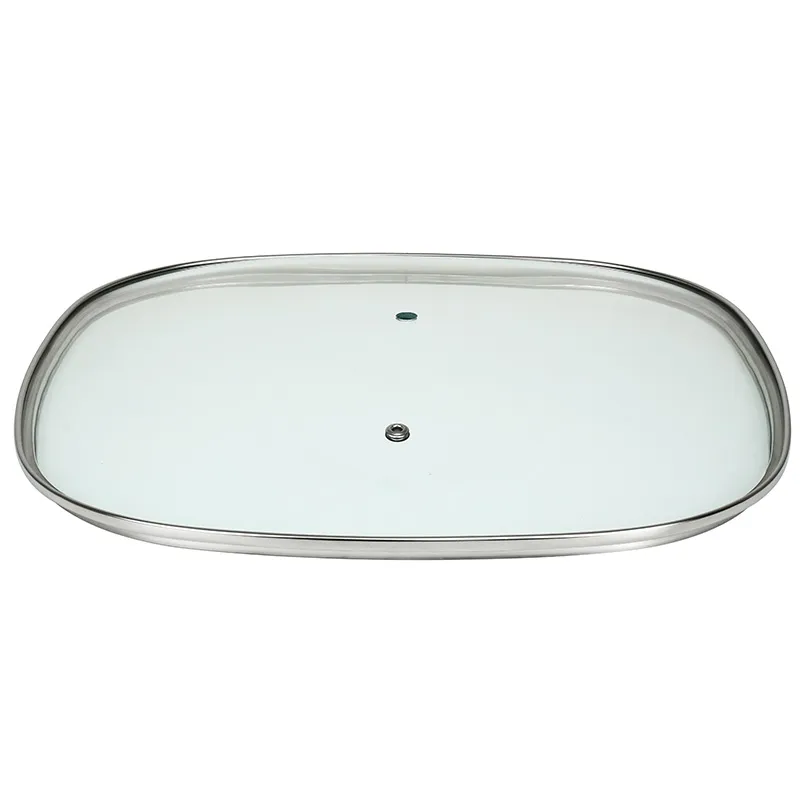
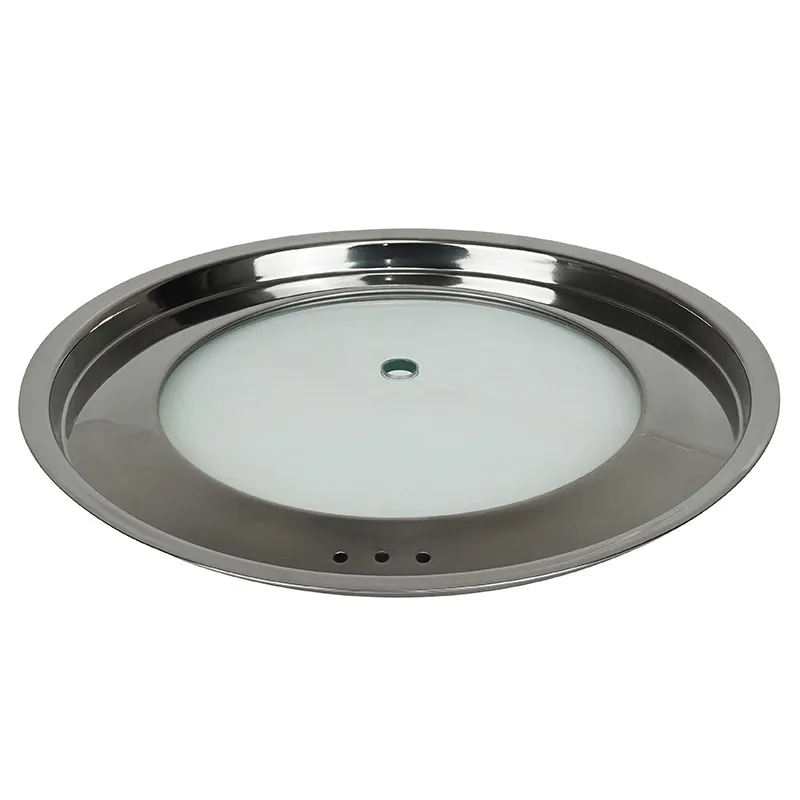
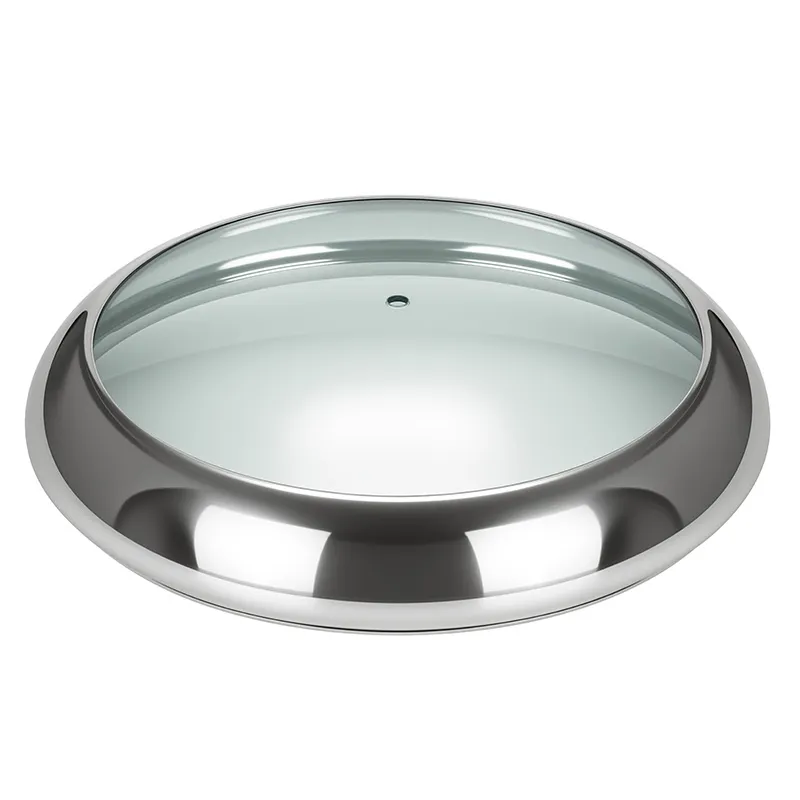
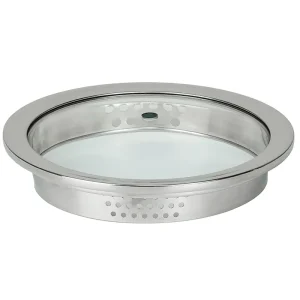
A T type glass lid is a cookware lid that uses a T-shaped stainless steel rim profile as part of its edge construction. It combines a glass panel with a specially shaped stainless steel rim to form a complete lid assembly for compatible cookware.
Unlike a lid classified by its handle shape or glass appearance, the T type designation refers specifically to the cross-sectional profile of the stainless steel rim.
This distinction matters to cookware manufacturers and buyers because the rim profile influences the lid’s edge construction, overall dimensions, appearance, and compatibility with the corresponding cookware.
Main Components of a T Type Glass Lid
A typical T type glass lid may include the following components:
- Tempered glass panel: The transparent glass section that allows users to observe food during cooking. The actual glass composition and tempering treatment should be confirmed according to the product specification.
- T-shaped stainless steel rim: The defining structural component surrounding the glass panel, with a T-shaped cross-sectional profile.
- Handle or knob: A component used to lift and handle the lid.
- Handle mounting components: Fasteners or other connecting parts used to secure the handle, depending on the design.
- Additional functional features: These may include a steam vent or other customized details when required by the product specification.
The exact configuration depends on the intended cookware application and the approved product design.
For B2B buyers, it is important to evaluate the complete assembly rather than considering the glass panel and stainless steel rim separately. The dimensions, material specifications, and connection details of each component should be confirmed before production.
Typical Applications of T Type Glass Lids
T type glass lids may be considered for cookware products designed to accommodate the corresponding stainless steel rim structure.
Potential applications include:
- Frying pans
- Sauce pans
- Cooking pots
- Other compatible cookware products
However, compatibility should not be assumed based on the nominal lid diameter alone. Buyers should also check the cookware’s upper opening, rim geometry, and required seating position.
Providing a cookware sample or technical drawing can help a manufacturer evaluate whether the proposed T-shaped rim profile is suitable for the intended application.
2. Key Features of T Type Tempered Glass Lids
When evaluating T type tempered glass lids, buyers should pay attention to several structural and material factors. These include glass thickness, glass treatment, stainless steel material, rim dimensions, steam vent configuration, and handle assembly.
Each factor should be considered as part of the complete lid specification.
Tempered Glass Thickness: 4mm or 5mm
Glass thickness is an important specification when developing cookware lids.
For cookware glass lids, 4mm and 5mm are two thickness options that may be considered, depending on the product design and manufacturing requirements.
The selection should take into account:
- Overall lid diameter
- Glass shape and design
- Rim structure and assembly requirements
- Intended cookware application
- Applicable product performance requirements
A thicker glass panel is not automatically suitable for every design. The appropriate specification should be determined through engineering evaluation and sample confirmation.
Buyers should also distinguish between float glass and tempered glass. Float glass describes the glass manufacturing process, while tempering refers to a subsequent heat-treatment process. These terms are not necessarily mutually exclusive.
Therefore, if a product is marketed as a tempered glass lid, buyers should confirm the actual glass specification and tempering process rather than assuming that the stated thickness or float-glass description proves that the glass has been tempered.
When requesting a quotation, specify the required thickness and ask the manufacturer to confirm the available options for the particular T type design.
T-Shaped Stainless Steel Rim Options
The T-shaped stainless steel rim is the defining structural feature of this lid type.
Its cross-sectional profile determines how the metal edge is arranged around the glass panel and contributes to the overall construction and fit of the complete lid.
Important considerations include:
- Rim cross-sectional profile
- Overall rim width and height
- Stainless steel material grade
- Surface finish
- Glass-to-rim fit
- Compatibility with the cookware opening
Material selection should be based on the intended product requirements.
SUS201, SUS202, and SUS304 are stainless steel grades appearing in the available cookware lid product specifications. However, their availability and suitability for a particular T type glass lid should be confirmed with the manufacturer.
Buyers should request clear material specifications instead of relying on general descriptions such as stainless steel rim.
Steam Vent and Functional Design
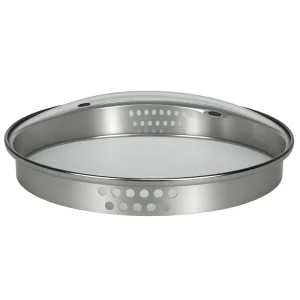
Some cookware glass lids include steam vents to allow steam to escape during cooking.
For customized T type glass lids, buyers may need to consider:
- Whether a steam vent is required
- The vent’s position
- The number of openings
- The opening dimensions
- Its relationship with the handle and other components
The steam vent configuration should be included in the product drawing or technical specification.
Its position should be reviewed together with the overall lid design to avoid interference with the handle mounting area or other structural features.
If a buyer already has an existing cookware design, providing a reference sample or drawing can make it easier to communicate the required vent arrangement.
Handle Structure and Assembly Requirements
Although the T type designation refers to the stainless steel rim profile, the handle remains an important component of the complete cookware lid.
When selecting or customizing a handle, buyers should consider:
- Handle shape and dimensions
- Handle material
- Mounting position
- Connection method
- Compatibility with the glass and rim assembly
- Appearance requirements
The mounting structure should be confirmed before sample approval.
For OEM/ODM projects, the handle design should be reviewed together with the glass panel and T-shaped stainless steel rim rather than treated as an independent component.
3. Customization Options from a T Type Glass Lid Manufacturer
For cookware brands and wholesale buyers, customization is often an important part of sourcing glass lids.
A T type glass lid manufacturer should first review the buyer’s product requirements and confirm which specifications can be accommodated.
Customization should be based on actual drawings, reference samples, and manufacturing feasibility.
Custom Sizes and Dimensions
The overall diameter is one of the first specifications buyers need to confirm.
However, the diameter alone is not sufficient to define a T type glass lid.
A more complete specification may include:
- Overall lid diameter
- Glass panel dimensions
- Stainless steel rim dimensions
- Rim cross-sectional profile
- Overall lid height
- Handle mounting position
- Other assembly dimensions
For cookware manufacturers, the most important consideration is whether the lid fits the corresponding cookware opening.
Buyers should provide the cookware’s dimensional drawing or a physical sample whenever possible. This helps reduce the risk of mismatched dimensions during product development.
Custom Glass and Rim Materials
Material selection affects the appearance and specification of the finished lid.
Depending on the confirmed manufacturing options, buyers may need to discuss the following:
Glass options
- Required glass thickness, such as 4mm or 5mm where available
- Transparent or other specified glass colors
- Glass dimensions and shape
- Float glass specification
- Tempering requirements, if applicable
Stainless steel rim options
- Required stainless steel grade
- T-shaped rim profile dimensions
- Surface finish
- Overall appearance
- Compatibility with the glass panel
For example, a cookware brand developing a coordinated product range may want the glass appearance, rim finish, and handle design to remain consistent across different lid sizes.
These requirements should be documented before sample production.
Custom Steam Vent and Handle Designs
Steam vent and handle configurations can be included in an OEM/ODM specification when the design allows.
Buyers should clearly communicate:
- Whether a steam vent is required.
- The desired vent position and dimensions.
- The handle design and material requirements.
- The mounting position and connection details.
- Any restrictions related to the cookware’s overall appearance.
Reference drawings and physical samples are useful when the required structure differs from an existing standard design.
Not every design can be accommodated without modification. The manufacturer should review the proposed configuration and confirm its feasibility before proceeding.
OEM/ODM Design and Sample Confirmation
OEM and ODM projects require clear communication between the buyer and manufacturer.
The process generally begins with a product concept, an existing sample, or a technical drawing.
A practical development workflow includes:
- Reviewing the buyer’s product requirements
- Confirming the T-shaped stainless steel rim profile
- Reviewing glass dimensions and thickness
- Confirming handle and steam vent configurations
- Preparing and reviewing product samples
- Approving the final specifications before bulk production
For OEM projects, buyers may already have a detailed product design and need a manufacturer to produce according to the approved specifications.
For ODM projects, buyers may require additional product design and specification discussions.
In either case, written confirmation of the final sample and technical details is important for maintaining consistency between the approved design and subsequent orders.

4. How to Choose the Right T Type Glass Lid Manufacturer
Selecting a T type glass lid manufacturer requires evaluating more than the product appearance.
Buyers should assess whether a supplier understands the required structure, communicates technical specifications clearly, and can coordinate the different stages of a bulk order.
Check Product Specifications and Manufacturing Compatibility
The first step is to confirm whether the manufacturer understands the T-shaped stainless steel rim profile required for the project.
Buyers should ask for clarification on:
- Rim cross-sectional dimensions
- Glass thickness options
- Glass material and tempering specifications
- Available stainless steel grades
- Glass-to-rim assembly requirements
- Handle and steam vent configurations
- Compatibility with the target cookware
A supplier should be able to discuss the actual product specifications rather than provide only a general product description.
If the buyer has an existing lid sample, it can be used as a reference for reviewing the structure and dimensions.
Review Quality Control Requirements
Quality control should cover the complete lid assembly rather than only the glass panel.
For T type glass lids, buyers may consider the following inspection points:
| Inspection area | What to check |
|---|---|
| Glass panel | Dimensions, thickness, appearance, and visible defects |
| Glass specification | Confirmation of the specified glass material and tempering requirements |
| Stainless steel rim | Material specification, profile dimensions, and surface finish |
| Rim assembly | Glass-to-rim fit and overall assembly condition |
| Handle | Appearance, mounting position, and connection |
| Steam vent | Position, dimensions, and opening condition, if applicable |
| Finished product | Overall appearance and consistency with the approved sample |
The specific inspection methods and acceptance criteria should be agreed upon before production.
For example, buyers may establish acceptable dimensional tolerances, appearance requirements, and inspection procedures according to their own product specifications.
If a particular international standard, test report, or certification is required, it should be identified and confirmed separately. Buyers should not assume that every glass lid manufacturer follows the same testing procedures or certification requirements.
Evaluate Packaging and Shipping Arrangements
Glass cookware lids require appropriate protection during storage and transportation.
Packaging should be considered during the quotation and product development stages, especially for bulk orders and international shipments.
Important points include:
- Individual product protection
- Separation between adjacent glass lids
- Protection for stainless steel edges
- Inner packaging materials
- Outer carton specifications
- Carton quantity and packing arrangement
- Export shipping requirements
The packaging method should protect both the glass panel and the stainless steel rim.
Buyers should also confirm whether customized packaging, product labels, or branded cartons are required.
For larger orders, a packaging sample or approved packing specification can help ensure that the bulk shipment follows the agreed requirements.
Confirm Production Capacity and Delivery Schedule
Before placing a bulk order, buyers should confirm whether the manufacturer can support the required order quantity and delivery schedule.
The discussion should cover:
- Order quantity
- Product specifications
- Material preparation
- Sample approval
- Production scheduling
- Quality inspection arrangements
- Packaging completion
- Shipping coordination
Delivery time should be confirmed according to the actual product design, order quantity, material availability, and production schedule.
Rather than relying on a general delivery estimate, buyers should request an order-specific schedule and clarify when the production lead time begins.
This is particularly important for cookware brands coordinating new product launches or seasonal purchasing plans.
5. Bulk Ordering Process for Custom T Type Glass Lids
A clearly defined ordering process helps reduce misunderstandings between cookware buyers and manufacturers.
For customized T type glass lids, the following steps provide a practical framework.
Step 1 – Define Product Specifications
Before requesting a quotation, prepare the basic product information.
A specification sheet may include:
- Product type: T type glass lid
- Overall diameter
- Glass thickness
- Glass material and appearance
- Tempering requirements, if applicable
- T-shaped stainless steel rim profile
- Stainless steel material grade
- Handle design and material
- Steam vent requirements
- Packaging requirements
- Estimated order quantity
The more complete the initial specification, the easier it is for the manufacturer to evaluate the project.
Step 2 – Submit Drawings or Samples
Provide a technical drawing or an existing product sample whenever possible.
The information should clearly identify the important structural dimensions, especially the T-shaped rim profile and the relationship between the glass panel and stainless steel edge.
If the buyer only has a reference product, photographs and dimensional measurements can help initiate the discussion.
However, a physical sample or technical drawing is preferable when precise fitting and assembly are important.
Step 3 – Confirm Samples and Quality Requirements
Before bulk production, buyers should review the proposed sample against the agreed specifications.
Important checks include:
- Overall dimensions
- Glass thickness and material
- Tempering requirements, if specified
- Rim profile and appearance
- Stainless steel material specification
- Handle assembly
- Steam vent configuration
- General product appearance
Any differences between the sample and the original requirements should be discussed and resolved before approval.
The approved sample and final specification should serve as references for the bulk order.
Step 4 – Confirm Bulk Order Details
Once the product design is approved, both parties should confirm the commercial and production details.
These generally include:
- Final product specifications
- Order quantity
- Unit price
- Payment terms
- Packaging requirements
- Production schedule
- Delivery arrangements
- Shipping terms
For international orders, buyers should also clarify the required export documents and shipping arrangements.
Step 5 – Coordinate Production and Shipment
After order confirmation, buyers and manufacturers should maintain communication regarding production progress and shipment preparation.
The coordination process may cover:
- Production schedule updates
- Material and specification confirmation
- Quality inspection arrangements
- Packaging checks
- Carton and shipment information
- Shipping documentation
Clear communication at this stage helps buyers coordinate incoming inventory and downstream distribution.
6. Frequently Asked Questions About T Type Glass Lids
What Is the Difference Between a T Type Glass Lid and a Standard Glass Lid?
The main distinction in this product classification is the stainless steel rim profile.
A T type glass lid uses a T-shaped stainless steel rim cross-section, while a standard glass lid may use a different rim construction or edge design.
The actual differences in dimensions, appearance, and compatibility depend on the specific product design.
Can T Type Glass Lids Be Customized in 4mm or 5mm Thickness?
Glass thickness options should be confirmed according to the specific T type product design.
Both 4mm and 5mm are thickness options found in the available cookware glass lid product information, but their availability for a particular T-shaped rim configuration should be verified with the manufacturer.
Buyers should specify the required thickness when submitting a quotation request.
Are Float Glass and Tempered Glass the Same?
No. Float glass describes a glass manufacturing process, while tempered glass refers to glass that has undergone a heat-treatment process.
Float glass can subsequently be tempered. Buyers should confirm the actual material and processing requirements for the specific product rather than relying on the term float glass or the stated thickness alone.
Can Manufacturers Customize the Steam Vent and Handle Structure?
Steam vent and handle requirements can be discussed as part of an OEM/ODM project.
The manufacturer should review the proposed design, dimensions, and assembly requirements before confirming whether the requested configuration can be produced.
Providing a drawing or physical sample can help clarify the requirements.
What Information Should Buyers Provide When Ordering Custom T Type Glass Lids?
Buyers should prepare the following information:
- Overall lid diameter
- Glass thickness
- Glass material and color
- Tempering requirements, if applicable
- T-shaped stainless steel rim profile
- Stainless steel material grade
- Handle design and material
- Steam vent requirements
- Estimated order quantity
- Packaging requirements
- Technical drawings or reference samples, if available
Complete specifications help reduce unnecessary communication during product development and quotation.
What Should Buyers Check Before Placing a Bulk Order?
Before placing a bulk order, buyers should confirm the final product specifications, approved sample, material requirements, quality acceptance criteria, packaging method, payment terms, and delivery schedule.
For customized T type glass lids, particular attention should be paid to the T-shaped stainless steel rim profile and its compatibility with the intended cookware.
Written confirmation of the final specifications helps both parties establish a clear reference for production.
7. Contact a T Type Glass Lid Manufacturer for Custom Orders
Selecting the right T type glass lid involves evaluating the stainless steel rim profile, glass specifications, overall dimensions, and compatibility with the intended cookware.
For cookware brands, wholesalers, and OEM/ODM buyers, these details should be confirmed before moving from product development to bulk production.
EUR-ASIA COOKWARE CO., LTD. focuses on glass cookware lids and related product cooperation for international buyers.
If you are sourcing custom T type glass lids, prepare your product drawings, required dimensions, material preferences, and estimated order quantity before contacting the manufacturer.
Looking for a T type glass lid manufacturer for your cookware project? Contact EUR-ASIA COOKWARE CO., LTD. to discuss your product specifications, OEM/ODM requirements, and bulk order needs.