- English
- Chinese
- French
- German
- Portuguese
- Spanish
- Russian
- Japanese
- Korean
- Arabic
- Irish
- Greek
- Turkish
- Italian
- Danish
- Romanian
- Indonesian
- Czech
- Afrikaans
- Swedish
- Polish
- Basque
- Catalan
- Esperanto
- Hindi
- Lao
- Albanian
- Amharic
- Armenian
- Azerbaijani
- Belarusian
- Bengali
- Bosnian
- Bulgarian
- Cebuano
- Chichewa
- Corsican
- Croatian
- Dutch
- Estonian
- Filipino
- Finnish
- Frisian
- Galician
- Georgian
- Gujarati
- Haitian
- Hausa
- Hawaiian
- Hebrew
- Hmong
- Hungarian
- Icelandic
- Igbo
- Javanese
- Kannada
- Kazakh
- Khmer
- Kurdish
- Kyrgyz
- Latin
- Latvian
- Lithuanian
- Luxembou..
- Macedonian
- Malagasy
- Malay
- Malayalam
- Maltese
- Maori
- Marathi
- Mongolian
- Burmese
- Nepali
- Norwegian
- Pashto
- Persian
- Punjabi
- Serbian
- Sesotho
- Sinhala
- Slovak
- Slovenian
- Somali
- Scots Gaelic
- Shona
- Sindhi
- Sundanese
- Swahili
- Tajik
- Tamil
- Telugu
- Thai
- Ukrainian
- Urdu
- Uzbek
- Vietnamese
- Welsh
- Xhosa
- Yiddish
- Yoruba
- Zulu
- Kinyarwanda
- Tatar
- Oriya
- Turkmen
- Uyghur

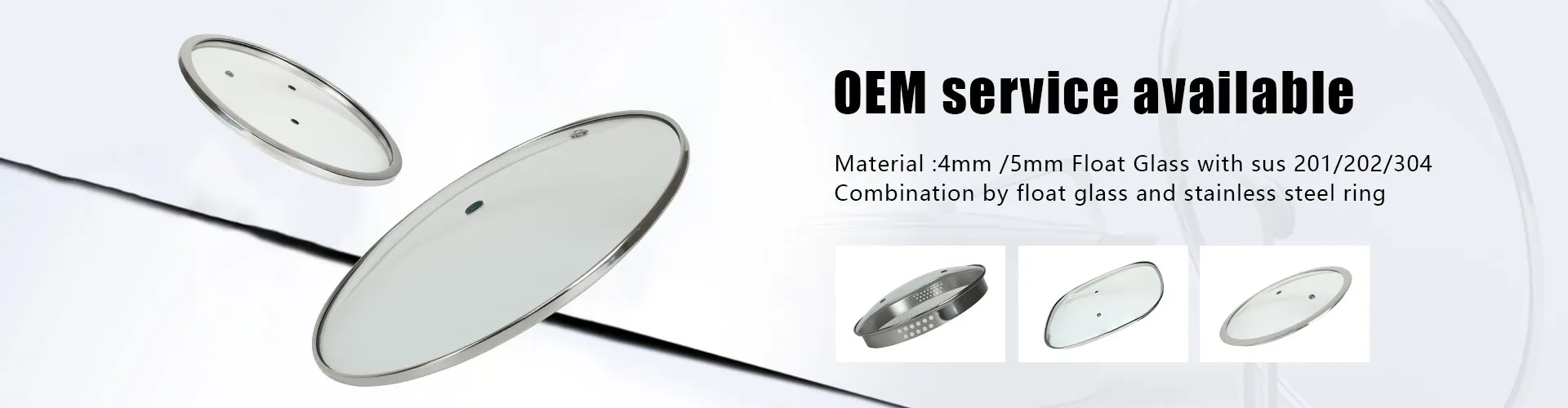
Eco-friendly beer can glass bamboo lid?
2026-03-14
You see this combination of words pop up in a spec sheet or a client request, and your first reaction isn’t excitement—it’s a practical sigh. Eco-friendly is the driver, sure, but the marriage of glass, bamboo, and a beer can application? That’s where the real-world headaches begin. It sounds like a perfect green story for a craft brewery’s limited run, but the industry chatter often glosses over the material incompatibilities and the sheer complexity of scaling this from a prototype to a line that actually survives a dishwasher, a pub table, and a distributor’s truck. Having been through the wringer on similar composite lids, I can say the concept is solid in theory, fraught in execution.
The Allure and The Immediate Hurdle
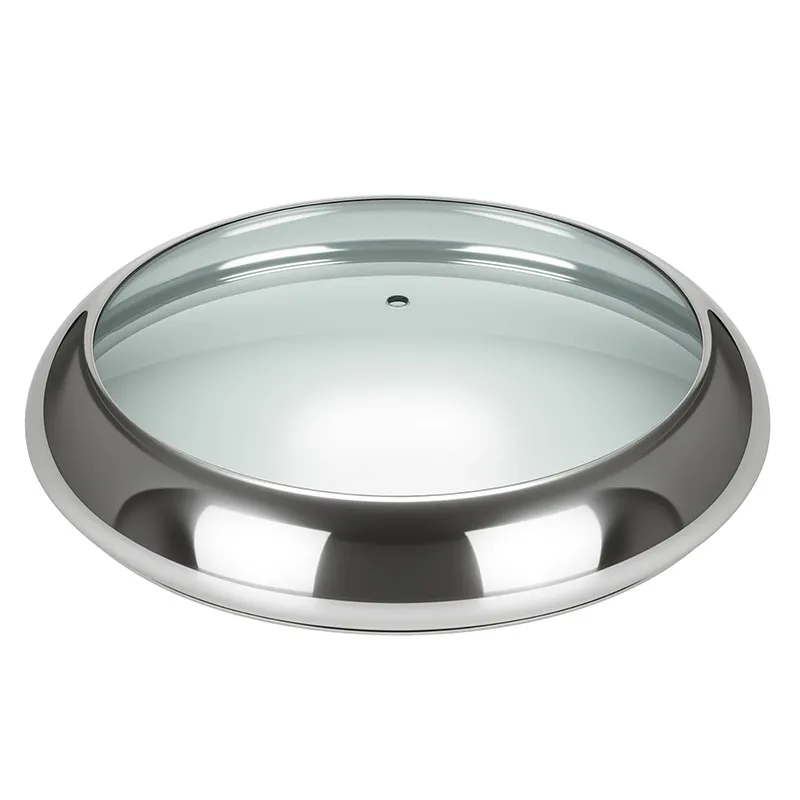
The pitch is irresistible: a sleek, tempered glass lid that lets you see the golden brew, capped with a natural bamboo top for that artisanal, warm touch. It screams premium and sustainable. The bamboo acts as the handle and the eco badge, while the glass provides the food-safe, inert barrier—no plastic taste migration, a real issue with some polymer-lined lids. But here’s the first snag: thermal expansion coefficients. Glass and bamboo expand and contract at wildly different rates with temperature changes. In a dishwasher cycle or even just sitting in a sunny beer garden, that stress can crack the adhesive bond or, worse, cause micro-fractures in the glass over time.
We learned this the hard way on an early project for a Nordic client. The lids looked beautiful fresh off the line. After three rounds in a commercial-grade dishwasher, about 30% developed a slight wobble in the bamboo attachment. The failure wasn’t catastrophic but it was enough to fail quality assurance for a major retailer. The culprit wasn’t the adhesive strength initially, but the lack of a designed mechanical fail-safe and an underestimation of the humidity warp in the bamboo itself.
This leads to the core challenge: it’s not a lid; it’s a system. You’re engineering an interface between two fundamentally different materials, each with its own supply chain and quality variables. The bamboo needs to be densely laminated, food-grade finished, and its grain orientation controlled for stability. The glass isn’t just any glass; it needs to be precisely tempered to a specific thickness to bear the point load from the bamboo handle, especially when people inevitably use it to lift the entire can.
Supply Chain Realities: It’s Never Just One Vendor
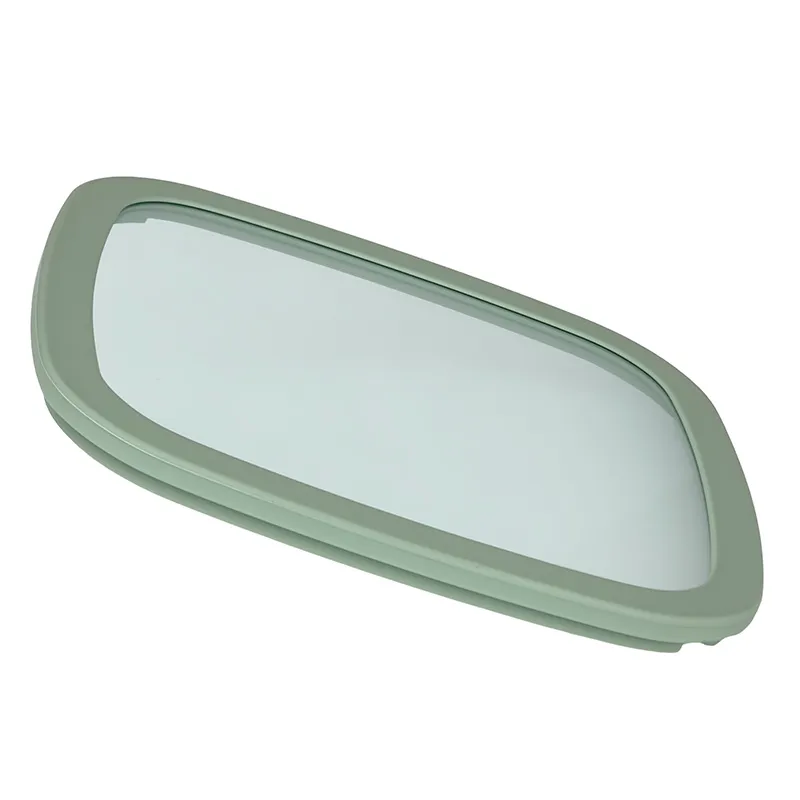
You can’t just order these from a catalog. A company like EUR-ASIA COOKWARE CO.,LTD. (https://www.glass-lid.com), with their specialization in tempered glass lids for household and kitchenware, becomes a critical partner. They have the expertise in precise glass cutting, edge grinding, and tempering for safety. Their production scale—15 million pieces annually—means they understand volume. But even they typically work with silicone or plastic components for sealing. Introducing a natural material like bamboo shifts the paradigm.
Their base in Taian, Shandong, puts them near bamboo sourcing, but the processing becomes a separate, specialized operation. The bamboo must be sourced for maturity, treated for mold and insect resistance (using food-safe methods, not just harsh chemicals), and milled to exacting tolerances. The variance between bamboo batches is a quality control nightmare that a pure glass or metal shop isn’t set up for. We ended up managing two separate supply chains: one for the glass from a lid specialist and one for the bamboo components from a specialty woodworker, with final assembly at a third facility. Logistics costs ate into the eco-premium margin quickly.
Then there’s the assembly. Food-grade adhesive bonding is the common method, but it requires perfect surface preparation on both materials and a curing process that accounts for bamboo’s porosity. Ultrasonic or mechanical fastening? That introduces more parts and potential corrosion points. Every added step is a point of potential failure and cost. EUR-ASIA’s export experience to Europe is a plus—they know EU and FDA standards for glass—but bamboo regulations, especially concerning finishes and adhesives, are a murkier, evolving landscape.
The Sealing Problem Nobody Talks About
Okay, let’s say you’ve solved the bonding. Now the lid has to actually work as a lid. A beer can lid needs to seal. Not hermetically, but well enough to contain carbonation briefly and prevent massive spillage. The classic solution is a silicone or thermoplastic elastomer gasket. But slapping a plastic ring under your beautiful bamboo top feels like greenwashing. It undermines the whole narrative.
We explored compressed bamboo fiber gaskets. Lab results were promising. In practice, they lost resilience faster, especially when exposed to beer acids and cleaning agents. They shrank unevenly. A client in Denmark reported that after a week on a stocked shelf, some cans had noticeably less fizz upon opening—a death knell for the product. We reverted to a minimal food-grade silicone gasket, but made it a removable/replaceable part, which added yet another component. The eco story became more nuanced: partially biodegradable or designed for disassembly. It’s honest, but harder to market.
This is where the beer can specific design matters. The lid isn’t for storage; it’s for serving. So the seal tolerance is different from a storage jar. It needs to be easy to place and remove repeatedly, often with one hand. The bamboo top’s thickness and texture directly affect this ergonomics. Too thick, it’s clumsy; too smooth, it’s slippery when wet with condensation.
Cost and The Green Premium Paradox
Let’s talk numbers. A standard metal or plastic pub lid costs pennies. A pure tempered glass lid with a simple plastic knob might cost 5-10 times that. Add the sustainably sourced, processed, and finished bamboo, the complex assembly, and the low-volume logistics, and you’re looking at a 20-30x multiplier easily. The craft breweries that want this are often operating on thin margins themselves. The green premium has a ceiling, especially for a single-use item (yes, it’s reusable, but in a commercial setting, its lifespan is measured in months, not years).
This product only makes sense in a very specific niche: high-end limited editions, brewery taproom merchandise, or as a branded accessory for a sustainability-focused subscription box. Its value is in marketing and brand experience, not pure utility. Scaling to the volume of a company like EUR-ASIA, where 90% of output is for export, would require a seismic shift in market demand. Currently, it’s a bespoke project, not a catalog item.
We calculated that to get the unit cost down to even a 10x premium, we’d need orders in the hundreds of thousands. That volume of bamboo sourcing becomes an ecological concern itself, negating the initial sustainability premise unless it’s rigorously certified. It’s a circular calculation that often ends with a compromise: using a bamboo-textured or bamboo-composite material that’s more uniform, which again waters down the all-natural story.
So, Is It Viable? A Cautious Yes, With Caveats
After all the trials, I wouldn’t call it a failed idea. It’s a viable product for a specific, conscious market. The key is managing expectations—both the client’s and the end-user’s. You have to be transparent: this lid is a premium, eco-friendly serving accessory that reduces single-use plastic, but it requires hand-washing and careful handling. Its lifecycle is shorter than a stainless steel lid. Its beauty is in its natural variation.
The successful iterations we’ve seen involved simplifying the design. One uses a smaller bamboo disc inset into a wider glass lid, reducing the bonding surface and stress points. Another uses a bamboo-derived biopolymer for the top handle, fused to the glass during tempering for a monolithic bond—it’s less pure but more durable. The partnership with a technical manufacturer is crucial. A firm like EUR-ASIA COOKWARE has the glass expertise; the innovation lies in adapting their processes for this hybrid.
Ultimately, is a question that answers itself. The question mark is the most important part. It prompts a deep dive into materials, supply chains, and real-world use. It’s not a greenwashing checkbox. It’s a complex, small-scale engineering project that, when done right with honesty about its limitations, can create a genuinely appealing and more sustainable product for a niche that values the story as much as the function. The path isn’t to make it the norm, but to make the best possible version of what it actually can be.