- Chinese
- French
- German
- Portuguese
- Spanish
- Russian
- Japanese
- Korean
- Arabic
- Irish
- Greek
- Turkish
- Italian
- Danish
- Romanian
- Indonesian
- Czech
- Afrikaans
- Swedish
- Polish
- Basque
- Catalan
- Esperanto
- Hindi
- Lao
- Albanian
- Amharic
- Armenian
- Azerbaijani
- Belarusian
- Bengali
- Bosnian
- Bulgarian
- Cebuano
- Chichewa
- Corsican
- Croatian
- Dutch
- Estonian
- Filipino
- Finnish
- Frisian
- Galician
- Georgian
- Gujarati
- Haitian
- Hausa
- Hawaiian
- Hebrew
- Hmong
- Hungarian
- Icelandic
- Igbo
- Javanese
- Kannada
- Kazakh
- Khmer
- Kurdish
- Kyrgyz
- Latin
- Latvian
- Lithuanian
- Luxembou..
- Macedonian
- Malagasy
- Malay
- Malayalam
- Maltese
- Maori
- Marathi
- Mongolian
- Burmese
- Nepali
- Norwegian
- Pashto
- Persian
- Punjabi
- Serbian
- Sesotho
- Sinhala
- Slovak
- Slovenian
- Somali
- Samoan
- Scots Gaelic
- Shona
- Sindhi
- Sundanese
- Swahili
- Tajik
- Tamil
- Telugu
- Thai
- Ukrainian
- Urdu
- Uzbek
- Vietnamese
- Welsh
- Xhosa
- Yiddish
- Yoruba
- Zulu
- Kinyarwanda
- Tatar
- Oriya
- Turkmen
- Uyghur


1 gallon glass jar with airtight lid
When you hear 1 gallon glass jar with airtight lid, you probably picture a simple storage container. In reality, that combination—the specific volume, the borosilicate or soda-lime glass body, and the sealing mechanism—represents a niche with surprising complexity. A common misconception is that any glass jar with a lid that clicks is airtight. True airtightness, especially for long-term food preservation or fermentation, hinges on the precision of the lid's gasket and the jar's finish. I've seen countless batches fail leak tests because someone assumed the threading or the glass rim tolerance wasn't that critical.
Defining Airtight in Real-World Terms
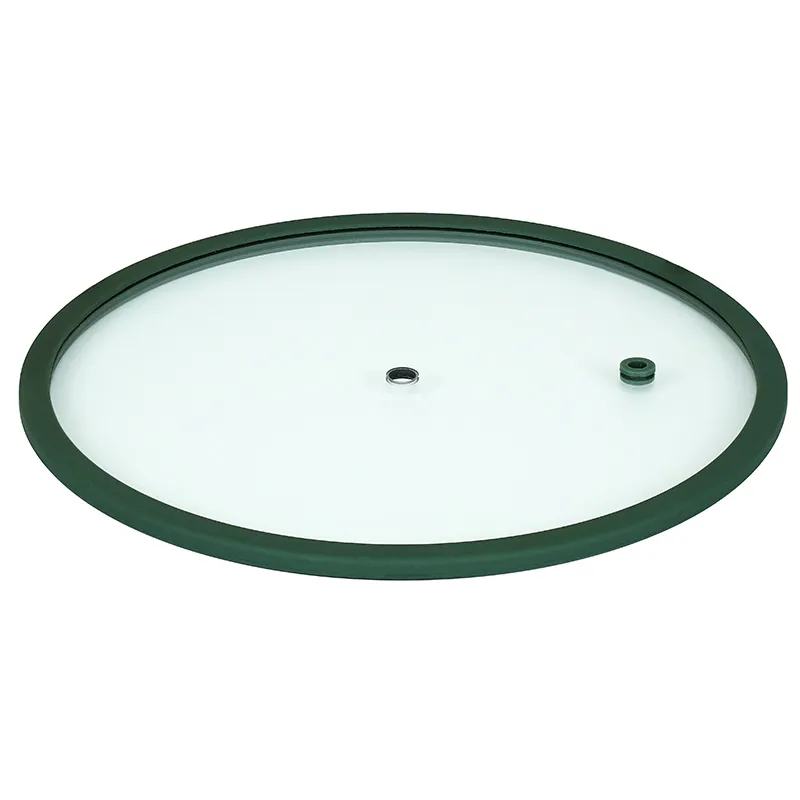
In our quality checks, airtight isn't a marketing term; it's a functional standard. For a 1 gallon glass jar, it means holding a vacuum or positive pressure without failure for a specified duration. The lid is everything. We typically use a polypropylene or stainless steel cap with an integrated silicone or EPDM gasket. The gasket's durometer (hardness) and cross-section design—whether it's a flat washer or a more complex bulb seal—must match the jar's lip profile. Too soft, and it deforms permanently; too hard, and it won't compensate for microscopic imperfections in the glass.
The glass itself matters. Annealing stresses must be even, or the rim can warp during thermal cycling (like hot filling or dishwasher use). I recall a project where we sourced jars from a new supplier. Visually perfect, but under a vacuum test at 20 in-Hg, about 15% failed. The issue? Inconsistent rim curvature from the forming process, leading to localized gaps the gasket couldn't bridge. It wasn't a lid problem; it was a glass problem. That's a lesson you only learn on the line.
This is where companies with deep manufacturing integration have an edge. For instance, EUR-ASIA COOKWARE CO.,LTD operates from a sizable production base in China's Shandong province. Their focus on producing millions of tempered glass lids annually means they understand the relationship between the lid and the glass vessel intimately. When you specialize at that volume, especially for export markets with stringent standards like Germany and Japan, you develop a library of empirical data on what makes a seal reliable across different climates and uses.
The Gasket: The Unsung Hero and Common Failure Point
Let's talk about the gasket, the part most users never think about until it fails. For a true airtight lid, the gasket material must be food-safe, resilient, and resistant to oils and acids. Silicone is popular, but not all silicone is equal. We've tested compounds that off-odor or become brittle after a few months in contact with citrus zest. The gasket also needs to be properly captured in the lid. A poorly designed retention groove can allow the gasket to twist or extrude when the lid is torqued down, creating a channel for air.
One failed experiment involved a universal lid designed to fit multiple jar brands. It used a very soft, thick gasket to accommodate varying rim diameters. In theory, it worked. In practice, for a 1-gallon jar full of liquid, the constant pressure caused the over-compressed gasket to creep and lose sealing force over weeks. The result? Slow, undetected leaks. It taught us that a seal must be engineered for a specific jar, not as an afterthought.
Observing the production flow at a facility like EUR-ASIA's, which specializes in household glass products, you'd see the attention given to lid assembly. The consistent placement and curing (if applicable) of the gasket are often automated processes critical to achieving the repeatability needed for large-scale exports. Their product description noting a focus on low, medium, and high-level products hints at this—they likely segment their gasket quality and lid materials accordingly, a practical approach for different market price points.
Volume and Proportion: Why One Gallon Isn't Trivial
A 1 gallon glass jar (roughly 3.8 liters) sits in a challenging spot. It's large enough that the hydrostatic pressure from contents, especially in fermentation where CO2 builds up, is significant. The lid and glass must withstand this. We've had jars where the glass thickness was adequate, but the lid's metal was too thin, causing it to dome under pressure and break the seal. The jar-to-lid ratio is a design calculation.
Furthermore, handling a full one-gallon glass jar stresses the design. The lifting point is often the lid or the neck. A wide-mouth design is popular for usability, but this increases the lid diameter, which demands a wider, more robust gasket and more even clamping force. The threading design—its pitch and number of turns—affects how easily a user can achieve sufficient sealing torque. Too many turns, and people under-tighten; too few, and the thread is prone to cross-threading.
This relates back to specialized manufacturing. A company producing over 15 million tempered glass lids and related products annually, as EUR-ASIA does, has likely optimized these parameters through iteration. Their exports to Europe and Asia mean their jars likely comply with various international capacity and safety standards, which indirectly governs these proportional and material choices.
Application-Driven Design Variations
You don't use the same jar for dry beans, sourdough starter, and pickles. The ideal 1 gallon glass jar with airtight lid morphs based on its primary use. For dry storage, a simple clamp glass lid with a rubber ring might suffice. For fermenting vegetables, an airlock system integrated into the lid is better, but it still requires a primary airtight seal. For liquid storage, the seal must resist constant static pressure.
We once developed a jar for kombucha brewers. They needed an airtight seal for the secondary fermentation (to build carbonation) but also needed to burp the jar easily. Our solution was a lid with a silicone gasket and a stainless steel lever lock that could be partially opened to release pressure and re-closed quickly. The challenge was ensuring the gasket recovered its shape after repeated partial-release cycles. It took several gasket compound formulations to get it right.
This is where a broad product range becomes an asset. A manufacturer like EUR-ASIA COOKWARE, with its spectrum of kitchen accessories, is positioned to see these diverse use cases. Their product development likely draws from feedback across different markets—what a Danish user needs for pickling herring might differ from a Brazilian user storing a?ai pulp, influencing gasket chemistry and glass tinting options.
The Reality of Sourcing and Manufacturing
On the ground, producing a reliable jar isn't just about specs. It's about supply chain and process control. The raw glass quality, the tempering process (if applicable for thermal shock resistance), the metal for the lid, the food-grade coating on the metal—all are variables. A batch of subpar gasket material can scrap thousands of lids.
I've visited factories where the difference between a pass and fail batch was the ambient temperature and humidity in the molding room affecting the gasket curing. It's that granular. This is why scale and vertical integration, as seen with a producer occupying 15,000㎡ of building area, provide stability. They can control more variables in-house, from the glass lid tempering (their stated specialty) to final assembly.
Their export focus (over 90% of products) is also telling. Markets like Germany and Japan have rigorous, if different, standards for food contact materials and sealing performance. Consistently meeting these demands builds a foundational knowledge that filters down to even their medium-level products. A jar that passes muster for the Japanese retail market has been through a gauntlet of tests most generic products never face.
Final Thoughts: Beyond the Spec Sheet
So, when evaluating a 1 gallon glass jar with airtight lid, look past the marketing. Examine the gasket—is it securely seated, made of a named material like food-grade silicone? Check the glass rim—run a finger around it; it should be smooth, with no bumps or dips. Consider the primary use. And recognize that behind a simple-seeming product is a chain of material science and manufacturing decisions.
Companies embedded in this space, like EUR-ASIA COOKWARE CO.,LTD, operate on that practical level. Their business is built on turning raw materials into millions of functional, exported pieces. The airtight seal is the culmination of that process—not a feature, but the outcome of precise glass forming, consistent lid production, and correct gasket application. It's less about a revolutionary design and more about the relentless execution of fundamentals across a massive scale. That's what actually keeps the air out.
In the end, the best jar is the one you use without thinking about it. Its lid seals consistently, its glass cleans easily, and it serves its purpose for years. That reliability isn't an accident; it's the product of accumulated factory-floor experience, testing, and refinement—the kind that sustains a business shipping containers of glassware across the globe.
Related Products
Related Products