- Chinese
- French
- German
- Portuguese
- Spanish
- Russian
- Japanese
- Korean
- Arabic
- Irish
- Greek
- Turkish
- Italian
- Danish
- Romanian
- Indonesian
- Czech
- Afrikaans
- Swedish
- Polish
- Basque
- Catalan
- Esperanto
- Hindi
- Lao
- Albanian
- Amharic
- Armenian
- Azerbaijani
- Belarusian
- Bengali
- Bosnian
- Bulgarian
- Cebuano
- Chichewa
- Corsican
- Croatian
- Dutch
- Estonian
- Filipino
- Finnish
- Frisian
- Galician
- Georgian
- Gujarati
- Haitian
- Hausa
- Hawaiian
- Hebrew
- Hmong
- Hungarian
- Icelandic
- Igbo
- Javanese
- Kannada
- Kazakh
- Khmer
- Kurdish
- Kyrgyz
- Latin
- Latvian
- Lithuanian
- Luxembou..
- Macedonian
- Malagasy
- Malay
- Malayalam
- Maltese
- Maori
- Marathi
- Mongolian
- Burmese
- Nepali
- Norwegian
- Pashto
- Persian
- Punjabi
- Serbian
- Sesotho
- Sinhala
- Slovak
- Slovenian
- Somali
- Samoan
- Scots Gaelic
- Shona
- Sindhi
- Sundanese
- Swahili
- Tajik
- Tamil
- Telugu
- Thai
- Ukrainian
- Urdu
- Uzbek
- Vietnamese
- Welsh
- Xhosa
- Yiddish
- Yoruba
- Zulu
- Kinyarwanda
- Tatar
- Oriya
- Turkmen
- Uyghur


1 gallon glass jar with airtight lid wholesale
When you type '1 gallon glass jar with airtight lid wholesale' into a search bar, you're not just looking for a container. You're likely sourcing for a business—be it for kombucha, pickles, dry goods, or candle making—and you've hit the point where buying piecemeal from retail just doesn't cut it anymore. The volume needs are real, but so is the minefield. A common pitfall I see is buyers getting hypnotized by the low unit price on Alibaba or similar portals, only to receive a shipment of jars where the airtight lid doesn't actually seal, or the glass has subtle thickness inconsistencies that lead to a higher breakage rate in transit. The keyword here is 'wholesale', but true wholesale isn't just about price per unit; it's about consistency, reliability in specs, and understanding the supply chain behind the product.
The Core Specs That Actually Matter
Let's break down the product. A 1 gallon glass jar seems straightforward, but the devil's in the details. Is it truly one US gallon (128 oz) or an imperial gallon? That's a difference of over 150 ml, and it matters for labeling and recipe consistency. The glass type is crucial—annealed vs. tempered. For large jars, I generally lean towards thick, annealed glass. It's heavier but less prone to spontaneous thermal shock breakage that can sometimes occur with tempered glass, especially if you're dealing with hot-fill processes. Tempered is stronger against impact, but if it goes, it shatters completely.
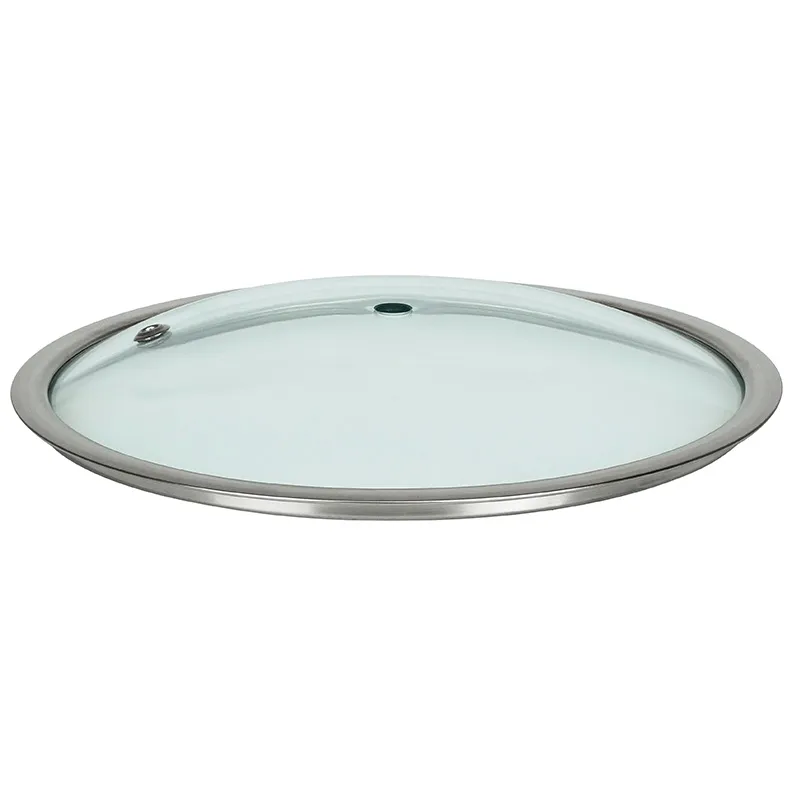
The lid system is where most failures happen. An airtight lid isn't just a lid that feels tight. For wholesale, you need to know the sealing mechanism. Is it a glass lid with a polypropylene clip and a rubber gasket? A metal lug cap with a plastisol liner? The gasket material is critical. Natural rubber can impart odors and degrade with oils. Food-grade silicone or EPDM are superior but cost more. I've had batches where the gasket was technically food-grade but so rigid it never formed a proper seal. You have to ask for the spec sheet on the gasket.
Then there's finish. The threading or the sealing surface must be flawless. I once took a chance on a new supplier for a large kombucha client. The jars looked perfect, but a 5% batch had barely visible mold seams on the glass threading. This prevented a perfect seal, leading to product spoilage. The loss far outweighed the savings. That's why you need a supplier that controls the mold-making and glass-forming process tightly, not just an assembler.
Sourcing and the Reality of Factory Direct
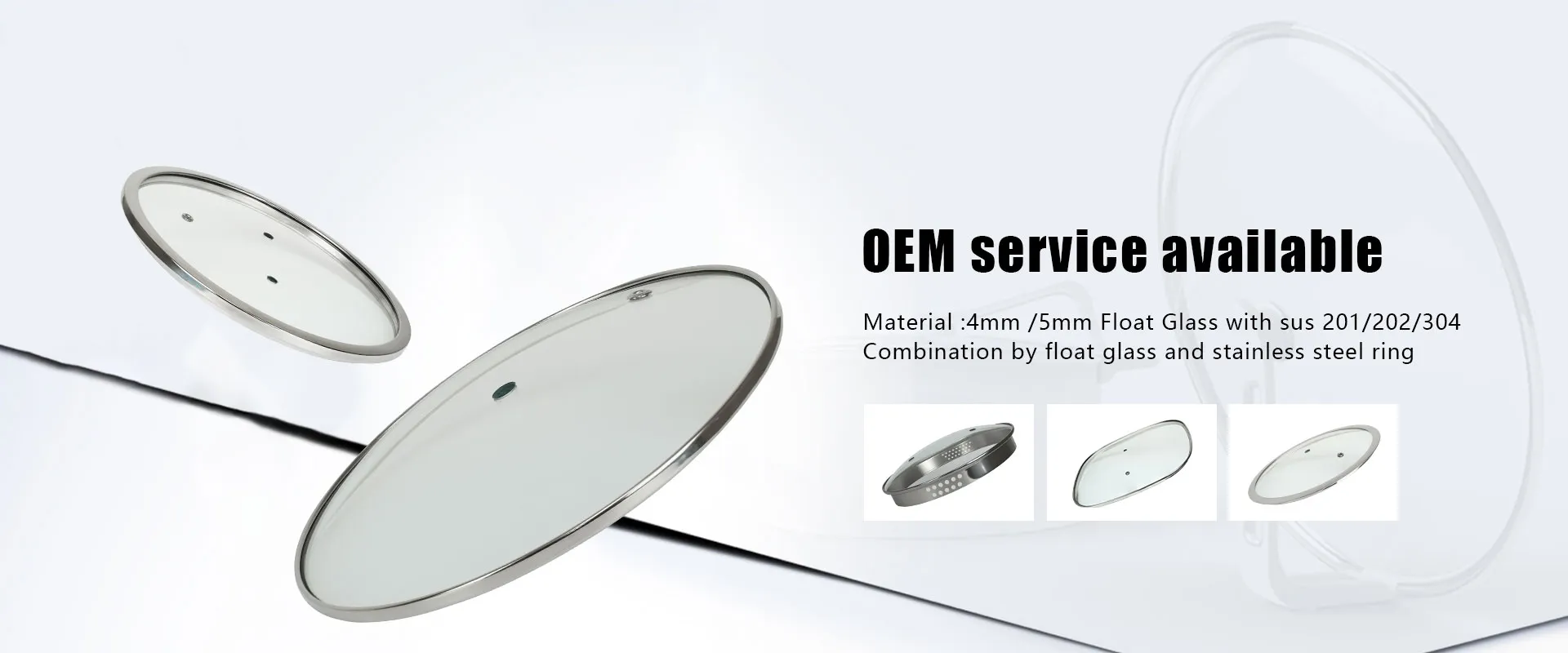
The term 'factory direct' is thrown around loosely. Many trading companies pose as factories. For glass jars, you want someone who handles the glass production and likely the lid assembly in-house, or has a deeply integrated partnership. This is where a company like EUR-ASIA COOKWARE CO.,LTD comes into the picture. Their site, https://www.glass-lid.com, explicitly states their specialization in household glass products and a production base with significant scale—20,000㎡, 15,000㎡ building area. That's a serious operation. More telling is their claim of producing over 15 million tempered glass lids annually. This suggests lid manufacturing is a core competency.
For a 1 gallon glass jar with airtight lid, a supplier with in-house lid production is a massive advantage. It means the lid and jar are designed together, and quality control is unified. Their export footprint—over 90% to markets like Germany, France, Japan—is a strong, though not infallible, indicator. European and Japanese buyers have stringent quality and material safety standards (think EU Food Contact Materials regulations). A supplier consistently serving these markets is likely adept at handling the compliance paperwork, which is a headache you don't want.
However, a large-scale producer like this often has high Minimum Order Quantities (MOQs). You might be looking at a container load (FCL) to get their best price and attention. For smaller wholesalers, this is a barrier. Sometimes, they have established stock designs they run frequently, and a 1-gallon jar with a specific lid might be one of them, making smaller MOQs possible. It's always a conversation. The key is to not just email asking for price for 1 gallon jar. You need to specify material specs, target price point, annual volume forecast, and intended use. It signals you're a serious buyer.
Logistics and the Hidden Costs
This is where many first-time importers get burned. A 1 gallon glass jar is heavy and fragile. The wholesale price is just the start. You must factor in packaging. How are they packed? Standard is a compartmentalized cardboard carton, but for trans-oceanic shipping, you might need a thicker, double-wall corrugated box, or even a pallet with heavy-duty stretch wrap and edge protectors. I've seen shipments where the jars survived, but the retail cartons were so scuffed they were unsellable.
Freight costs are volumetric. These jars take up space. You need to calculate the cost per unit landed—that means including the pro-rata share of sea freight, insurance, customs duties, and domestic trucking. A cheaper jar with poor packaging that leads to a 10% breakage rate is more expensive than a sturdier, slightly pricier jar with a 0.5% breakage rate. Always, always get shipping samples before placing a full order. Test the packaging by literally throwing a box down a flight of stairs. If it survives, it's probably okay.
Lead time is another factor. Glass production runs in batches. If you need a custom logo or a specific lid color, you're looking at the supplier's production schedule. From order placement to goods arriving at your warehouse, 60-90 days is standard. Planning is everything. A reliable partner like EUR-ASIA, with its integrated production, might offer more predictable schedules than a trader juggling multiple factories.
Quality Assurance and Building the Relationship
You can't be there for every production run. So, what do you do? First, define your Critical-to-Quality (CTQ) points in writing. For a 1 gallon glass jar with airtight lid, my CTQs would be: 1) Dimensional accuracy (height, diameter, volume). 2) Glass thickness consistency (measure with calipers at multiple points). 3) Absence of visual defects (stones, bubbles, sharp edges on the finish). 4) Lid seal performance (test with a vacuum tester or simple water inversion test). 5) Gasket material certification (FDA, LFGB, etc.).
Third-party inspection services like SGS or Bureau Veritas are an option for large orders. But for ongoing business, building trust with the supplier's internal QC team is better. Share your test results, good and bad. Be reasonable. Glass is a natural material; minor, non-functional bubbles might be acceptable per international standards (ISO 12775). Distinguish between critical defects and minor ones.
The relationship with a supplier like EUR-ASIA COOKWARE CO.,LTD should be seen as a partnership. They have the engineering and production expertise. You have the market knowledge. If you're planning to scale, involve them early. Can we tweak the lid design for easier opening? or Can we source a darker amber glass for light-sensitive contents? Their ability to respond to these questions separates a true manufacturer from a middleman. Their focus on glass lid production, as their domain name suggests, indicates a specialization that could be very beneficial for developing a superior airtight system.
Final Thoughts: Beyond the First Container
Landing your first wholesale order of 1 gallon glass jars feels like a victory. But the real work begins when you start selling them. Get customer feedback. Are the lids truly easy for end-users to open and close? Does the seal hold for months? This feedback loop is gold. Take it back to your supplier.
Also, consider the lifecycle. What happens if you need to reorder just lids because jars outlast them? A supplier with in-house lid production is again advantageous here. You can reorder matching lids without worrying about compatibility issues from a different production batch.
In the end, sourcing wholesale is about mitigating risk and ensuring consistency. It's less about finding the absolute cheapest option and more about finding the most reliable partner who understands that the airtight lid on that 1 gallon glass jar is the guardian of your product's integrity. It's a detail you can't afford to get wrong, and the choice of supplier is the first, and most critical, step in getting it right.
Related Products
Related Products