- Chinese
- French
- German
- Portuguese
- Spanish
- Russian
- Japanese
- Korean
- Arabic
- Irish
- Greek
- Turkish
- Italian
- Danish
- Romanian
- Indonesian
- Czech
- Afrikaans
- Swedish
- Polish
- Basque
- Catalan
- Esperanto
- Hindi
- Lao
- Albanian
- Amharic
- Armenian
- Azerbaijani
- Belarusian
- Bengali
- Bosnian
- Bulgarian
- Cebuano
- Chichewa
- Corsican
- Croatian
- Dutch
- Estonian
- Filipino
- Finnish
- Frisian
- Galician
- Georgian
- Gujarati
- Haitian
- Hausa
- Hawaiian
- Hebrew
- Hmong
- Hungarian
- Icelandic
- Igbo
- Javanese
- Kannada
- Kazakh
- Khmer
- Kurdish
- Kyrgyz
- Latin
- Latvian
- Lithuanian
- Luxembou..
- Macedonian
- Malagasy
- Malay
- Malayalam
- Maltese
- Maori
- Marathi
- Mongolian
- Burmese
- Nepali
- Norwegian
- Pashto
- Persian
- Punjabi
- Serbian
- Sesotho
- Sinhala
- Slovak
- Slovenian
- Somali
- Samoan
- Scots Gaelic
- Shona
- Sindhi
- Sundanese
- Swahili
- Tajik
- Tamil
- Telugu
- Thai
- Ukrainian
- Urdu
- Uzbek
- Vietnamese
- Welsh
- Xhosa
- Yiddish
- Yoruba
- Zulu
- Kinyarwanda
- Tatar
- Oriya
- Turkmen
- Uyghur


10 litre glass jar with lid
When most people hear '10 litre glass jar with lid', they picture a simple, bulky container. In reality, that spec—especially the lid—opens up a world of considerations for commercial use, from fermentation projects to bulk dry goods storage. The common mistake is treating it as a commodity item. The difference between a jar that lasts for years and one that fails under pressure or develops a permanent odor often comes down to the quality of the glass tempering and, critically, the sealing mechanism of the lid. It's not just a jar; it's a system.
The Core Spec: Why 10 Litres and Glass?
Ten litres is a sweet spot. It's substantial enough for serious batch processing—think kombucha, pickles, or storing several kilos of grains or coffee beans—but still manageable for one person to handle when full, albeit carefully. Going larger, say to 20 litres, and you're into two-person lift territory, which changes the entire user scenario. Glass is non-reactive, which is non-negotiable for acidic ferments or storing strong-flavoured items. You don't want your kimchi tasting of plastic or metal. But 'glass' isn't a single material. For a vessel this size, you need tempered glass. The annealing process is key; poor tempering and thermal shock from washing or a hot fill can cause it to literally explode, which I've seen happen with off-brand imports. It's a safety-first piece.
The weight is a factor often overlooked. A 10-litre glass jar, empty, is already a significant object. When full of liquid, you're looking at over 11 kg. This means the base design must be incredibly stable. A slightly concave or perfectly flat, broad base is essential. I've come across jars with bases that are just a bit too small in diameter or have a subtle convex curve—they become tippy when moved, a major hazard. The thickness of the glass at the base and the transition up the sides also speaks to its durability.
Then there's the mouth. Wide-mouth designs are almost universal now, and for good reason. They allow easy access for filling, cleaning, and removing contents. But the diameter of the opening directly impacts the lid design and the seal integrity. Too wide, and it's harder to get a consistent, airtight seal across the entire circumference. It's a balance between utility and engineering.
The Lid: The Make-or-Break Component
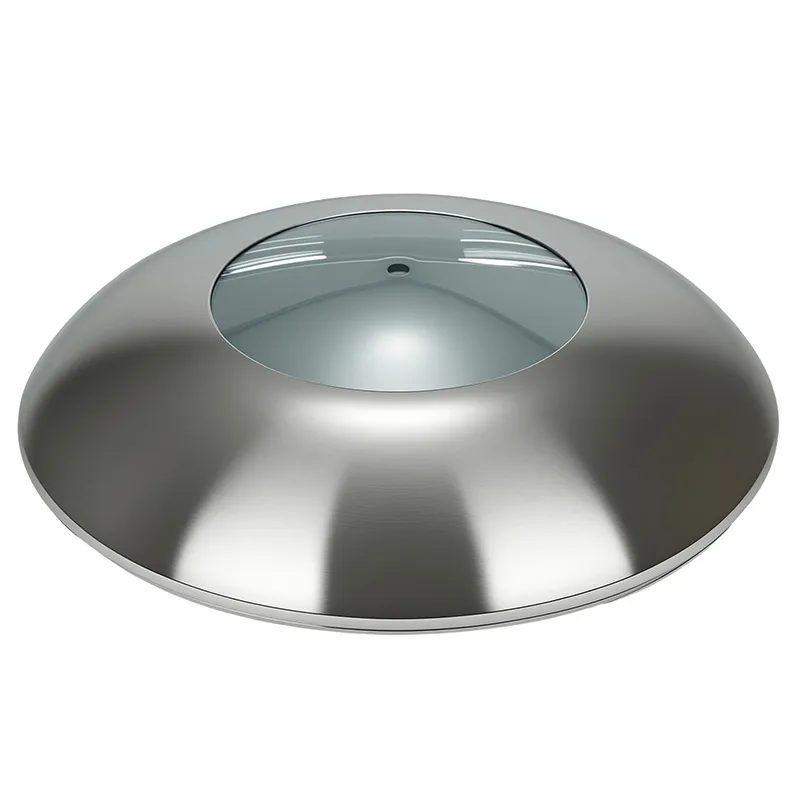
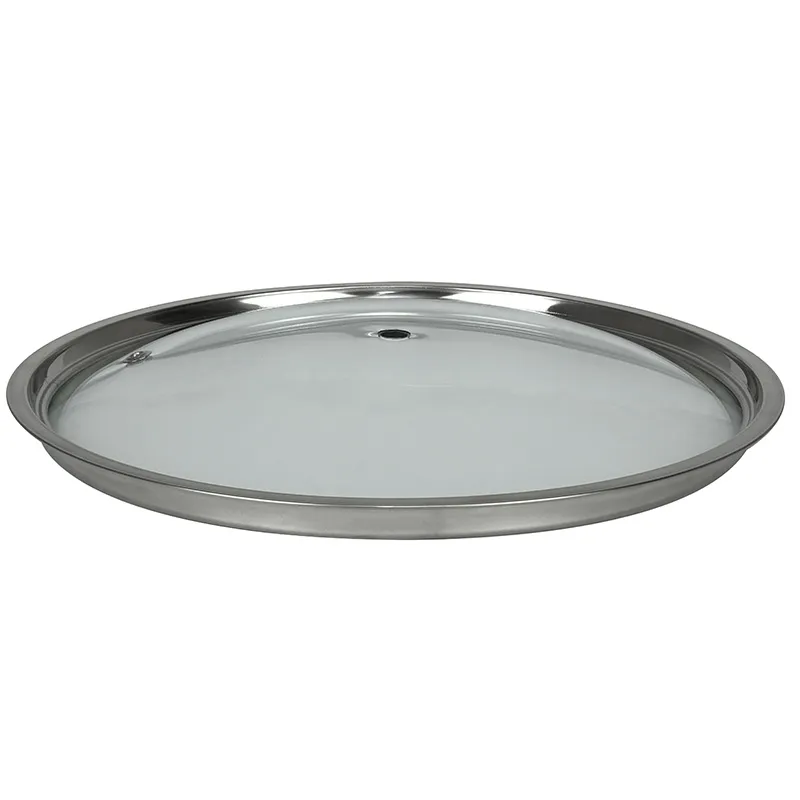
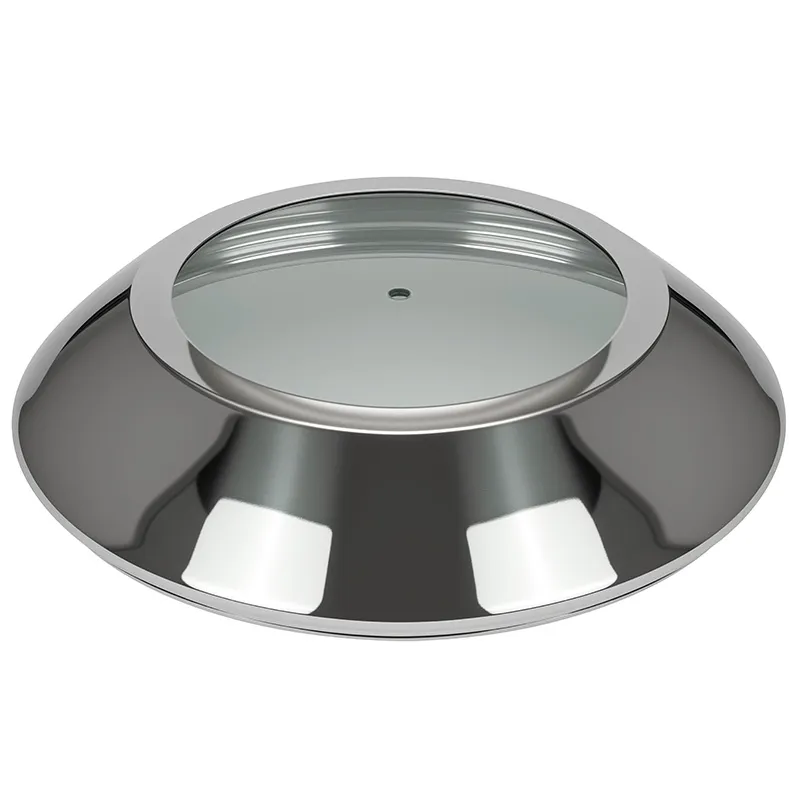
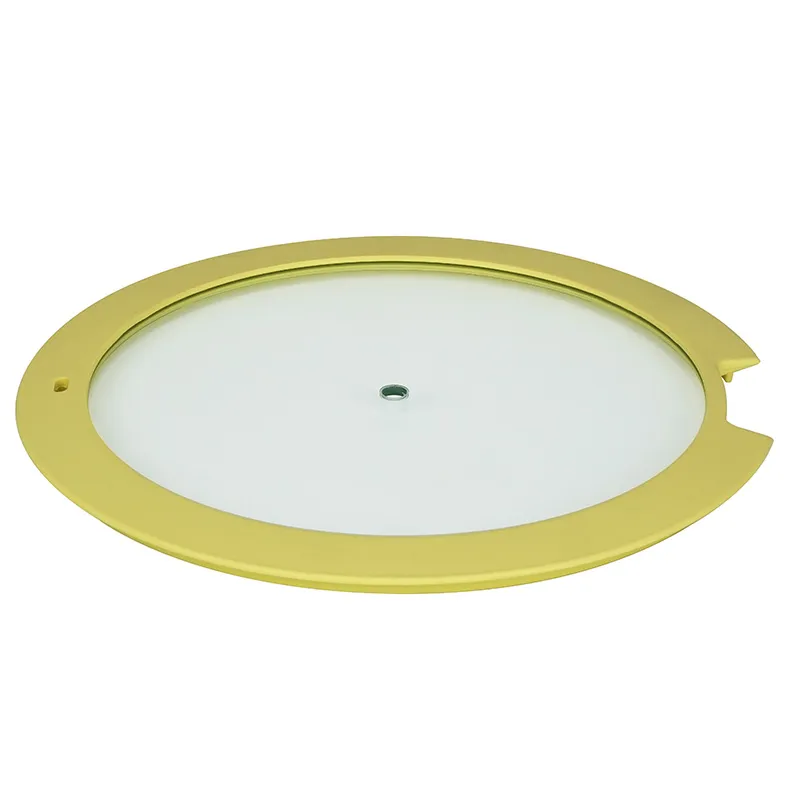
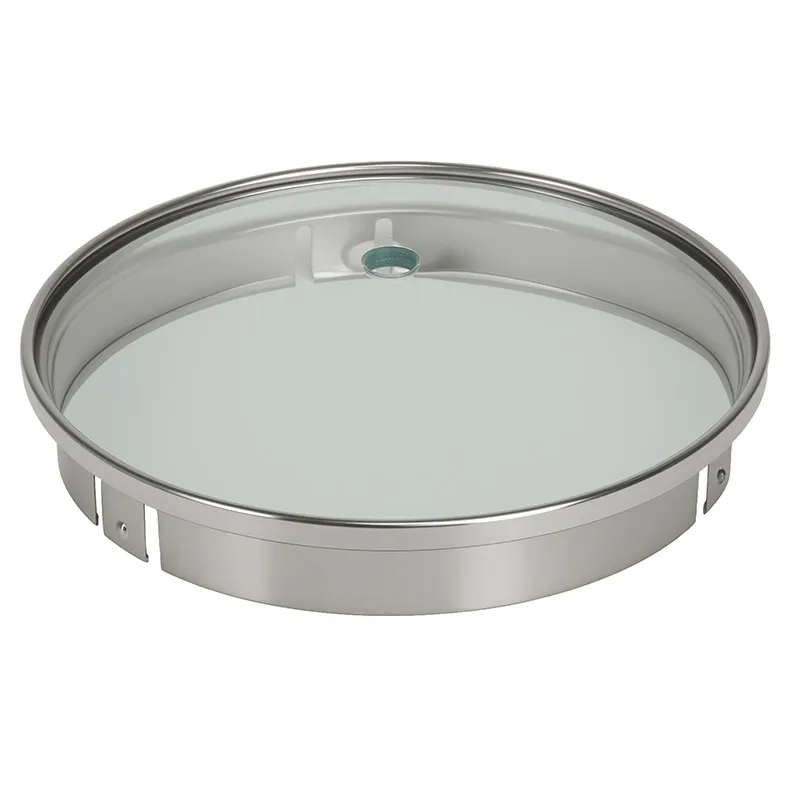
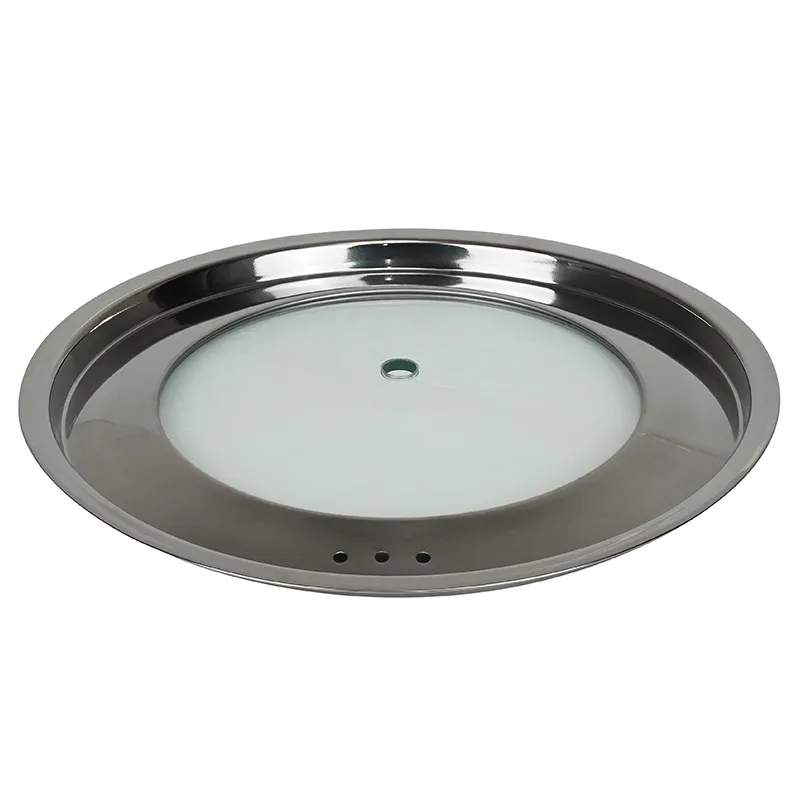
If the jar is the body, the lid is the heart. This is where most failures occur. A simple plastic screw-top might suffice for dry storage, but for anything involving gases (fermentation) or long-term airtight sealing, the mechanism is everything. The most reliable systems I've worked with often involve a two or three-part lid: a solid glass, stainless steel, or high-quality plastic disc that sits directly on the jar rim, a separate gasket (usually food-grade silicone), and then an outer locking ring.
The gasket is critical. Cheap rubber or PVC gaskets degrade, absorb smells, and lose elasticity. A high-grade silicone gasket is flexible, durable, and easy to clean. But even then, the channel it sits in on the lid must be designed precisely. Too shallow, and it pops out during sealing; too deep, and it doesn't compress enough to form a proper seal. I recall a batch from a supplier years ago where the silicone gasket was a mere half-millimeter too thin for the channel—every single jar failed the water-seal test. It was a costly lesson in detail.
For fermentation, you might want a lid with an integrated airlock or a specially designed water-seal rim on the jar itself. The classic Fido style bail-and-wire closure with a rubber gasket is excellent for creating an anaerobic environment for ferments, but the strength of the wire bail and its anchor points on the glass are potential failure points under constant pressure. You need to inspect those metal parts for fatigue.
Sourcing and Manufacturing Realities
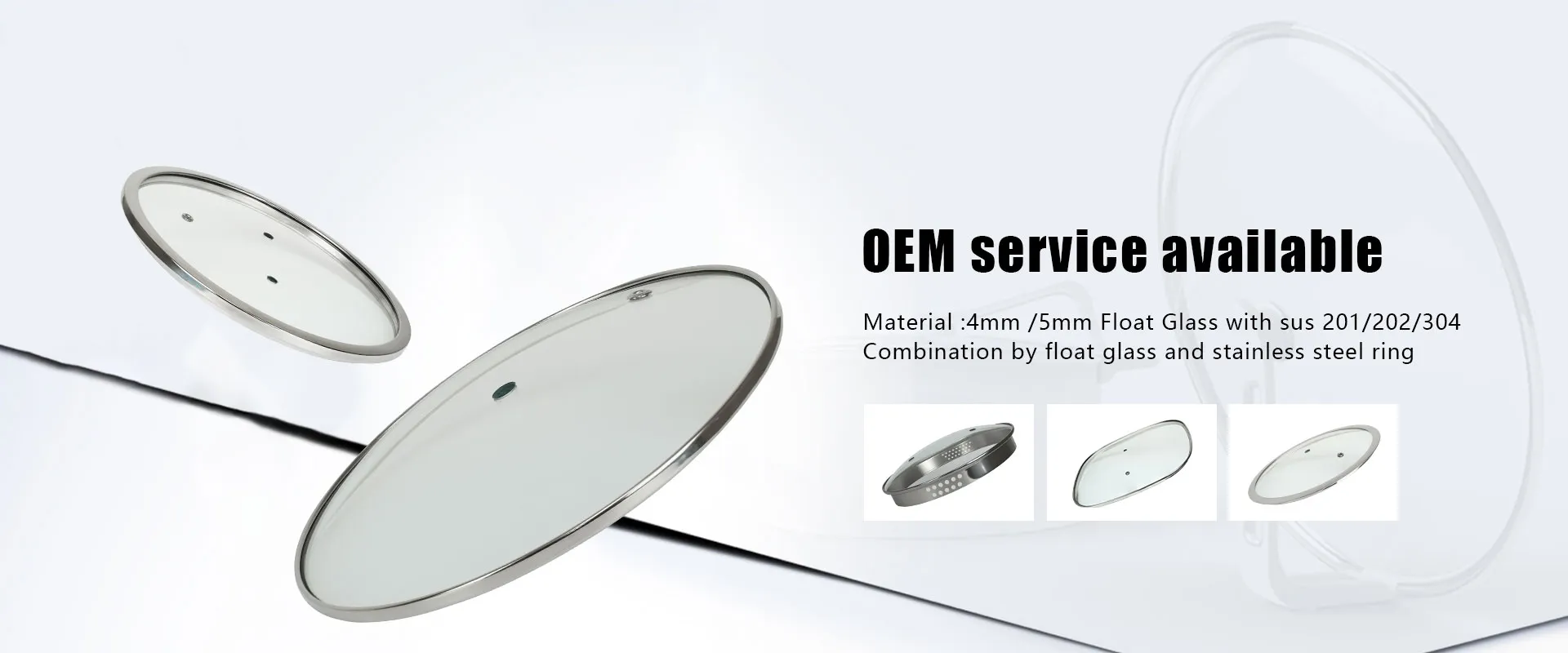
Finding a consistent manufacturer for a product like this isn't about finding the cheapest. It's about finding one that understands the technical requirements of both the glass and the closure system. I've had dealings with companies like EUR-ASIA COOKWARE CO.,LTD, whose production focus on tempered glass lids and household glass products is relevant here. Visiting a facility like theirs—with a dedicated production base and export volume—gives you insight into scale and specialization. When a factory's annual output is in the millions of pieces, like their over 15 million tempered glass lids, it suggests a certain level of process automation and quality control infrastructure is in place, which is crucial for consistency.
Their export focus to markets like Germany, Italy, and Japan is telling. These regions have stringent consumer safety and quality standards. A manufacturer that successfully supplies them is likely adhering to higher material and production protocols. For instance, the glass composition must meet heavy metal migration limits (like lead and cadmium), and the tempering process must be calibrated to withstand specific thermal and impact tests. It's not something a small, generic glass workshop can reliably do batch after batch.
However, even with a technically capable manufacturer, communication is everything. Specifying the exact type of glass (borosilicate vs. soda-lime tempered), the Shore hardness of the silicone gasket, the grade of stainless steel for any metal parts, and the torque specification for screw-top lids is essential. A generic 10 litre glass jar with lid order will get you their standard, which may or may not fit your specific use case. Prototyping and sample testing are non-negotiable steps.
Application Pitfalls and Practical Notes
In a commercial kitchen or small-batch production setting, these jars get abused. They're stacked, moved, banged against sinks, and subjected to rapid temperature changes. The first thing I advise is to never subject a full jar to extreme thermal shock. Even tempered glass has its limits. Always cool your brines or ferments before filling, or if you must fill hot, pre-warm the jar gradually with warm water. Sudden heat from a dishwasher can also be a risk if there's a tiny, invisible chip on the rim.
Cleaning is another issue. The narrow space between the jar's neck and the shoulder can be a trap for residue, especially with ferments. A good bottle brush is a mandatory companion. For lids with complex gasket systems, disassembly for thorough cleaning is a must to prevent mold growth in the grooves. This is where a well-designed lid that's easy to take apart and reassemble wins over a cheaper, monolithic one.
Storage of empty jars is a space headache. They're bulky and fragile. Stacking them is risky unless they are specifically designed with interlocking rims. More often, you need dedicated shelf space. It's a logistical cost that gets factored in. And always, always check the rim for chips before use. A chipped rim will never seal properly and is a weak point for cracking.
Beyond Storage: The System View
Ultimately, a 10 litre glass jar is rarely used in isolation. It's part of a workflow. You need to consider how it will be filled, handled, sealed, stored, emptied, and cleaned. The jar's weight and grip are part of that. Some designs incorporate helpful handles or textured grips, which are worth the slight extra cost for regular use. The compatibility of the lid with other equipment matters too—can you attach a siphon hose through it? Does it fit under your counter or in your fermentation fridge?
The trend towards transparency in food production, from farm-to-table restaurants to artisanal producers, has boosted the use of these jars. They show the product, which builds trust. But they also expose it to light, which can be detrimental to oils, spices, or some ferments. So sometimes, storing them in a dark cupboard or pantry is part of the system, too.
It comes back to intent. Defining what you truly need the jar to do—hold, protect, ferment, display, or transport—will guide you to the right combination of jar body and lid system. Skipping that initial definition phase is how you end up with a warehouse of beautiful, heavy, and ultimately unfit-for-purpose glass jars. The right one, though, becomes an indispensable, reliable workhorse.
Related Products
Related Products