- Chinese
- French
- German
- Portuguese
- Spanish
- Russian
- Japanese
- Korean
- Arabic
- Irish
- Greek
- Turkish
- Italian
- Danish
- Romanian
- Indonesian
- Czech
- Afrikaans
- Swedish
- Polish
- Basque
- Catalan
- Esperanto
- Hindi
- Lao
- Albanian
- Amharic
- Armenian
- Azerbaijani
- Belarusian
- Bengali
- Bosnian
- Bulgarian
- Cebuano
- Chichewa
- Corsican
- Croatian
- Dutch
- Estonian
- Filipino
- Finnish
- Frisian
- Galician
- Georgian
- Gujarati
- Haitian
- Hausa
- Hawaiian
- Hebrew
- Hmong
- Hungarian
- Icelandic
- Igbo
- Javanese
- Kannada
- Kazakh
- Khmer
- Kurdish
- Kyrgyz
- Latin
- Latvian
- Lithuanian
- Luxembou..
- Macedonian
- Malagasy
- Malay
- Malayalam
- Maltese
- Maori
- Marathi
- Mongolian
- Burmese
- Nepali
- Norwegian
- Pashto
- Persian
- Punjabi
- Serbian
- Sesotho
- Sinhala
- Slovak
- Slovenian
- Somali
- Samoan
- Scots Gaelic
- Shona
- Sindhi
- Sundanese
- Swahili
- Tajik
- Tamil
- Telugu
- Thai
- Ukrainian
- Urdu
- Uzbek
- Vietnamese
- Welsh
- Xhosa
- Yiddish
- Yoruba
- Zulu
- Kinyarwanda
- Tatar
- Oriya
- Turkmen
- Uyghur


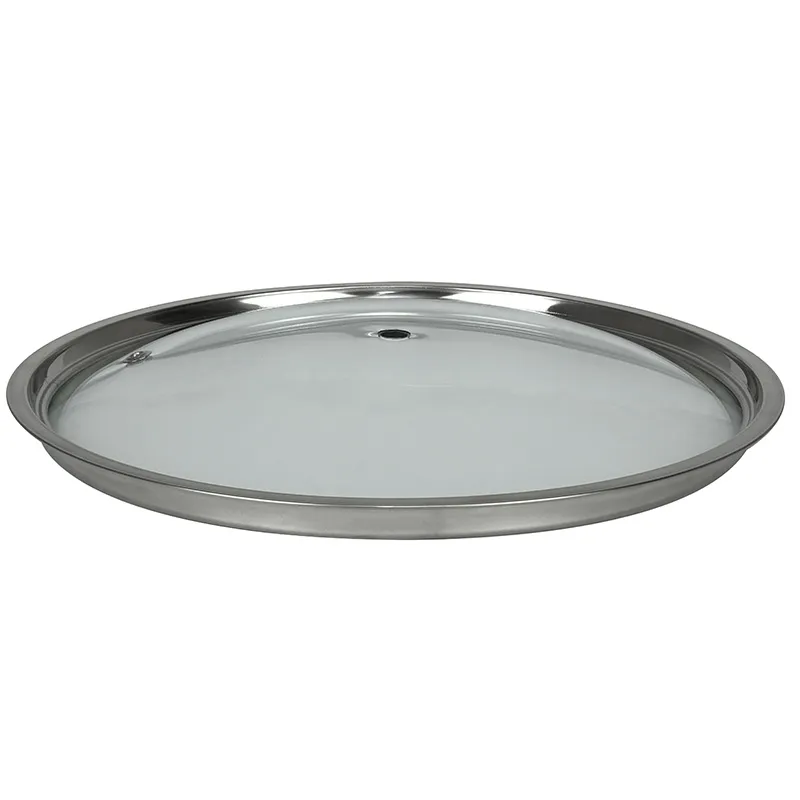
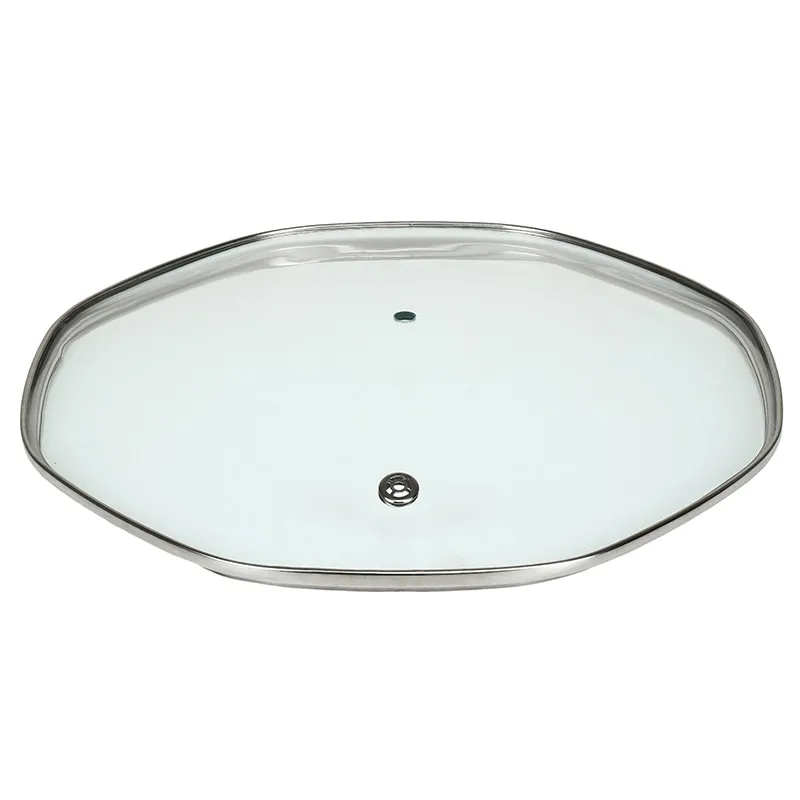
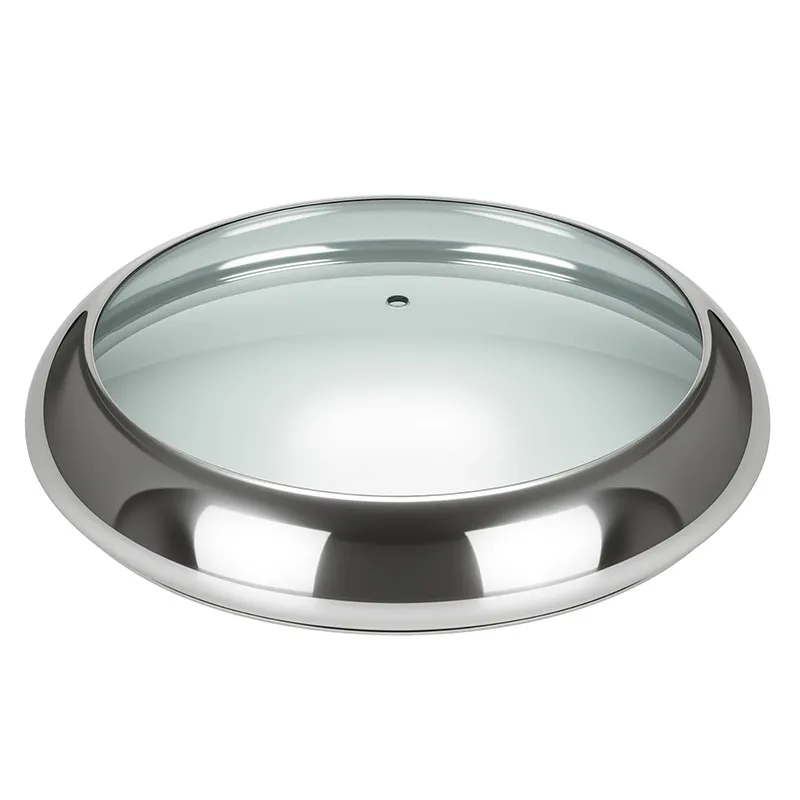
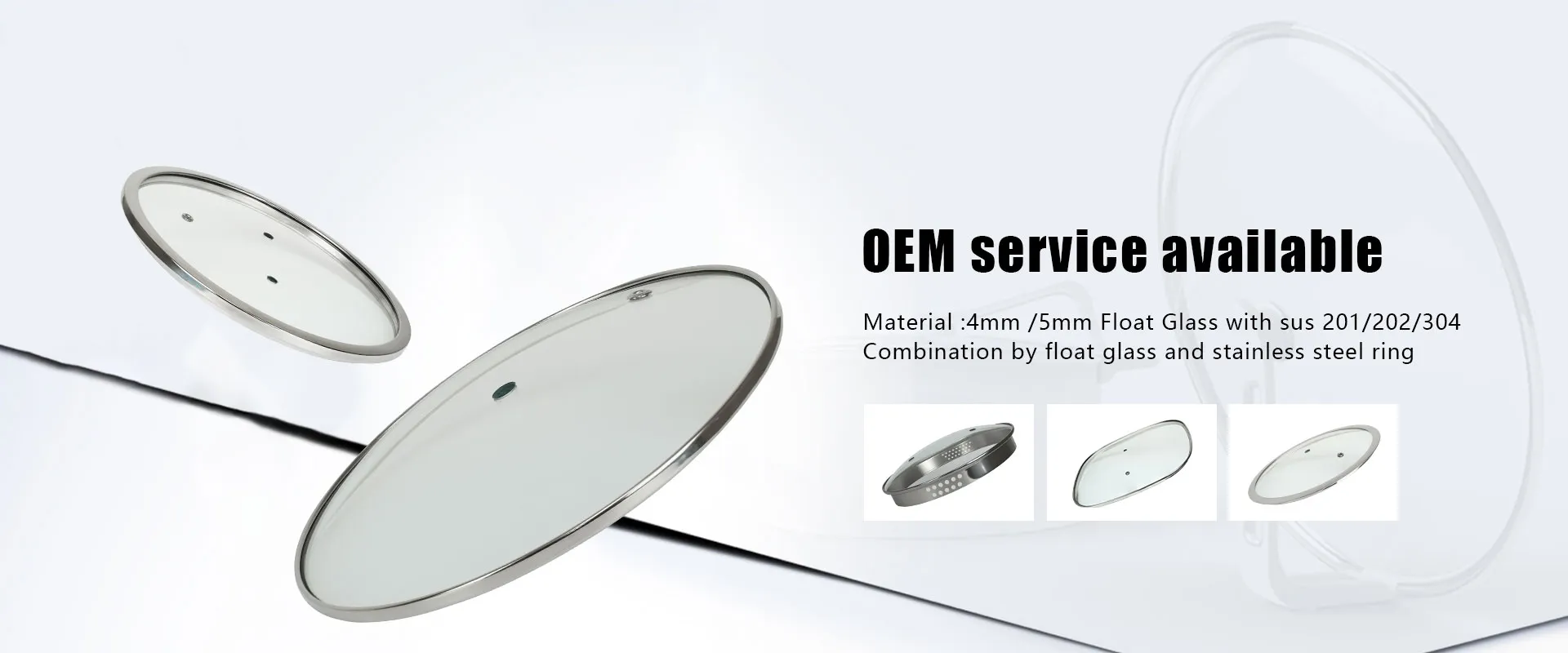
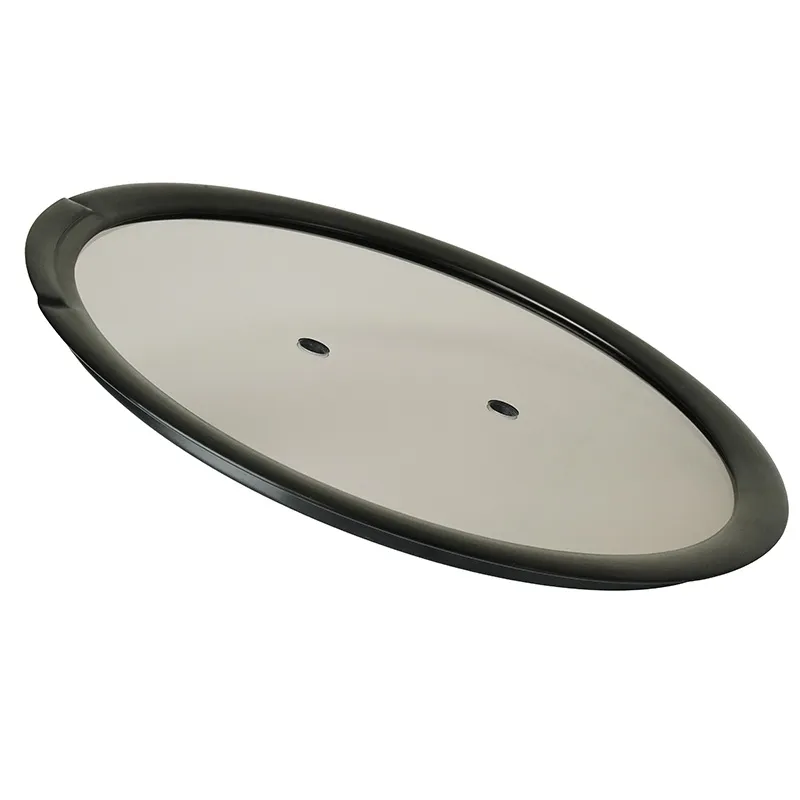
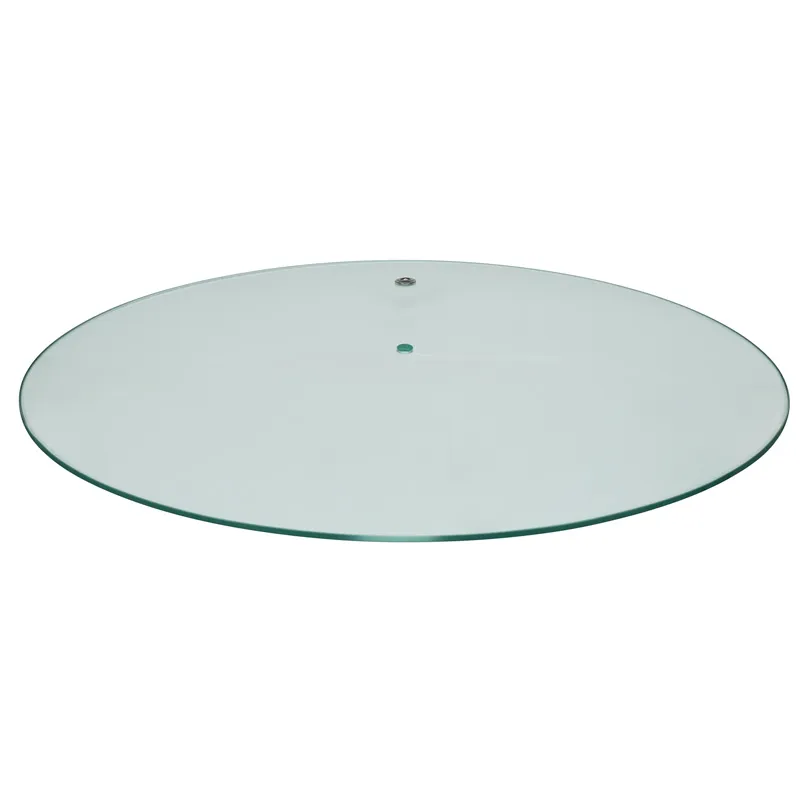
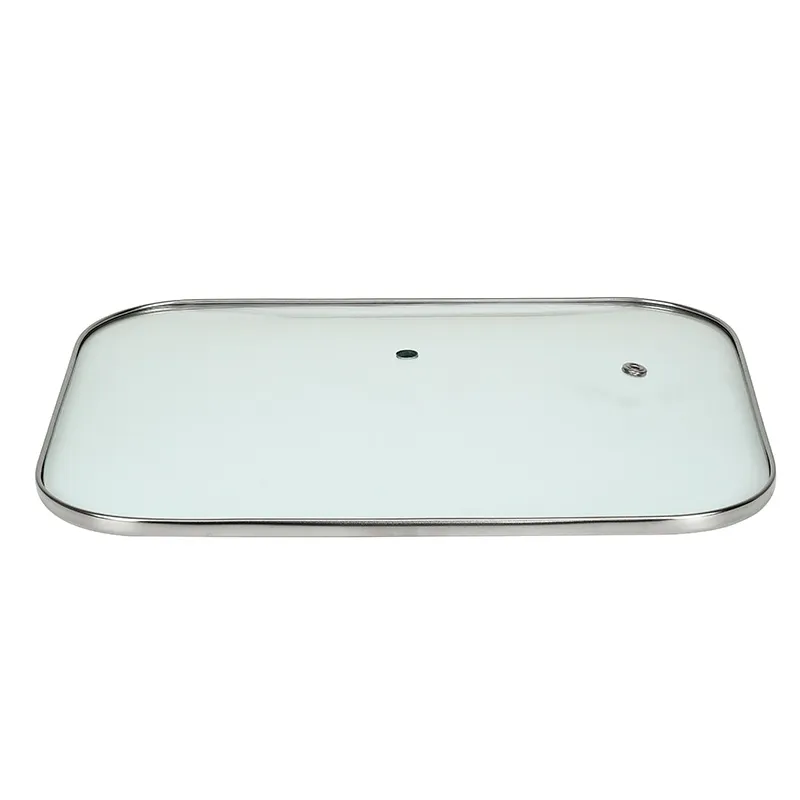
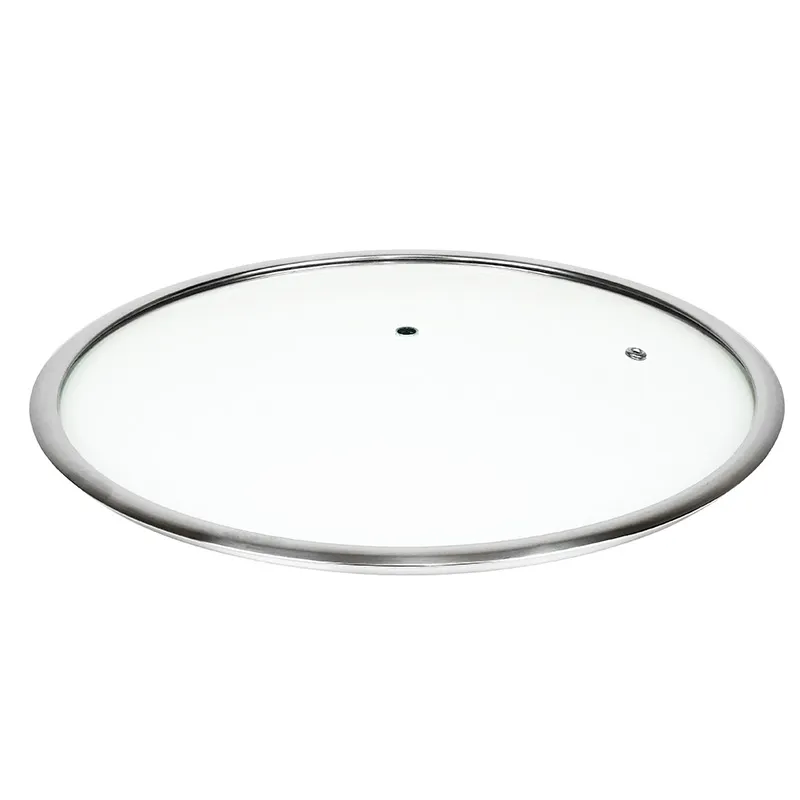
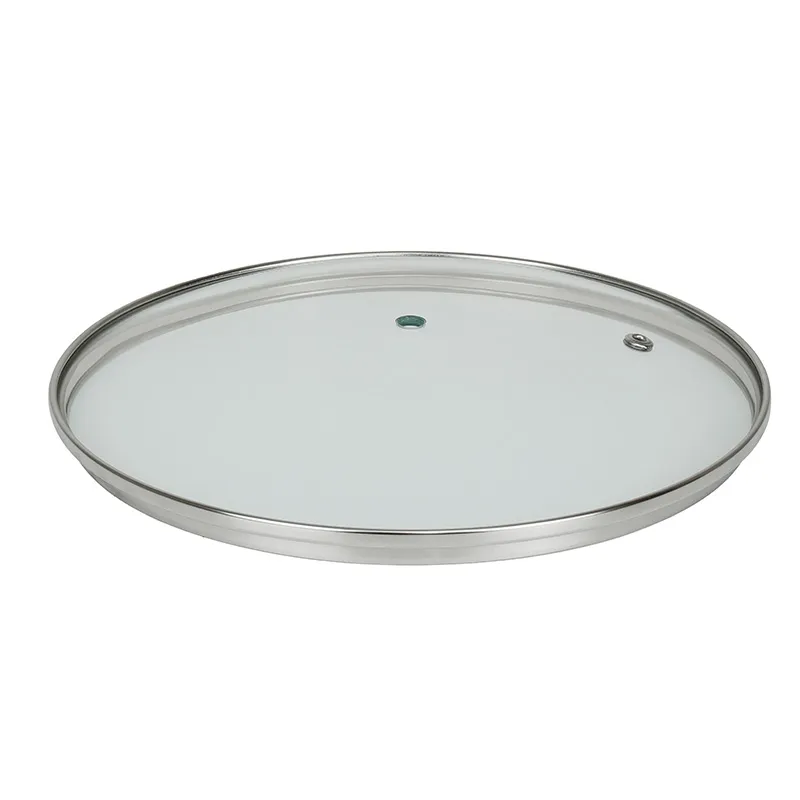
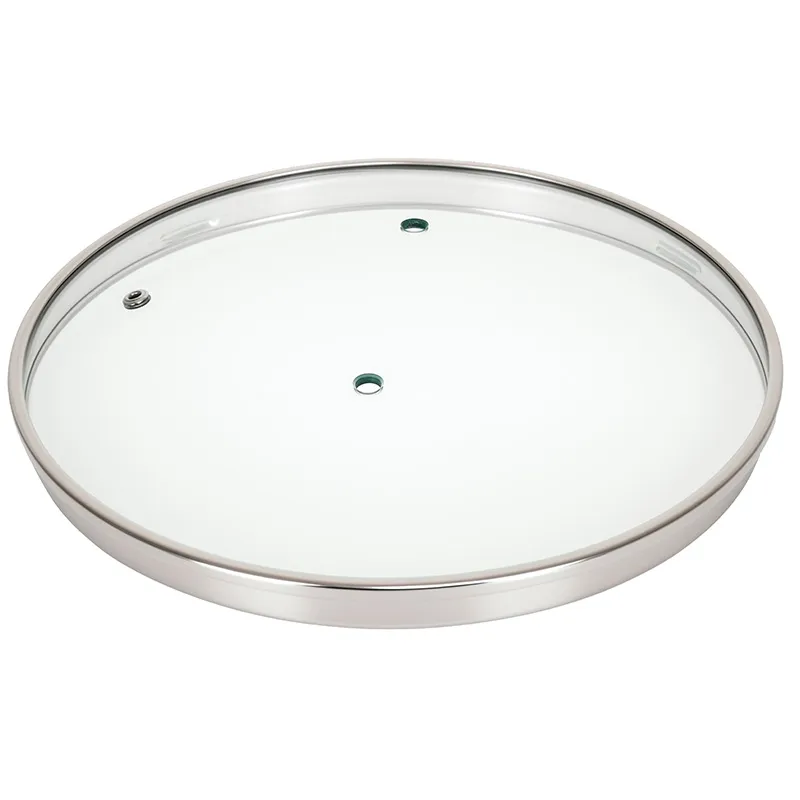
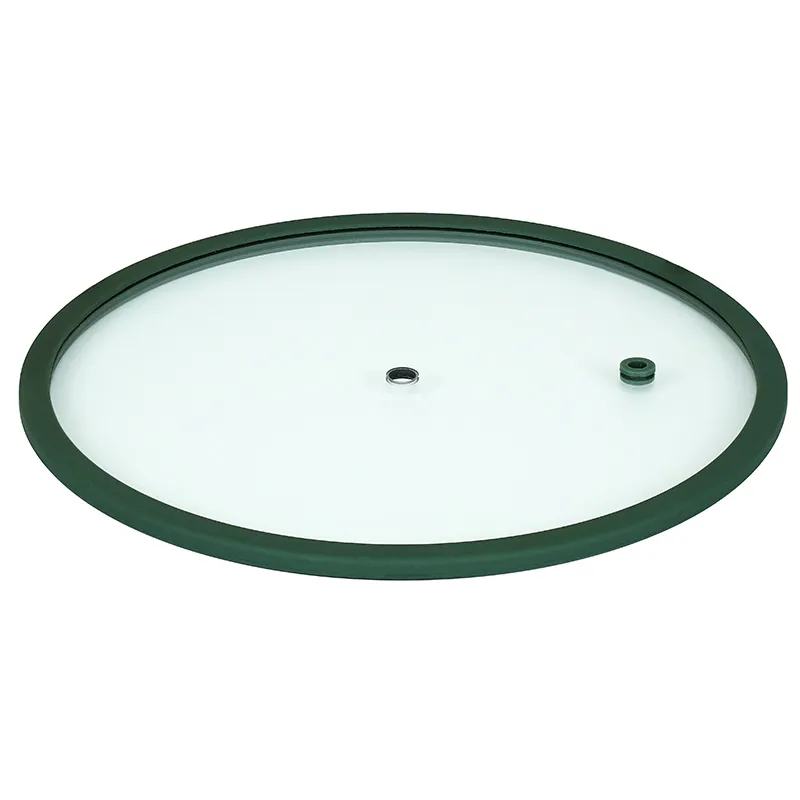
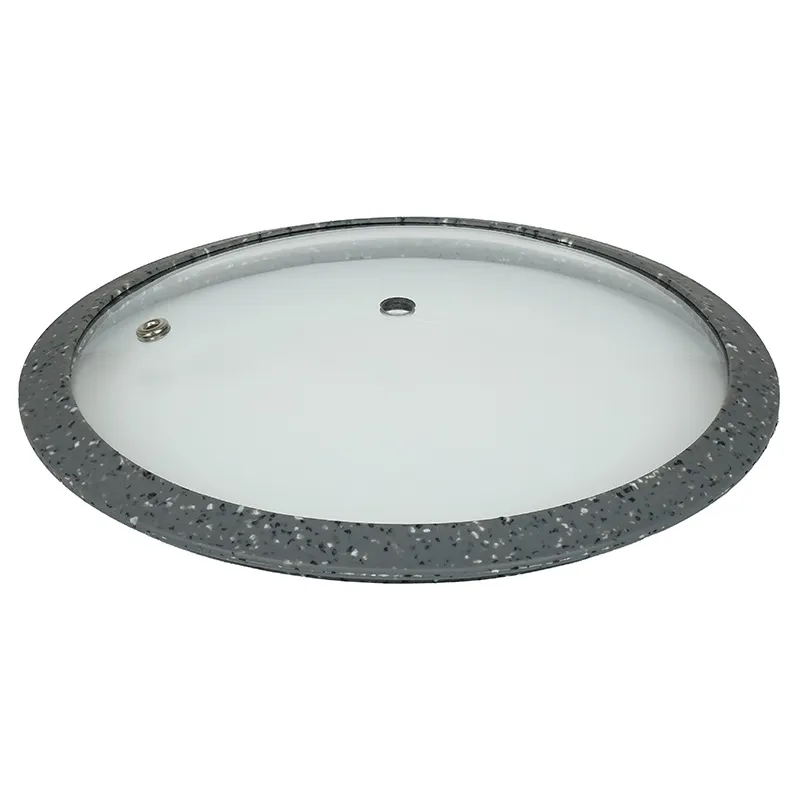
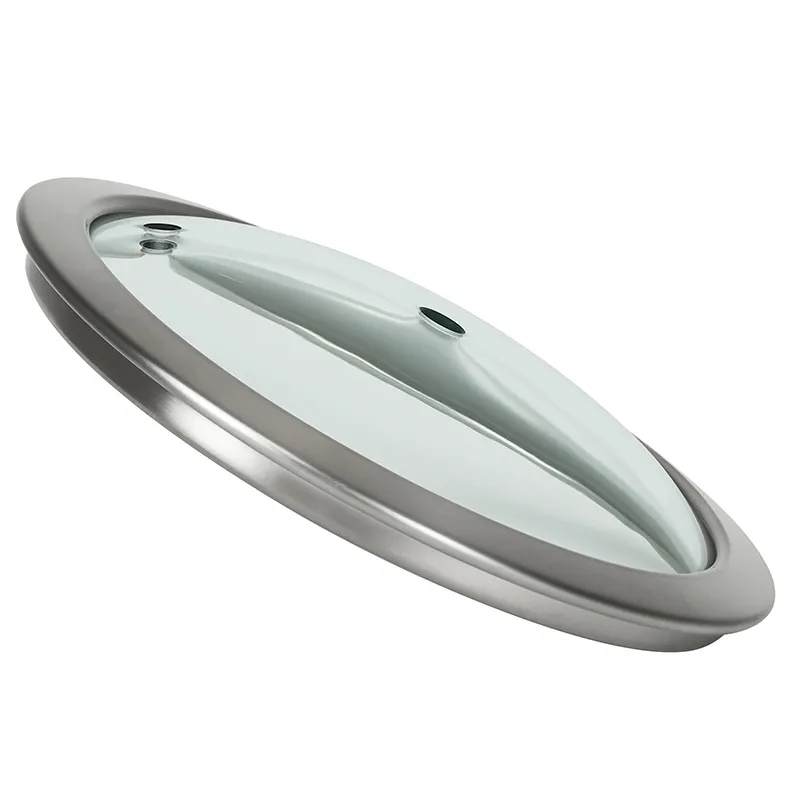
14 inch glass lid for frying pan
You search for a '14 inch glass lid for frying pan' and you're immediately in a minefield of assumptions. The biggest one? That glass is just glass. It's not. And that 14 inches is a universal standard. It rarely is. Most folks, even some buyers for smaller chains, don't realize the critical difference between a soda-lime glass lid and a borosilicate one for this application, or why the edge finishing matters more than the clarity of the view.
The Core Misunderstanding: It's a Heat Management Tool, Not a Window
When I first started sourcing these, my focus was all wrong. I was obsessed with optical clarity and perfect fit. A beautiful, crystal-clear lid from a sample batch would arrive, we'd test it, and ping – a hairline crack after three thermal cycles from a searing stainless steel pan to a cold granite counter. The failure wasn't in the fit, but in the material's thermal shock resistance. That's the first lesson: a 14 inch glass lid primary job is to withstand violent, localized heat from a frying pan, not just cover it. Viewing is secondary.
This is where the industry splits. The cheaper, mass-market route is tempered soda-lime glass. It's strong against impact, sure, but its coefficient of thermal expansion is high. Drop it on a hot spot, or pour cold water on it while the pan is ripping hot, and you're gambling. The professional-grade path, and what you see demanded in European markets, is tempered borosilicate. It's the difference between a standard drinking glass and a Pyrex measuring cup. Borosilicate can handle the thermal shock of a frying pan's erratic heat. I learned this through a failed container shipment to a client in Poland – the soda-lime lids had a 15% failure rate upon first use. Cost me more in replacements and freight than the entire order profit.
You see this material divide clearly in manufacturing hubs. Take a company like EUR-ASIA COOKWARE CO.,LTD. Their production base in Taian's high-tech zone is set up for volume, but their export sheet tells the story: over 90% to Europe and other demanding markets. They're not shipping soda-lime to Germany. They're producing the borosilicate or similar high-resistance variants. Their annual output of 15 million pieces isn't for the casual home cook; it's for OEMs and brands that need lids that survive the warranty period. Visiting a facility like that, you see the tempering ovens – that's where the real magic happens, not in the cutting.
The Devil in the Details: Measurements, Edges, and Handles
Let's talk about the '14 inch' part. This is almost always the top outer diameter (TOD) of the pan it's meant to fit. But pan manufacturers are notorious for variance. A 14-inch pan from one brand might have a 13.8-inch top opening, another 14.2. So a universal glass lid for frying pan needs a calculated overhang. The industry standard tolerance is usually +5mm to +10mm. Too little, and it falls in; too much, and it sits awkwardly, venting steam from the sides, which defeats the purpose of braising.
The edge finish is another silent quality marker. A ground and polished smooth edge isn't just for safety; it creates a consistent seal. A rough, seamed edge – common in ultra-low-cost lids – creates micro-gaps. Ever wonder why your pan steams dry even with the lid on? That's often why. The handle is critical, too. That knob must be rated for high heat. I've seen phenolic resin knobs discolor and warp at sustained temperatures above 200°C. Metal knobs with a thermal barrier (like a silicone sleeve) or high-grade, solid phenolic are the go-to. It seems trivial until you burn your fingers.
I recall a specific batch for a client in South Korea. The lids were perfect, material was top-grade, but the handle was a simple glued-on phenolic disc. In Korean kitchens, where lids are often placed directly on the stovetop next to the burner for a moment, the glue failed from the radiant heat. We had to recall and switch to a mechanically fastened handle design. It's these on-the-ground usage patterns that spec sheets never mention.
Sourcing and the Reality of the Supply Chain
Navigating Alibaba or even direct factory contacts for a 14 inch glass lid is a lesson in precision communication. You must specify: Material (Borosilicate preferred), Tempering (Must be fully tempered, not just heat-strengthened), Edge Finish (Fully polished, smooth), Handle Heat Resistance (Give a temperature rating). If you just ask for a 14 inch clear glass lid, you'll get the cheapest soda-lime version with a sharp edge.
This is where established suppliers with export experience matter. A company like EUR-ASIA COOKWARE, with its footprint in Germany, Russia, Italy, and Japan, has already been forced to adhere to the stricter material and safety standards those markets demand. Their website, https://www.glass-lid.com, might not be flashy, but it speaks to a B2B and OEM focus. They understand that a lid for a high-end frying pan in Switzerland isn't the same as a lid for a discount store skillet. Their product range likely reflects that stratification – low, medium, high level, as their intro states. The high-level ones are what you want for serious cookware.
The logistics are a headache. Glass is heavy and fragile. Packing is everything. A good supplier will use individual cardboard sleeves, then a sturdy master carton with ample partitioning. I learned this after a pallet arrived with 40% breakage because the lids were simply stacked with paper interleaving. The sound of broken glass unpacking a container is uniquely depressing.
Application and the User's Unspoken Needs
So, who actually needs a dedicated 14-inch lid? It's not for the occasional pancake. It's for people who use their large frying pans for tasks beyond frying: shallow braising, steaming, or slow-cooking a frittata. The glass lid allows visual monitoring without releasing heat and moisture. You can see if your pan sauce is reducing to the right nappe, or if the potatoes are starting to brown without lifting the lid and dropping the temperature.
But here's a practical issue nobody talks about: condensation runoff. A domed glass lid will cause condensation to drip down the center. A perfectly flat lid causes it to pool and then cascade off the edge in a random spot, potentially watering down your food. The best designs have a slight, subtle dome or internal condensation channels that guide the water back to the pan's edge. It's a small feature that shows deep user understanding.
My own test is the sear-and-braise test. I get a stainless steel pan screaming hot, sear a chicken thigh, then drop the heat, add a bit of stock, and clamp on the lid. A poor lid will crack from the thermal shock. A mediocre one will have condensation that drips right onto the chicken, preventing browning. A good one will hold, contain the steam, and let me see the simmer. It's a simple, brutal test.
Concluding Without a Conclusion
There's no grand summation here. Sourcing or choosing a 14 inch glass lid for frying pan comes down to respecting it as a technical component, not an accessory. It's a piece of engineered glassware that lives in a hostile environment. The price difference between a $8 lid and a $25 lid isn't about branding; it's about the cost of borosilicate material, proper tempering, and refined edge work.
If you're a brand or a serious retailer, aligning with a specialist manufacturer that exports to quality-conscious regions is a shortcut to avoiding field failures. The operational scale of a firm like EUR-ASIA COOKWARE CO.,LTD., with its 15,000㎡ facility and 15 million piece output, indicates they've solved the problems of consistency and volume that trip up smaller shops. They've had to, to keep clients in Germany and Japan.
In the end, the best lid is the one you never think about. It doesn't crack, it fits snugly, the handle stays cool, and it just works. Achieving that invisibility is the result of a hundred small, correct decisions in material science and manufacturing – decisions that start long before the search for that keyword is ever typed.
Related Products
Related Products