- Chinese
- French
- German
- Portuguese
- Spanish
- Russian
- Japanese
- Korean
- Arabic
- Irish
- Greek
- Turkish
- Italian
- Danish
- Romanian
- Indonesian
- Czech
- Afrikaans
- Swedish
- Polish
- Basque
- Catalan
- Esperanto
- Hindi
- Lao
- Albanian
- Amharic
- Armenian
- Azerbaijani
- Belarusian
- Bengali
- Bosnian
- Bulgarian
- Cebuano
- Chichewa
- Corsican
- Croatian
- Dutch
- Estonian
- Filipino
- Finnish
- Frisian
- Galician
- Georgian
- Gujarati
- Haitian
- Hausa
- Hawaiian
- Hebrew
- Hmong
- Hungarian
- Icelandic
- Igbo
- Javanese
- Kannada
- Kazakh
- Khmer
- Kurdish
- Kyrgyz
- Latin
- Latvian
- Lithuanian
- Luxembou..
- Macedonian
- Malagasy
- Malay
- Malayalam
- Maltese
- Maori
- Marathi
- Mongolian
- Burmese
- Nepali
- Norwegian
- Pashto
- Persian
- Punjabi
- Serbian
- Sesotho
- Sinhala
- Slovak
- Slovenian
- Somali
- Samoan
- Scots Gaelic
- Shona
- Sindhi
- Sundanese
- Swahili
- Tajik
- Tamil
- Telugu
- Thai
- Ukrainian
- Urdu
- Uzbek
- Vietnamese
- Welsh
- Xhosa
- Yiddish
- Yoruba
- Zulu
- Kinyarwanda
- Tatar
- Oriya
- Turkmen
- Uyghur


2 gallon glass jar with sealed lid
When you first hear 2 gallon glass jar with sealed lid, it sounds straightforward, almost mundane. But in this line of work, that phrase is a minefield of assumptions. Most people, even some buyers new to the game, think it's just a big glass container with a lid that clicks shut. The reality is, the term sealed is where the entire project lives or dies. Is it a hermetic seal for fermentation? A water-tight seal for dry storage? Or just a dust cover? That one word dictates the glass thickness, the lid's composition—often a plastic or metal gasket system—and the manufacturing tolerances. I've seen too many orders go sideways because someone assumed a standard mason jar lid mechanism would scale up to an 8-liter volume. It doesn't. The physics of sealing change dramatically.
Defining the Seal – More Than Just a Lid
The core challenge isn't the jar itself. Tempered glass for large-format containers is fairly standard now. The real puzzle is the interface between the glass rim and the lid. For a true 2 gallon glass jar, you're dealing with a mouth diameter that often exceeds 120mm. At that scale, any imperfection in the glass finish—a slight warp, a molding seam—will compromise the seal. The lid has to compensate. We're typically looking at a multi-component lid: a rigid outer band, a pliable gasket (food-grade silicone is the gold standard now, not rubber), and a central locking mechanism. The click of a smaller jar becomes a firm, sometimes two-handed, press-and-twist action.
I recall a project a few years back where we sourced what we thought were perfect jars from a general glassware supplier. The jars were fine, but the lids were a disaster. They used a single-piece plastic lid with an integrated, too-thin gasket. Under pressure, or with thermal changes, the plastic itself would deform, breaking the seal. The failure wasn't immediate; it was a slow creep of air getting in, ruining a batch of specialty coffee beans. That was a $15,000 lesson in lid specificity. The jar is just the vessel; the lid is the functional heart of the product.
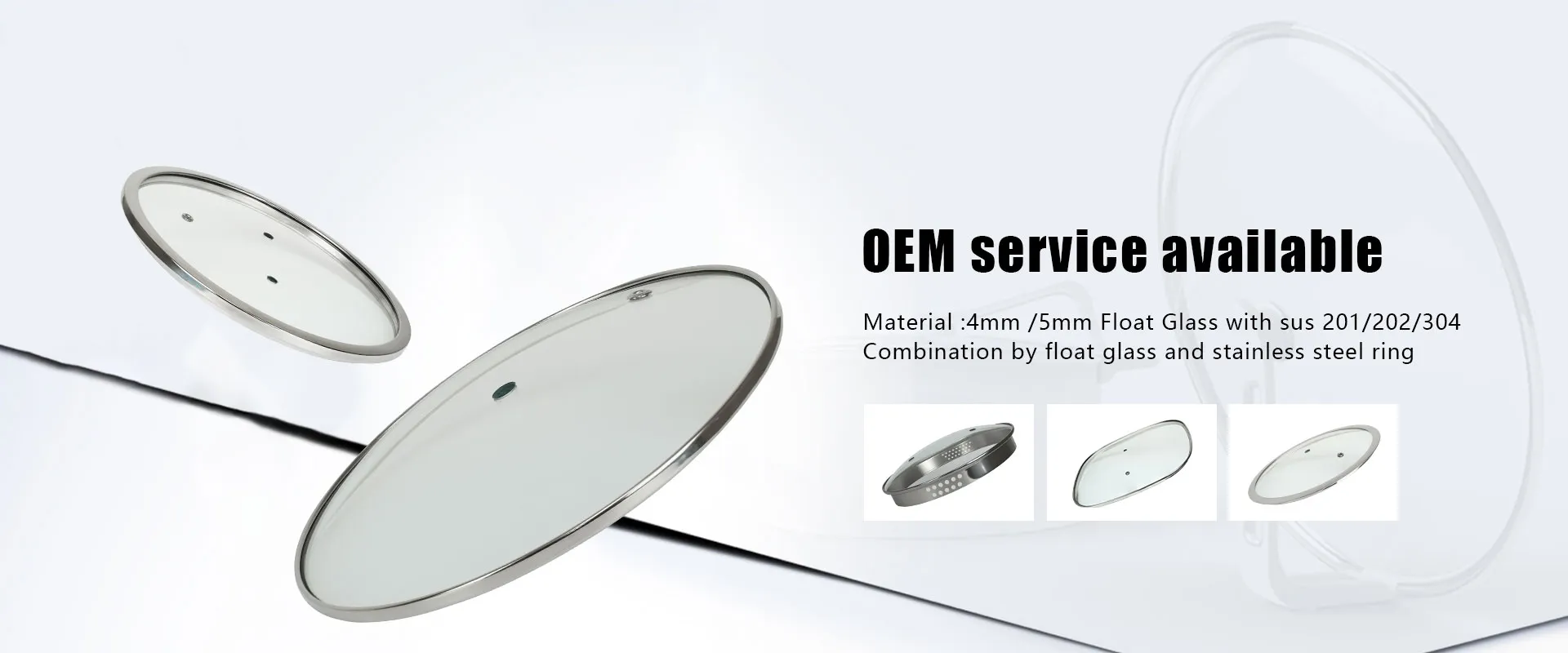
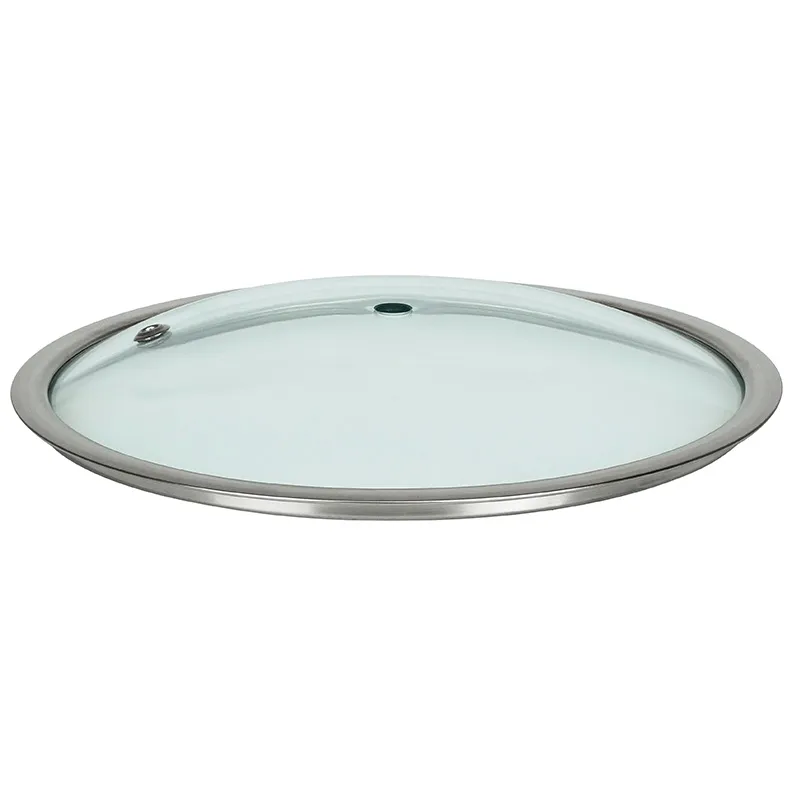
This is where working with a specialized manufacturer makes all the difference. A company like EUR-ASIA COOKWARE CO.,LTD, for instance, whose entire focus is on glass lids and kitchen glassware, understands this nuance intrinsically. Their production base in Shandong's High-tech Development Zone isn't just churning out generic glass; they're engineering the seal. When over 90% of your output is exported to markets like Germany and Japan, where product standards are brutally high, you learn to get the details right. Their expertise in tempered glass lids translates directly into solving the large-format jar sealing problem. It's a different mindset from a general glassblower.
The Manufacturing and Sourcing Tightrope
Sourcing these isn't a catalog exercise. You can't just pick a SKU. It's a conversation that starts with application. Are you pickling, storing dry goods, fermenting kombucha, or displaying retail product? Each demands a different pressure rating for the sealed lid. For fermentation, you might need a lid with an airlock port, which means modifying the glass jar's neck design. That's a custom mold, a significant upfront cost. Most suppliers will want a container order in the tens of thousands to justify that.
Then there's the glass quality. Tempered is non-negotiable for safety at this size and weight. But the degree of tempering matters. I've received jars that passed basic safety tests but would shatter into unusably small granules if tipped over while full—a clean-up nightmare. A good manufacturer will be able to discuss the specific tension standards (like the European EN 12150 standard) they meet. The fact that EUR-ASIA COOKWARE's main products are tempered glass lids suggests their processes for strengthening glass are core to their operation, which bodes well for the jar body itself.
Logistics is the silent killer. A pallet of 2 gallon glass jars is incredibly heavy and fragile. The packaging cost per unit can sometimes rival the manufacturing cost. Double-walled cardboard, heavy-duty foam cap inserts, and a strapped pallet that doesn't allow for any shift during transit are mandatory. One of my early mistakes was approving a slightly less expensive pack design to save $0.80 per unit. The shipment arrived with a 30% breakage rate. The savings were obliterated ten times over. Now, I insist on seeing and approving a pre-shipment photo of the fully packed, strapped pallet.
Real-World Application and Pitfalls
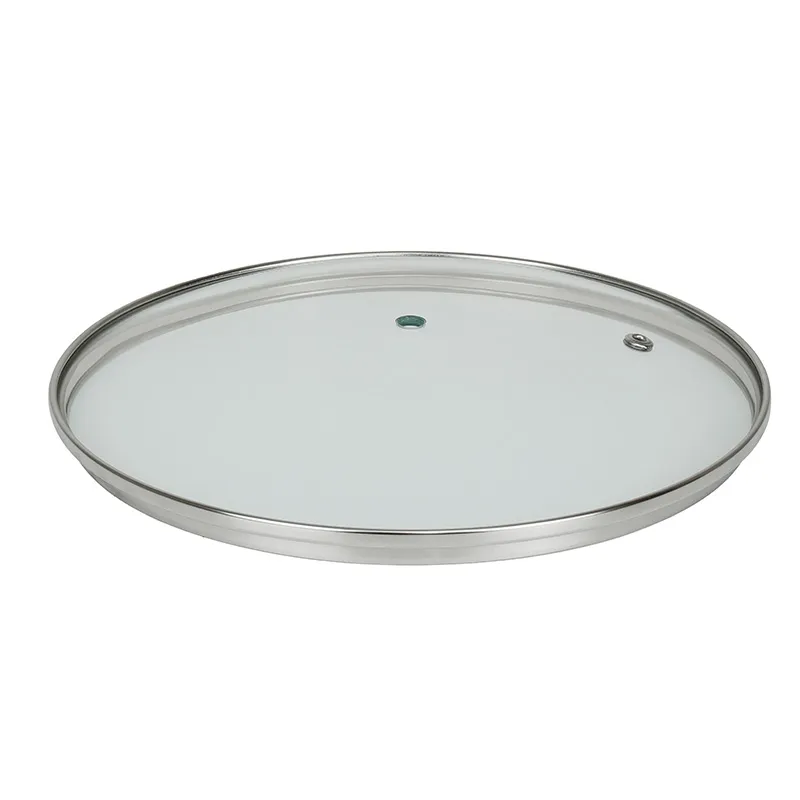
Let's talk about a specific use-case: bulk spice storage in a commercial kitchen. The requirement is a dust-proof and aroma-containing seal, but not necessarily airtight against fermentation gases. A simple clamp-style glass lid with a rubber gasket, like those used for European storage jars, could work. But at the 2-gallon size, that glass lid becomes very heavy and prone to chipping on the rim. A supplier specializing in glass lids, which you can find at a place like https://www.glass-lid.com, would likely recommend a hybrid: a lightweight, stamped metal bail lid that uses a glass-infused or ceramic-coated interior to maintain food contact safety, paired with a silicone gasket. It's lighter, safer, and more durable.
Another pitfall is cleaning. The wide mouth helps, but if the jar has pronounced shoulders, it becomes difficult to scrub. The lid assembly is worse. Complex lids with multiple parts need to be disassembled for proper sanitation. If the gasket is glued in or the mechanism has tiny crevices, it's a hygiene risk. The best designs I've seen have a one-piece, snap-out gasket and a lid that can go in the dishwasher. Always request a sample not just to look at, but to use—repeatedly. Fill it, seal it, open it, clean it. Do that cycle ten times. You'll discover flaws no spec sheet will reveal.
There's also the issue of finish. For a high-end retail product, the glass needs to be brilliantly clear, free of greenish tints (low-iron glass is a premium option), and the rim must be fire-polished smooth. For industrial storage, a slight tint and a ground rim are acceptable. Knowing your end-user's tolerance is key. The product range described for EUR-ASIA COOKWARE, covering low to high-level household products, indicates they likely have the capability to cater to these different finish tiers, which is useful information when specifying your order.
Beyond the Jar – The Ecosystem
You rarely just need the jar. You need accessories. Durable handles for carrying a full jar (15+ kg) are a must, but they must attach without stressing the glass. Pouring spouts, measurement markings silkscreened on the side, even dedicated storage racks. This is where a supplier with a broader kitchen accessory focus can be advantageous. They might already have solutions for these ancillary items, or the engineering capacity to develop them, ensuring compatibility.
The market is also shifting towards material transparency. Buyers want to know the exact composition of the gasket material (is it platinum-cured silicone?), the source of the glass, and the coatings on any metal parts. Having a manufacturer that can provide compliant Material Safety Data Sheets (MSDS) or certificates for food contact (like FDA or EU regulations) is becoming a baseline requirement, not a bonus. A company with a strong export record to regulated markets is already set up for this paperwork.
Finally, think about the lifecycle. What happens when a lid gasket wears out after two years? Does the supplier sell replacement gaskets? Or does the user have to buy a whole new jar? A sustainable and customer-friendly design includes replaceable wear parts. This is a small detail that speaks volumes about a manufacturer's long-term thinking. When evaluating a partner, it's a question worth asking early: Can I source replacement seals in two years? Their answer is very telling.
Concluding Thoughts – It's an Engineering Product
So, wrapping this up, a 2 gallon glass jar with sealed lid is not a commodity. It's a precision-engineered food storage system. The success hinges on treating the jar and lid as a single, inseparable unit from the design phase. Compromising on the lid to save cost invalidates the investment in the jar. The goal is to match the physical and chemical demands of the contents with the materials and mechanics of the container.
My advice is to start with the most demanding condition your product will face (internal pressure, acidity, weight) and spec from there. Partner with manufacturers who show evidence of solving these problems, not just selling glass. Look at their core competency—if lid technology is their focus, as it is with a specialist like EUR-ASIA COOKWARE CO.,LTD, you're probably on a better path than with a general glassware factory.
In the end, it's about risk mitigation. Every choice in material, design, and supplier either adds to or subtracts from the risk of product failure. The cheap option is almost always the most expensive one over the full product lifecycle. The right jar, with the right seal, from the right partner, just works. And in this business, just working is the highest compliment you can give to a piece of equipment.
Related Products
Related Products