- Chinese
- French
- German
- Portuguese
- Spanish
- Russian
- Japanese
- Korean
- Arabic
- Irish
- Greek
- Turkish
- Italian
- Danish
- Romanian
- Indonesian
- Czech
- Afrikaans
- Swedish
- Polish
- Basque
- Catalan
- Esperanto
- Hindi
- Lao
- Albanian
- Amharic
- Armenian
- Azerbaijani
- Belarusian
- Bengali
- Bosnian
- Bulgarian
- Cebuano
- Chichewa
- Corsican
- Croatian
- Dutch
- Estonian
- Filipino
- Finnish
- Frisian
- Galician
- Georgian
- Gujarati
- Haitian
- Hausa
- Hawaiian
- Hebrew
- Hmong
- Hungarian
- Icelandic
- Igbo
- Javanese
- Kannada
- Kazakh
- Khmer
- Kurdish
- Kyrgyz
- Latin
- Latvian
- Lithuanian
- Luxembou..
- Macedonian
- Malagasy
- Malay
- Malayalam
- Maltese
- Maori
- Marathi
- Mongolian
- Burmese
- Nepali
- Norwegian
- Pashto
- Persian
- Punjabi
- Serbian
- Sesotho
- Sinhala
- Slovak
- Slovenian
- Somali
- Samoan
- Scots Gaelic
- Shona
- Sindhi
- Sundanese
- Swahili
- Tajik
- Tamil
- Telugu
- Thai
- Ukrainian
- Urdu
- Uzbek
- Vietnamese
- Welsh
- Xhosa
- Yiddish
- Yoruba
- Zulu
- Kinyarwanda
- Tatar
- Oriya
- Turkmen
- Uyghur


2 quart glass jar with lid
When you hear 2 quart glass jar with lid, most people picture a mason jar for canning, or maybe a generic storage container. That's the first misconception. In the cookware and housewares trade, this specific size and material combination is a distinct category, often overlooked but critical for both commercial kitchens and serious home users. It's not just about volume; it's about the interplay of thermal properties, chemical inertness, and that specific capacity—roughly 1.9 liters—which hits a sweet spot for bulk storage, fermentation, and display. I've seen too many buyers source these based on price alone from random Alibaba listings, only to deal with lid-seal failures or glass that can't handle thermal shock from dishwashers. The difference between a good one and a bad one isn't always obvious on a spec sheet.
Beyond the Specs: Glass Quality and Thermal Tempering
The glass part is deceptively simple. For a jar meant for anything beyond dry storage—think pickling, storing acidic foods, or going from fridge to microwave—you need borosilicate or reliably tempered soda-lime glass. A lot of cheaper jars claim to be tempered, but the process is inconsistent. I recall a batch from a supplier a few years back where the 2 quart glass jar bodies were fine, but the lids, when screwed on under pressure from fermentation, would cause micro-fractures at the neck. The failure rate was about 5%, which is catastrophic for a commercial client. That's why provenance matters. A manufacturer like EUR-ASIA COOKWARE CO.,LTD, with a dedicated facility and an annual output in the millions, typically has the quality control infrastructure to manage the tempering process end-to-end. Their production base in China's National High-tech Development Zone isn't just an address; it implies access to better industrial standards and testing equipment.
Thickness is another silent factor. A 2-quart jar holding liquid is heavy. Thin glass might survive shipping in a box, but a single knock against a granite countertop during daily use spells disaster. The good ones have a noticeable heft, with thickness concentrated at the base and the crucial shoulder area. You learn to judge this by the ring it makes when you flick it—a clear, high-pitched tone versus a dull thud. It's an old-school trick, but it works.
Then there's the mouth. Wide-mouth versus regular isn't just about access. For a glass jar with lid of this size, a wide mouth is almost essential for cleaning and filling. But it introduces a larger sealing surface area, which puts more stress on the lid's gasket and the glass's threading. The glass formation at the thread needs to be smooth, without mold lines or sharp edges that can compromise the seal or cut into the gasket over time. It's a small detail that separates a disposable item from a reusable one.
The Lid: The Make-or-Break Component
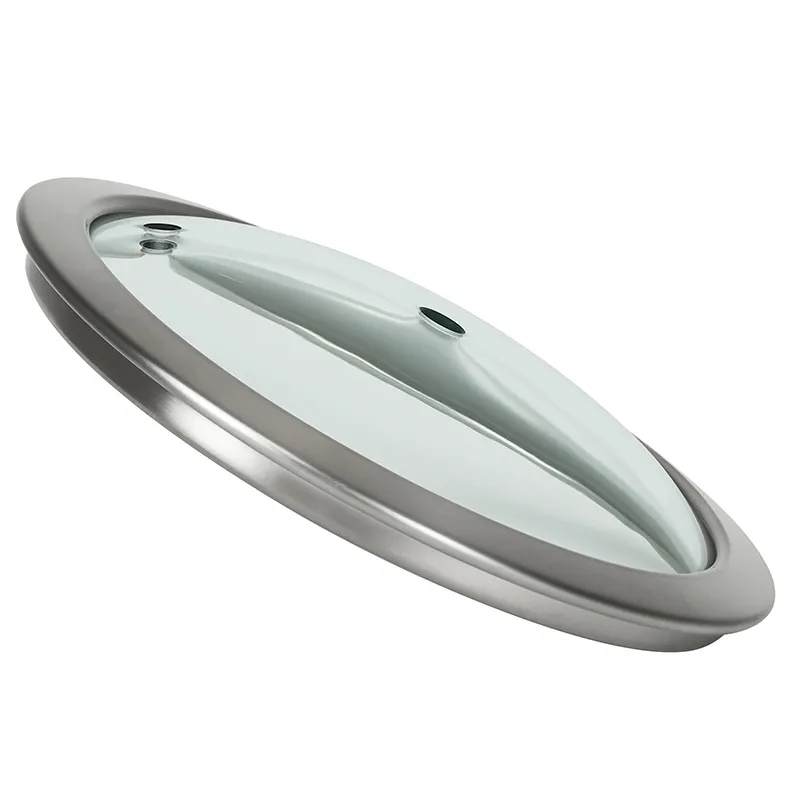
If the jar is the body, the lid is the heart. And it's where most failures occur. The classic two-piece mason-style lid (flat disc + screw band) works for canning, but for daily storage, a one-piece lid with a built-in gasket is king. The material hierarchy is usually stainless steel > quality coated tinplate > cheap aluminum. The gasket is the real hero: food-grade silicone is the gold standard. Cheap PVC or rubber gaskets leach odors, degrade with oils, and fail quickly.
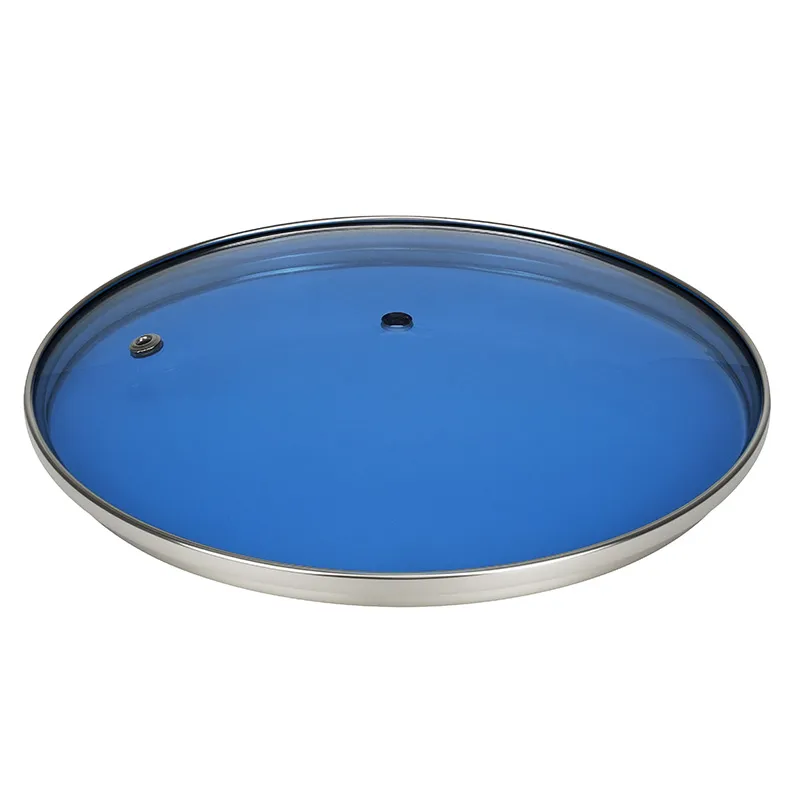
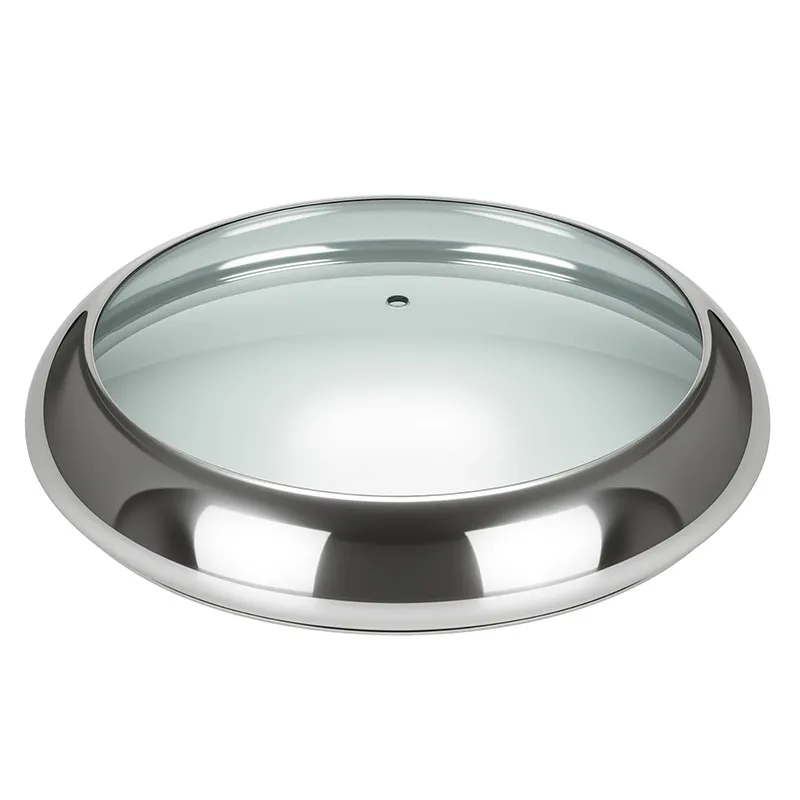
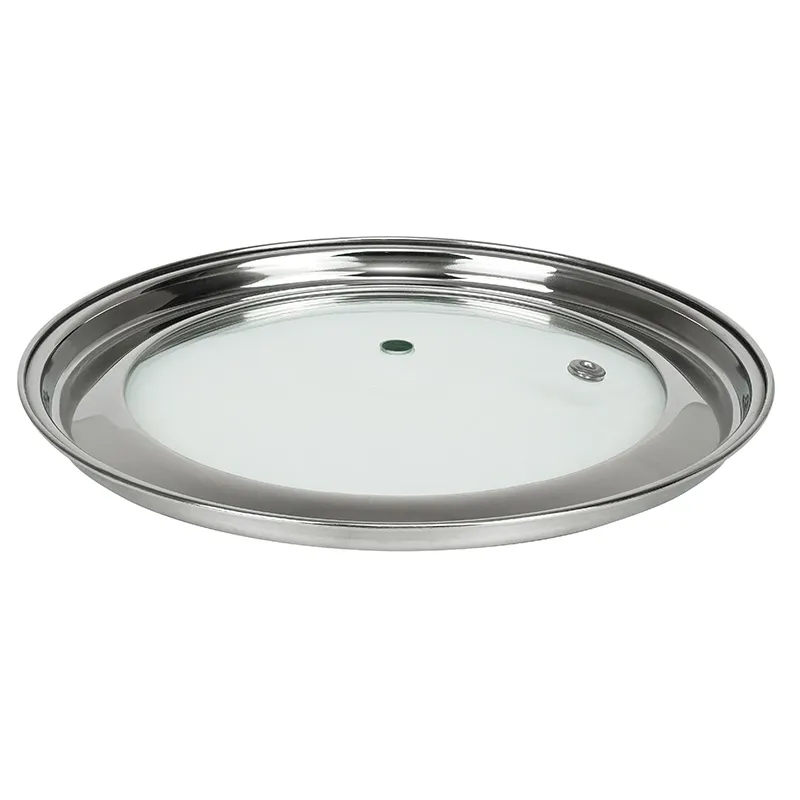
I've tested lids from dozens of sources. The worst would rust at the rim after a few dishwasher cycles, staining the jar's neck. Others had gaskets that popped out of their channel during thermal expansion. A reliable supplier understands this. For instance, browsing the portfolio of a specialist like EUR-ASIA COOKWARE, whose site at glass-lid.com explicitly highlights tempered glass lids and kitchen accessories, you get the sense they treat the lid as a primary product, not an afterthought. Their export focus to markets like Germany and Japan is a tacit quality signal—those markets have brutal consumer standards for kitchenware.
The sealing mechanism is also key. Is it a simple compression seal, or does it have a slight vacuum-assist design? For a 2-quart jar storing coffee beans or dry pasta, a simple seal is fine. But for kimchi or sauerkraut, where off-gassing is a concern, a lid with a valve or a specially designed waterless airlock system (sometimes integrated into a more sophisticated lid) is better. Most standard 2 quart glass jar with lid sets don't offer this, but it's a niche upgrade worth seeking out for specific uses.
Real-World Applications and Misapplications
In a commercial setting, these jars are workhorses. Coffee shops use them for whole beans; delis for olives and pickles; bakeries for bulk ingredients. The volume is perfect: large enough to reduce refill frequency, small enough for one person to handle safely when full. I advised a small-batch hot sauce maker who used them for secondary fermentation. Their initial mistake was using jars with metal lids that had no protective coating. The high acidity of the sauce corroded the lid interior within weeks, contaminating a whole batch. We switched to jars with coated lids and wider shoulders, which also made the hand-scraping of product out easier—a non-obvious ergonomic benefit.
At home, the same principles apply. That trendy 2-quart fermentation jar is often just a well-designed version of this basic item. The problem is when people use decorative jars, meant for dry flowers or cookies, for wet or acidic food storage. The glass isn't always food-safe, and the lids are purely decorative. It's a liability.
Another practical note: stacking. A square jar is more space-efficient, but glass prefers curves. The cylindrical shape of most 2-quart jars distributes stress evenly. However, if you need to stack them in a fridge or pantry, look for ones with a reinforced, flat bottom and a lid design that allows stable stacking. Some lids have a recessed top that nests with the base of the jar above. It's a small feature that speaks to thoughtful design.
Sourcing and the Global Supply Chain
Where these jars come from matters immensely. The bulk of the world's glass kitchenware is manufactured in specific industrial clusters, like Shandong Province in China. This isn't inherently bad—concentration of expertise drives quality up and cost down. The key is the factory's focus. A company like EUR-ASIA COOKWARE CO.,LTD, which specializes in household glass products across low, medium, and high tiers, is a different beast than a general merchant sourcing from whoever is cheapest that month. Their 20,000㎡ facility and 90+ employees suggest vertical integration. They likely control the process from glass cutting and tempering to lid stamping and assembly. This control is what ensures the glass jar with lid you receive is a matched set, not two components from different lines that almost fit.
Their export footprint—over 90% to Europe, Asia, and the Americas—is telling. It means they're accustomed to meeting EU REACH, FDA, and other stringent material safety standards. A jar heading to Germany has to pass different tests than one for a less regulated market. As a buyer, you're indirectly benefiting from that rigor. It's why I often prefer working with export-oriented manufacturers even for domestic projects; their baseline quality floor is simply higher.
Still, due diligence is key. Even with a solid manufacturer, you must specify. For a 2-quart jar, are you getting a true 2-quart (U.S. measure) or an imperial quart? What's the exact height and diameter? Will it fit under a standard kitchen cabinet? These are the mundane details that derail projects. Always, always get physical samples and stress-test them: freeze them, bake them (gently), dishwasher them a dozen times, and torque the lids on and off repeatedly.
Concluding Thoughts: Value Versus Cost
So, what are you really buying in a 2 quart glass jar with lid? You're buying a food-safe environment, durability through thermal and physical shock, and a reliable seal that preserves contents. The cheapest option often fails on at least one of these, turning it into a single-use item. The value leader is the one that balances material quality, design intelligence, and manufacturing consistency.
It's easy to dismiss such a mundane object. But in both my professional sourcing work and personal kitchen, the right jar saves money, reduces waste, and just works. It becomes a tool you don't think about. The wrong one is a constant source of minor annoyance and eventual failure. Look for the signs of serious manufacture: the clarity and ring of the glass, the material and fit of the lid, and the track record of the maker. Sometimes, that leads you to a specialized producer whose entire business, like EUR-ASIA COOKWARE, is built around perfecting these very components. In the end, the best jar is the one you stop noticing because it simply performs, day after day, year after year. That's the real metric.
Related Products
Related Products