- Chinese
- French
- German
- Portuguese
- Spanish
- Russian
- Japanese
- Korean
- Arabic
- Irish
- Greek
- Turkish
- Italian
- Danish
- Romanian
- Indonesian
- Czech
- Afrikaans
- Swedish
- Polish
- Basque
- Catalan
- Esperanto
- Hindi
- Lao
- Albanian
- Amharic
- Armenian
- Azerbaijani
- Belarusian
- Bengali
- Bosnian
- Bulgarian
- Cebuano
- Chichewa
- Corsican
- Croatian
- Dutch
- Estonian
- Filipino
- Finnish
- Frisian
- Galician
- Georgian
- Gujarati
- Haitian
- Hausa
- Hawaiian
- Hebrew
- Hmong
- Hungarian
- Icelandic
- Igbo
- Javanese
- Kannada
- Kazakh
- Khmer
- Kurdish
- Kyrgyz
- Latin
- Latvian
- Lithuanian
- Luxembou..
- Macedonian
- Malagasy
- Malay
- Malayalam
- Maltese
- Maori
- Marathi
- Mongolian
- Burmese
- Nepali
- Norwegian
- Pashto
- Persian
- Punjabi
- Serbian
- Sesotho
- Sinhala
- Slovak
- Slovenian
- Somali
- Samoan
- Scots Gaelic
- Shona
- Sindhi
- Sundanese
- Swahili
- Tajik
- Tamil
- Telugu
- Thai
- Ukrainian
- Urdu
- Uzbek
- Vietnamese
- Welsh
- Xhosa
- Yiddish
- Yoruba
- Zulu
- Kinyarwanda
- Tatar
- Oriya
- Turkmen
- Uyghur


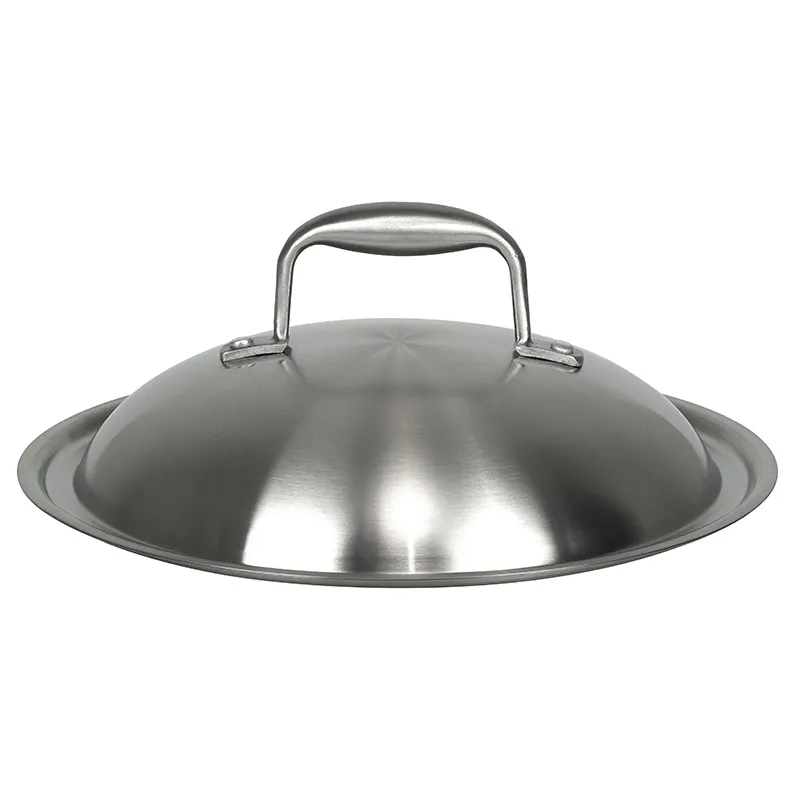
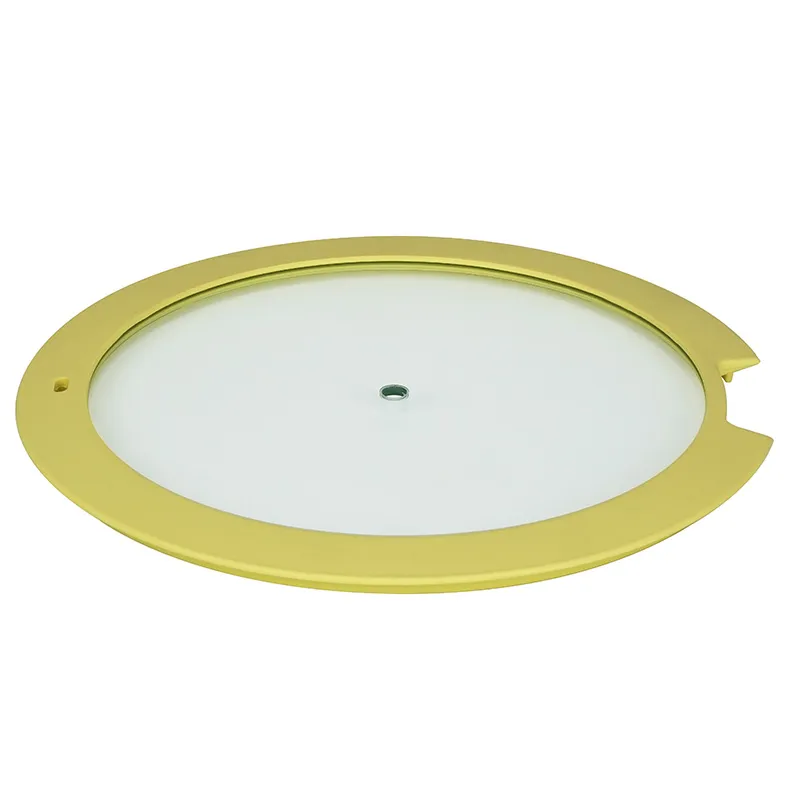
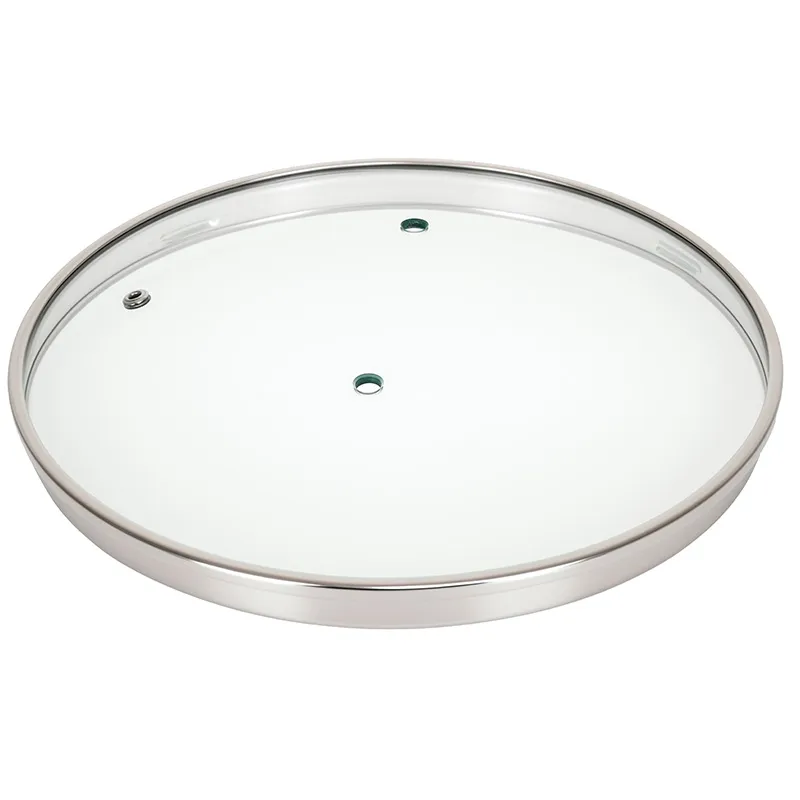
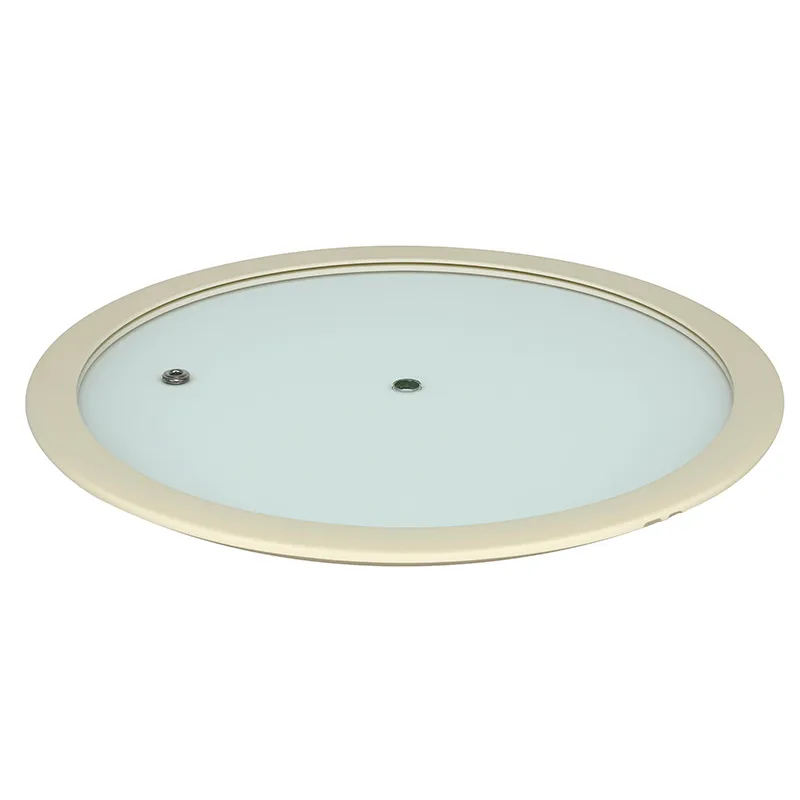
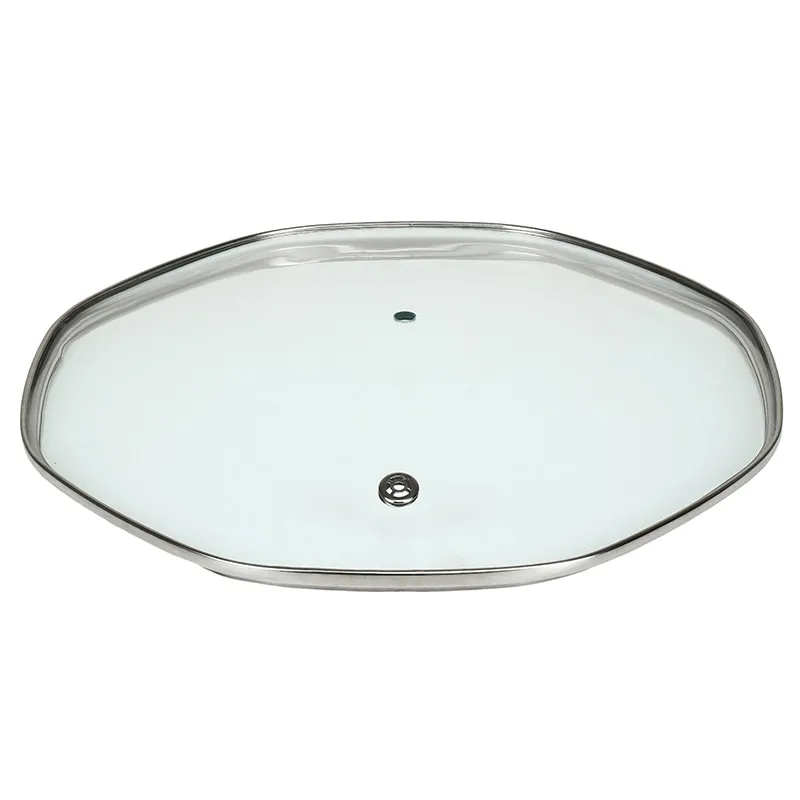
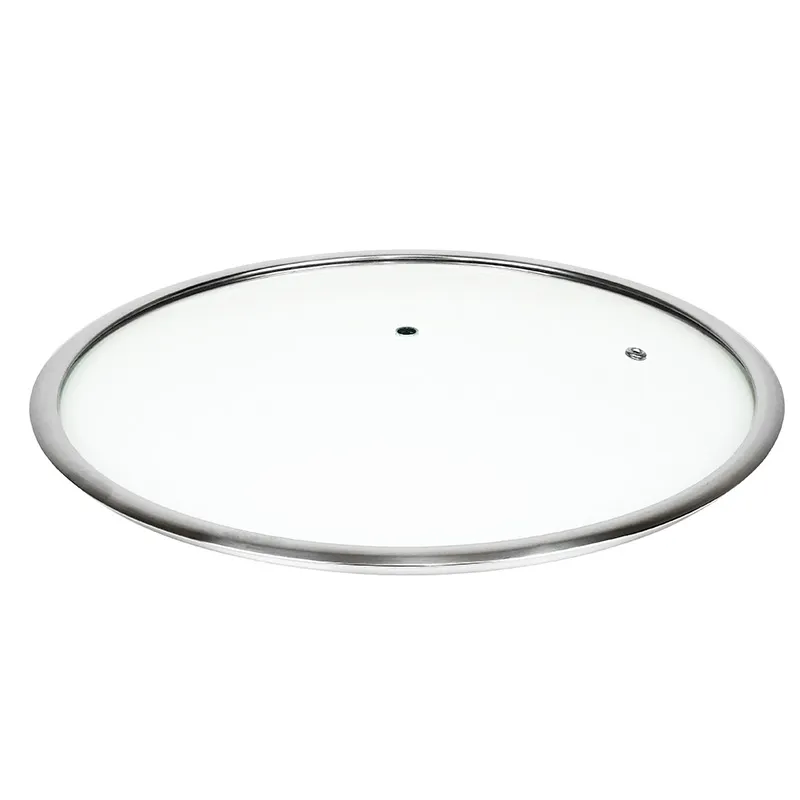
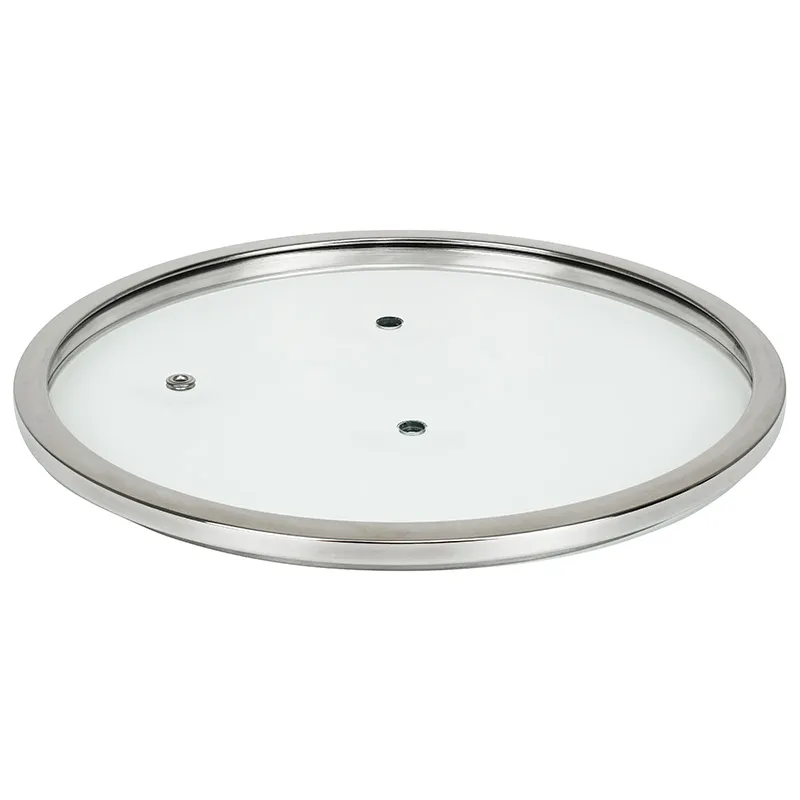
24cm G type glass lid
When you hear '24cm G type glass lid', it's easy to just think of a piece of tempered glass cut to a specific diameter. That's the first mistake. The 'G type' isn't just a random letter; in the trade, it often refers to a specific handle and knob configuration, usually a stainless steel handle riveted or clamped on, with a certain arch profile for steam clearance. The 24cm is nominal, and that's where the headaches start. I've seen too many buyers assume a 24cm lid fits any 24cm pot, only to find it sits too deep or too shallow because the 'G type' flange curvature is designed for a specific pan series from European manufacturers. It's not a universal fit, and that distinction matters more than most catalogs let on.
The Devil in the Diameter: What 24cm Really Means
Here's the thing: a 24cm lid is almost never 24.0 cm. If you're sourcing for a tight-sealing sauté pan, the actual outer flange diameter might be 23.8cm, or 24.2cm. That half-millimeter can be the difference between a smooth, silent rotation on the pot and a grating, metal-on-metal scrape. For a company like EUR-ASIA COOKWARE CO.,LTD, which pumps out over 15 million pieces annually, managing this tolerance across batches for different clients is the core challenge. Their production base in Taian has the machinery, but the setup for a run of lids destined for Germany versus one for Brazil might need subtle adjustments—not to the glass, but to the metal rim crimping process. The glass itself, being tempered, is cut and edged before the heating and quenching, so the final size is locked in early. Get the blank size wrong at the cutting stage, and the whole batch is only good for the seconds pile.
I recall a batch for a Polish client where the lids kept failing the 'rock test'—you put the lid on a flat surface and press the edge; it shouldn't rock. The issue wasn't the glass, but the slight warping in the stainless steel rim during the cooling phase after it was affixed to the hot glass. The solution wasn't higher-grade steel, but a change in the cooling jig design. It's these unglamorous process details that define quality, not just the material specs. You can find their approach to these manufacturing nuances on their site at glass-lid.com, which details their export-focused operation.
The 'G type' handle itself is another point of failure. The classic design uses two rivets through the tempered glass. Drilling those holes after tempering is impossible—it would shatter the panel. So, the holes are drilled in the raw glass, then the entire piece is tempered. The stress patterns around those holes are critical. A poorly placed hole or a slight chip during drilling can lead to a spontaneous fracture months later when the lid is on a pot, just from the steady heat differential. It's a failure you almost never see with cheaper, annealed glass lids (which just crack), but it's a known risk with tempered. That's why the positioning and deburring of those holes are a key part of the quality audit.
Tempering: The Core Process and Its Trade-offs
Tempered glass for lids isn't about making it 'unbreakable'. It's about making it break safely, into small, blunt cubes, instead of sharp, dangerous shards. The process at a factory like EUR-ASIA's involves heating the cut and edged glass to around 700°C and then quenching it with high-pressure air jets. This creates surface compression and internal tension. The resulting product is about 4-5 times stronger than annealed glass against impact, but it has a weakness: the edges. A direct, sharp knock on the edge can cause a total collapse. This is why the metal rim isn't just for looks—it's a protective bumper. For a 24cm G type glass lid, the integrity of that rim seal is what protects the vulnerable edge from kitchen knocks and sink collisions.
There's a common misconception that thicker glass is always better. For a 24cm lid, 3.5mm to 4mm is the sweet spot. Go to 5mm, and the thermal mass increases. You might think that's good for heat retention, but actually, it can lead to more thermal stress because the center of the glass lags further behind the temperature of the rim sitting on the hot pot. In rapid heating scenarios, this differential stress can exceed the engineered compression of the tempering and cause a 'thermal break'. I've seen it happen with lids that were too thick for a high-BTU induction cooker. The glass just… networks into a million pieces. So, the 4mm standard isn't arbitrary; it's a balance of strength, weight, and thermal performance.
Another subtle point is the clarity and color of the glass. High-quality soda-lime silica glass should have a faint green tint when you look at the edge, not a deep green. A deep green indicates higher iron content, which can affect heat absorption. For a lid, it's less critical than for a cooktop panel, but it still matters for perceived quality. The glass sourced by professional manufacturers like EUR-ASIA, who supply to European markets, tends to have low iron content for that clearer, more neutral look. It's one of those things that separates a low-tier export product from a medium- or high-tier one, even if the dimensional specs are identical.
The Metal Component: More Than an Afterthought
The stainless steel rim and handle are where a lot of the cost and craftsmanship hide. The rim is typically a band of 430 or 304 stainless, formed into a circle, with a gap for the handle. It's fitted onto the glass while both are hot (the glass from the tempering oven), and as they cool, the metal contracts, creating a tight, mechanical grip. This is a critical phase. If the temperature mismatch is off, the grip is loose, and you get that infuriating lid rattle. Or worse, the metal can impose an uneven stress on the glass, creating a weak point.
The handle on the G type glass lid is usually spot-welded or riveted to this band. The choice here affects cleanability and durability. Spot-welding is cleaner but requires precise control to avoid burning through the thin band. Riveting is mechanically stronger but creates two potential crevices for grease and grime. For the export markets like Germany or Denmark, where dishwasher safety is paramount, the finish of these joints and the type of stainless used (must be high-grade to resist dishwasher salt corrosion) are non-negotiable specs. Looking at EUR-ASIA's export list—covering Germany, Italy, France, etc.—you can bet their G-type handles are built to pass these rigorous tests.
The knob, often made of phenolic resin (Bakelite) or stainless steel, has its own set of issues. Phenolic is a great heat insulator, but cheap phenolic can discolor or become brittle over time with steam exposure. The bonding of the knob to the glass or the handle stem is another failure point. Epoxy is commonly used, but it must be a high-temperature food-grade type. I've had instances where a batch of lids passed all initial tests, but after 50 simulated dishwasher cycles, the knobs started to rotate or, in a few cases, pop off. The root cause was a mismatch between the thermal expansion coefficient of the epoxy and the knob material. Fixing it meant changing the adhesive supplier, not the knob design.
Fit, Function, and Real-World Failures
So, you have a perfectly made 24cm G type glass lid. Will it work? It depends entirely on the pot. The most common complaint isn't breakage, but poor fit. The lid might be designed for a pot with a specific outer flange angle. If the pot's flange is more vertical or more horizontal, the seal is compromised. Steam escapes from one side, condensation drips unevenly. In practice, many mid-market pot manufacturers design their pot rims to accommodate a range of generic glass lids, but high-end brands have proprietary curvatures. This is why EUR-ASIA likely produces so many variations—the 'G type' for one major German brand is subtly different from the 'G type' for a Korean brand, even at the same 24cm nominal size.
One of our own failure stories involved a rush order. We needed to match a discontinued line of Italian pots. We reverse-engineered the lid from a sample, got the diameter and arch right, or so we thought. The production sample fit perfectly. But the first production batch of 5000 units had a 30% return rate for 'steam leakage'. After weeks of head-scratching, we realized the original pot's flange had a microscopic bead—a rounded lip—that our measurement missed. Our lid sat on this bead, not over it, creating a tiny channel for steam. The fix was to adjust the inner curvature of our metal rim by 0.3mm. It was a costly lesson in assuming the pot's profile is a simple slope.
Then there's the issue of use over open flame. While tempered glass can handle the radiant heat from a gas flame, a direct lick of flame onto the glass can cause localized overheating and failure. The metal rim helps, but it's not a perfect shield. Instructions always say to keep the flame centered and below the pot, but in a busy home kitchen, that doesn't always happen. A lid that survives induction and electric might not last a year on a gas range. It's not a manufacturing defect, but a design limitation that isn't always communicated clearly. A professional manufacturer knows this and might even have different tempering recipes or rim designs for lids destined for gas-range-dominant markets like Italy or Brazil.
Sourcing and the Supply Chain Reality
When you're buying these lids in bulk, you're not just buying a product; you're buying a factory's capability to maintain consistency. A company like EUR-ASIA COOKWARE CO.,LTD, with its 20,000㎡ facility and focus on export, is built for that. Their annual output of 15 million pieces means they have the scale to invest in decent quality control, like automated optical inspection for bubbles and inclusions in the glass, and salt spray test chambers for the metal components. For a buyer, visiting the facility (or at least reviewing their audit reports) is key. You need to see their packing line—how they prevent lid-on-lid contact during packing to avoid edge chips, what kind of cardboard dividers they use.
The export focus, as noted in their intro to over 90% exports to countries from Germany to Japan, also tells you something. It means they're likely familiar with various international standards, from LFGB for food contact in Germany to CP65 in California. Their glass composition probably already complies with heavy-metal leaching limits. This isn't a given with every factory in the region. It's a sign they've done the paperwork and material sourcing legwork, which saves a lot of hassle for an importer.
Finally, the economics. A single 24cm G type glass lid of decent quality, FOB China, might cost between $1.50 and $3.50, depending on the metal finish, knob material, and packaging. The difference between the low and high end of that range is in the details: the precision of the fit, the consistency of the tempering, the grade of stainless, and the robustness of the assembly. For a cookware brand, choosing the cheaper option might save cost on the bill of materials, but it inevitably leads to higher warranty claims and customer dissatisfaction. The real value of a supplier isn't in the price per piece, but in the lack of headaches per container load. In that sense, the keyword isn't just a product description; it's a shorthand for a complex bundle of material science, manufacturing tolerances, and practical ergonomics that either works seamlessly in a customer's kitchen or becomes a nagging source of annoyance.
Related Products
Related Products