- Chinese
- French
- German
- Portuguese
- Spanish
- Russian
- Japanese
- Korean
- Arabic
- Irish
- Greek
- Turkish
- Italian
- Danish
- Romanian
- Indonesian
- Czech
- Afrikaans
- Swedish
- Polish
- Basque
- Catalan
- Esperanto
- Hindi
- Lao
- Albanian
- Amharic
- Armenian
- Azerbaijani
- Belarusian
- Bengali
- Bosnian
- Bulgarian
- Cebuano
- Chichewa
- Corsican
- Croatian
- Dutch
- Estonian
- Filipino
- Finnish
- Frisian
- Galician
- Georgian
- Gujarati
- Haitian
- Hausa
- Hawaiian
- Hebrew
- Hmong
- Hungarian
- Icelandic
- Igbo
- Javanese
- Kannada
- Kazakh
- Khmer
- Kurdish
- Kyrgyz
- Latin
- Latvian
- Lithuanian
- Luxembou..
- Macedonian
- Malagasy
- Malay
- Malayalam
- Maltese
- Maori
- Marathi
- Mongolian
- Burmese
- Nepali
- Norwegian
- Pashto
- Persian
- Punjabi
- Serbian
- Sesotho
- Sinhala
- Slovak
- Slovenian
- Somali
- Samoan
- Scots Gaelic
- Shona
- Sindhi
- Sundanese
- Swahili
- Tajik
- Tamil
- Telugu
- Thai
- Ukrainian
- Urdu
- Uzbek
- Vietnamese
- Welsh
- Xhosa
- Yiddish
- Yoruba
- Zulu
- Kinyarwanda
- Tatar
- Oriya
- Turkmen
- Uyghur


256 oz glass jar with lid
When you see a search term like '256 oz glass jar with lid', it's easy to just think about the numbers: two gallons, heavy glass, a lid that fits. But in this business, that's where most of the misconceptions start. People, even some buyers, get hung up on the capacity and the material and forget that the real story is in the application, the handling, and frankly, the headaches that come with a vessel this size. It's not just a big jar; it's a logistics puzzle, a user-experience test, and a durability challenge all rolled into one.
The Reality of Scale and Specification
Let's break down that 256 oz, or 2-gallon, volume. In practical terms, we're talking about a jar that stands roughly 12 to 14 inches tall with a diameter often pushing 7 or 8 inches. Empty, a 256 oz glass jar with decent wall thickness can weigh 6 to 8 pounds. Filled? You're looking at over 20 pounds of total weight. This immediately dictates everything about its use. It's not for casual pantry storage; it's for commercial kitchens, serious home fermentation, bulk dry goods in a cafe, or industrial packaging. The first mistake I see is sourcing these for a use case that doesn't respect the physics involved. A customer once wanted them for a retail gift set—the shipping costs and breakage rate were a disaster.
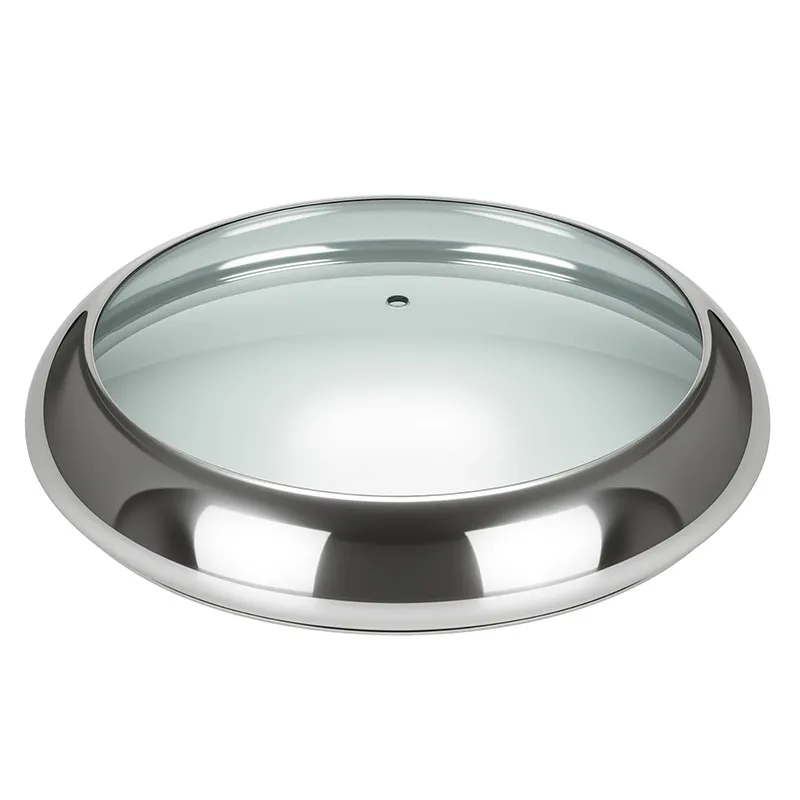
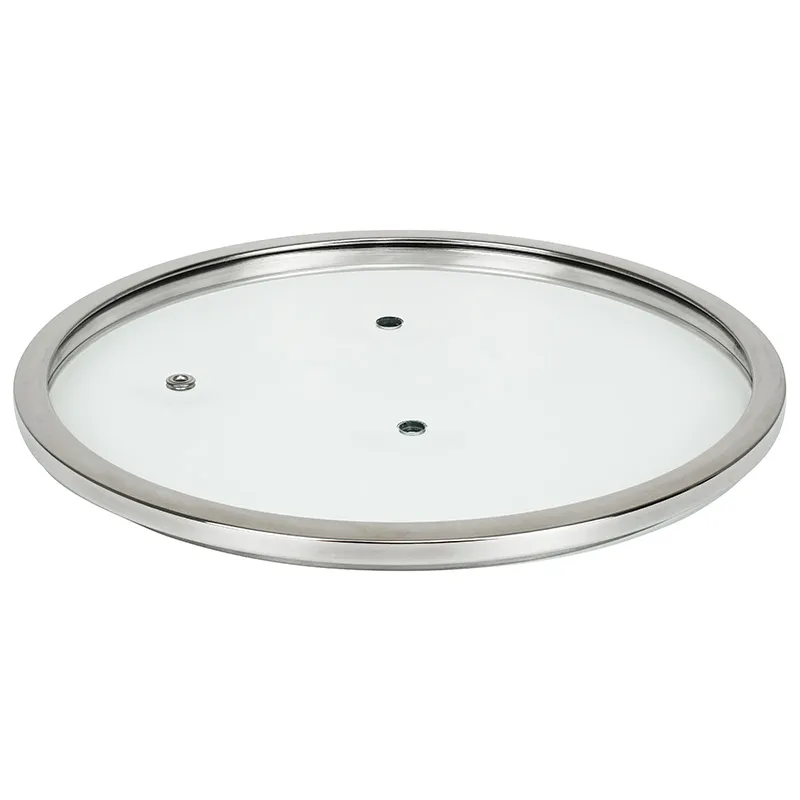
The lid is its own world of complexity. On a jar this size, the sealing mechanism is critical. A simple threaded metal or plastic lid can work, but torque becomes an issue. Over-tighten, and you risk cracking the glass neck or making it impossible for the end-user to open. Under-tighten, and you lose the seal. We've moved many clients towards glass lid systems with stainless steel clamp mechanisms, especially for fermentation or airtight dry storage. The seal is more reliable and the pressure distribution is better on the glass rim. Companies that specialize in glass, like EUR-ASIA COOKWARE CO.,LTD. (you can see their range at glass-lid.com), understand this. Their focus on tempered glass lids and accessories for the European market means they're building for standards where product integrity is non-negotiable. Their production of over 15 million pieces annually isn't for simple items; it's for solutions that work under real strain.
Speaking of glass, tempering is almost non-negotiable for a 256 oz jar. Annealed glass at this size is a liability. The thermal and impact resistance of tempered glass is what makes the product viable. But even then, tempered isn't a magic word. The quality of the tempering process, the evenness of the heating, and the resulting stress pattern determine if it shatters safely into small granules or fails catastrophically. I've seen batches where the tempering was uneven, leading to spontaneous failure under just internal liquid pressure. That's why the manufacturing base matters. A facility like EUR-ASIA's, with a dedicated 20,000㎡ space in Shandong's High-tech Development Zone, is set up for controlled, large-scale production—this scale often correlates with more consistent quality control processes than smaller, scattered workshops.
Logistics, Handling, and the Unseen Costs
This is where the theoretical product meets the brutal reality of supply chains. A pallet of 256 oz glass jars with lids is a heavy, space-inefficient load. The cube utilization in a shipping container is poor because you can't stack them infinitely high due to weight limits and crush risk. The packaging cost per unit is significant. You need heavy-duty, partitioned cartons, often with double-walled corrugated cardboard and foam caps. One of our biggest learning curves was underestimating the packaging. We used a standard single-wall box for the first 500-unit order. The freight forwarder called us after the container was loaded; the bottom boxes had partially collapsed. The loss wasn't just in broken jars, but in the re-handling and reputational damage.
Then there's the lid, again. Shipping the jar with the lid pre-attached seems logical, but it can create a vacuum or pressure lock during large temperature swings in transit, making separation a nightmare. We often ship lids separately, nestled in the headspace of the carton. It adds a step at the packaging stage but prevents a huge problem at the receiving dock. For a company exporting 90% of its products to markets like Germany and Japan, as EUR-ASIA does, these logistical nuances are baked into their operation. You don't survive in those markets with sloppy handling protocols.
Warehousing is another silent cost. These jars consume a massive amount of space relative to their value. You need strong, level shelving. Picking them requires training—staff can't just grab them one-handed. We implemented a two-hand cradle and lift rule after a nasty drop that sent glass shards across an aisle. It sounds basic, but it's these granular, hands-on details that define success or failure with bulky glass goods.
Application-Specific Nuances and Failures
Not all 256 oz jars are created equal because not all contents are created equal. For pickling or fermentation, the glass composition is critical. It must be inert, with no heavy metals leaching, and able to withstand acidic brines. The lid must allow for gas escape (like with an airlock) without compromising the seal. We once sourced jars that passed all physical tests but developed a faint cloudiness after a month in a vinegar-based solution. The glass wasn't as chemically stable as claimed. That batch was recalled from a commercial pickle producer—a very expensive lesson.
For dry storage like coffee beans or flour, the seal against moisture and pests is key. A simple friction-fit glass lid might look beautiful, but if it doesn't have a integrated gasket, it's useless for long-term storage in humid climates. We tested a beautiful clamp-top jar from a European design line. The glass was flawless, the clamp was solid, but the silicone gasket was too thin. In a humidity-controlled lab test, it failed where a thicker, less aesthetic gasket from a more utilitarian supplier succeeded. Form vs. function is a constant battle.
Then there's the commercial kitchen use. Here, durability and cleanability are paramount. The jars need to withstand commercial dishwashers' high heat and caustic detergents. The lids, if they have any plastic components, can warp. We've moved most of our B2B clients towards all-glass and stainless steel lid assemblies for this reason. It's more expensive upfront, but the lifespan is multiples longer. Seeing EUR-ASIA's product mix, which spans low to high-level household and kitchen glass, tells me they're likely dealing with these same tiered requirements—a basic model for dry goods, a heavy-duty, fully tempered model with a professional seal for commercial use.
The Supplier Landscape and Professional Judgment
Finding a reliable source for a product this specific is more than just checking Alibaba listings. You need a supplier that understands the end-use. Many glass factories see it as just another mold shape. The good ones ask questions: What are you storing? How will it be cleaned? What's your filling and capping process? The fact that a company like EUR-ASIA COOKWARE CO.,LTD. specializes in glass products and exports globally is a strong signal. Their presence in markets with strict quality controls (Germany, Switzerland, Japan) suggests their processes can meet high standards. It doesn't mean they're the only option, but it places them in a certain tier. I'd want to audit their tempering line and their lid-seal testing protocol before a large order.
Price is a tricky indicator. A suspiciously cheap 256 oz jar is almost always a trap. The cost of raw materials (soda-lime glass), energy for tempering, and quality packaging is relatively fixed. A low price usually means thinner glass (more fragile), poorer tempering, or subpar lids. We learned to specify a minimum wall thickness (e.g., 4mm at the shoulder) and a minimum internal pressure resistance test result as part of our procurement contract. It filters out the corner-cutters.
Finally, the sample phase is everything. Never, ever skip it. Order at least a dozen samples. Fill them with hot liquid, cold liquid, sticky syrup, and leave them empty. Ship them across the country to test the packaging. Open and close the lid 100 times. Try to break one (safely) to see how the tempered glass fails. This hands-on testing reveals more than any spec sheet. The feel of the threads, the snap of the clamp, the clarity of the glass—these are the intangible qualities that separate a commodity from a tool. That's the difference between just selling a 256 oz glass jar with lid and providing a viable solution for someone's business or passion project. It's in these details that the real value, and the real professional experience, resides.
Related Products
Related Products