
- Chinese
- French
- German
- Portuguese
- Spanish
- Russian
- Japanese
- Korean
- Arabic
- Irish
- Greek
- Turkish
- Italian
- Danish
- Romanian
- Indonesian
- Czech
- Afrikaans
- Swedish
- Polish
- Basque
- Catalan
- Esperanto
- Hindi
- Lao
- Albanian
- Amharic
- Armenian
- Azerbaijani
- Belarusian
- Bengali
- Bosnian
- Bulgarian
- Cebuano
- Chichewa
- Corsican
- Croatian
- Dutch
- Estonian
- Filipino
- Finnish
- Frisian
- Galician
- Georgian
- Gujarati
- Haitian
- Hausa
- Hawaiian
- Hebrew
- Hmong
- Hungarian
- Icelandic
- Igbo
- Javanese
- Kannada
- Kazakh
- Khmer
- Kurdish
- Kyrgyz
- Latin
- Latvian
- Lithuanian
- Luxembou..
- Macedonian
- Malagasy
- Malay
- Malayalam
- Maltese
- Maori
- Marathi
- Mongolian
- Burmese
- Nepali
- Norwegian
- Pashto
- Persian
- Punjabi
- Serbian
- Sesotho
- Sinhala
- Slovak
- Slovenian
- Somali
- Samoan
- Scots Gaelic
- Shona
- Sindhi
- Sundanese
- Swahili
- Tajik
- Tamil
- Telugu
- Thai
- Ukrainian
- Urdu
- Uzbek
- Vietnamese
- Welsh
- Xhosa
- Yiddish
- Yoruba
- Zulu
- Kinyarwanda
- Tatar
- Oriya
- Turkmen
- Uyghur


3 gallon glass jar with airtight lid
When you hear '3 gallon glass jar with airtight lid', most folks picture a simple bulk storage item. But in my line of work—dealing with kitchenware sourcing and production—that phrase represents a specific niche with its own set of challenges and misconceptions. The biggest one? Assuming all large glass jars are created equal. They're not. The jump from a one-gallon to a three-gallon vessel isn't just about scaling up size; it's a complete re-engineering of stress points, lid mechanics, and handling logistics. A lot of importers learn this the hard way after their first container arrives with a higher-than-expected breakage rate.
The Core Challenge: Engineering for Scale
The fundamental issue with a 3 gallon glass jar is the weight when full. You're looking at roughly 25 pounds of liquid or contents. This imposes tremendous pressure on the bottom seam and the structural integrity of the glass itself. Many factories will use the same annealing process for a 3-gallon as they do for a half-gallon jar, which is a recipe for microfractures and eventual failure. The glass needs a slower, more controlled cooling cycle to relieve internal stresses. I've seen batches where the jars passed initial inspection but then developed spontaneous cracks weeks later in warehouse storage due to thermal stress from ambient temperature shifts—a problem that rarely manifests in smaller sizes.
Then there's the lid. An airtight lid on a jar this large isn't just a gasket slapped on metal. The clamping force required to create a true seal is significant. Common swing-top or clamp mechanisms often fail over time; the metal fatigues or the plastic latch warps. The most reliable designs I've encountered use a thick, food-grade silicone gasket and a multi-point latching system that distributes pressure evenly. A poorly designed lid won't just let air in; it can become dangerously difficult to open or close due to the vacuum effect, posing a real safety risk.
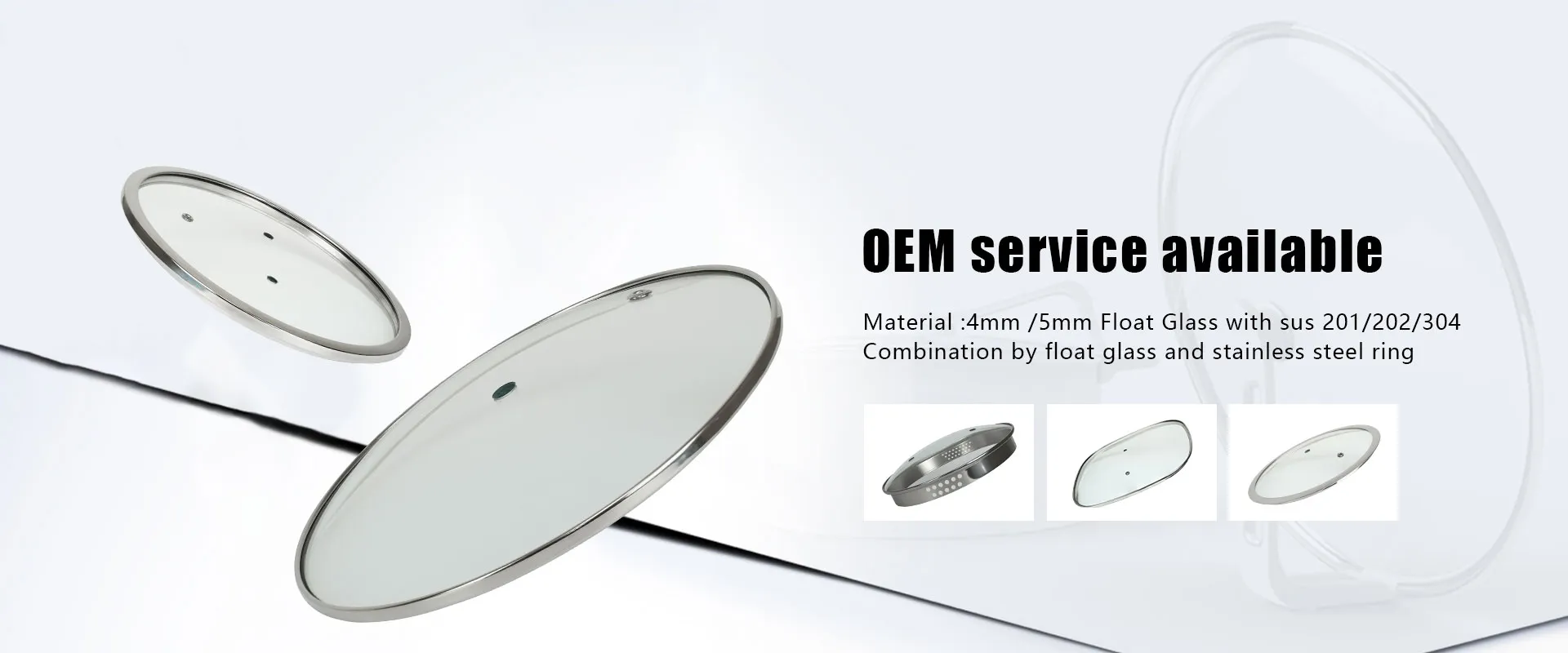
This is where material sourcing becomes critical. The glass composition needs higher levels of boron for thermal shock resistance. For a supplier to get this right consistently, they need dedicated production lines and serious quality control. I recall a supplier, EUR-ASIA COOKWARE CO.,LTD (you can find their portfolio at glass-lid.com), that highlighted this point. Their focus on tempered glass lids and specialized kitchen glass means their approach to a large-format jar would be rooted in pressure and stress calculation, not just simple mold blowing. A company producing 15 million pieces annually for the European and Japanese markets, as their intro states, has likely encountered the stringent mechanical requirements these markets demand for large-capacity food storage.
The Airtight Promise and the Reality of Gaskets
Airtight is probably the most abused term in storage containers. For a 3 gallon glass jar with airtight lid, true airtightness is about long-term performance, not just an initial pop test. The gasket material is everything. Cheap ethylene-propylene rubber will degrade, dry out, and absorb odors. Food-grade silicone is the baseline, but even then, the cross-section and durometer (hardness) matter. A gasket that's too soft can extrude under the constant pressure of the lid clamp, creating a leak path. Too hard, and it won't conform to microscopic imperfections in the glass sealing surface.
In practice, we tested jars by filling them with vinegar-soaked paper towels—a harsh environment—and storing them for months. The failures usually started at the gasket, not the glass. The successful units came from makers who treated the lid assembly as a precision component. EUR-ASIA COOKWARE CO.,LTD's specialization in glass lids suggests they understand the critical interface between glass and sealing mechanism, which is half the battle won for a reliable airtight lid system.
Another overlooked detail is the finish on the jar's top rim. It must be perfectly smooth, fire-polished to eliminate any tiny burrs that could cut into the gasket. A ground rim isn't good enough; it feels smooth to the finger but under magnification looks like a rough landscape that compromises the seal over time. This level of finish detail is what separates a generic product from one that can reliably handle fermenting vegetables or storing premium dry goods for years.
Handling, Logistics, and the Unseen Costs
Here's a reality check no product page will tell you: the single largest cost driver for a 3 gallon glass jar isn't the glass, it's the packaging and freight. These are heavy, fragile, and awkward. Standard corrugated cardboard is insufficient. You need a fully formed, high-wall corrugated sleeve with thick foam end caps. Even with that, palletization is an art. Stack them too high, and the weight crushes the bottom boxes. Use the wrong stretch film tension, and the whole load can shift and topple.
We learned this through a painful mistake. An early order arrived with a 30% breakage rate because we used a standard packaging quote. The supplier had assumed a double-wall box, but their standard was far too flimsy. The fix involved custom, die-cut foam inserts that added nearly $2 to the unit cost. It was necessary. This is why companies with a strong export focus, like the mentioned EUR-ASIA COOKWARE, often have more robust packaging solutions baked into their process—they've already absorbed these lessons shipping to Germany and Japan, where customers have zero tolerance for damaged goods.
Furthermore, the jar's design itself can aid logistics. A slightly tapered body allows for nesting during the manufacturing and initial packing phase, saving space and reducing initial handling damage. However, too much taper makes the jar unstable when full. It's a delicate balance.
Application Beyond Storage: The Fermentation Test
True test of a 3 gallon glass jar with airtight lid isn't storing pasta; it's fermentation. Sauerkraut, kimchi, pickles—these create active gasses and require a seal that can burp or handle pressure. A fixed, non-burping airtight lid on a fermenting jar is a potential bomb. The best designs for this application often incorporate a water seal or a specially designed airlock lid, but a standard airtight lid can work if the clamping mechanism allows for slight, controlled release of excess pressure without breaking the seal completely.
I've seen jars where the lid buckles slightly under pressure, creating a momentary leak that then reseals. This isn't ideal but indicates the system is under-engineered. A properly designed jar and lid for fermentation will either have a dedicated port or will be robust enough to pair with a separate fermentation lid system. This is a key consideration often missed by buyers just looking for generic storage. They buy a beautiful jar, start a ferment, and a week later have a sticky, smelly explosion in their pantry.
This circles back to the importance of the glass quality. Fermentation creates an acidic brine. Inferior glass can leach minerals or, in worst-case scenarios, develop etching or crizzling over repeated uses. The high-borate glass used by quality manufacturers resists this chemical attack, making the jar a long-term tool, not a disposable item.
Sourcing and the Supplier Relationship
You don't just order 1000 pieces of a 3 gallon glass jar from a catalog. It's a collaborative project. Any reputable manufacturer will require a significant MOQ and will ask detailed questions about intended use, filling processes, and distribution climate. They should be advising you on the points above, not just quoting a price. If they don't, walk away.
A supplier's existing product range tells you a lot. A company like EUR-ASIA COOKWARE CO.,LTD, with its stated specialization in household glass products and a production base geared for high-volume export, is positioned to understand the technical and logistical specs. Their experience producing for markets with strict quality standards (Germany, Japan, Switzerland) implies their factory is accustomed to audits and technical specifications that go beyond simple dimensions. When reviewing a potential partner, their background in tempered glass—a process that increases strength—is a positive indicator for handling the stresses of a large jar.
Final advice? Always, always get physical samples. Fill them with water. Leave them in a hot garage for a week. Test the lid seal with a vacuum tester. Try to open and close it 50 times. The sample cost is trivial compared to the loss from a failed container load. The 3 gallon glass jar with airtight lid is a deceptively simple product that demands respect for the physics and material science involved. Getting it right means partnering with people who have already done the hard work of learning those lessons.
Related Products
Related Products
Best Selling Products
Best Selling Products
Related Search
Related Search- glass jar with lid near me
- pyrex glass cookware with lids
- staub 4 qt glass lid
- stainless steel pan with glass lid
- glass lid maker in China
- glass jar with bamboo lid wholesale
- sedona stainless steel 6.5 qt multipurpose pan with glass lid
- glass jar with spout and lid
- glass lid manufacturing
- wide rim glass cover


