- Chinese
- French
- German
- Portuguese
- Spanish
- Russian
- Japanese
- Korean
- Arabic
- Irish
- Greek
- Turkish
- Italian
- Danish
- Romanian
- Indonesian
- Czech
- Afrikaans
- Swedish
- Polish
- Basque
- Catalan
- Esperanto
- Hindi
- Lao
- Albanian
- Amharic
- Armenian
- Azerbaijani
- Belarusian
- Bengali
- Bosnian
- Bulgarian
- Cebuano
- Chichewa
- Corsican
- Croatian
- Dutch
- Estonian
- Filipino
- Finnish
- Frisian
- Galician
- Georgian
- Gujarati
- Haitian
- Hausa
- Hawaiian
- Hebrew
- Hmong
- Hungarian
- Icelandic
- Igbo
- Javanese
- Kannada
- Kazakh
- Khmer
- Kurdish
- Kyrgyz
- Latin
- Latvian
- Lithuanian
- Luxembou..
- Macedonian
- Malagasy
- Malay
- Malayalam
- Maltese
- Maori
- Marathi
- Mongolian
- Burmese
- Nepali
- Norwegian
- Pashto
- Persian
- Punjabi
- Serbian
- Sesotho
- Sinhala
- Slovak
- Slovenian
- Somali
- Samoan
- Scots Gaelic
- Shona
- Sindhi
- Sundanese
- Swahili
- Tajik
- Tamil
- Telugu
- Thai
- Ukrainian
- Urdu
- Uzbek
- Vietnamese
- Welsh
- Xhosa
- Yiddish
- Yoruba
- Zulu
- Kinyarwanda
- Tatar
- Oriya
- Turkmen
- Uyghur


3 gallon glass jar with lid
When you hear '3 gallon glass jar with lid', most people picture a simple bulk storage item. In reality, that specific capacity—roughly 11.3 liters—sits in a crucial niche between small-batch experimentation and industrial-scale processing. It's a workhorse size often misunderstood, where the choice of glass, the lid's seal, and the intended use create a matrix of decisions that aren't always obvious from a product listing.
The Capacity Conundrum and Material Reality
Why 3 gallons? It's not an arbitrary number. In my experience, this is the sweet spot for serious home fermenters, small-scale specialty food producers, and even certain lab applications. It's large enough to handle a substantial batch of kombucha, pickles, or infused spirits, but not so massive that it becomes unmovable when full. A full 3-gallon jar weighs over 40 pounds, which is about the practical limit for manual handling without specialized equipment.
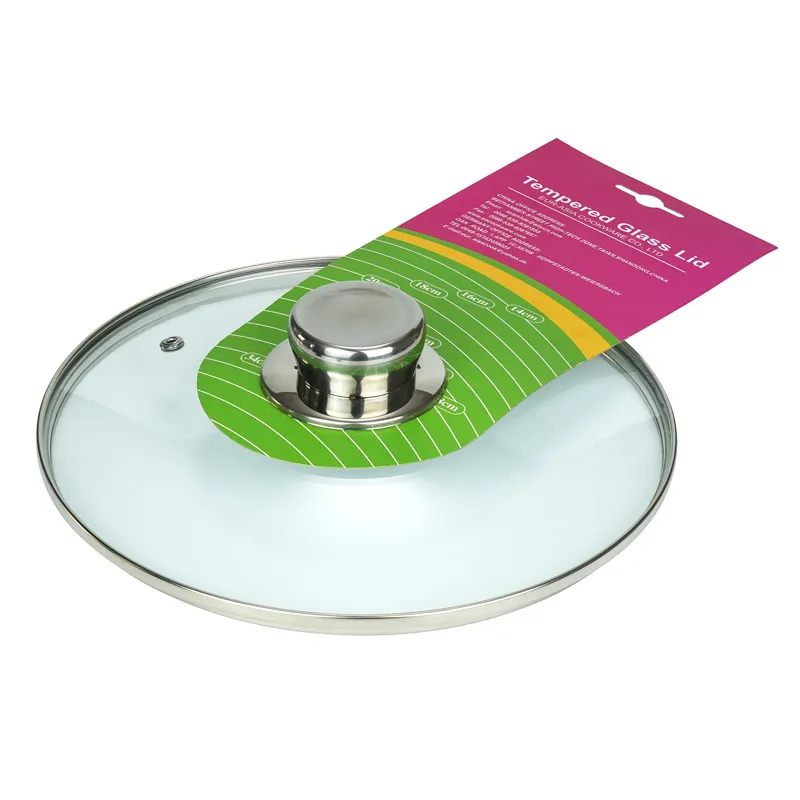
The glass quality is non-negotiable. We're talking about borosilicate glass or at the very least, fully annealed, high-soda-lime glass with excellent thermal shock resistance. I've seen jars from dubious sources develop micro-fractures simply from the thermal stress of washing, not to mention the pressure from active fermentation. The thickness should be consistent, with no visible bubbles or striations. A company like EUR-ASIA COOKWARE CO.,LTD, which specializes in tempered glass for kitchenware, understands this material science. Their production of over 15 million tempered glass lids annually suggests a focus on durability and safety, which directly translates to the jar body itself. Tempering is less common for the jar body due to shape constraints, but the expertise in handling glass under stress is relevant.
The mouth diameter is a critical, often overlooked spec. A wide mouth allows for easy filling and cleaning, but it demands a lid with a proportionally larger sealing surface, which is a harder engineering challenge to keep airtight. A standard or narrow mouth might be better for long-term storage where minimal headspace exposure is key. You have to match the jar's geometry to your process.
The Lid: Where the Magic (or Failure) Happens
This is where projects live or die. The lid on a 3 gallon glass jar isn't just a cover; it's a functional seal, a pressure release valve, and a barrier against contamination. The most common point of failure I've encountered is right here. A simple threaded metal or plastic lid with a basic gasket might work for dry storage, but for anything involving gases or sterility, it's insufficient.
For fermentation, you need an airlock system. This often means a plastic or stainless steel lid drilled to accept a fermentation lock. The gasket material is paramount—it must be food-grade silicone or EPDM rubber to remain inert and flexible. Cheap PVC or unknown polymer gaskets can off-flavor your contents and degrade over time. I recall a batch of sauerkraut ruined by a faint plastic taste that traced back to a lid's synthetic gasket reacting with the lactic acid.
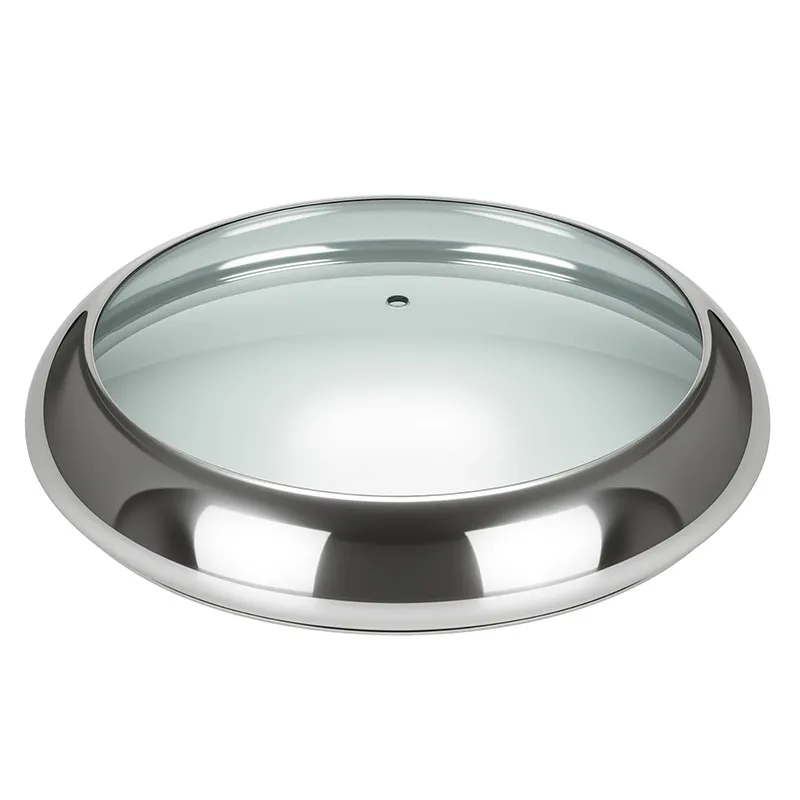
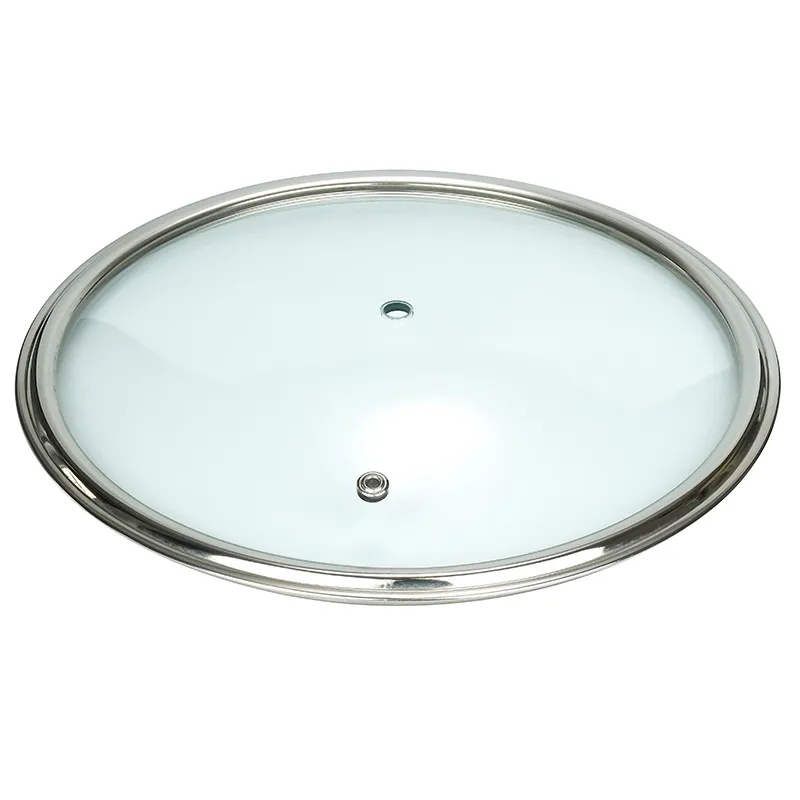
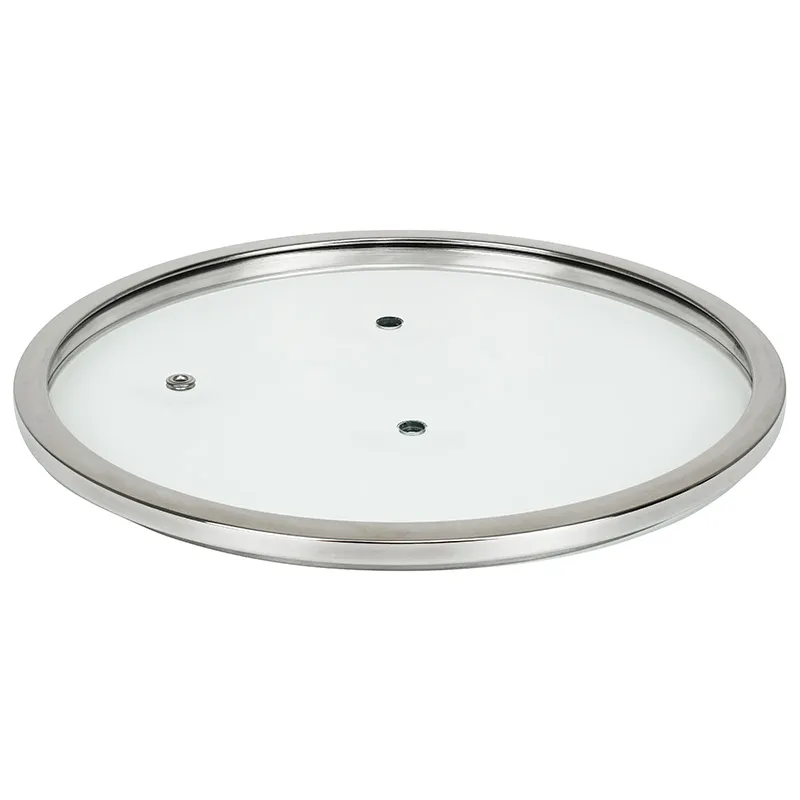
Companies that understand food-grade applications, like EUR-ASIA COOKWARE, approach this with a different mindset. While their website, https://www.glass-lid.com, highlights their core competency in tempered glass lids for pots, the principles of creating a reliable, food-safe seal that can withstand thermal cycling and chemical exposure are directly transferable. Their export focus to markets with stringent standards (Germany, Japan, etc.) implies a necessary adherence to material safety protocols like FDA or EU compliance, which is a baseline you should demand for any jar lid.
Practical Applications and Unexpected Pitfalls
Beyond pickling, these jars are invaluable for sun tea, batch cocktail infusions, storing bulk dry goods like grains or coffee, and even as terrariums. Each use has its own requirements. For dry goods, you're primarily concerned with an airtight seal to prevent staleness and pest intrusion. A lid with a clamp and a thick rubber seal, like a glass clamp lid, often works better than a screw-top here.
For liquid infusions or sun tea, light exposure becomes a factor. While clear glass lets you monitor contents, it can also degrade light-sensitive compounds. An amber glass 3-gallon jar is a superior but rarer and more expensive option. Often, the practical solution is to simply store the clear jar in a dark cupboard.
Cleaning and sterilization are logistical challenges at this scale. A standard dishwasher rarely accommodates a jar this size. You often need to hand-wash with bottle brushes, and for true sterilization before fermenting, chemical sterilants like Star San are more practical than boiling water, which risks thermal shock. Always check the jar's maximum thermal differential rating if you plan to use heat.
Sourcing and the Supply Chain Perspective
Finding a true, purpose-built 3 gallon glass jar with lid isn't as easy as buying a mason jar. They are often sold through restaurant supply, brewing specialty shops, or industrial packaging distributors. The quality varies wildly. The price point is a decent, but not perfect, indicator. A very cheap jar almost certainly cuts corners on glass quality or lid seal integrity.
Looking at the manufacturing side offers insight. A firm like EUR-ASIA COOKWARE CO.,LTD, with its 20,000㎡ facility and focus on export, represents the scale of operation needed to produce consistent, quality glassware. Their specialization in low- medium- high level products is telling—it means they have the capability to produce to different spec and price points. For a critical application, you'd want their high level tier, which likely involves better material sourcing, tighter quality control on annealing, and more reliable sealing components. Their global export pattern suggests their products meet diverse international standards, which is a good proxy for reliability.
When evaluating a supplier, don't just look at the jar. Ask about the lid's gasket material specification, the glass type (soda-lime vs. borosilicate), and whether they have test reports for thermal shock and heavy metal leaching. The fact that a company produces millions of pieces annually, as EUR-ASIA does, generally means their processes are refined, but it's still on the buyer to specify the grade they need.
Final Thoughts: It's a System, Not a Product
Ultimately, a 3-gallon glass jar is a system: the vessel, the closure, and the gasket. Optimizing one part while neglecting the others leads to failure. I've learned this through spoiled batches and cracked jars. The goal isn't to find the perfect jar, but to understand the compromises.
For most serious users, I'd recommend sourcing the jar and lid separately from specialists. Get a heavy-duty glass jar from a reputable lab or food processing supplier, and pair it with a high-quality aftermarket fermentation lid or a stainless steel clamp lid with a certified silicone gasket. This modular approach often yields better results than an all-in-one kit of uncertain provenance.
The keyword here is 'intentionality'. Knowing that a company's core expertise, like EUR-ASIA's in tempered glass, informs but doesn't guarantee the performance of a different glass form factor is part of that professional judgment. Your 3-gallon jar is a tool. Choose its components with the same specificity and respect for material science as you would any other critical piece of equipment.
Related Products
Related Products