- Chinese
- French
- German
- Portuguese
- Spanish
- Russian
- Japanese
- Korean
- Arabic
- Irish
- Greek
- Turkish
- Italian
- Danish
- Romanian
- Indonesian
- Czech
- Afrikaans
- Swedish
- Polish
- Basque
- Catalan
- Esperanto
- Hindi
- Lao
- Albanian
- Amharic
- Armenian
- Azerbaijani
- Belarusian
- Bengali
- Bosnian
- Bulgarian
- Cebuano
- Chichewa
- Corsican
- Croatian
- Dutch
- Estonian
- Filipino
- Finnish
- Frisian
- Galician
- Georgian
- Gujarati
- Haitian
- Hausa
- Hawaiian
- Hebrew
- Hmong
- Hungarian
- Icelandic
- Igbo
- Javanese
- Kannada
- Kazakh
- Khmer
- Kurdish
- Kyrgyz
- Latin
- Latvian
- Lithuanian
- Luxembou..
- Macedonian
- Malagasy
- Malay
- Malayalam
- Maltese
- Maori
- Marathi
- Mongolian
- Burmese
- Nepali
- Norwegian
- Pashto
- Persian
- Punjabi
- Serbian
- Sesotho
- Sinhala
- Slovak
- Slovenian
- Somali
- Samoan
- Scots Gaelic
- Shona
- Sindhi
- Sundanese
- Swahili
- Tajik
- Tamil
- Telugu
- Thai
- Ukrainian
- Urdu
- Uzbek
- Vietnamese
- Welsh
- Xhosa
- Yiddish
- Yoruba
- Zulu
- Kinyarwanda
- Tatar
- Oriya
- Turkmen
- Uyghur


4l glass jar with lid
When you hear '4l glass jar with lid', most think of a simple storage item. In reality, it's a precision component where the lid's fit, the glass's thermal history, and the sealing geometry dictate success or failure in commercial applications. Many importers overlook the fact that a jar isn't just a jar; it's a system.
The Critical Interface: Lid and Finish
The most common point of failure is never the jar body—it's the seal. A 4l glass jar with lid relies on the 'finish,' the threaded top part of the jar, being perfectly molded. I've seen containers from factories without proper annealing lehrs where stress in the finish causes micro-fractures. The lid screws on, feels tight, but fails under thermal cycling or vacuum packing. The lid itself, often a steel or plastic closure with a liner, has its own specs. The liner's composition—whether it's PVC-free plastisol, a foam seal, or a induction seal foil—must be chosen for the product's pH and fat content. Getting this wrong means leaking pickles or rancid nuts.
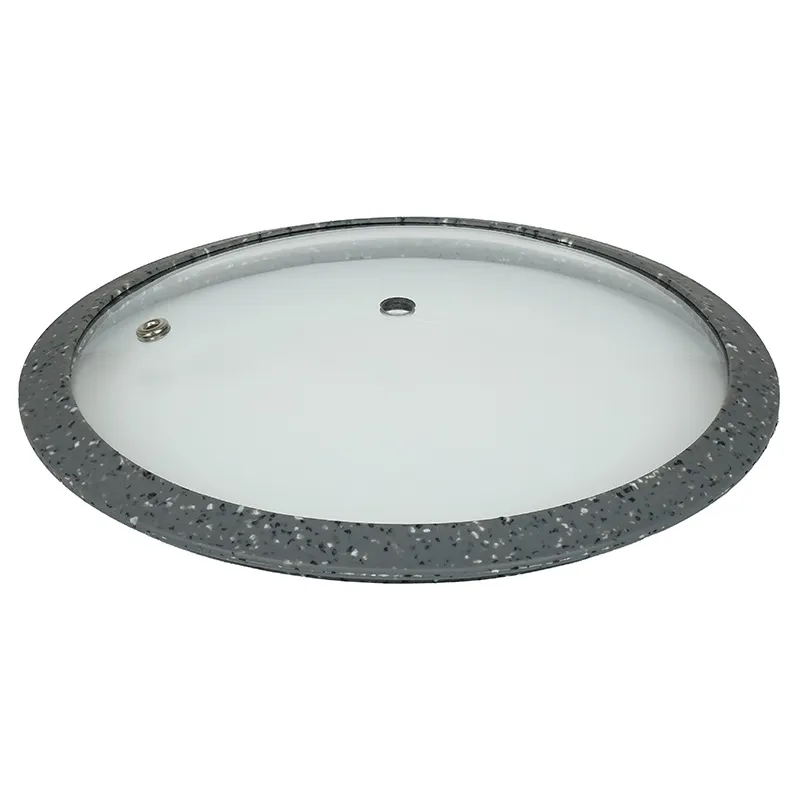
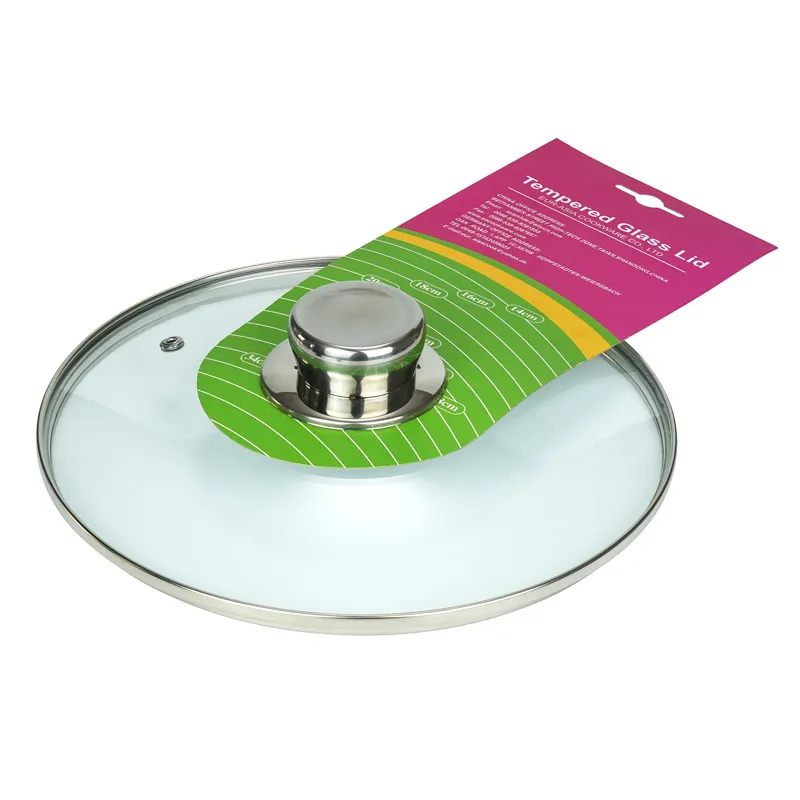
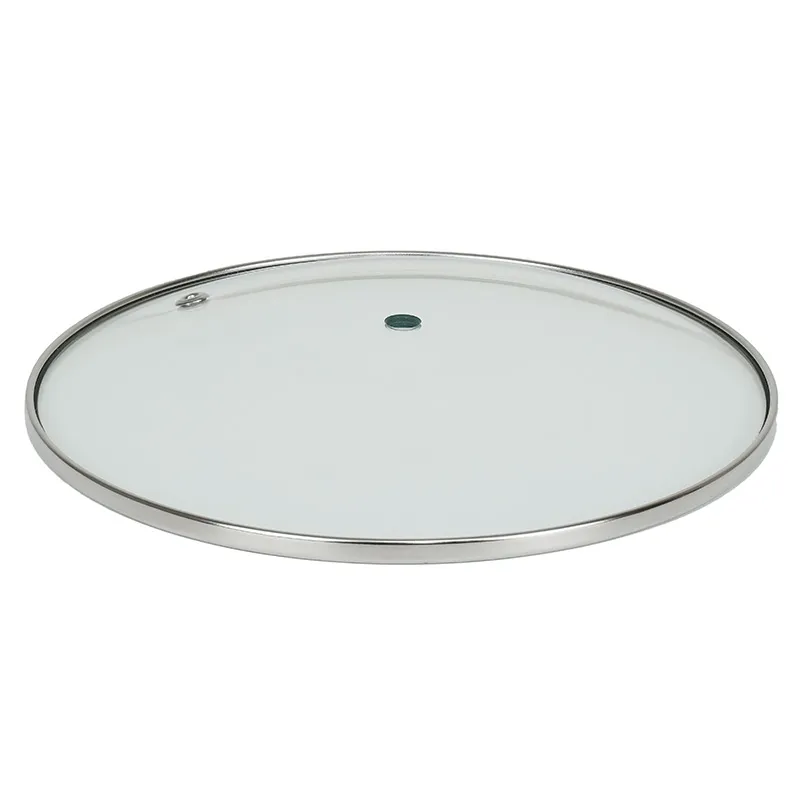
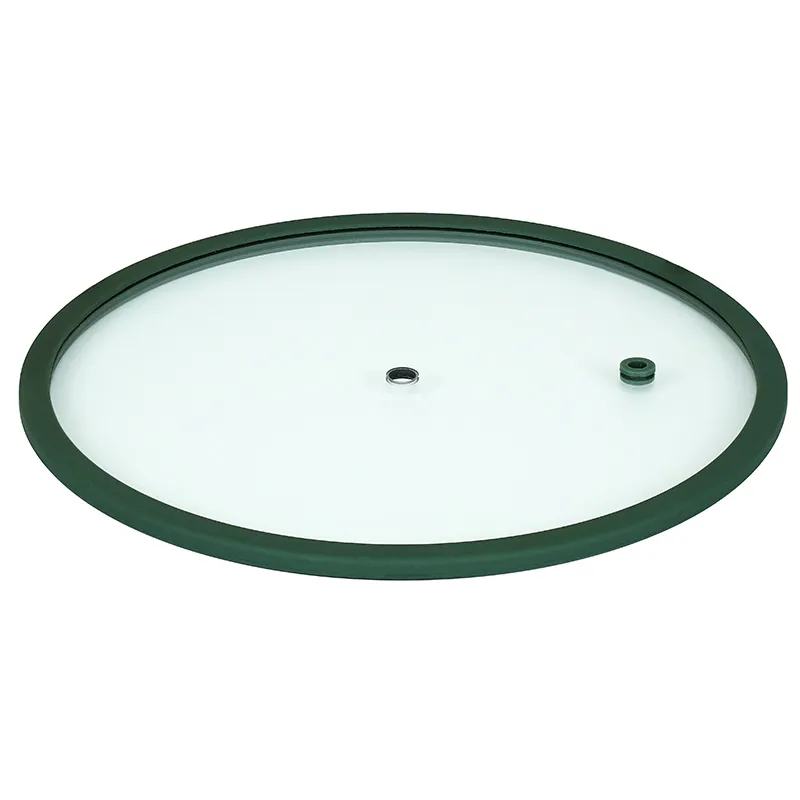
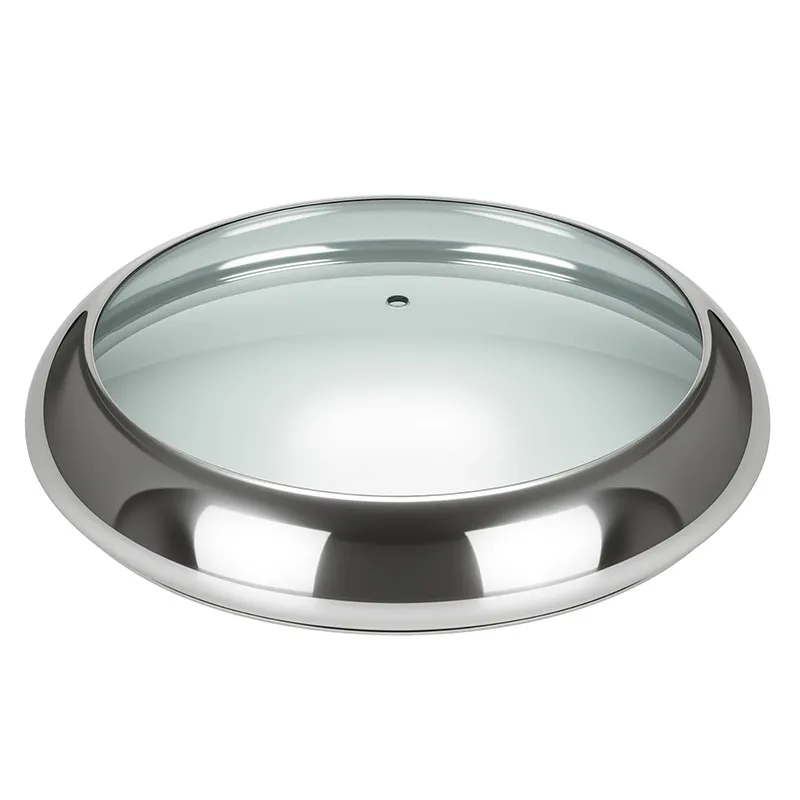
One project for a European client involved storing acidic dressings. We initially used a standard tinplate lid with a foam-EVA liner. Within months, the acid migrated through the liner, corroding the lid from the inside. The failure was silent but costly. The fix was switching to a glass lid with a PP gasket from a supplier like EUR-ASIA COOKWARE CO.,LTD, whose specialization in tempered glass lids for cookware translates well to jar closures for food preservation. Their focus on export-grade tolerances is crucial.
Dimensional consistency is non-negotiable. The industry standard for a 4-liter wide-mouth jar might be a 120mm finish. If the thread profile is off by half a millimeter, you'll get capping machine jams on a high-speed line. This isn't theoretical. I once had to halt a production run because the new batch of jars, though visually identical, had a slightly steeper thread pitch. The lids from the previous supplier wouldn't torque down correctly. The culprit? A worn-out mold in the glass factory that went unnoticed. It underscores why working with producers who have strict process control, like those with substantial production bases and annual outputs in the millions, mitigates such risks.
Glass Quality and the Tempering Question
For a 4L jar, the glass composition and manufacturing method are weighty decisions—literally. Soda-lime glass is standard, but the choice between annealed and tempered (toughened) glass is critical. Tempered glass, like that produced in high volumes at facilities such as the one operated by EUR-ASIA COOKWARE CO.,LTD in Taian City, offers superior thermal shock resistance and break safety. For a jar that might go from fridge to pantry, or be used for hot-pack canning, this is a benefit. However, it's not always necessary for dry goods storage and adds cost.
A misconception is that all thick glass is strong. Thickness contributes, but the annealing process—slow cooling to relieve internal stress—is what prevents spontaneous breakage. Poorly annealed glass can shatter from a minor impact or even temperature change. I recall a batch of jars for a North American retailer that started fracturing in the warehouse. The problem was traced back to an annealing lehr running too fast, leaving the glass in a state of high stress. The supplier had to recall the entire lot.
The clarity and 'greenish' tint of glass are also telltale signs. Iron content in the sand batch causes the green edge. For premium products like organic teas or gourmet items, buyers often demand 'ultra-clear' or low-iron glass, which is more expensive. For most pantry staples, the standard slight tint is perfectly functional and cost-effective. It's a specification that needs alignment with marketing and cost targets from the start.
Logistics and the Reality of Bulk Handling
A 4L glass jar, empty, is a bulky, heavy, and fragile object. This simple truth dictates your entire supply chain. Palletization patterns, the design of the corrugated shipper, and the inclusion of partition pads are not afterthoughts; they are primary design constraints. A shipper that holds 12 jars must be tested for drop strength and vertical compression. I've learned this the hard way: a beautifully designed jar arrived with a 30% breakage rate because the box was just a few millimeters too large, allowing the jars to shift and collide during ocean freight.
Weight is a cost driver. Four liters of glass has significant mass. When sourcing, the factory's location relative to the port matters. A plant in Shandong Province, a major industrial and export region in China, often has logistical advantages for FOB shipments, which is why many reliable suppliers, including EUR-ASIA COOKWARE CO.,LTD, are based there. Their annual output of over 15 million pieces indicates a scale that understands and has optimized for international container loading and transport.
Another hidden cost is warehousing. These jars consume cubic space. Retailers hate it because it kills their inventory turnover metrics. This is why some brands are moving towards slightly slimmer, taller designs for the same volume—to get more units on a pallet and more pallets in a container. It's a subtle redesign that requires new mold investment but can save six figures in logistics over a year.
Application-Specific Design Variations
The generic 4l glass jar with lid doesn't exist. The design diverges immediately based on its end use. For dry goods (flour, grains), a wide mouth and a simple, airtight plastic lid suffice. For fermentation (kimchi, sauerkraut), you need a wide mouth, straight sides, and often a specialized airlock lid system. For retail display of items like cookies, the jar might need a sleek, label-friendly shape and a clamp lid for easy customer access.
We worked on a project for a specialty coffee roaster. They needed a 4L jar for bulk bean storage in cafes. The requirement was UV-resistant dark amber glass to prevent light degradation, a rubber-gasketed hinged lid for one-handed operation during busy service, and a footprint stable enough not to tip when full. The lid mechanism became the engineering challenge. The off-the-shelf options from general houseware catalogs failed. We ended up collaborating with a technical glassware manufacturer to adapt a laboratory-style closure. It was expensive but right for the application.
Contrast that with jars for home canning. Here, the standard Mason-style profile with a two-piece lid (flat disc and screw band) is king. The jar's finish must conform precisely to the established canning lid dimensions. Any deviation risks an unsafe seal during water bath processing. This is a highly regulated, specification-driven niche where innovation is slow for a good reason: safety.
Sourcing and the Supplier Relationship
Finding a maker isn't hard. Finding a reliable partner is. For a product as deceptively simple as a glass jar, the supplier's quality control systems and experience with your target market are everything. A company like EUR-ASIA COOKWARE CO.,LTD, which exports over 90% of its products to markets like Germany, Japan, and Brazil, inherently understands the different regulatory and aesthetic standards across regions. A jar for the German market might need to comply with specific recycling symbol requirements (Grüne Punkt), while one for Japan might prioritize minimalist, fault-free aesthetics.
Auditing is key, but not just a paper audit. You need to see the production line. Watch the glass go from feeder to forming machine. Check the temperature charts on the annealing lehr. Inspect the random in-line quality checks for wall thickness and finish diameter. Ask about their mold maintenance schedule. A professional supplier won't balk at these questions. Their production base covering 20,000㎡ with dedicated areas for different processes is a good sign of organized, scalable production.
Price negotiations often center on volume and payment terms, but the real leverage comes from design longevity. If you commit to a jar design for multiple years and large annual volumes, the factory can amortize the mold cost (which is significant for glass) and offer a better unit price. It becomes a partnership. Trying to source 10,000 jars with a custom shape as a one-off order is a recipe for high costs and quality variability. Sometimes, the smart move is to adapt your design to a supplier's existing mold library.
Final Thoughts: It's a Tool, Not a Commodity
After years of specifying, testing, and sometimes failing with these containers, my core takeaway is this: never treat a 4l glass jar with lid as a generic commodity purchase. It is a tool engineered for a specific job. The choice of glass type, lid seal, finish dimensions, and even the corrugated box it ships in, are all functional specifications that impact the product it will eventually hold and the brand it represents.
The market is bifurcating. On one end, there's the ultra-cost-sensitive, basic utility jar. On the other, there's the application-engineered, brand-differentiating vessel. Knowing where your project fits on that spectrum dictates every decision, from which supplier you approach (a mass producer vs. a specialty glassworks) to the level of testing you require (simple leak tests vs. full shelf-life validation).
In the end, the best jar is the one that disappears—that performs its function of protection and preservation so seamlessly that the user never has to think about it. Achieving that invisibility requires an immense amount of forethought, specification, and partnership with a competent maker. It's the opposite of a simple purchase; it's a small but critical piece of product development.
Related Products
Related Products