- Chinese
- French
- German
- Portuguese
- Spanish
- Russian
- Japanese
- Korean
- Arabic
- Irish
- Greek
- Turkish
- Italian
- Danish
- Romanian
- Indonesian
- Czech
- Afrikaans
- Swedish
- Polish
- Basque
- Catalan
- Esperanto
- Hindi
- Lao
- Albanian
- Amharic
- Armenian
- Azerbaijani
- Belarusian
- Bengali
- Bosnian
- Bulgarian
- Cebuano
- Chichewa
- Corsican
- Croatian
- Dutch
- Estonian
- Filipino
- Finnish
- Frisian
- Galician
- Georgian
- Gujarati
- Haitian
- Hausa
- Hawaiian
- Hebrew
- Hmong
- Hungarian
- Icelandic
- Igbo
- Javanese
- Kannada
- Kazakh
- Khmer
- Kurdish
- Kyrgyz
- Latin
- Latvian
- Lithuanian
- Luxembou..
- Macedonian
- Malagasy
- Malay
- Malayalam
- Maltese
- Maori
- Marathi
- Mongolian
- Burmese
- Nepali
- Norwegian
- Pashto
- Persian
- Punjabi
- Serbian
- Sesotho
- Sinhala
- Slovak
- Slovenian
- Somali
- Samoan
- Scots Gaelic
- Shona
- Sindhi
- Sundanese
- Swahili
- Tajik
- Tamil
- Telugu
- Thai
- Ukrainian
- Urdu
- Uzbek
- Vietnamese
- Welsh
- Xhosa
- Yiddish
- Yoruba
- Zulu
- Kinyarwanda
- Tatar
- Oriya
- Turkmen
- Uyghur


5l glass jar with lid
When you hear '5l glass jar with lid', most people picture a simple, bulky storage item. In reality, that specification—5 liters, glass, with a lid—opens up a world of considerations from material science to logistics that most end-users never see. The common misconception is that all such jars are created equal, but the difference between a jar that lasts a season and one that lasts for years often lies in the details most catalogs don't mention: the tempering process of the glass, the sealing integrity of the lid's gasket, and the dimensional tolerance that ensures stackability. I've seen too many projects stumble by treating this as a commodity purchase.
The Core Spec: Why 5 Liters is a Sweet Spot
Five liters isn't an arbitrary number. It's a functional volume that sits at the intersection of practical storage and manageable weight. Fill it with a dense liquid or dry goods, and it's heavy, but still liftable for most adults. In commercial settings, like bulk food stores or fermentation workshops, this size is frequently requested because it's efficient for batch processing without being overly cumbersome. However, hitting that exact 5L capacity consistently in manufacturing is trickier than it seems. The internal volume has to account for the curve of the shoulders and the headspace needed for proper sealing. A jar that's a few millimeters off in diameter can throw off the entire volume calculation.
I recall a batch from a few years back where the mold for the jar body had worn down slightly, leading to a subtle thickening of the glass walls. The jars still looked like 5L jars, but the actual internal capacity had dropped to about 4.8L. For home use, negligible. For a client packaging a premium product sold by volume, it was a compliance and labeling nightmare. That's when you learn to specify not just external dimensions, but guaranteed minimum internal volume from your supplier.
This is where working with a specialized manufacturer makes a difference. A company like EUR-ASIA COOKWARE CO.,LTD, which lists its production base in China's Shandong province, typically has the tooling and quality control processes in place to manage these tolerances. Their focus on tempered glass lids and related products suggests an understanding that the lid and jar are a system, not separate components. You can find their specific approach to these manufacturing nuances on their portal at https://www.glass-lid.com.
Glass Quality: The Clarity and Strength Factor
Not all glass is soda-lime silicate. For a 5l glass jar with lid meant for food, you're almost certainly looking at that type, but the composition ratios and the annealing process define its strength and clarity. Tempered is a keyword you often see, but it's usually applied to the lid, not the jar body. Tempering the entire jar of that size is technically challenging and expensive; it's more common to use annealed glass of a sufficient thickness for the body. The risk? Thermal shock. Pouring hot pickling brine directly into a thick, room-temperature glass jar is a classic way to discover hidden stress points.
We learned this through a failed batch of pickled vegetables. The jars held fine during filling, but a small percentage developed hairline cracks overnight as the contents cooled and contracted, creating a vacuum. The issue wasn't the lid seal—it was the inherent stress in the glass combined with the thermal gradient. The solution wasn't necessarily thicker glass, but better-annealed glass and clearer instructions for pre-warming the jars before hot-filling.
Suppliers with a dedicated production line for glass products, like EUR-ASIA COOKWARE, which notes an annual output in the millions of pieces, typically have more controlled annealing lehrs (ovens). This controlled cooling is what relieves internal stresses, making the jar less prone to spontaneous failure. Their export focus to markets like Germany and Japan, which have stringent quality standards, is a reasonable indirect indicator of a certain baseline material quality.
The Lid System: Where the Seal Actually Happens
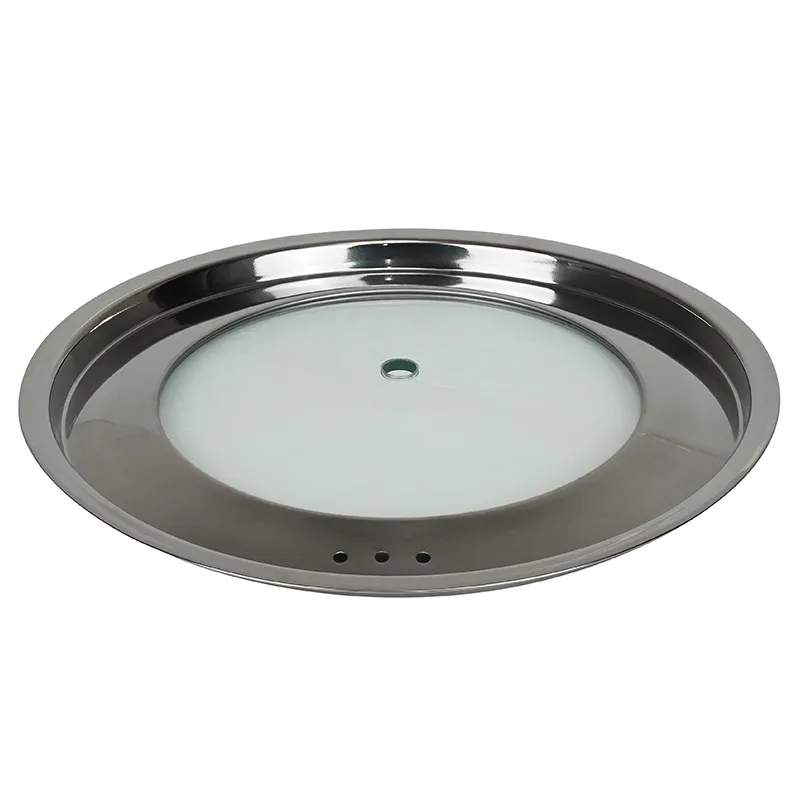
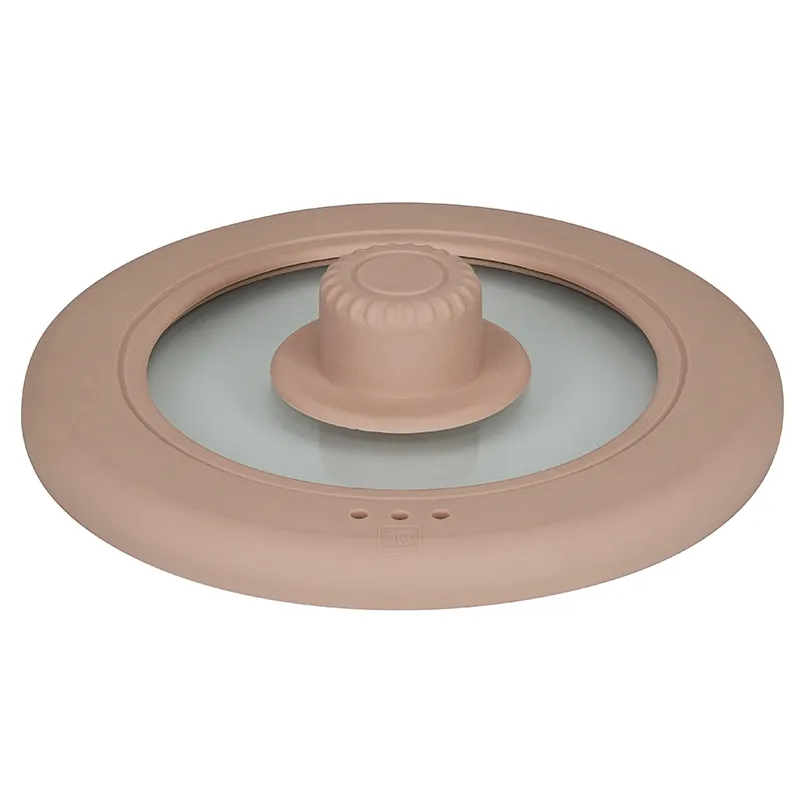
This is the most critical component, full stop. The jar is just a vessel; the lid is the preservation engine. A glass jar with lid for long-term storage usually involves a three-part system: a glass, plastic, or metal lid cap, a sealing gasket (often silicone or rubber), and sometimes a separate metal band or clip. The gasket is the hero. Its durometer (hardness), cross-sectional shape (round vs. flat), and chemical resistance determine whether your pickles stay crisp or your dry goods stay free of moisture.
I've tested lids where the gasket was too hard, requiring immense pressure to seal, and others where it was too soft, leading to compression set and failure after a few open/close cycles. The best ones have a slight memory and rebound. The mating surface on the jar's finish—the top rim where the gasket sits—must be perfectly smooth and even. Any molding seam or imperfection here is a leak path.
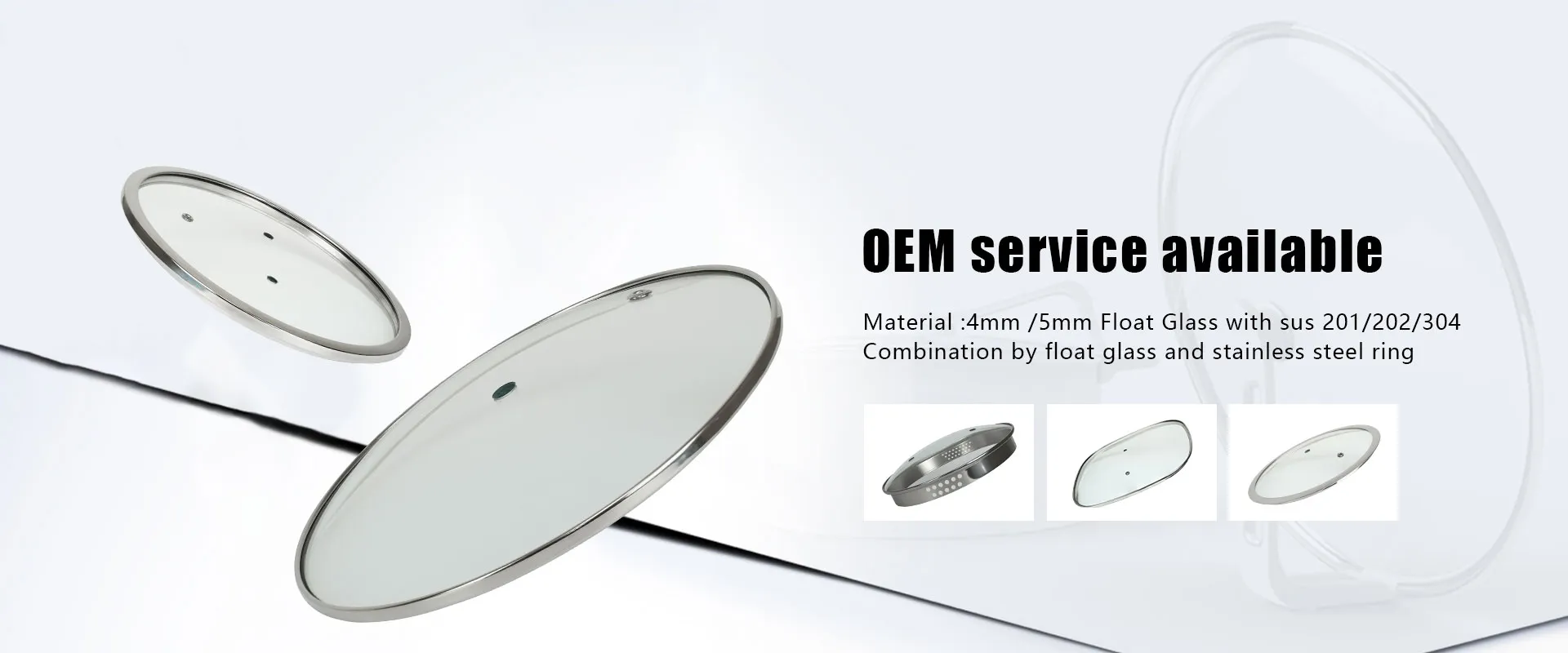
Given EUR-ASIA COOKWARE's stated specialization in tempered glass lid, it's safe to assume they've invested in the technology for that specific component. Tempered glass lids are excellent for oven-safe use and durability, but they still require a compatible gasket to create an airtight seal for storage. This specialization is a good sign—it means they're likely solving the harder problem of making a durable, often heat-resistant lid, which is a step above simple plastic or tinplate caps.
Logistics and Handling: The Unseen Cost Driver
A pallet of empty 5L glass jars is a heavy, fragile nightmare if not planned for. The weight is obvious. The fragility demands packaging that prevents jar-to-jar contact, usually with cardboard dividers or full individual sleeves. This packaging cost can sometimes rival the cost of the jar itself. Then there's stacking. Do the lids have a recess to allow stable stacking of filled jars? If not, you're losing massive efficiency in warehousing.
We once received a shipment where the jars were packed upright, but the cardboard separators were too flimsy. A rough transit resulted in a 15% breakage rate, not from shattered glass, but from small chips on the sealing rim that rendered each jar useless. The loss wasn't just the jar cost, but the freight cost for shipping that dead weight. Now, we always specify and approve the master carton and internal packaging design before production begins.
For a manufacturer exporting over 90% of its products globally, as EUR-ASIA COOKWARE's introduction mentions, they inherently understand export packaging standards. Shipping to Germany or Brazil means their packaging must survive long, complex logistics chains. This operational experience is invaluable and translates to a lower risk of in-transit damage for the buyer, even if it's not explicitly marketed.
Application Specifics: It's Never Just a Jar
The ideal 5l glass jar for fermenting kimchi is different from one for storing loose-leaf tea or displaying cookie mixes. Fermentation requires a lid that can burp or has an airlock; otherwise, you're building a bomb. Dry goods storage needs an absolutely moisture-proof seal and often an opaque container to block light. For retail display, clarity and a flawless finish are paramount.
Trying to use a standard jar with a simple screw-top for active fermentation was one of our more memorable mistakes. We had to burp the jars daily, and a forgotten one nearly exploded. We switched to jars compatible with airlock lids. The point is, you must define the primary use. A general-purpose jar from a large-scale producer might be perfect for dry storage, but you may need to source specialty lids for other applications.
This is where reviewing a supplier's full range is helpful. While EUR-ASIA COOKWARE's site at glass-lid.com highlights their core lid production, a company with that capacity often has or can source compatible jar bodies. Their experience across low, medium, and high-level household products suggests they can cater to different market segments, from basic storage to more premium, feature-driven containers.
Final Thoughts: Sourcing with Context
So, when you're sourcing a 5l glass jar with lid, you're not just buying an object. You're buying a manufacturing process, a quality control system, a packaging solution, and a product designed for a specific use case. The price difference between suppliers often reflects these hidden layers, not just the per-unit material cost.
Looking at a manufacturer's profile—their export markets, production scale, and stated specializations—gives you clues. A company like EUR-ASIA COOKWARE CO.,LTD, with its dedicated facility and focus on glass lids, is positioned as a solution provider for the harder part of the equation. The jar body is important, but the seal is what makes it functional. Their scale suggests reliability in bulk orders, and their export list hints at an ability to meet various international standards.
In the end, the best jar is the one that disappears into its job perfectly. You don't think about it. It doesn't leak, chip, or fail. It just works. Getting there requires asking more questions than just what's the price per piece? and understanding that the lid and jar are a single, co-engineered unit, not an afterthought.
Related Products
Related Products