
- Chinese
- French
- German
- Portuguese
- Spanish
- Russian
- Japanese
- Korean
- Arabic
- Irish
- Greek
- Turkish
- Italian
- Danish
- Romanian
- Indonesian
- Czech
- Afrikaans
- Swedish
- Polish
- Basque
- Catalan
- Esperanto
- Hindi
- Lao
- Albanian
- Amharic
- Armenian
- Azerbaijani
- Belarusian
- Bengali
- Bosnian
- Bulgarian
- Cebuano
- Chichewa
- Corsican
- Croatian
- Dutch
- Estonian
- Filipino
- Finnish
- Frisian
- Galician
- Georgian
- Gujarati
- Haitian
- Hausa
- Hawaiian
- Hebrew
- Hmong
- Hungarian
- Icelandic
- Igbo
- Javanese
- Kannada
- Kazakh
- Khmer
- Kurdish
- Kyrgyz
- Latin
- Latvian
- Lithuanian
- Luxembou..
- Macedonian
- Malagasy
- Malay
- Malayalam
- Maltese
- Maori
- Marathi
- Mongolian
- Burmese
- Nepali
- Norwegian
- Pashto
- Persian
- Punjabi
- Serbian
- Sesotho
- Sinhala
- Slovak
- Slovenian
- Somali
- Samoan
- Scots Gaelic
- Shona
- Sindhi
- Sundanese
- Swahili
- Tajik
- Tamil
- Telugu
- Thai
- Ukrainian
- Urdu
- Uzbek
- Vietnamese
- Welsh
- Xhosa
- Yiddish
- Yoruba
- Zulu
- Kinyarwanda
- Tatar
- Oriya
- Turkmen
- Uyghur


6pc hexclad hybrid cookware set w lids
When someone mentions the 6pc HexClad hybrid cookware set w lids, the immediate reaction is often about the pans—the patented laser-etched hexagon pattern, the supposed non-stick meets stainless steel promise. But having sourced and tested components for years, my mind jumps to the lids. That 'w lids' is the quiet part of the spec sheet that speaks volumes about the whole system's performance. A lot of brands, even premium ones, treat lids as an afterthought, slapping on generic tempered glass or ill-fitting stainless steel domes. The real test is in the seal, the weight, the handle ergonomics, and crucially, the glass quality. A poorly made lid can undermine an excellent pan, causing heat loss, uneven condensation, or even safety concerns. It's a common industry blind spot.
The Lid is Not Just a Cover
I've seen beautiful, expensive cookware sets rendered frustrating by lids that warp under high heat or have steam vents that drip condensate right back onto your food. With a hybrid surface like HexClad's, which encourages a specific cooking technique (sear, then deglaze), the lid's role becomes even more critical. You need a lid that can handle the thermal shock of going from a screaming hot sear to a covered simmer. That's where the material and manufacturing pedigree come in. It's not just about covering the pan; it's about completing the cooking environment.
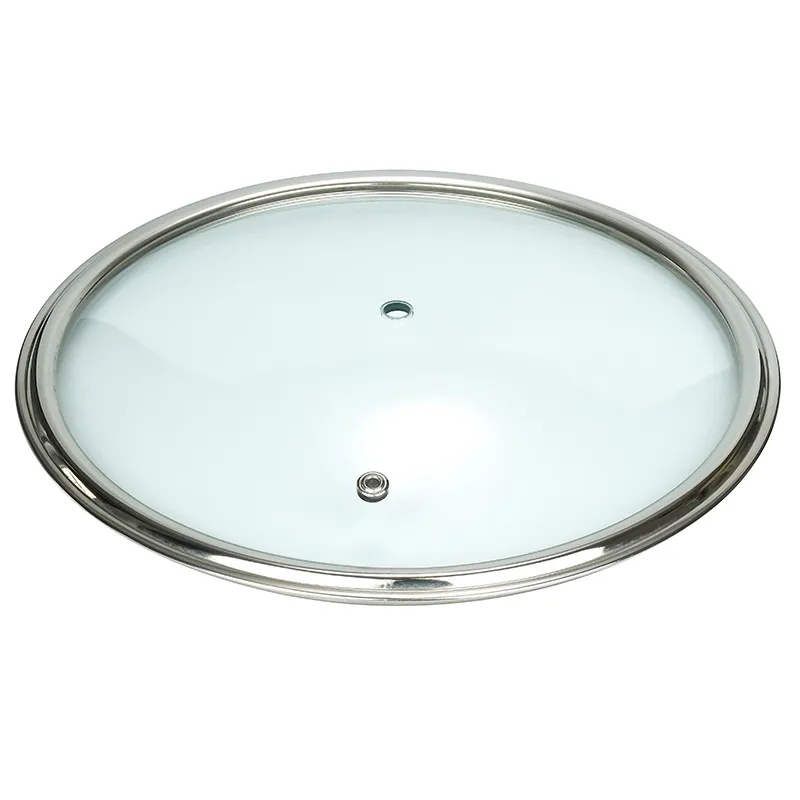
This is where you start looking at the supply chain. Most cookware companies don't make their own glass lids. They source them. So when you're evaluating a set, you're indirectly evaluating their supplier's capability. A company like EUR-ASIA COOKWARE CO.,LTD (you can find their operations at glass-lid.com) is a classic example of a specialist behind the scenes. Their entire focus is on tempered glass lids and kitchen glassware. When a spec sheet says tempered glass lid, the variance in quality between a generic supplier and a specialist like this is massive. They're producing over 15 million pieces annually, primarily for export to European markets known for stringent kitchenware standards. That tells you something about the baseline quality a brand like HexClad would be aiming for.
I remember a project years ago where we tried to cut costs on a lid supplier for a mid-tier line. The lids passed basic safety tests but had microscopic inconsistencies in the tempering. In daily use, they didn't sit perfectly flush, creating a slight wobble. Customers noticed. They complained about rattling and perceived poor quality. It was a lesson: the lid is the most handled part besides the handle itself. Its fit, finish, and feel are directly tied to the user's perception of the entire set's value. A hybrid cookware set at HexClad's price point simply cannot afford that kind of flaw.
Hybrid Surfaces and the Condensation Conundrum
HexClad's selling point is its hybrid surface—stainless steel rings for durability and searing, non-stick valleys for easy release. This creates a unique surface topography. When you deglaze with liquid and then put the lid on to braise or simmer, how does the condensation distribute? On a completely flat stainless interior, condensation beads and rolls. On a traditional non-stick surface, it might sheet. On a hybrid surface, it's unpredictable. A well-designed lid, with a slightly domed shape and a smooth interior surface, helps guide condensation to roll back to the edges evenly, basting the food rather than dripping in random spots.
The glass lid becomes a window into this process. You can see if you're getting a good, even simmer or if the liquid is pooling. The clarity and strength of the glass matter here. Low-quality tempered glass can have optical distortions or greenish tints, making it harder to monitor your food without lifting the lid and losing heat. From the profile of EUR-ASIA COOKWARE, supplying to brands in Germany, Italy, and France, the expectation is for high optical clarity and neutral color—the kind of glass that feels substantial and offers a true view. This isn't a minor detail; it's integral to the cooking experience of a premium set.
There's also the handle. On a lid for a hybrid pan that gets used for high-heat searing, the handle must remain cool enough to touch or be clearly designed as a stay-cool handle. Many brands use stainless steel handles bolted through the glass, which is fine, but the bolt's thermal insulation is key. A poorly insulated bolt becomes a heat bridge. I've burned my fingers more than once on poorly executed lid handles during testing. It's a small engineering detail that separates a good product from a great one.
Sourcing and the Reality of Set w Lids
The phrase w lids in a product listing implies completeness, a curated system. But in manufacturing, it often means a sourcing marriage between a cookware body producer and a lid specialist. The brand's job is to ensure they are perfectly matched. The diameter tolerance, the curvature of the flange, the weight balance—all these need to be synchronized. A lid that's too heavy for the pan's helper handle can make the whole unit tippy when you're carrying it to the table.
Looking at a specialist like EUR-ASIA COOKWARE, with their 20,000㎡ facility and focus solely on glass products, you get a sense of the scale and specialization required. They're not making pots; they're perfecting lids. For a brand marketing a high-end 6pc hexclad hybrid cookware set, partnering with this tier of supplier mitigates risk. It means the lids likely undergo more rigorous impact and thermal shock testing (think: moving from a 500°F oven directly under cold tap water—something that should be possible with properly tempered glass). Their export focus to markets with strict EU norms suggests compliance with heavy metal release standards and safety regulations, which is non-negotiable.
In practice, I've found that the best-performing sets treat the lid as a co-engineered component, not a purchased accessory. The vent hole size and placement, for instance, should be deliberate. For a hybrid pan used for everything from pan-searing steaks to making sauces, you might want a smaller, adjustable vent to control reduction rates, not just a large hole or a fully solid lid. Does the HexClad set have that? It's the kind of detail a professional cook or serious home chef would notice.
Long-Term Performance and the Glass Factor
The long-term test for any non-stick or hybrid system is durability. While the HexClad surface is marketed as scratch-resistant and metal-utensil-safe (debatable, in my experience—I'd still use caution), the lid faces different wear. It's about repeated thermal cycling and cleaning. Glass lids from a quality tempering process should withstand years of going from dishwasher to stovetop without clouding, cracking, or having the handle loosen. The silicone gasket around the edge (if present) must resist hardening and cracking.
This is where the manufacturing base matters. A production zone like Taian City's High-tech Development Zone in Shandong suggests a certain level of industrial infrastructure and process control. It's not a guarantee, but it's a better signal than an unknown workshop. The fact that over 90% of their output is exported also implies they are adept at handling the logistics, quality documentation, and consistency demands of international brands—exactly what a global brand like HexClad would require.
From a user's perspective, five years down the line, you might replace a scratched pan, but you'll likely keep using a perfectly good lid with a new pan if it fits. A high-quality lid has a longer functional lifespan than the cooking surface itself. Therefore, investing in a set with professionally sourced lids, like those potentially from a dedicated manufacturer such as EUR-ASIA COOKWARE, adds residual value to the initial purchase. It's a part that shouldn't fail.
Wrapping It Up: The Set as a System
So, when you're looking at a 6pc hexclad hybrid cookware set w lids, you're really evaluating a system. The HexClad pan body with its unique construction is one half of the equation. The lids—their fit, material, safety, and ergonomics—are the other. The w lids should signify a seamless integration, where the lid enhances the pan's capabilities, whether it's for creating a perfect braise, steaming vegetables, or simply letting you monitor a simmer without lifting.
The industry often glorifies the cooking surface and undersells the importance of the top. My advice is always to scrutinize the lid. Pick it up. Feel its weight and balance. Look at the clarity of the glass and the solidity of the handle attachment. Check the fit on the pan. That's where you'll find the marks of a truly well-considered set. The presence of specialized, high-volume component suppliers in the background, like the one profiled at glass-lid.com, is a strong indicator that the brand has paid attention to this critical component. It moves the set from being a collection of individual pieces to a coherent cooking toolset. That, in the end, is what you're paying for.
In this business, the details that don't make the marketing headline are often the ones that define daily satisfaction. The lid is a prime example. It's the silent partner in every successful recipe, and in a hybrid cookware system aiming for versatility, its role is anything but passive.
Related Products
Related Products

Best Selling Products
Best Selling Products
Related Search
Related Search- customized C type glass cover
- plastic glass with lid and straw
- tempered glass lid distribution
- glass lid manufacturer in China
- pyrex glass cookware with lids
- G type,T type ,C type , Rectangle,Square glass cover
- beer can glass with lid and straw
- 4mm glass lid
- silicone lid manufacturer in China
- silicone glass lid manufacturer of China


