- Chinese
- French
- German
- Portuguese
- Spanish
- Russian
- Japanese
- Korean
- Arabic
- Irish
- Greek
- Turkish
- Italian
- Danish
- Romanian
- Indonesian
- Czech
- Afrikaans
- Swedish
- Polish
- Basque
- Catalan
- Esperanto
- Hindi
- Lao
- Albanian
- Amharic
- Armenian
- Azerbaijani
- Belarusian
- Bengali
- Bosnian
- Bulgarian
- Cebuano
- Chichewa
- Corsican
- Croatian
- Dutch
- Estonian
- Filipino
- Finnish
- Frisian
- Galician
- Georgian
- Gujarati
- Haitian
- Hausa
- Hawaiian
- Hebrew
- Hmong
- Hungarian
- Icelandic
- Igbo
- Javanese
- Kannada
- Kazakh
- Khmer
- Kurdish
- Kyrgyz
- Latin
- Latvian
- Lithuanian
- Luxembou..
- Macedonian
- Malagasy
- Malay
- Malayalam
- Maltese
- Maori
- Marathi
- Mongolian
- Burmese
- Nepali
- Norwegian
- Pashto
- Persian
- Punjabi
- Serbian
- Sesotho
- Sinhala
- Slovak
- Slovenian
- Somali
- Samoan
- Scots Gaelic
- Shona
- Sindhi
- Sundanese
- Swahili
- Tajik
- Tamil
- Telugu
- Thai
- Ukrainian
- Urdu
- Uzbek
- Vietnamese
- Welsh
- Xhosa
- Yiddish
- Yoruba
- Zulu
- Kinyarwanda
- Tatar
- Oriya
- Turkmen
- Uyghur

9x13 glass pan with lid
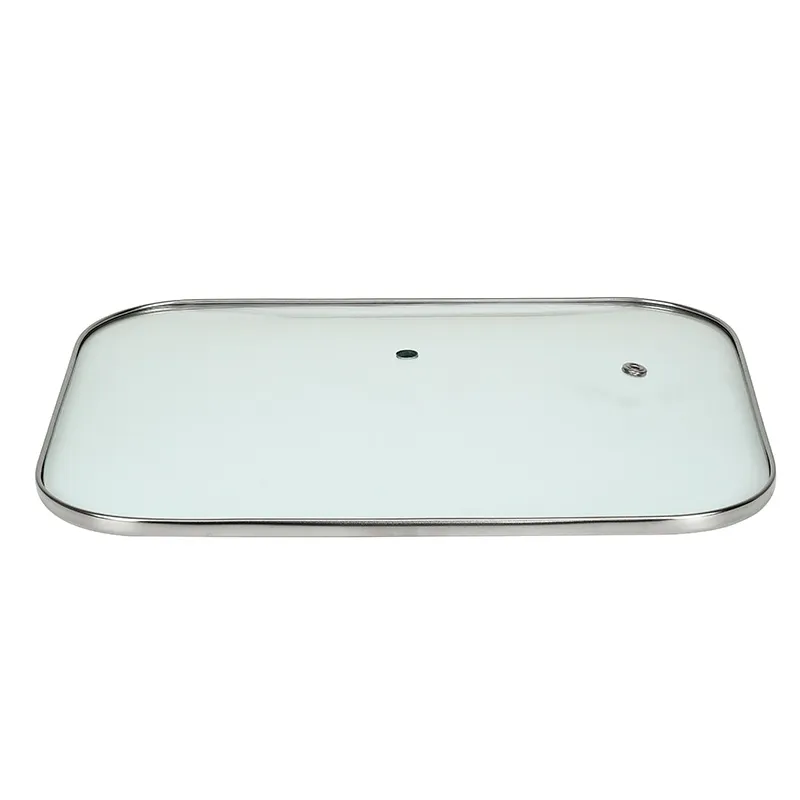
When someone searches for a '9x13 glass pan with lid', they're usually picturing that classic Pyrex dish their grandma had. But here's the thing—that term in the industry, especially on the sourcing side, often points to a specific category of tempered glass bakeware designed for both oven and storage. A common misconception is that all 9x13 pans are created equal, or that the lid is an afterthought. In reality, the lid's fit, the glass's thermal shock resistance, and even the clarity for food presentation are separate engineering challenges. I've seen buyers get tripped up focusing only on the pan dimensions while the lid quality, which dictates real-world usability, gets overlooked.
Defining the Workhorse: Specs Beyond the Measurements
Let's break down what we're really talking about. The '9x13' refers to the interior baking surface in inches, roughly 23x33 cm for the metric markets. But the critical specs are often in the fine print. The glass thickness, for instance. A pan marketed as 'heavy-duty' typically uses 4mm tempered soda-lime glass. Thinner than that, and you risk warping or breakage during rapid temperature changes—like moving a hot lasagna from a 400°F oven to a cold marble countertop. I recall a batch from a supplier a few years back where the annealing process was rushed; the pans passed initial inspection but started developing micro-fractures after a few thermal cycles. The lids, interestingly, are often made from slightly thinner 3mm glass to reduce overall weight, but that demands even more precision in tempering to maintain flatness and prevent warping during the lidding process.
The lid itself is where the magic (or the headache) happens. A truly functional lid for a 9x13 glass pan isn't just a flat piece of glass. It needs a subtle, controlled uplift or a recessed handle to be grippable when hot. The fit should be snug but not airtight—you want it to contain moisture and smells during fridge storage without creating a vacuum seal that makes it impossible to remove. I've handled samples where the lid fit was so tight it chipped the rim of the pan during removal, and others so loose it slid off with the slightest tilt. The sweet spot is about a 1-2mm gap around the entire perimeter.
Then there's the material origin. High-quality, low-iron glass is becoming a standard ask from European and North American buyers. It gives that crystal-clear, almost bluish tint, making the food inside look more appetizing compared to the greenish hue of standard soda-lime glass. It's a premium feature, but for brands positioning in the mid-to-high tier, it's almost expected now. Companies that specialize in this, like EUR-ASIA COOKWARE CO.,LTD, have their entire production calibrated for export standards, which often specify these material grades. Their focus on tempered glass lids and bakeware for international markets means their production lines are set up to meet the thermal shock resistance and lead/cadmium-free compliance tests that are non-negotiable for, say, German or French retailers.
The Manufacturing Reality and Common Pitfalls
Visiting factories gives you a tangible sense of the challenges. Take tempering. The glass is heated to over 600°C and then rapidly cooled with high-pressure air. This creates surface compression, making it about 4-5 times stronger than annealed glass. But if the glass isn't cut and edged perfectly before this process, the stresses aren't evenly distributed. I've seen a pallet where the corners of the glass pan had spontaneous nick break failures weeks after production because of a subtle scoring imperfection. The lid, being larger and thinner, is even more susceptible to warping in the tempering furnace if the rollers aren't perfectly level. It's a process that looks simple but is brutally unforgiving of small errors in setup or raw material quality.
Another pitfall is in the packaging. A 9x13 glass pan with lid is a bulky, heavy, and fragile item. The standard practice is to foam-cap the corners of the pan, place the lid on top with a foam sheet in between, and then shrink-wrap the whole assembly into a single unit. The failure point? When the foam separator is too thin or the shrink wrap is too tight, vibration during ocean freight can cause the lid to grind against the pan's rim, resulting in frosting or light scratches on the glass surface. It doesn't affect functionality, but it kills the unboxing experience for the end customer. We learned this the hard way with an early shipment to Poland; the retailer complained about a 30% cosmetic defect rate. The fix was a thicker, non-abrasive felt pad and less aggressive wrapping tension.
This is where a producer's experience shows. A company with a long export history, like the one behind https://www.glass-lid.com, typically has this down to a science. Their product pages might not shout about it, but their packaging solutions are often pre-validated by big-box retailers. Their specialization in glass lids and household glass products means they understand that the product isn't finished until it's safely unpacked in a consumer's kitchen halfway across the world. Their annual output of over 15 million pieces of tempered glass lids and related products isn't just a volume number; it represents a massive database of what can go wrong in transit and in use.
Application Nuances and Market Expectations
In practice, how is this product used? Beyond baking casseroles, it's a universal food prep and storage container. In commercial kitchens or for meal-prep enthusiasts, it's a staple. But different markets have different quirks. In the U.S., the pan is often used in direct-heat situations, like making a microwave brownie or being placed on a gas stove's simmering burner (though most manufacturers strongly advise against this). This demands exceptional thermal shock resistance. In Europe, there's a stronger emphasis on the lid's ability to create a seal for refrigerator storage and its compatibility with labeling systems for date tracking.
The lid's design is critical for stacking in refrigerators or pantry shelves. A flat glass lid is a nightmare for stability. The better designs incorporate small, molded silicone bumpers on the lid's top surface. These serve a dual purpose: they prevent the lid from scratching when placed upside down, and they provide friction when another container is stacked on top. I've advocated for this feature with several suppliers. Some push back on the added cost and assembly step, but it's a classic example of a small detail that dramatically increases perceived quality and daily utility for the end-user.
We also can't ignore the trend towards versatility. The standalone glass pan with lid is now often part of a modular system. Can the same lid fit a 9x13 pan and a 7x11 pan? Some brands are moving in this direction. It's a logistical and manufacturing challenge—maintaining precise dimensional tolerances across different pan sizes so one lid fits multiple SKUs. It's a smart play for consumer convenience and reducing inventory complexity for retailers. When you see a company exporting to diverse and demanding markets like Germany, Japan, and Brazil, you can bet they've had to solve for these kinds of nuanced, market-driven requests.
Sourcing and Quality Verification
So, if you're sourcing this item, what do you look beyond the sample? First, ask for the test reports. Not just a generic compliance certificate, but specific test data for thermal shock (e.g., MIL-STD-810 or EN 1051-1 standards). A reputable factory will have these on file. Ask about their process for 100% edge inspection. Chipped edges are the number one cause of customer returns. A good supplier will have automated optical inspection or a rigorous manual check station with proper lighting.
Second, audit the packaging. Don't just look at a pre-made sample box. Ask to see the packing line. Watch how workers handle the glass, how the foam is inserted, how the shrink wrap is applied. Are the corners protected? Is there any room for movement inside the carton? Shake a packed unit. If you hear clicking or sliding, that's a red flag. The production base of a specialist like EUR-ASIA COOKWARE, covering 20,000㎡ with dedicated facilities, usually indicates a controlled environment where this entire process, from tempering to packing, is integrated and monitored.
Finally, consider the glass source. Many top-tier manufacturers control their own glass cutting and tempering but source the raw glass panels from a select few high-quality float glass producers. It's worth asking. Consistency in raw material is 80% of the battle in avoiding issues like bubbles, inclusions, or uneven tint. A supplier heavily focused on export, with over 90% of products going to quality-conscious regions, is almost certainly locked into a reliable raw material supply chain. Their business depends on the repeat orders that come from consistent quality, not just the one-off container sale.
Concluding Thoughts: The Unsung Hero of the Kitchen
It's easy to see a 9x13 glass pan with lid as a commodity. But when you peel back the layers, it's a precision product. Its success hinges on materials science, process control, and a deep understanding of how it will be used—and abused—in real kitchens. The difference between a good one and a great one isn't always visible in a product photo; it's in the hand-feel of the lid, the absence of a hollow sound when you tap it, and its survival of the fifth trip from oven to fridge.
The market is shifting. It's not enough to just be durable. Consumers now expect aesthetic clarity, thoughtful features like easy-grip lids, and packaging that arrives intact. Manufacturers who've grown up with the export model, serving clients from Switzerland to South Korea, are uniquely positioned to meet this bar. They've been stress-tested by the most stringent import regulations and retailer QC protocols in the world.
In the end, the humble glass baking dish with its lid is a testament to applied industrial design. The next time you use one, lift that lid and look at the rim. That perfect fit, the smooth edge, the clear view of your leftovers—that's not an accident. It's the result of a thousand small decisions on a factory floor, made by people who understand that even the simplest kitchen tool deserves to be engineered well.
Related Products
Related Products