- Chinese
- French
- German
- Portuguese
- Spanish
- Russian
- Japanese
- Korean
- Arabic
- Irish
- Greek
- Turkish
- Italian
- Danish
- Romanian
- Indonesian
- Czech
- Afrikaans
- Swedish
- Polish
- Basque
- Catalan
- Esperanto
- Hindi
- Lao
- Albanian
- Amharic
- Armenian
- Azerbaijani
- Belarusian
- Bengali
- Bosnian
- Bulgarian
- Cebuano
- Chichewa
- Corsican
- Croatian
- Dutch
- Estonian
- Filipino
- Finnish
- Frisian
- Galician
- Georgian
- Gujarati
- Haitian
- Hausa
- Hawaiian
- Hebrew
- Hmong
- Hungarian
- Icelandic
- Igbo
- Javanese
- Kannada
- Kazakh
- Khmer
- Kurdish
- Kyrgyz
- Latin
- Latvian
- Lithuanian
- Luxembou..
- Macedonian
- Malagasy
- Malay
- Malayalam
- Maltese
- Maori
- Marathi
- Mongolian
- Burmese
- Nepali
- Norwegian
- Pashto
- Persian
- Punjabi
- Serbian
- Sesotho
- Sinhala
- Slovak
- Slovenian
- Somali
- Samoan
- Scots Gaelic
- Shona
- Sindhi
- Sundanese
- Swahili
- Tajik
- Tamil
- Telugu
- Thai
- Ukrainian
- Urdu
- Uzbek
- Vietnamese
- Welsh
- Xhosa
- Yiddish
- Yoruba
- Zulu
- Kinyarwanda
- Tatar
- Oriya
- Turkmen
- Uyghur

all clad glass lid replacement
When someone types 'all clad glass lid replacement' into a search bar, I know exactly what they're facing. It's not just about buying a new lid; it's a specific frustration. The assumption is often that you can just order a direct, perfect-fit replacement from the cookware giant itself. But in the real world of kitchenware supply and repair, that's rarely the straightforward path. The reality is more about matching dimensions, understanding tempering standards, and finding a manufacturer that actually produces these components at scale for global brands. That's where the disconnect happens between consumer expectation and industrial practice.
The Core Challenge: It's Never Just One-Size-Fits-All
All-Clad, as a premier brand, has multiple lines—D3, D5, Copper Core—and their lid dimensions, handle placements, and even the curvature can vary between collections and over production years. The glass itself is always tempered, of course, but the thickness, the edge finishing (polished or seamed?), and the diameter tolerance are critical. I've seen folks measure just the pan's top diameter and order a lid that's technically that size, only to find it doesn't sit flush because they didn't account for the flange or the specific overhang design. You need to measure the inner lip where the lid actually rests, not the outer rim. It's a basic step, but it's the first place mistakes happen.
Then there's the handle. The stainless steel or phenolic knob isn't just glued on; it's typically attached with a metal stem and a locking nut from underneath. Corrosion or heat can fuse that assembly. A common workaround we've tried is sourcing universal knobs, but the thread pattern (metric vs. imperial) and stem length must be exact. Sometimes, it's easier and safer to replace the entire lid assembly—glass and handle—as one unit if you can find a match. This is where having a supplier that can offer customization, even in small batches, becomes invaluable.
This leads me to a key point: very few end-users realize that brands like All-Clad often source components like glass lids from specialized OEM manufacturers. They don't typically operate massive glass-tempering lines in-house. The brand's value is in the metal bonding and craftsmanship of the cookware body. The lid, while essential, is frequently a procured item. Understanding this supply chain is half the battle for a proper replacement.
Where Practical Sourcing Meets Industrial Scale
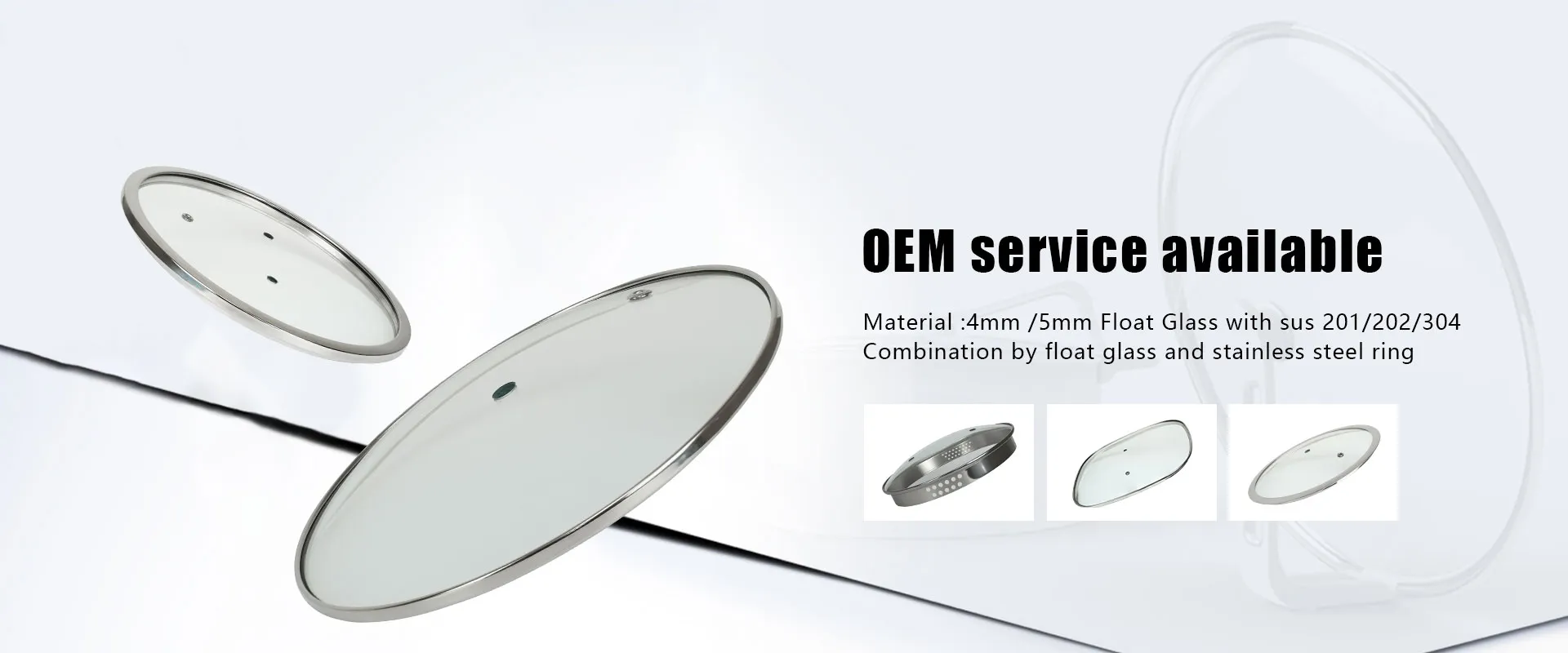
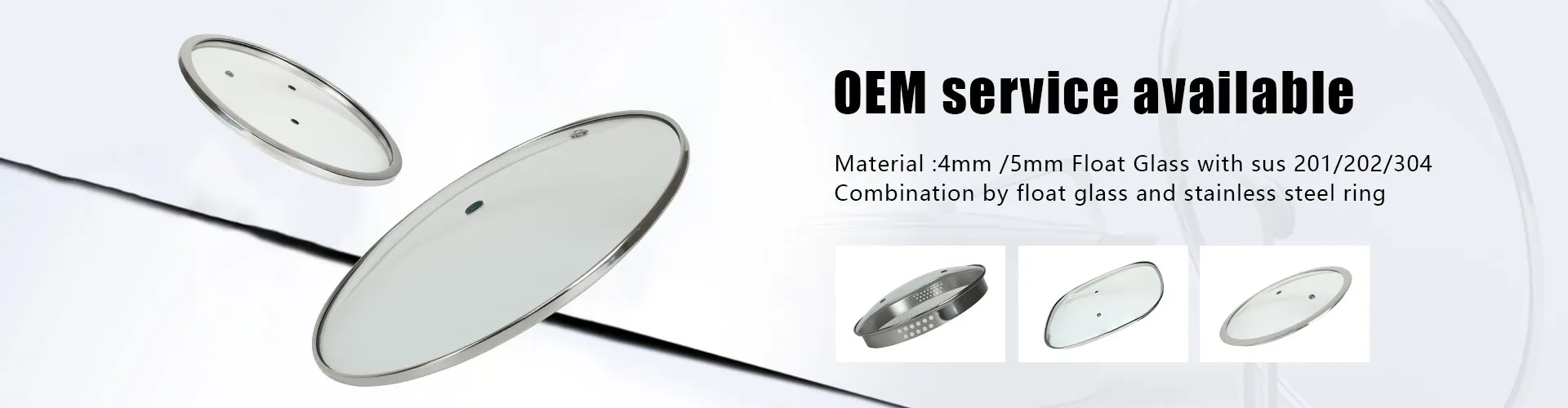
This is the realm of companies like EUR-ASIA COOKWARE CO.,LTD. When you look at their operation at https://www.glass-lid.com, the scale tells a story. An annual output of over 15 million pieces of tempered glass lids isn't for the retail DIY market; that's B2B volume. This company, based in China's Shandong province, exemplifies the tier of manufacturer that supplies the global kitchenware industry. Their specialization in low-to-high-end household glass products means they have the capability to produce to the specifications that European and North American brands demand.
For a professional or a serious repair service, the question isn't where do I buy an All-Clad branded lid? It's who manufactures a lid to these exact specs? A company with EUR-ASIA's profile, exporting over 90% of its products to markets like Germany, Italy, and France, is inherently working to stringent quality and dimensional standards. They're likely producing lids that end up on various high-end cookware lines, possibly even as an indirect supplier. The takeaway? The exact glass lid replacement you need might exist in their catalog under a part number, not a brand name.
I recall a project where we needed a batch of replacements for a discontinued All-Clad sauce pan line. Going direct was impossible. We provided a sample lid to a similar manufacturer—not unlike EUR-ASIA in scope—with precise drawings for the diameter, handle hole placement, and requested 4mm thick, fully polished edge tempered glass. The result was a near-perfect functional match. The lesson was that the authentic part is defined by its form, fit, and function, not solely by a logo. For a single lid, this route is impractical, but it reveals the industrial reality.
The Details That Make or Break a Replacement
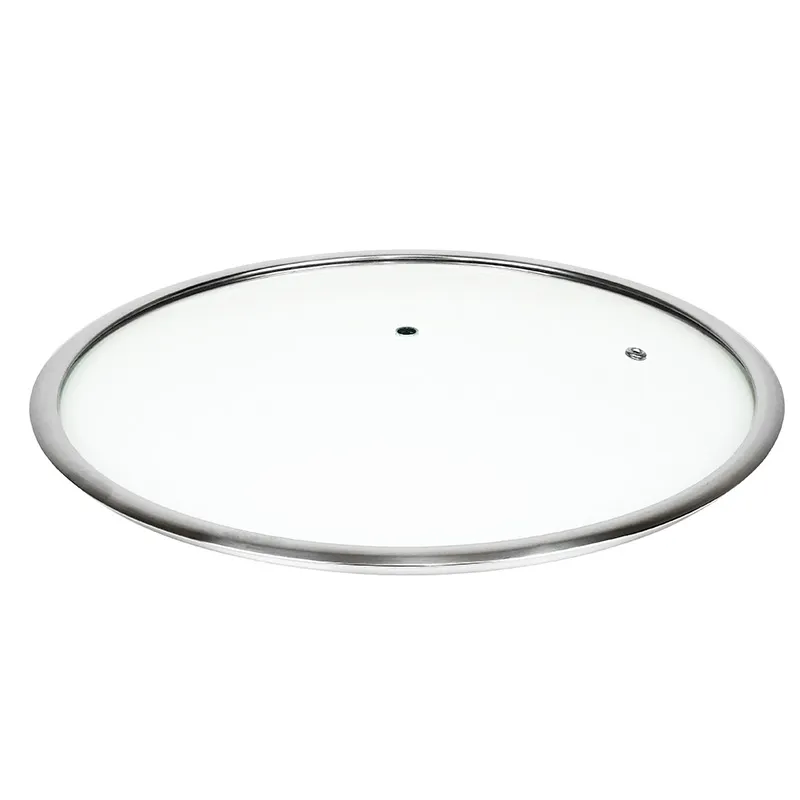
Let's talk about the glass itself. Tempered isn't a monolithic standard. Good quality lids for brands like All-Clad use clear, low-iron glass for better transparency and are tempered to withstand thermal shock from fridge to stovetop. A cheap replacement might use higher-iron content glass (giving a greenish tint) and have weaker tempering, risking shatter from uneven heating. You can sometimes spot the difference by looking at the edges and checking for minor optical distortions.
The sealing edge is another subtlety. It's not always perfectly flat. Some lids have a slight bevel or a ground smoothness that ensures a quiet, smooth contact with the pot rim. A poorly finished replacement might grind or chip over time. Also, the hole for the handle stem: if it's not cleanly drilled and fire-polished, it becomes a stress point. In my experience, these are the details that separate a lid that merely fits from one that performs and lasts like the original. When evaluating a source, these are the specs to inquire about, not just the price and diameter.
Failed Attempts and Workarounds
I've definitely been down the wrong path. Early on, we tried using generic, off-the-shelf glass lids from big-box stores. For stock pots, sometimes you get lucky. For precision fry pans or sauciers, it was almost always a failure—too much wobble, poor heat retention, or a handle that felt dangerously insecure. Another failed attempt was with aftermarket universal lids with silicone gaskets. They seal too tightly for the venting often designed into premium cookware lids and can create a pressure difference that's both dangerous and bad for cooking.
The workaround that often works for individual consumers is the secondary market: eBay, specialty kitchen forums, or even contacting All-Clad's customer service for discontinued part inventories. But for a sustainable solution, especially for businesses like restaurants or rental kitchens that use this equipment, building a relationship with a component supplier is key. You're not just buying a lid; you're securing access to a critical spare part. A manufacturer like EUR-ASIA COOKWARE CO.,LTD, with its focus on export and scale, represents this tier of the supply chain. Their business is producing these glass lid components reliably.
Closing the Loop: A Realistic Path Forward
So, what's the actionable advice for someone with a broken All-Clad lid? First, identify the exact cookware line and measure meticulously. Second, accept that a direct OEM replacement might not be a retail product. Explore specialized online retailers that deal in replacement parts—some do source from major factories. Third, for bulk needs or impossible-to-find sizes, consider reaching out to industrial manufacturers directly. A company with the profile of EUR-ASIA, which specializes in producing and selling tempered glass lids for the global market, is precisely the type of entity that fulfills these orders for trade partners.
Ultimately, the search for an all clad glass lid replacement is a lesson in modern manufacturing. The brand is the face, but a network of specialized component makers, often operating at a massive scale like the 15,000㎡ facility in Taian, is the backbone. The replacement exists; it's just a matter of navigating past the brand name to find the actual producer of the component. It's not the simplest journey, but understanding this landscape is the first step to a successful, functional fix.
Related Products
Related Products