
- Chinese
- French
- German
- Portuguese
- Spanish
- Russian
- Japanese
- Korean
- Arabic
- Irish
- Greek
- Turkish
- Italian
- Danish
- Romanian
- Indonesian
- Czech
- Afrikaans
- Swedish
- Polish
- Basque
- Catalan
- Esperanto
- Hindi
- Lao
- Albanian
- Amharic
- Armenian
- Azerbaijani
- Belarusian
- Bengali
- Bosnian
- Bulgarian
- Cebuano
- Chichewa
- Corsican
- Croatian
- Dutch
- Estonian
- Filipino
- Finnish
- Frisian
- Galician
- Georgian
- Gujarati
- Haitian
- Hausa
- Hawaiian
- Hebrew
- Hmong
- Hungarian
- Icelandic
- Igbo
- Javanese
- Kannada
- Kazakh
- Khmer
- Kurdish
- Kyrgyz
- Latin
- Latvian
- Lithuanian
- Luxembou..
- Macedonian
- Malagasy
- Malay
- Malayalam
- Maltese
- Maori
- Marathi
- Mongolian
- Burmese
- Nepali
- Norwegian
- Pashto
- Persian
- Punjabi
- Serbian
- Sesotho
- Sinhala
- Slovak
- Slovenian
- Somali
- Samoan
- Scots Gaelic
- Shona
- Sindhi
- Sundanese
- Swahili
- Tajik
- Tamil
- Telugu
- Thai
- Ukrainian
- Urdu
- Uzbek
- Vietnamese
- Welsh
- Xhosa
- Yiddish
- Yoruba
- Zulu
- Kinyarwanda
- Tatar
- Oriya
- Turkmen
- Uyghur


beer can glass with bamboo lid and straw
You see this keyword pop up more and more—'beer can glass with bamboo lid and straw'—and honestly, the immediate reaction from a lot of folks in the trade is to dismiss it as a novelty. Just another social media-friendly drinkware piece, right? But that's where the common misconception lies. Having sourced and developed glassware for years, I've learned that items like these often reveal more about material compatibility, user behavior, and genuine market demand than the serious tabletop items do. It's not just a glass; it's a specific convergence of materials—tempered glass, natural bamboo, food-grade straws—that each bring their own set of manufacturing headaches and consumer expectations. Let's talk about what that actually means on the ground.
The Anatomy of a Trend: Deconstructing the Components
First, the glass itself. It's not a standard pint or tumbler. It's shaped to mimic a beer can—wider in the middle, tapering slightly. That shape matters for tempering. We've worked with factories, like the production base of EUR-ASIA COOKWARE CO.,LTD. in Taian, that specialize in tempered glass lids and products. Their expertise in heat-strengthening glass is crucial here. A poorly tempered glass with this curvature is a shatter risk. The requirement isn't just clarity; it's structural integrity for a shape that's more challenging than a flat lid or straight-sided cup.
Then the bamboo lid. This is where the natural marketing meets manufacturing reality. Bamboo needs to be kiln-dried to a specific moisture content to prevent warping or cracking when it comes into contact with condensation from a cold drink. I've seen batches where the lid fit perfectly at the factory, but after a week in a humid warehouse, the bamboo swelled just enough to make it a struggle to fit on the glass. Sourcing consistent, food-safe bamboo that can be machined to a precise inner diameter for a snug, but not forced, fit on the glass rim is a constant negotiation.
The straw is the sleeper issue. It seems simple, but pairing a beer can glass with a straw implies a certain drinking experience—often for cocktails or iced drinks. The straw hole in the bamboo lid needs to be drilled cleanly, without splintering, and the diameter must match a standard straw size (often 10-12mm). We once had a shipment where the holes were just a millimeter too small, forcing the straw in risked splitting the lid. A millimeter too large, and the straw wobbles. It's a tiny detail that kills the user experience instantly.
From Prototype to Production: The EUR-ASIA Case Point
Looking at a manufacturer like EUR-ASIA COOKWARE CO.,LTD. (their site is at https://www.glass-lid.com) provides a practical lens. They're not a boutique craft shop; they're an export-oriented operation with an annual output in the millions. For them, a product like this isn't a one-off art piece. It's about integrating a new SKU into a high-volume line. Their core business is tempered glass lids and kitchen glass, so the glass with bamboo lid component is in their wheelhouse. The challenge for such a factory is adapting their processes for the bamboo element, which is outside their primary material focus.
Their export footprint—to Germany, Russia, Japan, etc.—is telling. It shows the trend for this kind of hybrid, eco-conscious (or at least eco-appearing) drinkware is global, not just a North American fad. A German client might have stricter demands on the bamboo's finish and the straw's food-grade certification than a client in another region. This forces a factory to elevate its compliance game across the board. The product listing on their site likely represents just the final, sellable version, not the 5-10 prototype iterations that got them there.
One practical hiccup we encountered in a similar project was assembly. Do you ship the glass, lid, and straw as separate components for the buyer to assemble, or do you pre-assemble? Pre-assembly seems efficient, but it increases packaging volume dramatically to protect the protruding straw and lid. Separate components reduce shipping density but increase labor costs at the destination for assembly. For EUR-ASIA, with 90% export, this logistics calculus is a major part of the product's viability. A poorly made bamboo lid and straw combo that breaks in transit turns a profitable item into a loss leader due to return rates.
The Feel Factor: Why This Isn't Just a Glass
Professionally, the most interesting part is the tactile feedback loop. A standard glass is about weight, clarity, and lip feel. This product adds the tactile experience of removing and replacing a bamboo lid—the slight grain, the soft thunk of a good fit—and the act of sipping through a straw from a wide-bodied glass. It changes the drinking dynamic entirely. It makes a beer (or more likely, a radler or shandy) or a cocktail a slower, more deliberate act. This isn't accidental; it's a design choice that targets a specific at-home or patio consumption occasion.
I've had samples where the bamboo lid was too thick, making it clumsy to handle, or too thin, feeling cheap and fragile. The sweet spot is a lid with enough heft to feel substantial but beveled comfortably for the fingers. The straw's placement also matters. Is it dead center? Off to the side? Centered is aesthetically pleasing but can interfere with nose space when drinking. Off-center is more functional but can look odd. These are decisions made in sampling rooms, not just on CAD drawings.
Durability testing is another realm. We'd run these through dishwashers. The glass is fine, but the bamboo? It can fade, dry out, and crack over repeated high-heat cycles. The straw, if plastic, can deform. So, you immediately have care instructions to consider. Is this a hand-wash-only product? That affects its market position. A truly robust product needs a bamboo treatment that can withstand dishwasher heat, which adds cost. Most of the mass-market versions, frankly, can't.
Market Positioning and the Reality of Premium
So, who's buying this? And at what price point? The keyword often gets bundled with unique gift or barware. That positions it in the low-to-mid premium segment. It's not a $5 basic glass, but it's also not a $50 hand-blown masterpiece. For a manufacturer like EUR-ASIA, this fits their low-to-high level product range. They can produce the tempered glass body at scale with high quality, source the bamboo components from vetted partners, and assemble for a mid-tier price that supports export margins.
A failure we learned from was underestimating the packaging. You can't just throw these in a standard glass box. The lid needs to be secured in a foam or pulp insert to prevent it from rattling and chipping the glass interior during shipping. The straw needs its own slot. Good packaging can add 20-30% to the unit cost. Skimp here, and your beautiful product arrives as a box of fragments. Seeing the scale of EUR-ASIA's facility (15,000㎡ building area), they have the space for proper packaging lines, which is a non-negotiable for export reliability.
Finally, is it a lasting trend or a flash in the pan? My take is that the specific beer can shape might fade, but the demand for hybrid material drinkware—glass paired with sustainable or natural accents—is solid. It speaks to a desire for experience over mere utility. The product's success hinges on nailing the functional details: a lid that fits just so, a straw that doesn't feel like an afterthought, and a glass that feels good in the hand despite its unconventional shape. Get those right, and it moves from novelty to a legitimate barware category. Get them wrong, and it's just another item in the clearance bin. For companies embedded in production, like the one behind https://www.glass-lid.com, navigating that fine line is the daily work.
Related Products
Related Products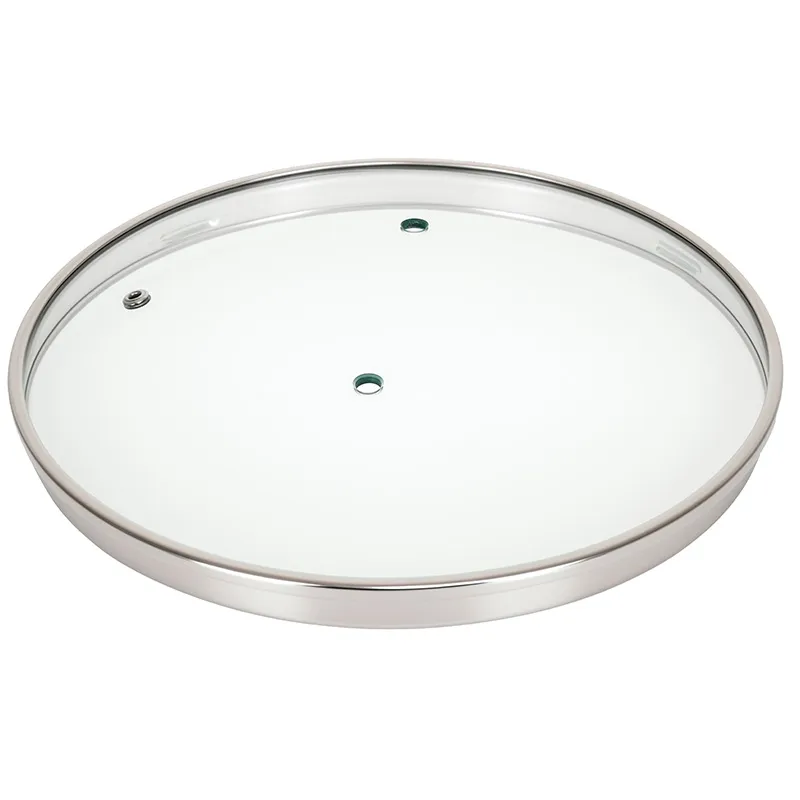
Best Selling Products
Best Selling Products
Related Search
Related Search- stainless steel glass with lid
- China glass lid factory
- cookware tempered glass lid
- tempered glass lid with stainless steel
- 1 gallon glass jar wide mouth with airtight metal lid
- tempered glass cover maker in China
- square tempered glass lid
- glass lid distributior
- glass jar with copper lid
- C type glass lid manufacturer


