- Chinese
- French
- German
- Portuguese
- Spanish
- Russian
- Japanese
- Korean
- Arabic
- Irish
- Greek
- Turkish
- Italian
- Danish
- Romanian
- Indonesian
- Czech
- Afrikaans
- Swedish
- Polish
- Basque
- Catalan
- Esperanto
- Hindi
- Lao
- Albanian
- Amharic
- Armenian
- Azerbaijani
- Belarusian
- Bengali
- Bosnian
- Bulgarian
- Cebuano
- Chichewa
- Corsican
- Croatian
- Dutch
- Estonian
- Filipino
- Finnish
- Frisian
- Galician
- Georgian
- Gujarati
- Haitian
- Hausa
- Hawaiian
- Hebrew
- Hmong
- Hungarian
- Icelandic
- Igbo
- Javanese
- Kannada
- Kazakh
- Khmer
- Kurdish
- Kyrgyz
- Latin
- Latvian
- Lithuanian
- Luxembou..
- Macedonian
- Malagasy
- Malay
- Malayalam
- Maltese
- Maori
- Marathi
- Mongolian
- Burmese
- Nepali
- Norwegian
- Pashto
- Persian
- Punjabi
- Serbian
- Sesotho
- Sinhala
- Slovak
- Slovenian
- Somali
- Samoan
- Scots Gaelic
- Shona
- Sindhi
- Sundanese
- Swahili
- Tajik
- Tamil
- Telugu
- Thai
- Ukrainian
- Urdu
- Uzbek
- Vietnamese
- Welsh
- Xhosa
- Yiddish
- Yoruba
- Zulu
- Kinyarwanda
- Tatar
- Oriya
- Turkmen
- Uyghur


beer can glass with lid wholesale
When you type 'beer can glass with lid wholesale' into a search, you're probably picturing a straightforward product: a glass shaped like a beer can, with a lid, ready for bulk order. The reality in this niche is often more fragmented. Many suppliers list it, but the devil is in the details—thread compatibility between glass and lid, the actual thickness of the glass, and whether that 'wholesale price' is truly viable for a container that requires separate sourcing of glass bodies and plastic lids. It's not a single SKU world; it's an assembly.
The Core Product Breakdown: It's Never Just One Item
Let's get specific. A beer can glass with lid typically involves two distinct components manufactured separately. The glass body is tempered, often in a 500ml or pint size, with a specific threading pattern molded into the rim—usually a continuous thread (CT) design. The lid is a separate injection-molded plastic piece, PP or PS, with a matching thread and often a silicone seal. The first pitfall is assuming these are always sold as a set. In true wholesale, you might source glasses from a glass factory and lids from a plastics specialist, then assemble. Or you find a consolidator who does that legwork.
I've seen buyers get burned by ordering 10,000 glasses only to find the lids from their usual supplier don't fit. The thread pitch might be off by a millimeter, rendering the seal useless. This is where partnering with a supplier that controls or rigorously audits the entire assembly chain pays off. It's not just about having the product; it's about having the matching product.
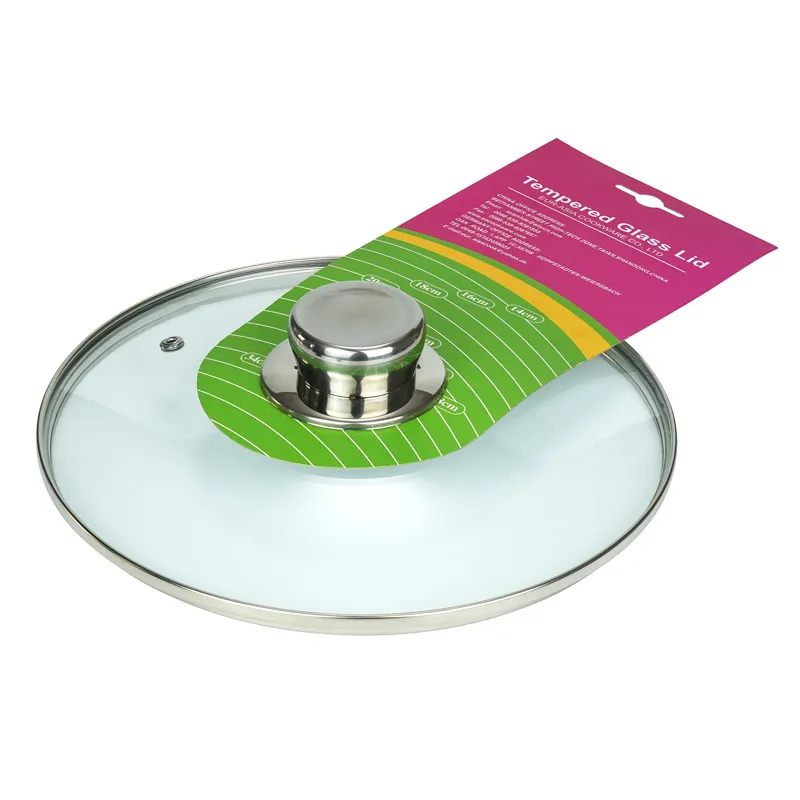
Companies that specialize in glassware and kitchen accessories, like EUR-ASIA COOKWARE CO.,LTD (you can find them at glass-lid.com), often have an edge here. Their core business, as their site states, is tempered glass lids and household glass products. For them, producing a tempered beer can glass body is within their wheelhouse. The lid becomes a complementary accessory. Their production base in Shandong's high-tech zone, with an annual output in the millions of pieces, suggests the capacity for the volume and precision consistency that wholesale requires.
Quality Benchmarks Beyond the Listing Photo
Photos online show a pristine, frosty glass. The received shipment tells another story. For wholesale, you need to define benchmarks. Tempering is non-negotiable for safety—it should meet FDA or LFGB standards for food contact. The weight of the glass matters; a light, tinny feel often means thinner walls and lower durability. I always ask for the gram weight specification. A good 500ml tempered beer can glass should have a substantial heft, around 350-400 grams.
Then there's the lid. Does it have a vent hole for drinking? Is the seal ring removable for cleaning? Is the plastic BPA-free? These seem like small details, but they're the difference between a product that gets returned and one that earns repeat orders. A supplier's focus on low- medium- high level products, as EUR-ASIA COOKWARE notes, is actually a useful signal—it means they likely have tiers. A wholesale buyer for a premium brand would target their high level line, which should imply better material clarity, tighter tolerance on threads, and more consistent finishing.
Their export footprint—over 90% to markets like Germany, Japan, and South Korea—is a practical indicator. These are stringent markets with high compliance standards. A factory consistently serving them is likely adept at handling the quality documentation and material safety certifications that serious wholesale buyers need. It doesn't guarantee perfection, but it filters out a lot of the lower-tier players.
Minimum Order Quantities and the True Cost of Wholesale
The term 'wholesale' is often tied to MOQs, and here's where dreams meet spreadsheets. For a specialized item like this, a factory's glass MOQ might be 5,000 pieces per design, and the lid might have a separate MOQ of 10,000. This immediately creates a inventory calculation problem. You either commit to higher lid volumes or negotiate a matched MOQ.
My experience is that integrated suppliers offer a simpler path. If a company already produces millions of glass lids annually, adding a matching lid for a beer can glass is a minor mold adjustment. Their MOQ for a complete set (glass + lid) might be more pragmatic, say 3,000 sets, because they're leveraging existing production lines. The cost isn't just the unit price; it's the cost of complexity, logistics, and quality assurance. Sourcing separately might seem cheaper per unit until you factor in the extra freight, quality checks, and assembly labor.
Pricing is opaque. A per-unit price of $1.50 might look great, but does it include the lid? Is it FOB Shanghai or EXW factory? For a product with a lid, packaging becomes crucial to prevent scratches and breakage. That cost and the carton dimensions (which affect shipping volume) need to be baked in from the quote stage. A professional supplier will provide all this detail upfront.
Logistics and the Fragility Factor
Glass is fragile. This isn't news, but with a beer can glass with lid, you have two fragile components (glass) and one less fragile (plastic lid) that can still be damaged. Packaging design is critical. Good suppliers use compartmentalized inner packaging—often a plastic sleeve for the glass and a separate slot for the lid, all within a sturdy corrugated carton. You must discuss and approve the packing method before production.
Insurance is a must. Even with great packing, breakage happens. Factor a 1-3% breakage rate into your cost model for sea freight. Air freight is faster but exorbitant for heavy glass. The location of the factory matters for inland logistics. Shandong Province, where EUR-ASIA COOKWARE is based, has good port access to Qingdao, which simplifies the export process. This operational smoothness is a hidden value in a wholesale partnership.
Lead times are another reality check. From order confirmation to goods ready for shipment, expect 45-60 days for a customized order. This includes glass production, lid production (if not in stock), assembly, and packing. Rushing this process is a recipe for quality disasters.
Strategic Sourcing: Building a Relationship, Not Just a Transaction
The goal of 'wholesale' should be a reliable pipeline, not a one-off deal. This means viewing a supplier as a partner. Can they handle slight design modifications? For instance, adding a logo via silk-screening or laser etching on the glass? Can they develop a custom lid color? Their response to these questions reveals their flexibility and technical capability.
A supplier like the one mentioned, with a clear specialization in glass and a substantial physical footprint (20,000㎡ area, 150 employees), is built for stability. They're less likely to disappear next season. Their product range focus suggests depth of knowledge in tempering processes and lid fitment—exactly the expertise needed for this product.
Finally, always, always get samples. Not just one, but a pre-production sample from the actual production run. Pay for the courier. Test the sample: pour a beer in, seal the lid, shake it, check for leaks. Feel the thread engagement. Wash it in a dishwasher 50 times. This due diligence is what separates professional wholesale sourcing from hopeful guessing. The search for 'beer can glass with lid wholesale' ends not with a website, but with a sample on your desk that passes your own stress test.
Related Products
Related Products