- Chinese
- French
- German
- Portuguese
- Spanish
- Russian
- Japanese
- Korean
- Arabic
- Irish
- Greek
- Turkish
- Italian
- Danish
- Romanian
- Indonesian
- Czech
- Afrikaans
- Swedish
- Polish
- Basque
- Catalan
- Esperanto
- Hindi
- Lao
- Albanian
- Amharic
- Armenian
- Azerbaijani
- Belarusian
- Bengali
- Bosnian
- Bulgarian
- Cebuano
- Chichewa
- Corsican
- Croatian
- Dutch
- Estonian
- Filipino
- Finnish
- Frisian
- Galician
- Georgian
- Gujarati
- Haitian
- Hausa
- Hawaiian
- Hebrew
- Hmong
- Hungarian
- Icelandic
- Igbo
- Javanese
- Kannada
- Kazakh
- Khmer
- Kurdish
- Kyrgyz
- Latin
- Latvian
- Lithuanian
- Luxembou..
- Macedonian
- Malagasy
- Malay
- Malayalam
- Maltese
- Maori
- Marathi
- Mongolian
- Burmese
- Nepali
- Norwegian
- Pashto
- Persian
- Punjabi
- Serbian
- Sesotho
- Sinhala
- Slovak
- Slovenian
- Somali
- Samoan
- Scots Gaelic
- Shona
- Sindhi
- Sundanese
- Swahili
- Tajik
- Tamil
- Telugu
- Thai
- Ukrainian
- Urdu
- Uzbek
- Vietnamese
- Welsh
- Xhosa
- Yiddish
- Yoruba
- Zulu
- Kinyarwanda
- Tatar
- Oriya
- Turkmen
- Uyghur


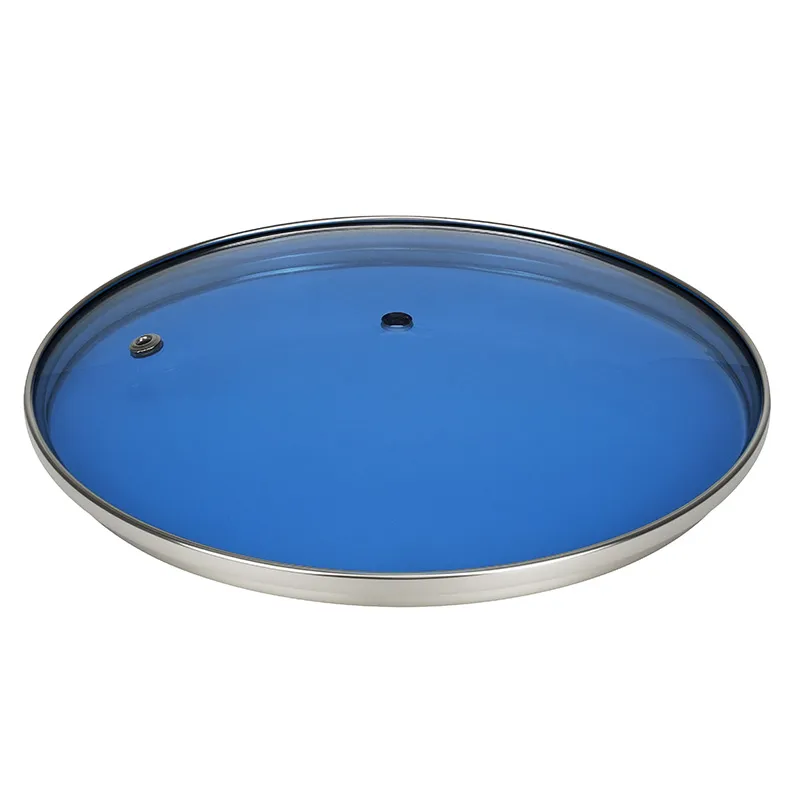
blue glass jar with lid
When most people hear 'blue glass jar with lid', they picture a quaint apothecary piece on a rustic shelf. That's the first misconception. In the trade, that specific descriptor isn't just about nostalgia; it's a functional category with its own set of material and production puzzles. The blue tint isn't merely decorative—it's often a byproduct of the cobalt or copper used for tempering stability, which brings me to the first real hurdle: achieving consistent color depth while maintaining structural integrity during rapid thermal cycling. It’s less about looking pretty and more about not cracking under pressure, literally.
The Core Challenge: Color and Tempering
The blue isn't painted on; it's in the glass batch. This means the entire jar body is uniformly colored, which is crucial for even heat distribution during tempering. If the cobalt oxide mix isn't perfectly homogeneous, you get streaks—not the nice kind, but weak points. I've seen batches where the blue was gorgeous, but the jars failed the thermal shock test at 220°C because the colorant acted as an impurity affecting the expansion coefficient. It's a balancing act: enough cobalt for that signature blue glass jar with lid appeal, but not so much that it compromises the tempering process. Suppliers who promise a deep sapphire blue often overlook this, leading to higher breakage rates during production or, worse, after filling.
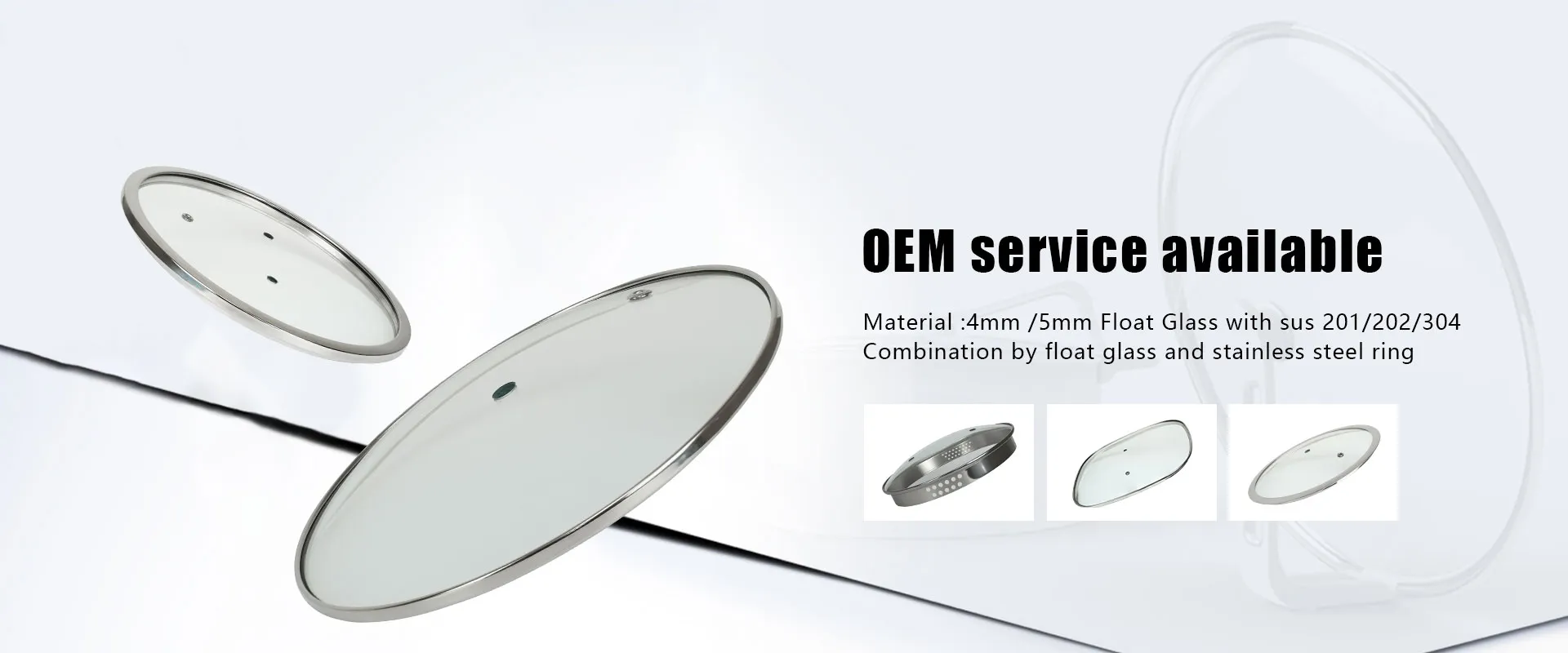
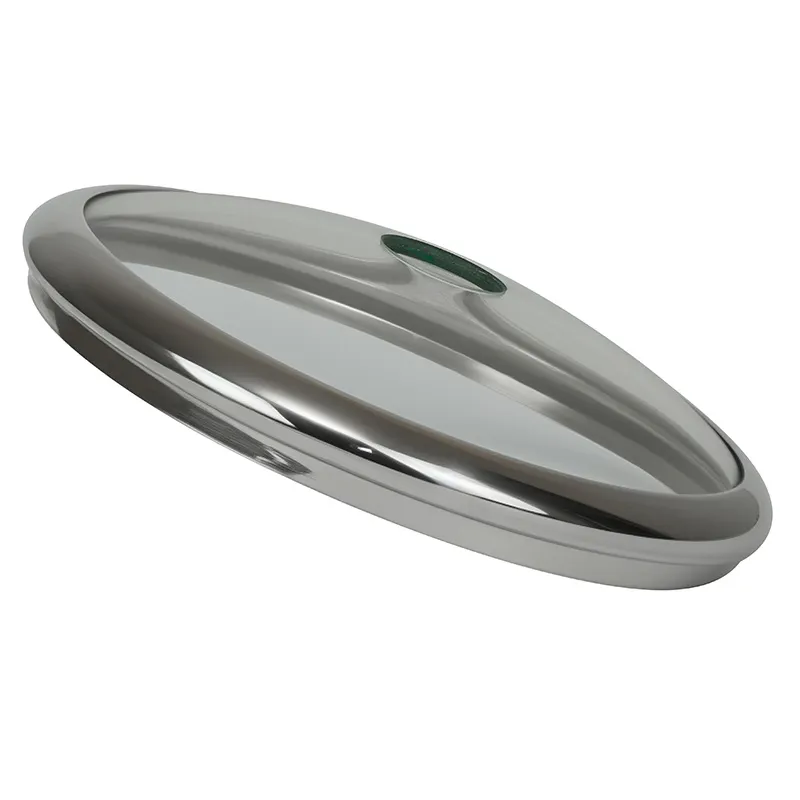
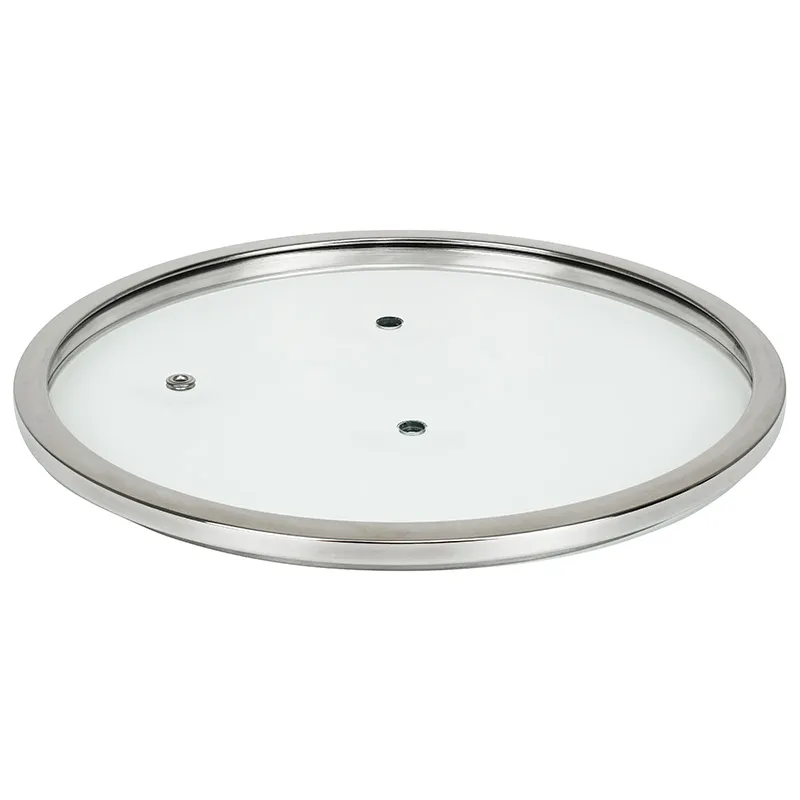
Then there's the lid. It's rarely made from the same tempered blue glass—that would be cost-prohibitive and create sealing issues. The lid is usually a clear, tempered glass disc or a high-quality plastic with a silicone gasket. The real art is in the finish of the jar's sealing surface, the lip. It must be fire-polished to a smooth, rounded edge after tempering. Any microscopic chip or unevenness here, and your lid won't seal, turning a beautiful jar into a useless vessel. I recall a project with EUR-ASIA COOKWARE CO.,LTD where we tackled this. Their production base in Taian has the capacity for high-volume runs, and they understood that the lip finishing needed a separate, slower conveyor line to avoid post-temper damage, a detail many larger factories ignore in favor of speed.
Speaking of volume, their annual output of over 15 million tempered glass lids gives them a data pool most don't have. They've iterated on the clamping tension of the metal bail wire (common on these jars) based on feedback from European markets. A lid that's too tight can crack the glass rim during temperature changes; too loose, and it's not airtight. Their solution involved a specific spring-steel wire shape that allows for a bit of flex. It's these unsexy, granular details that separate a shelf-ready product from one that gets returned.
Market Realities and the Export Game
You can't talk about these jars without addressing the global supply chain. Over 90% of EUR-ASIA's products are exported to places like Germany, Italy, and Japan. Each market has subtly different standards. The German retailers, for instance, are obsessive about the lid's food-contact certification (LFGB vs. FDA), while Italian buyers might prioritize the exact hue of blue matching a existing dinnerware line. A blue glass jar with lid for the European market often has a slightly thicker glass bottom for stability and a more pronounced shoulder to the jar for easier gripping—ergonomic details born from practical use, not just design software.
This export focus shapes the entire product. The blue glass used isn't the cheap, thin stuff. It's typically soda-lime glass with a higher magnesium oxide content for better chemical durability. Why? Because these jars aren't just for dry pasta. They're used for pickling, storing oily herbs, or holding homemade cosmetics. The glass must resist clouding or etching from acids and fats. A failure we encountered early on was with a citric acid-based preserve; after a few months, the inner surface of a jar from a different supplier developed a hazy film. The issue traced back to insufficient chemical stabilization during the glass melting phase. EUR-ASIA's formulation, geared for stringent EU standards, passed the same test without issue.
The export model also dictates packaging. These jars aren't shipped individually. They're nested, often with the lids pre-assembled, in triple-wall corrugated cardboard. The packaging design has to account for the jar's widest point (usually the shoulder) and prevent lid-on-glass abrasion during transit. It sounds simple, but getting the die-cut foam insert right to cradle a blue glass jar with lid without being so tight it's impossible to unload is a minor science. A poorly packed container leads to a sea of broken glass and a ruined shipment, something their logistics team in Shandong has clearly refined over moving 15 million pieces a year.
The Lid as a Separate Engineering Feat
It's tempting to think the jar is the star, but the lid is the critical co-star. For a true airtight seal suitable for food storage, the closure system is everything. The classic swing-top bail with a rubber gasket is common, but the quality variance is huge. The gasket material is key—it must be food-grade silicone, not cheaper EPDM rubber, to remain pliable and odorless over time. I've seen gasksets that degraded after a year, becoming brittle and letting in air, which defeats the entire purpose.
Another point of failure is the hinge mechanism on the bail. Cheap zinc alloy will corrode or fatigue. Better suppliers, and I've seen this in EUR-ASIA's component specs, use stainless steel or coated steel for the bail and hinge. The lid glass itself, if it's a glass lid, is tempered to about 3mm thick—thick enough to feel substantial, thin enough to not be overly heavy. Its underside is often ground flat to mate perfectly with the gasket. If this grinding is off by even half a degree, you get a leak. It's a step that requires precision machinery, the kind you find in a facility with 15,000㎡ of building area dedicated to this craft.
We experimented once with a bamboo lid for a natural look. It was a disaster. Bamboo, even treated, warps with changes in humidity, breaking the seal. It was a lesson in not letting aesthetics override core functionality. The humble, properly engineered blue glass jar with lid with a reliable glass or high-grade plastic lid outperforms any gimmicky alternative every time.
Practical Applications and User Missteps
In a commercial kitchen or for serious home preserving, these jars are workhorses. But there are common user errors. The biggest is thermal shock. People take a jar from the freezer and pour hot liquid into it, or vice versa. Even tempered glass has its limits. The blue tint offers no extra protection here. Another is using metal utensils inside, which can scratch the interior. While the surface is hard, deep scratches can become stress concentrators. It's why some manufacturers, though not all, advise against it.
The jar's design also informs its best use. A wide-mouth blue glass jar with lid is ideal for pickling whole vegetables or storing large utensils. A narrower mouth is better for liquids or small dry goods. The capacity, from 250ml to 2 liters, should match the content's density. Filling a large jar with lightweight tea leaves means constantly opening it, exposing the contents to air and light—the blue glass does help block some light, but it's not a perfect barrier.
From a sourcing perspective, if you're looking at a company like EUR-ASIA COOKWARE CO.,LTD, their specialization in low-to-high level household glass products is telling. It means they have the range to produce both a cost-effective version for a supermarket private label and a premium, heavy-gauge version for a specialty brand. The key is to specify. Don't just ask for a blue jar. Specify the glass thickness (e.g., 4mm body), the tempering standard (e.g., meets ANSI Z97.1), the lid material and gasket certification, and the intended use. Their engineers can then recommend the right product from their vast catalog, avoiding the mismatch between a beautiful jar and a practical failure.
Concluding Thoughts on Substance Over Style
Ultimately, a blue glass jar with lid is a fusion of material science, mechanical design, and an understanding of end-use. Its value isn't captured in a stock photo. It's in the hand-feel of the tempered glass, the confident snap of the bail closing, and the jar's ability to sit for years on a shelf, contents preserved, without degrading. The color is the hook, but the engineering is the product.
Companies that last in this space, like the one with its production base in Taian's High-tech Development Zone, succeed by obsessing over these details at scale. They're not just selling glass; they're selling reliability and fitness for purpose. When 90% of your output is judged by the exacting standards of international markets, you learn quickly that a good jar is defined by its weakest point—often the seal, sometimes the finish, never just its color.
So next time you see one, look past the blue. Check the lip. Feel the weight of the lid. Listen for the seal. That's where the real story of the object is told, far from the rustic fantasy and deep in the realm of practical, manufactured reality.
Related Products
Related Products