
- Chinese
- French
- German
- Portuguese
- Spanish
- Russian
- Japanese
- Korean
- Arabic
- Irish
- Greek
- Turkish
- Italian
- Danish
- Romanian
- Indonesian
- Czech
- Afrikaans
- Swedish
- Polish
- Basque
- Catalan
- Esperanto
- Hindi
- Lao
- Albanian
- Amharic
- Armenian
- Azerbaijani
- Belarusian
- Bengali
- Bosnian
- Bulgarian
- Cebuano
- Chichewa
- Corsican
- Croatian
- Dutch
- Estonian
- Filipino
- Finnish
- Frisian
- Galician
- Georgian
- Gujarati
- Haitian
- Hausa
- Hawaiian
- Hebrew
- Hmong
- Hungarian
- Icelandic
- Igbo
- Javanese
- Kannada
- Kazakh
- Khmer
- Kurdish
- Kyrgyz
- Latin
- Latvian
- Lithuanian
- Luxembou..
- Macedonian
- Malagasy
- Malay
- Malayalam
- Maltese
- Maori
- Marathi
- Mongolian
- Burmese
- Nepali
- Norwegian
- Pashto
- Persian
- Punjabi
- Serbian
- Sesotho
- Sinhala
- Slovak
- Slovenian
- Somali
- Samoan
- Scots Gaelic
- Shona
- Sindhi
- Sundanese
- Swahili
- Tajik
- Tamil
- Telugu
- Thai
- Ukrainian
- Urdu
- Uzbek
- Vietnamese
- Welsh
- Xhosa
- Yiddish
- Yoruba
- Zulu
- Kinyarwanda
- Tatar
- Oriya
- Turkmen
- Uyghur


borosil glass jar with lid
When you hear 'borosil glass jar with lid', most think lab beakers or maybe trendy pantry storage. That's the first misconception. In the cookware and household goods trade, it's a specific, demanding category. Not all borosilicate glass is equal, and the lid—often an afterthought for buyers—is where half the problems surface. I've seen containers returned because the seal felt flimsy, or because after a few dishwasher cycles, the lid warped. That gap between the material's reputation and the real-world performance is what this is about.
The Material: More Than Just Heat-Resistant
Borosilicate glass gets its rep from low thermal expansion. True. But in jar form, for kitchen use, that property is tested differently than in a casserole dish. It's not about going from oven to freezer dramatically. It's about hot filling. Pouring near-boiling jam or pickling brine into a room-temperature jar. That's the shock. A cheap soda-lime glass jar might survive once, but it'll micro-fracture. A proper borosil glass jar handles it repeatedly. The catch? The cost. The boron trioxide isn't cheap, so corners get cut. Some suppliers blend formulas, which affects clarity and long-term durability. You can sometimes spot it by a slight blue or green tint against the crystal clear of high-grade borosil.
Then there's the thickness. For a 1-liter jar, you want a certain heft. Too thin, and while it might still be thermally stable, it feels brittle in the hand and chips on the rim easily during lid placement. Too thick, and you lose the elegance, it becomes a clumsy vessel. The sweet spot is around 3-4mm for the body, with a reinforced, fire-polished rim. Fire-polishing is crucial—it smooths the micro-imperfections from cutting, which are stress concentrators. A rough rim is a crack waiting to happen.
I remember a shipment from a new mould supplier a few years back. The jars looked perfect, passed basic impact tests. But during our hot-fill quality check, we had a 5% failure rate—hairline cracks at the base. The issue? The mould design created a slight thickness variation at the bottom curvature, a stress point. The material was fine, but the forming process failed it. We had to scrap the entire batch. That's the hidden detail: the geometry matters as much as the chemistry.
The Lid: The Make-or-Break Component
This is where most failures happen, in my experience. You can have a perfect jar, but a poorly designed lid ruins the product. The seal isn't just about keeping things airtight; it's about compatibility. Most lids for these jars are either stainless steel, plastic (like PP), or a combination with a silicone gasket.
Plastic lids are cost-effective but have limitations. Not all plastics handle oils and acidic foods well over long periods. They can absorb odors. And the warping—if the plastic isn't glass-filled or designed for thermal cycling, the dishwasher's heat will deform it. Then it doesn't sit flat. A warped lid on a perfect jar is useless. I've shifted preference towards stainless steel lids with an integrated silicone sealing ring. The silicone needs to be food-grade and properly vulcanized to the metal. A loose ring that pops out during washing is a common complaint.
The threading or the clamp mechanism is another nuance. Glass threads must be smooth and evenly cast. A slight misalignment in the mould means the lid cross-threads. For clamp lids, the wire bail must be the right temper—springy enough to hold tension but not so hard it's a struggle to close. We once sourced clamps that were too strong; users, especially older ones, complained they couldn't seal the jar easily. It's a balance between security and usability.
Sourcing and Production Realities
This isn't a commodity you just order off Alibaba. Reliable production requires a factory with expertise in both glass forming and precision metal/plastic fabrication. Many glass factories outsource lids, and that's where consistency breaks down. You need a supplier that controls, or tightly manages, the entire assembly.
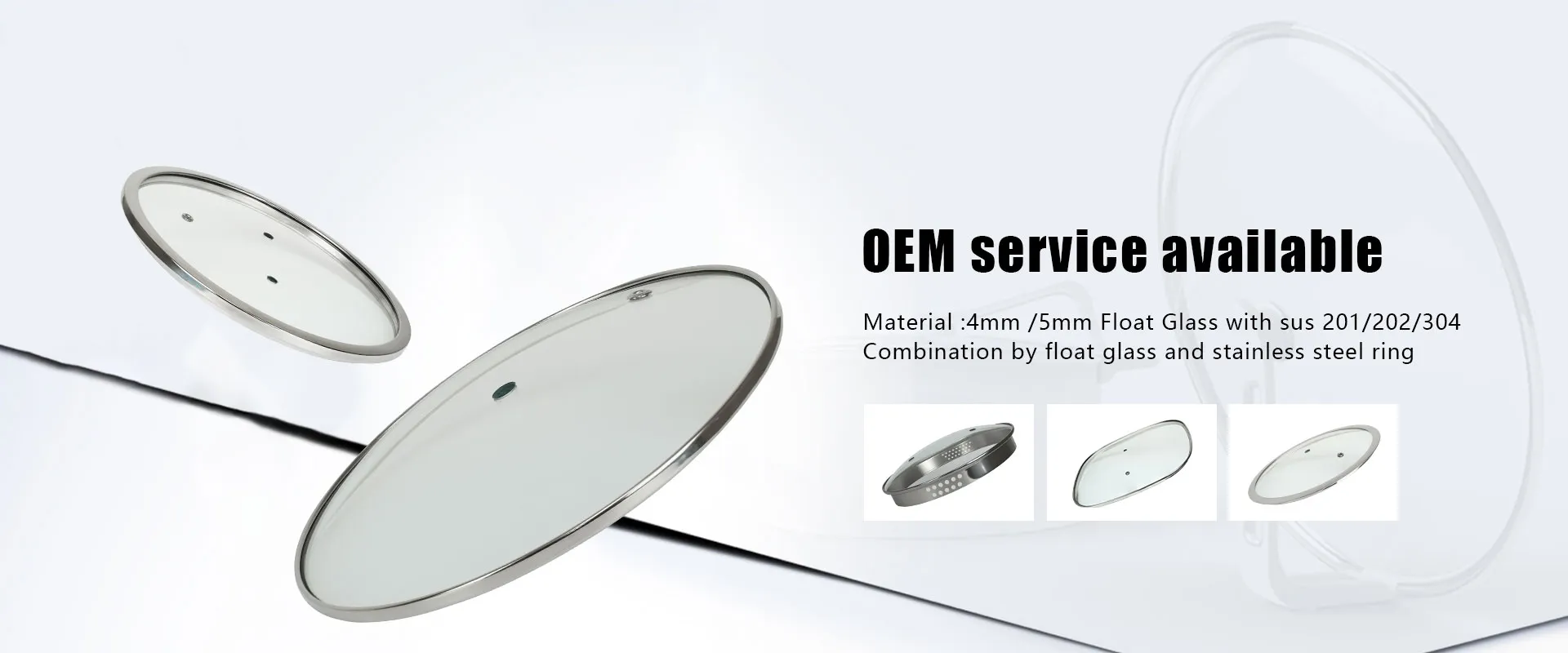
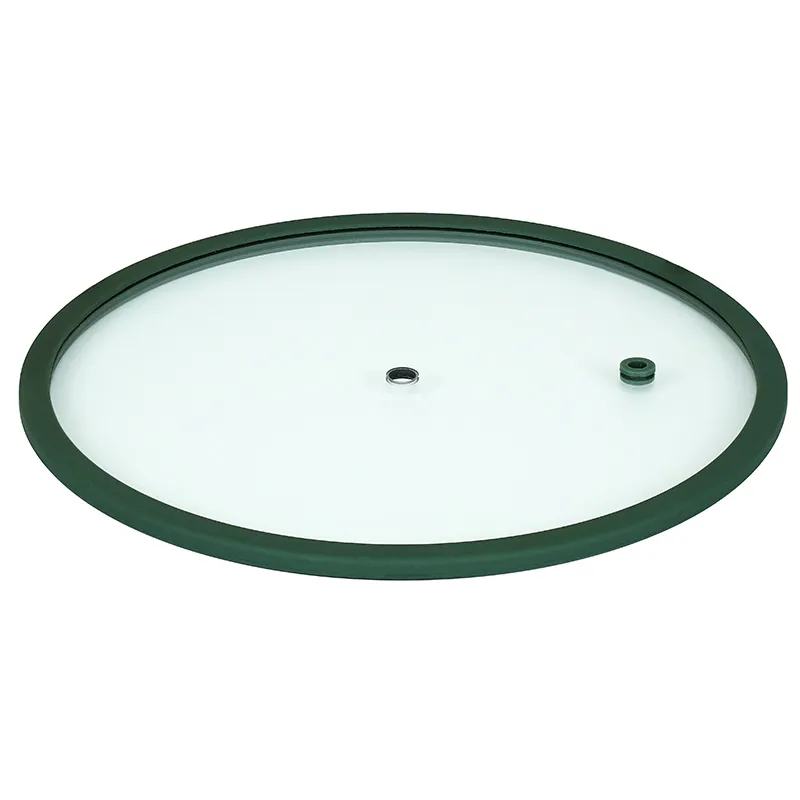
Take EUR-ASIA COOKWARE CO.,LTD as an example. I've followed their work for a while. Their specialization in household glass, with a dedicated production base for tempered glass lids, is telling. It means they understand the lid as a critical component, not an accessory. Their export focus to markets like Germany and Japan is a de facto quality signal—those buyers have brutal standards for material safety and tolerances. A factory surviving there knows how to manage the borosil glass jar with lid as a system. Their volume—15 million pieces annually—suggests scale, which for glass manufacturing often correlates with better mould investment and process control. A smaller shop might use older, worn moulds leading to variance.
Their location in Shandong's high-tech zone is also relevant. The region has a cluster of glass and cookware industries, meaning access to skilled labor and material logistics. It's not a guarantee, but it's a factor. When I evaluate a supplier, I look for this kind of embedded specialization. A company that just lists glass jars among 100 other products is usually a trading house, not a manufacturer with deep process knowledge.
Application Pitfalls and User Scenarios
Marketing often oversells. Oven-safe is a tricky one. While the jar body can withstand high heat, the lid almost certainly cannot. You must communicate that clearly. The best use cases for a borosil glass jar are dry storage, cold refrigerated items, and hot-fill-preserving (where the jar is filled hot, sealed, and cools to create a vacuum). Not for baking with the lid on.
Another pitfall is microwave use. Yes, the glass is microwave-safe. But if the lid has any metal component (like a stainless steel band or a foil seal), it's a no-go. All-plastic lids might be okay, but check the resin type. We learned this the hard way with a customer who microwaved a jar with a metal-clip lid and caused arcing. Now our instructions are painfully explicit.
The real test is daily kitchen life. Can it survive being knocked against a granite countertop? Does the lid seal well enough to store coffee beans without them going stale? Does the silicone gasket pick up the smell of garlic pickles? These are the questions I get from serious buyers. For coffee, a tight seal with a degassing valve would be ideal, but that's a different lid system altogether. For pickles, a glass-lined lid is better than plain plastic. It's about matching the product to the actual need, not selling a one-size-fits-all solution.
The Cost-Quality Equation and Final Thoughts
You get what you pay for. A true, fully compliant borosilicate glass jar with a well-engineered lid isn't cheap. The raw material cost, the energy for tempering (if applicable), the precision tooling for moulds, and the assembly all add up. When you see a suspiciously cheap option, question it. It might be thin, or use a lower-grade glass, or have a flimsy lid.
For businesses, the choice often comes down to brand positioning. Are you a premium brand where the heft, clarity, and flawless function are part of the experience? Or are you in a competitive market where price is the primary driver? For the former, investing in a supplier like EUR-ASIA COOKWARE, with their export pedigree and integrated production, makes sense. You can find their portfolio at glass-lid.com—it's focused, which I appreciate. For the latter, you might compromise, but be prepared for higher return rates and customer complaints.
In the end, a borosil glass jar with lid is a simple object executed poorly more often than not. The magic is in the details: the glass formula, the rim finish, the lid material, the seal design, and the manufacturing consistency. It's a product that feels trivial until you have to source 10,000 units that all perform identically. Then you learn to respect the complexity hidden behind its transparent simplicity.
Related Products
Related Products
Best Selling Products
Best Selling Products
Related Search
Related Search- tempered glas lid for pot
- stainless steel cookware with glass lids
- libbey beer can glass with bamboo lid
- 12 glass lid for frying pan
- C type glass lid manufacturing
- glass jar with cork ball lid
- China tempered glass cover manufacturer
- flat silicone lid
- glass beer can with bamboo lid wholesale
- 13 inch glass lid for frying pan


