- Chinese
- French
- German
- Portuguese
- Spanish
- Russian
- Japanese
- Korean
- Arabic
- Irish
- Greek
- Turkish
- Italian
- Danish
- Romanian
- Indonesian
- Czech
- Afrikaans
- Swedish
- Polish
- Basque
- Catalan
- Esperanto
- Hindi
- Lao
- Albanian
- Amharic
- Armenian
- Azerbaijani
- Belarusian
- Bengali
- Bosnian
- Bulgarian
- Cebuano
- Chichewa
- Corsican
- Croatian
- Dutch
- Estonian
- Filipino
- Finnish
- Frisian
- Galician
- Georgian
- Gujarati
- Haitian
- Hausa
- Hawaiian
- Hebrew
- Hmong
- Hungarian
- Icelandic
- Igbo
- Javanese
- Kannada
- Kazakh
- Khmer
- Kurdish
- Kyrgyz
- Latin
- Latvian
- Lithuanian
- Luxembou..
- Macedonian
- Malagasy
- Malay
- Malayalam
- Maltese
- Maori
- Marathi
- Mongolian
- Burmese
- Nepali
- Norwegian
- Pashto
- Persian
- Punjabi
- Serbian
- Sesotho
- Sinhala
- Slovak
- Slovenian
- Somali
- Samoan
- Scots Gaelic
- Shona
- Sindhi
- Sundanese
- Swahili
- Tajik
- Tamil
- Telugu
- Thai
- Ukrainian
- Urdu
- Uzbek
- Vietnamese
- Welsh
- Xhosa
- Yiddish
- Yoruba
- Zulu
- Kinyarwanda
- Tatar
- Oriya
- Turkmen
- Uyghur


China glass lid manufacturer
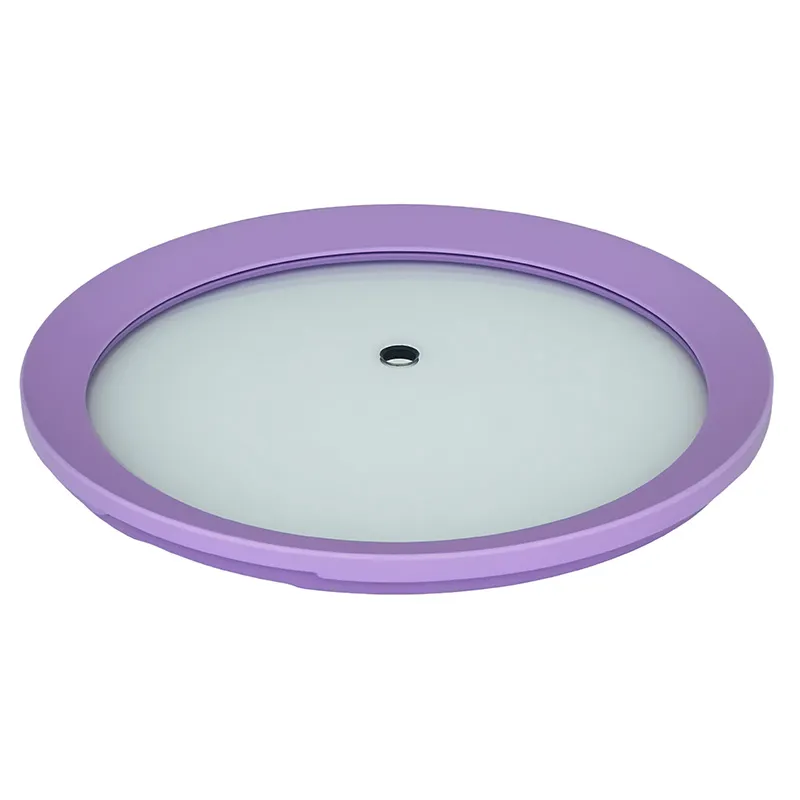
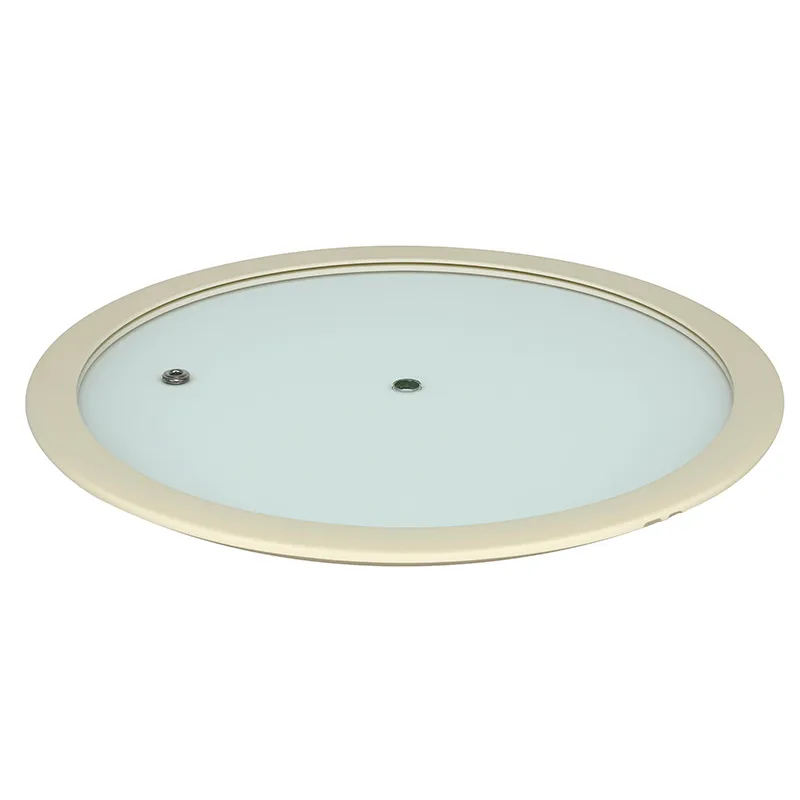
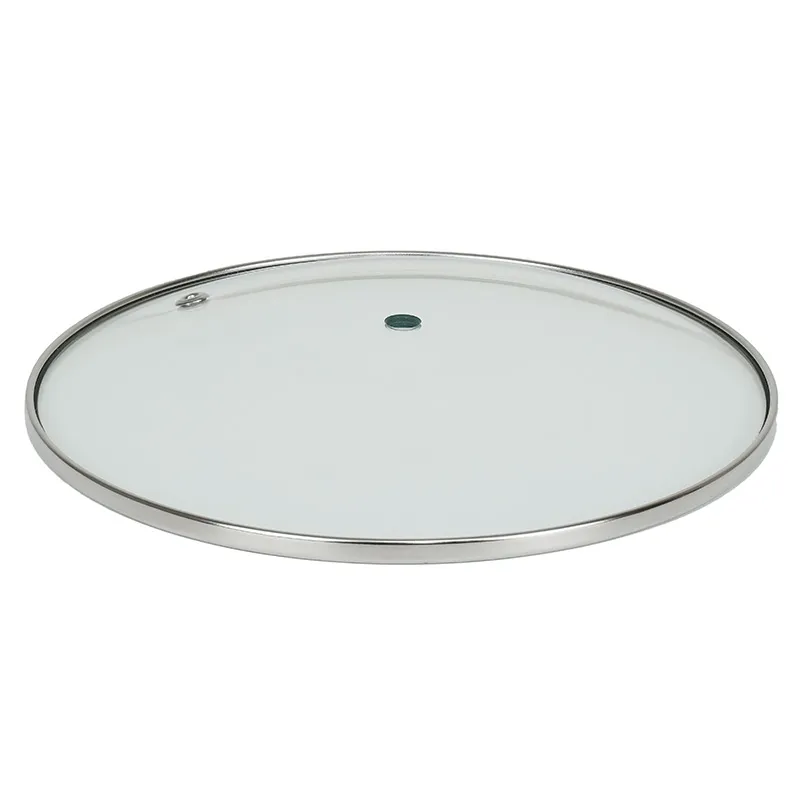
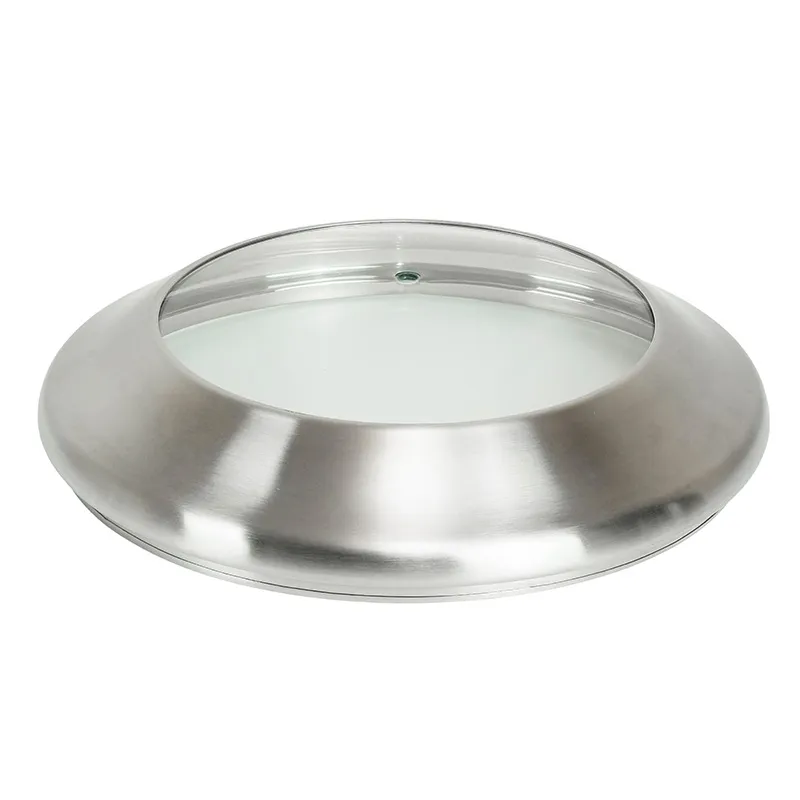
When you type 'China glass lid manufacturer' into a search bar, you're likely picturing a vast, homogenous industrial landscape. That's the first misconception. It's not one giant factory; it's a complex ecosystem of specialized workshops, mid-sized players with specific export niches, and a few integrated operations that handle everything from raw glass to final packaging. The real challenge isn't finding a manufacturer, it's identifying the one whose capabilities align precisely with your product's stress points—be it a specific cladding for induction cooktops, a particular silicone gasket tolerance for pressure cookers, or just the right level of optical clarity for a high-end retail box. I've seen buyers get hung up on unit price per piece, only to have their entire shipment held up at customs because the glass composition didn't meet a specific EU directive on lead and cadmium release. The cost saved upfront was a fraction of the logistics and compliance nightmare that followed.
The Reality of Scale and Specialization
Take a company like EUR-ASIA COOKWARE CO.,LTD. Their website, glass-lid.com, gives you a snapshot of a certain tier. An annual output of 15 million pieces, with over 90% for export, tells you they're geared for volume and international standards. But the devil is in their stated specialization: low- medium- high level household glass products. That's not marketing fluff; it's a critical operational reality. It means their lines are likely set up for batch runs across different quality tiers. A run of basic, clear tempered lids for a budget supermarket chain in Eastern Europe might be followed by a run of coated, edge-polished lids with custom silicone seals for a German brand. The setup in Taian City, within a National High-tech Development Zone, often implies better access to utilities and logistics, but also potentially higher baseline compliance costs, which get factored into the MOQ.
This specialization is key. You don't go to a factory like this for one-off prototypes or artisan hand-blown glass. You go for consistent, repeatable output in the hundreds of thousands. Their client list—Germany, Russia, Italy, Brazil, Japan—is a map of different market demands. German clients might demand TüV or GS certification reports for every batch, focusing on thermal shock resistance and edge safety. A Brazilian buyer might prioritize cost and resilience to certain cleaning chemicals common there. A single China glass lid manufacturer has to navigate all these specs, which is why their technical department is often the most telling part of a facility tour.
I remember a visit to a similar plant where the discussion wasn't about price for the first hour. It was about their tempering furnace's quenching process and how it affected the stress profile of the glass for a lid destined for a high-altitude market (lower atmospheric pressure affects pressure cooker dynamics, believe it or not). They had data. That's the difference between a commodity supplier and a manufacturing partner.
Beyond the Quotation: The Unseen Variables
Everyone asks for a quotation. The smart ones ask for the failure analysis report from the last production hiccup. What goes wrong? Silicone bonding is a classic pain point. The adhesive fails not in the factory, but after six months on a retailer's shelf in a humid climate. Or the glass itself—sourcing the right float glass. Not all tempered glass starts equal. Some manufacturers have long-term agreements with float glass producers like Xinyi or CSG, ensuring batch-to-batch consistency in thickness and impurity levels. Others buy from the spot market, which is cheaper but introduces variability. That variability shows up as slight optical distortions or, worse, a higher rate of spontaneous breakage during tempering, which of course, you pay for in yield loss.
Logistics is another hidden layer. EUR-ASIA mentions exports to Europe and beyond. That means they have experience with palletization for container shipping—how to stack lids with silicone seals without deforming them, what cardboard interleaving to use to prevent scratching during a month at sea. I've had a shipment arrive where the lids were perfectly fine, but the packaging was crushed because the factory used a cheaper, lower-ECT corrugated board. The retailer rejected the entire lot because the boxes looked damaged on the shelf. The glass lid manufacturer blamed the shipping company, but the root cause was a cost-cutting decision on packaging specs that we didn't nail down in the P.O.
Then there's tooling. For a custom shape or handle hole pattern, you need a steel mold for the cutting and grinding process. Lead time for a quality mold can be 45-60 days. And it's not a one-time cost; it wears. A factory running millions of pieces will have a schedule for mold maintenance and replacement. If you're a smaller buyer piggybacking on a shared mold, you're at the mercy of their schedule and the wear on that tool, which can lead to gradual, imperceptible changes in the final product's dimensions over time.
The Export Mentality and Quality Gates
A manufacturer with 90% export focus, like the one described, operates differently. Their internal QC is often built around avoiding chargebacks and claims from overseas clients. This is a double-edged sword. On one hand, they're generally more reliable on fundamental safety standards—they have to be to clear customs and avoid liability. On the other hand, their definition of acceptable quality is often tied to the contractual AQL (Acceptable Quality Level) sampling plan. An AQL of 1.0 for critical defects might mean they can ship a batch with a handful of lids that have a barely visible chip on the non-contact rim. For a discount retailer, that's fine. For a premium brand, it's a disaster.
The real test is how they handle a failed inspection. Do they have a rework line? Or do they simply sort out the defects and crush the rejects? I've worked with a China glass lid manufacturer who had a dedicated team for re-polishing edges on B-grade stock to be sold into a secondary, less demanding market. It was an efficient use of resources. Another just scrapped everything, which felt rigorous but also meant their base cost was higher. You need to know which model you're buying into.
Their export focus also means they're accustomed to certain documentation: commercial invoices, packing lists, certificates of origin, and sometimes specific test reports. If you're a new importer without a robust logistics agent, their familiarity with this paperwork is a huge advantage. They can often recommend forwarders or at least tell you the exact HS code they use for EU vs. US customs, which saves a lot of headaches.
The Pitfall of High-Tech and Actual Innovation
Being in a National High-tech Development Zone, as EUR-ASIA's production base is, can be meaningful. It sometimes translates to tax benefits that can be passed on, or easier recruitment of engineers. But don't confuse it with the product being high-tech. Tempered glass lid manufacturing is a mature process. The innovation is often incremental: more precise digital control of tempering ovens for even stress, automated optical inspection systems to replace human eyes for detecting micro-cracks, or better recycling systems for grinding slurry.
The more interesting developments are in coatings. Anti-fog coatings that actually last more than 50 dishwasher cycles, or easy-clean coatings that repel oil. These often involve partnerships with chemical suppliers. A manufacturer's ability to reliably apply these coatings at scale is a major differentiator. I've seen prototypes with fantastic coating performance that completely fell apart in mass production because the coating line couldn't maintain a consistent temperature or the curing process was too slow for the production pace. Ask not just can you do it? but what is your yield rate on the coated product line, and how do you test coating adhesion after thermal cycling?
Another subtle point is edge work. A fully polished, smooth edge feels premium but adds cost. A seamed edge (where the ground edge is left with a slight matte finish) is cheaper. Some manufacturers offer a hybrid where the top edge is polished and the underside is seamed, which looks good from above and saves money. These are the practical details you discover on the factory floor, not in a brochure.
Sourcing as Relationship, Not Transaction
Ultimately, finding the right China glass lid manufacturer is about building a relationship with a production team that understands your market's unspoken rules. It's about the communication when something goes wrong. Does your contact proactively send you photos of a material flaw they caught? Or do they hide it and hope you don't notice? I value a factory that sends a monthly production report more than one that offers a 2% discount.
For a company like EUR-ASIA COOKWARE, their longevity and export list suggest they've managed these relationships across diverse cultures. A manufacturer that keeps clients in Germany, Japan, and Brazil for years is doing something right—likely consistent communication and rigorous process control. The takeaway isn't to just contact them, but to approach them (or any similar manufacturer) with the right questions. Don't lead with what's your best price for 100k pieces? Lead with what's the most common reason for customer returns on your glass lids, and how is your process designed to prevent that? The answer will tell you far more about whether they're a fit for your next product line.
The landscape is dense, competitive, and nuanced. The keyword 'China glass lid manufacturer' opens a door, but walking through it requires leaving assumptions behind and engaging with the gritty, practical realities of mass production. It's there, in the details of tempering curves, silicone durometer, and pallet loading diagrams, that you find a real partner.
Related Products
Related Products