
- Chinese
- French
- German
- Portuguese
- Spanish
- Russian
- Japanese
- Korean
- Arabic
- Irish
- Greek
- Turkish
- Italian
- Danish
- Romanian
- Indonesian
- Czech
- Afrikaans
- Swedish
- Polish
- Basque
- Catalan
- Esperanto
- Hindi
- Lao
- Albanian
- Amharic
- Armenian
- Azerbaijani
- Belarusian
- Bengali
- Bosnian
- Bulgarian
- Cebuano
- Chichewa
- Corsican
- Croatian
- Dutch
- Estonian
- Filipino
- Finnish
- Frisian
- Galician
- Georgian
- Gujarati
- Haitian
- Hausa
- Hawaiian
- Hebrew
- Hmong
- Hungarian
- Icelandic
- Igbo
- Javanese
- Kannada
- Kazakh
- Khmer
- Kurdish
- Kyrgyz
- Latin
- Latvian
- Lithuanian
- Luxembou..
- Macedonian
- Malagasy
- Malay
- Malayalam
- Maltese
- Maori
- Marathi
- Mongolian
- Burmese
- Nepali
- Norwegian
- Pashto
- Persian
- Punjabi
- Serbian
- Sesotho
- Sinhala
- Slovak
- Slovenian
- Somali
- Samoan
- Scots Gaelic
- Shona
- Sindhi
- Sundanese
- Swahili
- Tajik
- Tamil
- Telugu
- Thai
- Ukrainian
- Urdu
- Uzbek
- Vietnamese
- Welsh
- Xhosa
- Yiddish
- Yoruba
- Zulu
- Kinyarwanda
- Tatar
- Oriya
- Turkmen
- Uyghur

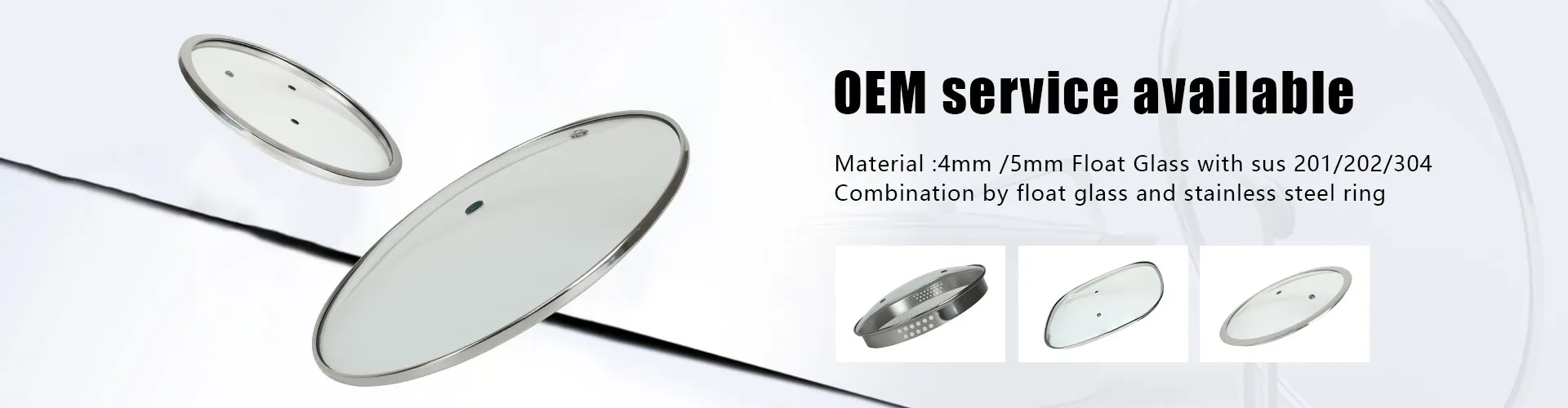
China silicone glass cover manufacturer
When you type 'China silicone glass cover manufacturer' into a search bar, you're likely picturing a vast, monolithic industry. The reality is far more fragmented and nuanced. Many buyers, especially those new to sourcing, assume it's all about finding the lowest price per unit from a directory. That's the first pitfall. The term itself bundles two critical components: the tempered glass lid and the silicone sealing ring. In China, you'll find factories excelling at one but outsourcing the other, which directly impacts consistency. I've seen orders derailed because the glass was pristine from one specialist, but the sourced silicone gasket failed heat tests, causing warping and seal breaks. It's rarely a one-stop-shop game unless you're dealing with integrated players who have mastered both materials under one roof.
The Core Challenge: Integration vs. Specialization
This is where the real industry split lies. Some manufacturers are essentially glass processors. They buy silicone rings from a network of suppliers and assemble them. The risk? Batch inconsistency. The silicone's durometer (hardness), its tolerance to repeated thermal shock, and its food-grade certification can vary if not strictly controlled. A true China silicone glass cover manufacturer worth the name should have in-house compounding or at least a locked-down, audited partnership with a silicone supplier. I remember auditing a factory in Zhejiang that produced beautiful, laser-cut glass. Their workshop was impressive. But their 'silicone department' was just a bench where workers assembled rings from a box. When asked for the silicone supplier's SGS report, they provided three different ones from the last six months. That's a red flag you only learn to spot by being on the ground.
Then there are the integrated operations. These are more complex setups, often located in industrial clusters like Shandong or Guangdong. They handle the glass tempering, the silicone molding or extrusion, and the final assembly. The benefit is traceability. Take a company like EUR-ASIA COOKWARE CO.,LTD (you can find them at https://www.glass-lid.com). From their info, they state a specialization in household glass and kitchen accessories, with a significant production base in Taian, Shandong. An output of over 15 million pieces annually suggests a focus on scale and integration. When a factory has its own 20,000㎡ campus and controls the process from raw glass to finished glass lid with silicone seal, it minimizes the variables. Their mention of exporting over 90% to European markets like Germany and France is a tacit signal about compliance; those markets have stringent food contact material regulations, which forces the manufacturer to have rigorous inbound material control.
The trade-off, of course, is minimum order quantity (MOQ) and flexibility. An integrated manufacturer like this isn't typically set up for a 500-piece custom shape order with a unique silicone color. Their strength is in perfecting high-volume runs for standard sizes—think the universal lids for 24cm or 28cm pots. Their tempered glass lid production is likely highly automated for these staples. For a buyer, the key is aligning your project needs with the factory's core competency. Wanting a bespoke, small-batch artistic lid with a complex silicone flange? A specialized glass workshop partnering with a silicone expert might be better. Need a reliable, certified, high-volume supply for a retail chain? The integrated model is safer.
Beyond the Spec Sheet: The Unspoken Details
Specifications tell half the story. A data sheet will list glass thickness (often 3mm or 4mm tempered), diameter, and maybe silicone Shore hardness. What it won't tell you is how the silicone is bonded. This is a massive differentiator. The cheap method is simply stretching the ring around the glass edge. It works, initially. After a dozen dishwasher cycles, the tension relaxes, and the seal fails. The proper method involves using a food-grade adhesive to bond the silicone to the glass, creating a permanent seal. I've conducted peel tests myself in factory labs—the difference in adhesion strength is staggering. A good manufacturer will have this bonding process down to a science, with controlled humidity and temperature curing stages.
Another unspoken detail is the glass edge finishing. After tempering, the edge is the weakest point. A poorly finished edge feels sharp and is prone to chipping during handling or impact. A high-quality finish involves seaming or polishing the edge to a smooth, rounded contour. This isn't just about feel; it directly affects how the silicone ring seats and the overall product lifespan. You can't judge this from a website image. You have to feel a sample, run your finger around the edge, and inspect it under a light. It's one of the first things I do with a prototype.
The Export Reality and Compliance Hurdles
The export focus mentioned by many Chinese manufacturers, like EUR-ASIA COOKWARE's mention of Germany, France, etc., isn't just a sales pitch. It's a testament to their compliance infrastructure. Selling to the EU means navigating the EU Framework Regulation (EC) No 1935/2004 for food contact materials. For glass, this involves heavy metal release testing. For the silicone ring, it's more complex, requiring compliance with specific directives like (EU) No 10/2011 for plastics, which often covers silicones in food contact, ensuring no harmful siloxanes migrate. A manufacturer consistently serving these markets has likely invested in the lab testing and documentation to prove compliance. They should be able to provide a DoC (Declaration of Compliance) and supporting test reports almost immediately.
However, export experience can be shallow. Some factories merely ship to a trading company in Hong Kong, which then handles the final destination. That's not the same as having direct experience with a retailer's quality assurance (QA) standards. The good ones have direct relationships with overseas importers and have undergone third-party audits (like BSCI or Sedex). They understand the importance of consistent packaging, barcode labeling, and palletization standards—the unglamorous logistics that prevent chargebacks. When a factory's website, like glass-lid.com, clearly states its export destinations, it's worth probing deeper. Ask for references or case studies of direct clients in those countries.
Failure on compliance is a silent killer. I recall a batch where the glass passed all tests, but the silicone, under extended heat, released a faint odor. It wasn't toxic, but it was enough for a discerning European buyer to reject the entire container. The root cause was a cost-saving change in the silicone masterbatch by a sub-supplier. The manufacturer hadn't re-tested the final assembled product under real-world cooking conditions (like slow simmering for 4+ hours). This is where an integrated facility has an advantage: their change control processes should catch this, as they control the silicone formulation.
Sourcing Strategy: Finding the Right Fit
So, how do you actually find a reliable China silicone glass cover manufacturer? Alibaba is a starting point, not the finish line. Filtering for Assessed Suppliers or Trade Assurance helps, but it's superficial. The real work begins with a technical questionnaire. Don't just ask for a price quote. Ask for: 1) Their glass tempering furnace type (horizontal vs. vertical, which affects flatness), 2) The source and food-grade certification of their silicone raw material (request the mill certificate), 3) Their in-house QC procedures for bond strength and thermal shock resistance (they should have a test where they cycle the lid from boiling water to ice water repeatedly).
Site verification is non-negotiable for serious volume. For a company like EUR-ASIA COOKWARE, with its stated size and output, a virtual tour can be a good first step, but nothing replaces walking the production line. You need to see the cleanliness of the glass cutting area, the organization of the silicone molding shop, and the discipline in the assembly section. Are workers wearing gloves when handling the final product? Is there a dedicated, calibrated station for testing seal integrity? These observational details tell you more about consistent quality than any brochure.
Finally, start with a pilot order. Not a sample—a pilot production run of your exact specification, at the minimum order quantity. Put this batch through your own rigorous testing: dishwasher durability, oven safety, freeze-to-oven thermal shock, and even simple drop tests. The manufacturer's reaction to feedback from this pilot order is the ultimate test. A professional partner will engage, troubleshoot, and adjust. A transactional vendor will make excuses. In this industry, the relationship is everything because the product, while seemingly simple, hides a multitude of potential failure points that only emerge with use.
Concluding Thoughts: It's a Mature Segment
The market for silicone and glass lids from China is mature. The low-hanging fruit is gone. Competition has pushed the serious players towards integration, scale, and compliance. The manufacturers that thrive, like the one profiled, have moved beyond being cheap suppliers to being specialized component partners for global kitchenware brands. They compete on reliability, certification, and supply chain stability, not just cents per piece.
For a buyer, the goal shouldn't be to find a manufacturer. It should be to find the right type of manufacturer whose operational model matches your product's risk profile and volume. Sometimes that means the large, integrated exporter in Shandong. Other times, it means a more agile specialist in Fujian. The keyword search is just the opening gambit. The real work is in understanding the material science and production realities behind those two deceptively simple components: the tempered glass and the silicone seal. Getting that right is the difference between a product that gets 5-star reviews for durability and one that gets returned for a faulty seal after two months.
In the end, it boils down to control. The more control the manufacturer has over the entire process, from sand to seal, the more predictable the outcome. That's the unspoken truth behind a successful search for a quality-driven China silicone glass cover manufacturer.
Related Products
Related Products
Best Selling Products
Best Selling Products
Related Search
Related Search- wholesale beer can glass with lid
- 3 litre glass jar with lid
- replacement glass lid for rival crock pot
- threshold glass jar and metal lid
- glass lid with stainless steel
- silicone glass lid maker of China
- glass lid supplier of China
- glass jar with lid flipkart
- tempered glass lid with stainless steel
- instant pot tempered glass lid 6 quart


