
- Chinese
- French
- German
- Portuguese
- Spanish
- Russian
- Japanese
- Korean
- Arabic
- Irish
- Greek
- Turkish
- Italian
- Danish
- Romanian
- Indonesian
- Czech
- Afrikaans
- Swedish
- Polish
- Basque
- Catalan
- Esperanto
- Hindi
- Lao
- Albanian
- Amharic
- Armenian
- Azerbaijani
- Belarusian
- Bengali
- Bosnian
- Bulgarian
- Cebuano
- Chichewa
- Corsican
- Croatian
- Dutch
- Estonian
- Filipino
- Finnish
- Frisian
- Galician
- Georgian
- Gujarati
- Haitian
- Hausa
- Hawaiian
- Hebrew
- Hmong
- Hungarian
- Icelandic
- Igbo
- Javanese
- Kannada
- Kazakh
- Khmer
- Kurdish
- Kyrgyz
- Latin
- Latvian
- Lithuanian
- Luxembou..
- Macedonian
- Malagasy
- Malay
- Malayalam
- Maltese
- Maori
- Marathi
- Mongolian
- Burmese
- Nepali
- Norwegian
- Pashto
- Persian
- Punjabi
- Serbian
- Sesotho
- Sinhala
- Slovak
- Slovenian
- Somali
- Samoan
- Scots Gaelic
- Shona
- Sindhi
- Sundanese
- Swahili
- Tajik
- Tamil
- Telugu
- Thai
- Ukrainian
- Urdu
- Uzbek
- Vietnamese
- Welsh
- Xhosa
- Yiddish
- Yoruba
- Zulu
- Kinyarwanda
- Tatar
- Oriya
- Turkmen
- Uyghur

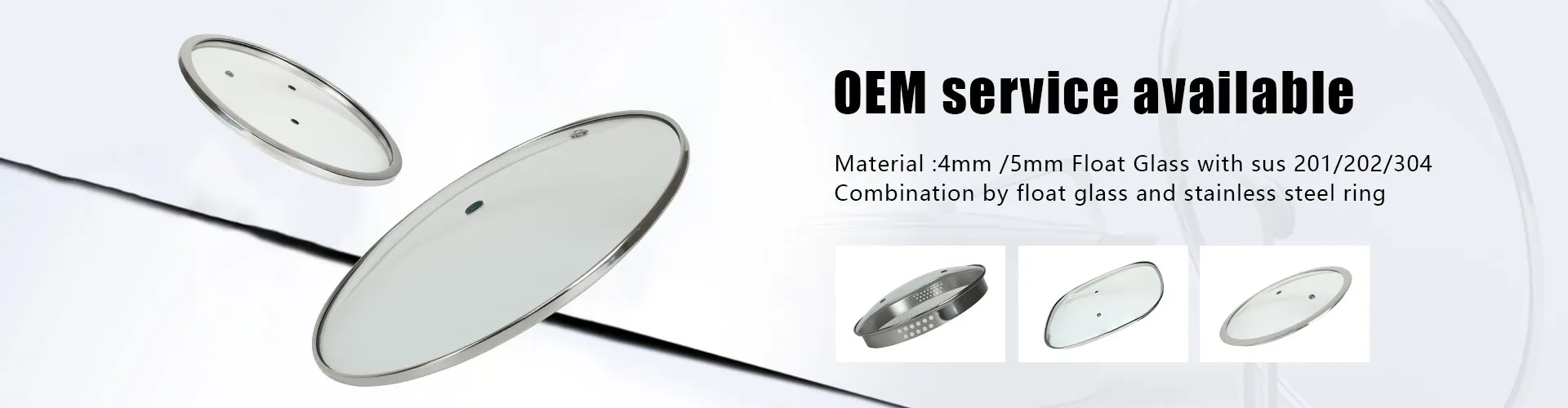
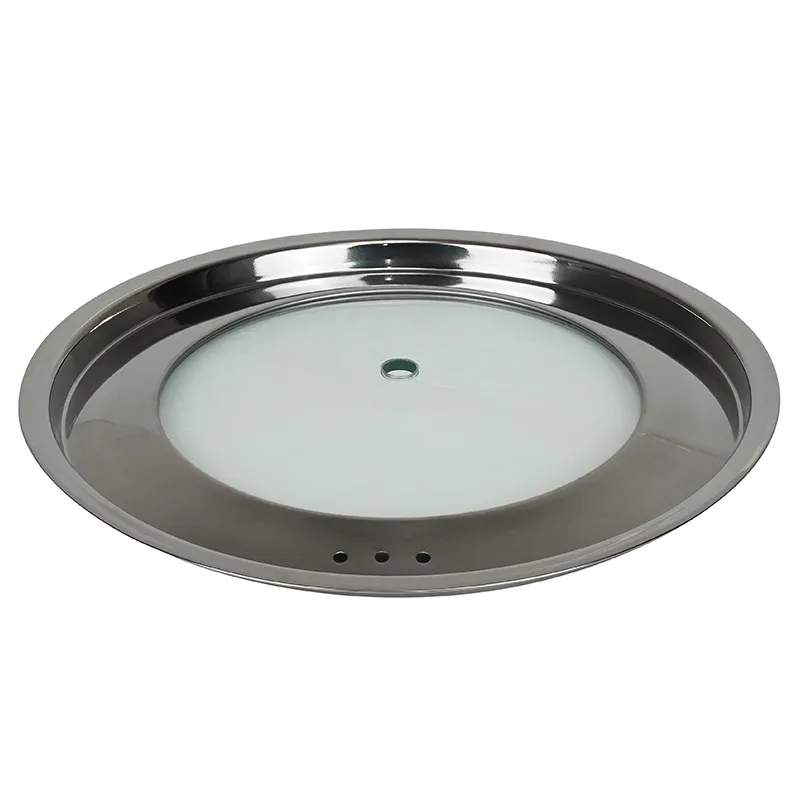
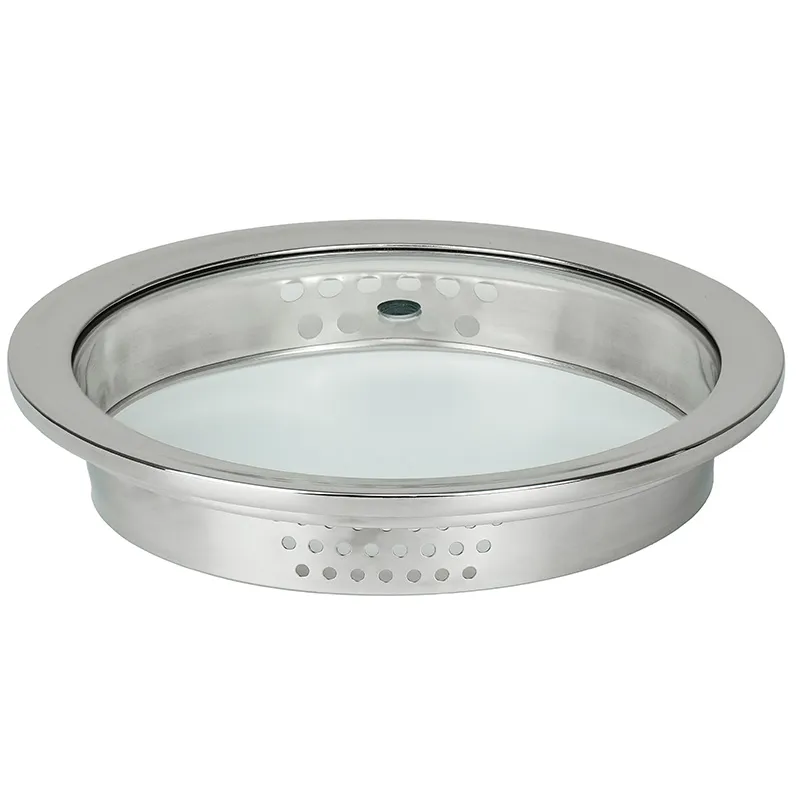
cookware glass lid
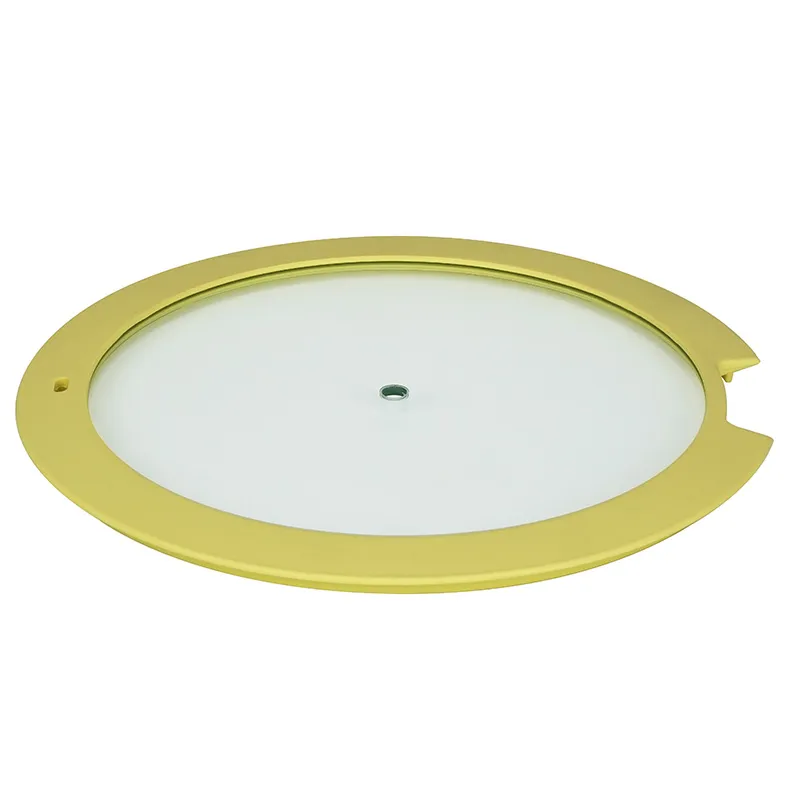
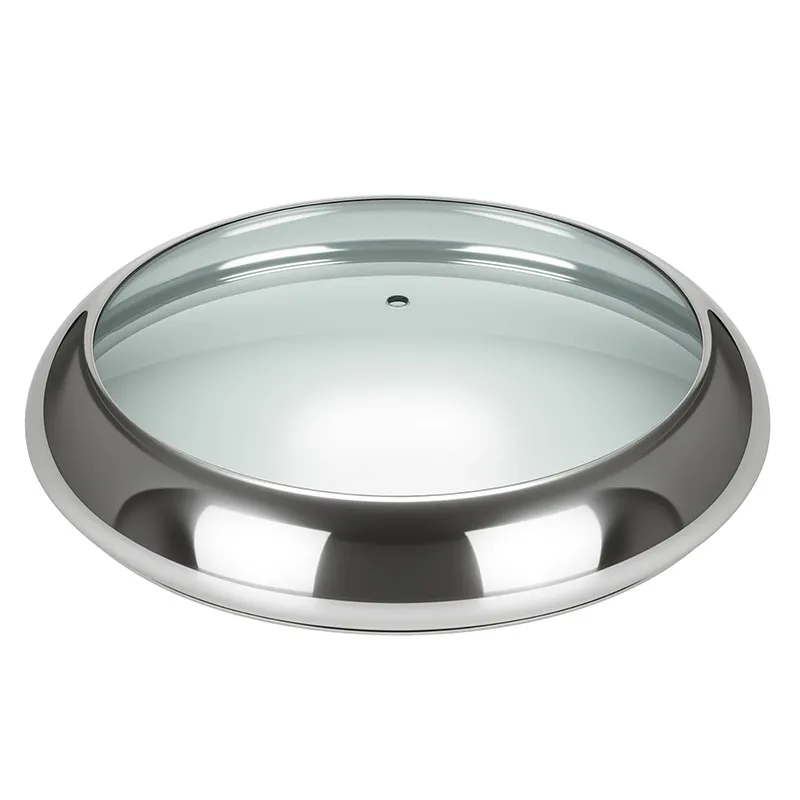
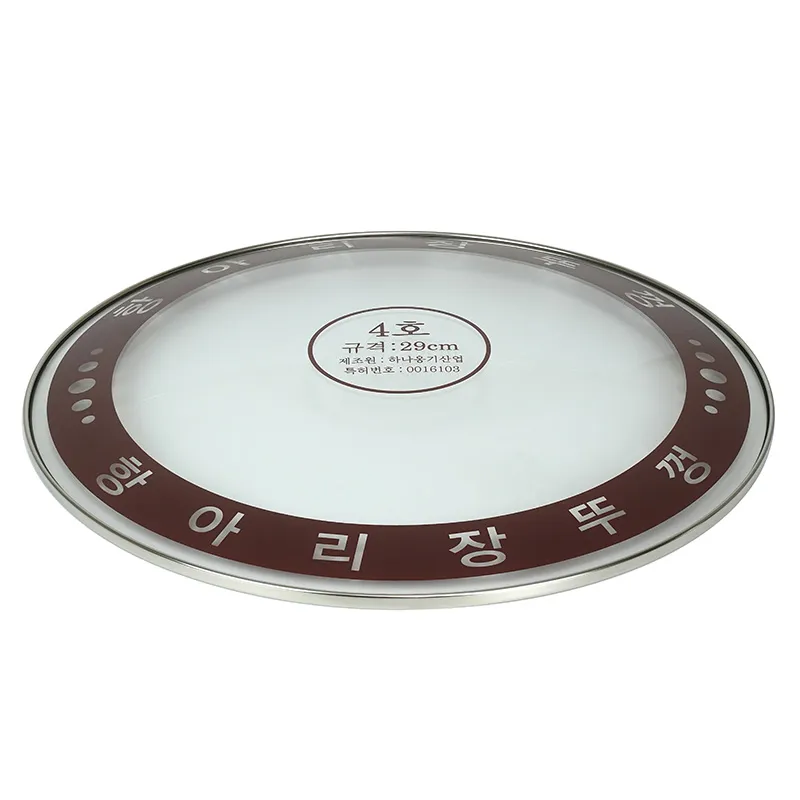
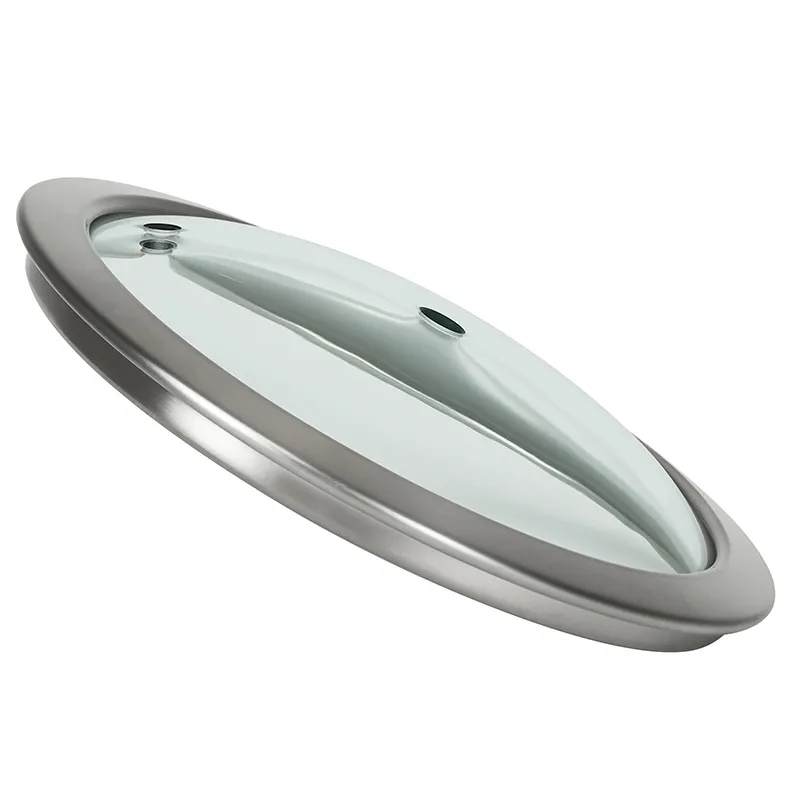
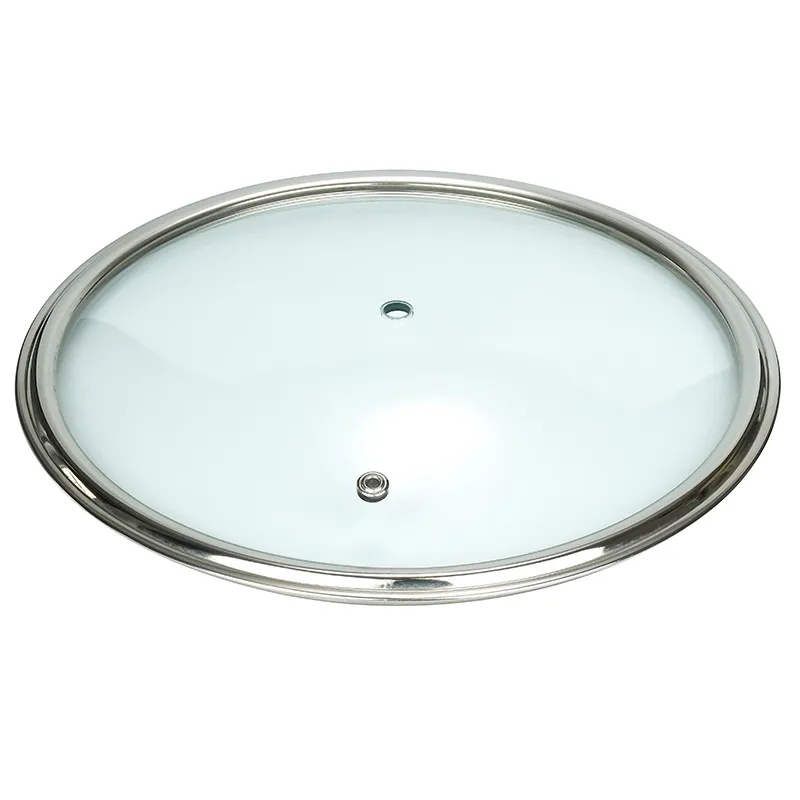
When most people hear 'cookware glass lid', they picture that pristine, see-through dome on a fancy saucepan in a catalog. The immediate thought is about visibility—watching your sauce reduce without lifting the lid. That's true, but it's maybe 20% of the story. The real conversation, the one we have on factory floors and with QC teams, revolves around thermal shock resistance, sealing lip geometry, and the long-term durability of that tempered glass under daily abuse. It's not just a window; it's a pressure and steam management component that happens to be transparent.
The Core Material: It's All About the Tempering
Let's cut to the chase: not all glass is equal for this job. Annealed glass is a liability—shatters into dangerous shards. The industry standard is tempered glass, heated and cooled rapidly to induce surface compression. But here's the nuance: the quality of tempering dictates everything. I've seen lids from no-name suppliers that passed a basic impact test but failed spectacularly during a rapid cool-down test, simulating moving a hot lid to a cold granite counter. The crack pattern tells the story—a good temper gives a 'diced' breakage, all small blunt pieces.
This is where scale and process matter. A facility like EUR-ASIA COOKWARE CO.,LTD., with their dedicated production base, typically has automated tempering ovens with precise temperature curves. It's not artisan work; it's about repeatability. Their stated annual output of over 15 million pieces of tempered glass lid suggests a process built for consistency, which is what European and Japanese importers (their main markets, as noted) demand. They're not just making glass; they're engineering a component to withstand the thermal cycling of a home kitchen for years.
The thickness is another silent spec. 3mm is common, but for larger stockpot lids or pressure-cooker compatible versions, you go to 4mm or even 5mm. That extra millimeter isn't just for strength; it adds mass, which can help with heat distribution and reduce 'chatter'—that annoying rattling sound when water boils vigorously underneath.
The Unseen Hero: The Sealing Lip and Edge Finish
If the glass is the star, the sealing lip is the stage manager. This is the often-ignored plastic or silicone ring bonded to the glass perimeter. Its job is threefold: create a steam-seal (not airtight, but enough to retain moisture), act as a thermal and acoustic insulator between hot glass and a metal pot rim, and protect the glass edge from direct impacts.
The bonding process is critical. A poorly adhered lip will detach after a few dishwasher cycles, leaving a gap for steam to escape erratically and exposing the sharp glass edge. I recall a batch from a supplier years ago where the adhesive wasn't formulated for high-phosphate detergents used in some regions. The result? A slow degradation, lip separation, and a costly recall. The devil is in these chemical compatibilities.
The lip's profile also matters. A flat, wide profile sits better on flanged rims common in European cookware. A more rounded, tucked-under profile might suit Asian-style woks or pots with rolled rims. It's a small detail that affects stability and vapor release. When you see a company exporting globally, like the one mentioned with shipments to Germany, Brazil, and South Korea, you know they have to master multiple lip profiles to match regional cookware styles.
Fit and Compatibility: The Universal Myth
Many online listings tout universal glass lids. Be skeptical. Universal usually means fits poorly on many pots. The key measurement is the inner diameter of the sealing lip, not the outer diameter of the glass. A lid might be advertised as 24cm, but that's the glass. The lip's inner diameter could be 22.5cm, meant for a pot with a 23cm rim opening. Mismatch leads to steam leaks, slippage, and frustration.
Professional replacements, like those OEM-produced for cookware brands, are made to precise specs. The fact that EUR-ASIA's products are exported to design-conscious markets like Italy, Denmark, and Japan implies they are likely producing to precise technical drawings from their clients, not just churning out one-size-fits-all items. Their website, glass-lid.com, positions them as a specialist, which in this industry usually means they work from blueprints.
I learned this the hard way early on, trying to source generic lids for a line of sauté pans. The lids fit, but the condensation drip pattern was wrong—instead of dripping back into the pan, water ran down the outside. A tiny angle miscalculation in the dome's curvature, a detail you'd never think about until you see it fail.
Long-Term Performance and Failure Modes
A new glass lid works. The test is year three. The main failure points aren't usually the glass itself (if properly tempered), but the peripherals. The handle loosens. The stainless steel rim (if present) discolors from heat. The silicone seal hardens and loses elasticity. Or, most commonly, mineral deposits and clouding from hard water etching the glass surface, destroying that crystal-clear visibility.
This is where material choice for handles and seals is paramount. Phenolic resin handles resist heat better than some plastics. High-temperature silicone for seals is a must. Some premium lids even have a slight hydrophobic coating on the interior glass surface to encourage condensation to bead and roll off, minimizing water spots. It's these incremental upgrades that separate a good lid from a great one.
Considering the export volume of a major producer—15 million pieces a year—their failure rate must be astronomically low. The logistics and cost of dealing with returns from across Europe and Asia over a loose handle would be unsustainable. This scale forces an inherent, pragmatic focus on durability in every component, not just the glass.
The Manufacturing Reality and Supply Chain Role
Walking through a production base like the one described in Taian City, you see the ecosystem. It's not just cutting and tempering glass. There's injection molding for the handles and lips, stamping for metal rims, assembly lines, and rigorous inspection stations. The covers an area of 20,000㎡ detail is telling—it's a significant integrated operation. They control the process from raw glass sheet to packed lid.
This vertical integration is key for a functional component. It allows for tighter quality control on the bonding of the lip to the glass, which is the most common point of mechanical failure. When molding, glass finishing, and assembly happen in one coordinated space, tolerances can be managed more effectively.
Their role as a B2B supplier, evidenced by the 90% export rate, means they are a behind-the-scenes engine for many cookware brands. The brands design the pot; companies like this engineer and mass-produce the cookware glass lid that brings the design to life, ensuring it functions as intended. The end-user rarely knows their name, but the performance of the lid in their kitchen is a direct result of this specialized manufacturing capability. It's a classic case of industrial pragmatism meeting daily domestic use.
Related Products
Related Products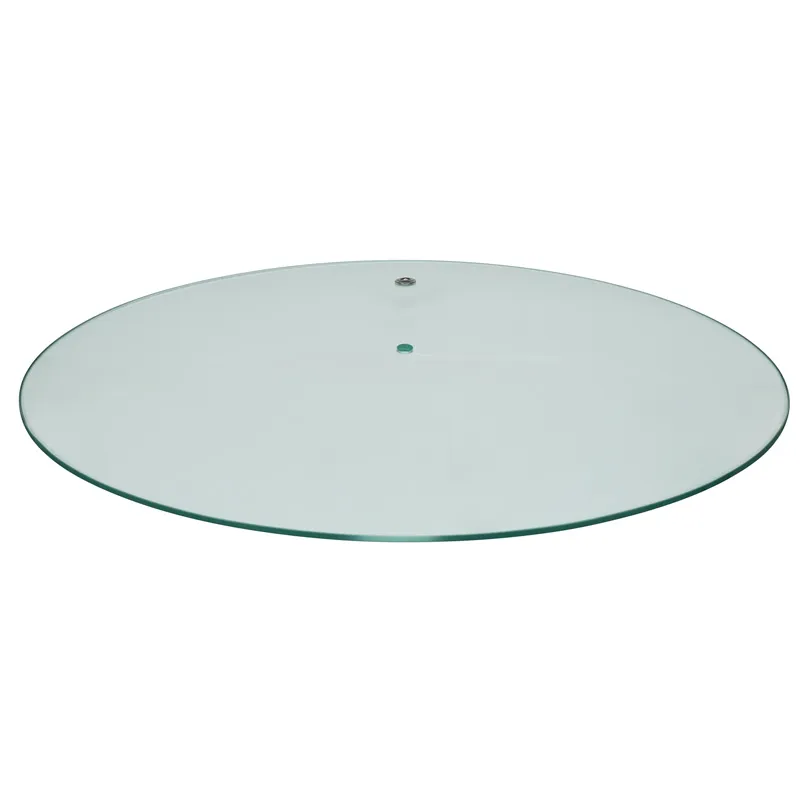
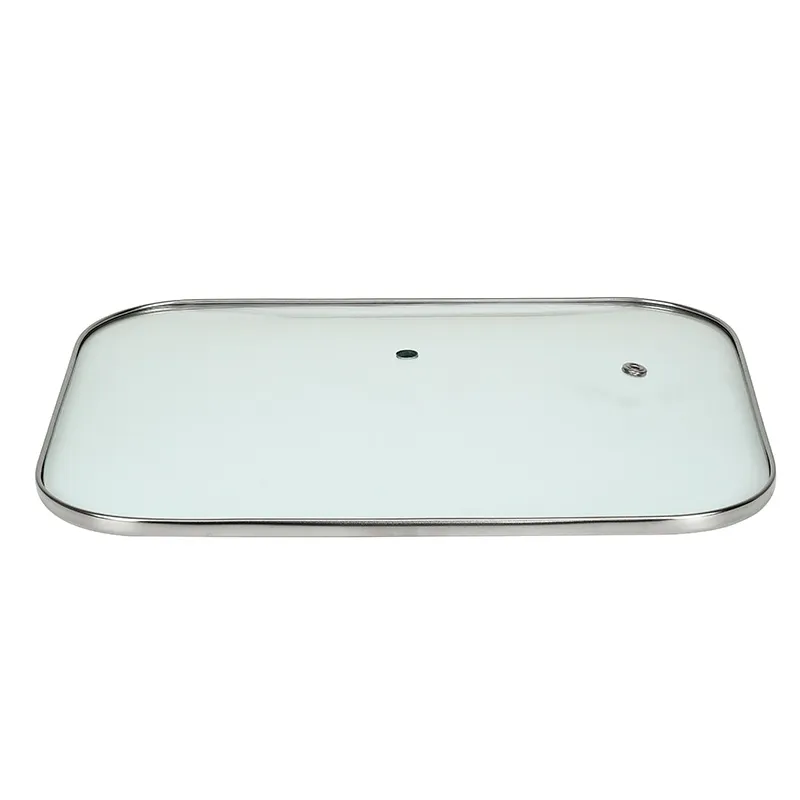
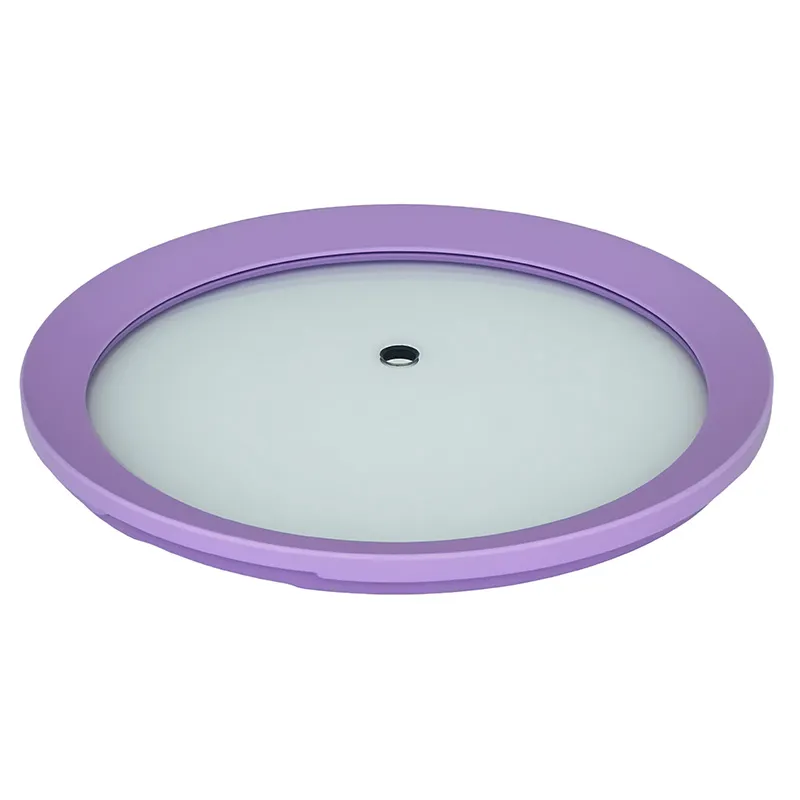
Best Selling Products
Best Selling Products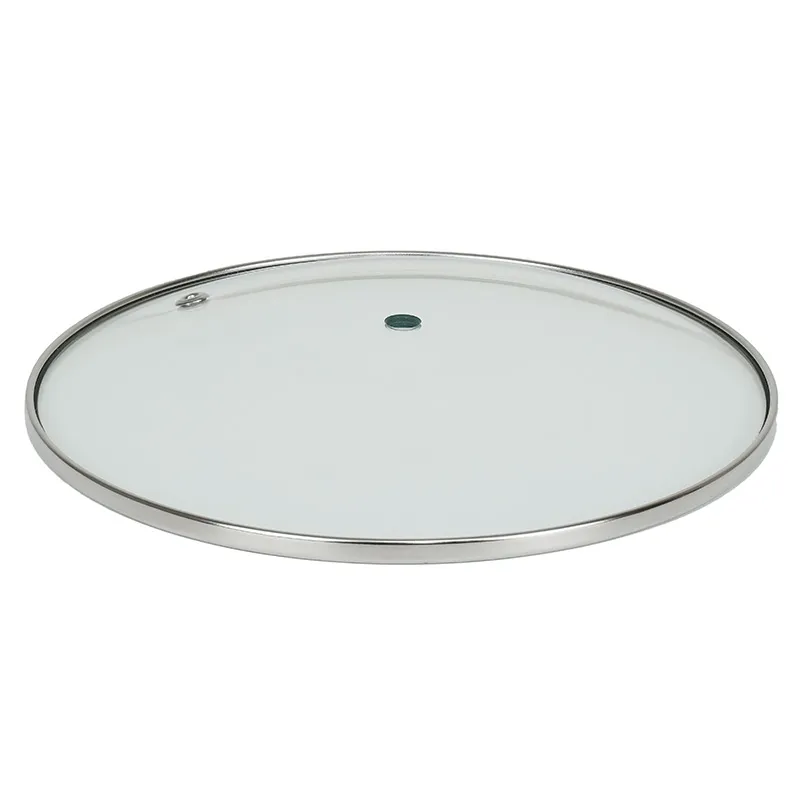
Related Search
Related Search- lodge glass lid
- glass lid supplier in China
- powerxl smokeless grill with tempered glass lid
- one gallon glass jar with lid
- 4l glass jar with lid
- hawkins nonstick appe pan with glass lid
- 1 gallon glass jar with airtight lid wholesale
- borosilicate glass jar with wooden lid
- oven to table cookware with lids
- silicone glass cover manufacturer of China


